Textile Documents › Topic: Historic handweaving and early weavers
494 documents found
Sort: 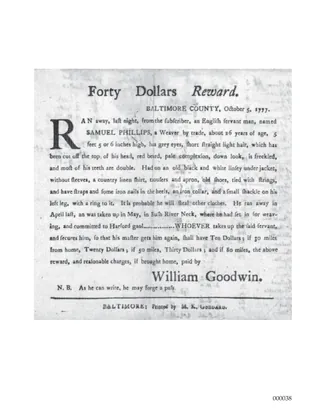
Forty Dollars Reward
M. K. Goddard, Baltimore, October 5, 1777
Ephemera · 1 page
A printed runaway servant notice dated October 5, 1777, from Baltimore County, Maryland. William Goodwin offers a reward of forty dollars for the return of Samuel Phillips, an English indentured servant who is a weaver by trade. The notice describes his appearance and clothing (including a linsey under jacket and linen shirt), and records that he had previously escaped and set up weaving in Bush River Neck before being jailed at Harford.
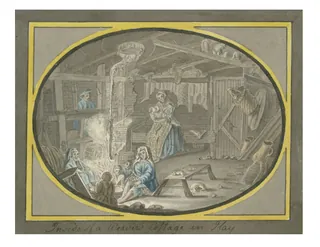
Inside of a Weaver's Cottage in Islay
18th century
Illustration · 1 page
A single watercolor illustration showing the interior of a weaver's cottage on Islay, Scotland. A figure sits at a loom on the left, with a hearth and large chimney hood nearby, and a woman holding a baby stands near a bench. Other figures and household details fill the room. The only text is a handwritten caption.
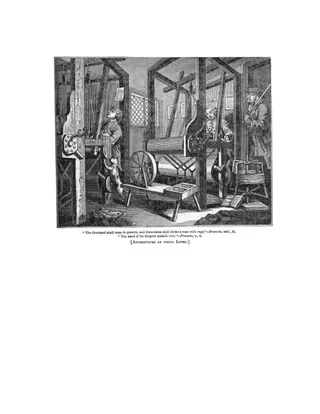
[Apprentices at Their Looms]
Illustration · 1 page
A single-page engraving titled "Apprentices at their Looms" from the Monthly Supplement of the Penny Magazine (1834). It shows a workshop interior with two apprentices at looms, one in the left foreground at a treadle loom and another on the right under supervision. Two Bible verses on idleness and diligence appear above the image, suggesting a moral lesson about industrious apprenticeship.
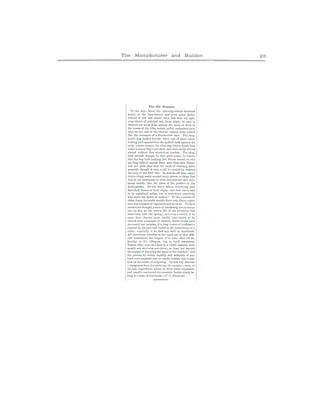
The Old Weavers
Article · 1 page
A short one-page piece describing the social position of hand weavers in rural communities in the days of home spinning. It portrays them as pale, solitary itinerant craftsmen carrying bags of linen thread and cloth, viewed with suspicion and superstition by villagers. The text is a literary or social sketch with no technical weaving content. It is credited to the U. S. Economist.
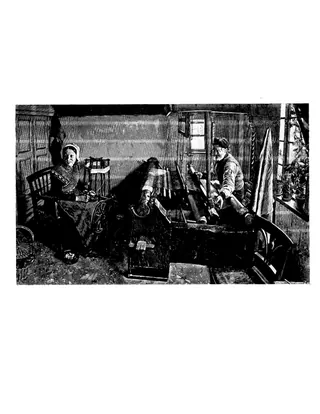
[Spinner and Weaver]
Illustration · 1 page
A single halftone illustration of an interior weaving workshop. A woman in a white cap and dark shawl sits at left beside a spinning wheel or similar apparatus, a central figure leans over a loom, and a man at right works at a loom with the beam and warp threads visible. A cloth hangs at the right. The page has no text, so the artist, source and date cannot be determined.
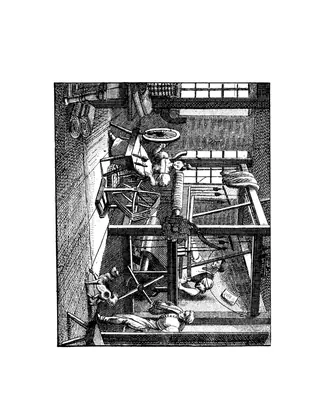
Der Weber [The Weaver]
Illustration · 1 page · German
A single-page engraving of a weaver's workshop, catalogued as an old lithograph. It shows a treadle loom with warp threads and a shuttle, a spinning wheel, a large bobbin or reel, and hanks of yarn hanging on the wall. A seated weaver and a second figure are at work, with a window at upper right. The page has no legible text and no weaving drafts.
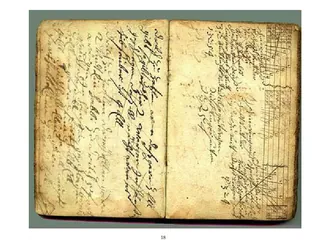
[Jacob Snavely's personal account book with weaving drafts, 1727-1733]
Jacob Snavely · 1727-1733
Manuscript · 51 pages · German · weaving drafts
Photographic reproductions of selected pages from Jacob Snavely's handwritten German-language personal account book, dating from the 1720s and 1730s, digitized by Lebanon Valley College and compiled by Ralph Griswold in 2000. The early pages hold dated account entries (names, places, amounts, ages, weights and payments), calendar-style lists, and a few ink sketches of a figure and a bird. The last 28 pages (original pp. 58-86) were flagged as of interest to weavers and show hand-drawn weaving drafts in grid and tally notation with German notes. The handwriting is mostly illegible in the scan text.
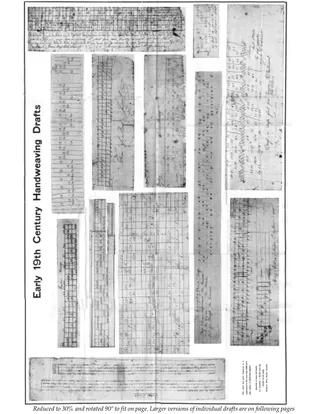
Shuttle-Craft Bulletin (June-July 1958)
Periodical · 6 pages · weaving drafts
A supplement to the Shuttle-Craft Bulletin (June-July 1958) reproducing scans of early 19th-century handwritten handweaving drafts. Page 1 is a composite overview reduced to 30%, and the following pages show larger versions of individual drafts, including threading, tie-up and treadling notation and drawdowns. Some pages carry handwritten captions or notes (e.g. 'Quilting', 'Chain Money', 'Begin', and a French annotation), and one page appears to be a ledger-style sheet with dates.
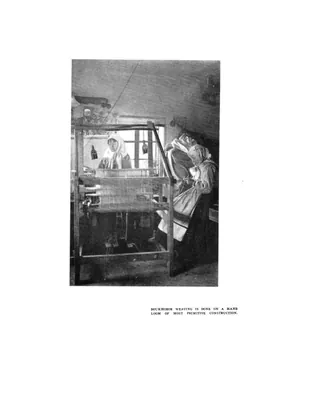
Doukhobors of Canada -- A Community of Siberian Exiles Which is Being Brought to Great Financial Prosperity by a Russian Captain of Industry
Article · 16 pages
A 1907 Craftsman magazine article by Katherine Louise Smith on the Doukhobors, Russian religious exiles who settled in Canada under their leader Peter Verigin. It covers their communal organization, finances, railroad work, agriculture, religion and customs. Photographs show women spinning yarn, weaving on a primitive hand loom, beating flax, harvesting and doing embroidery, but the text says little about textile techniques.
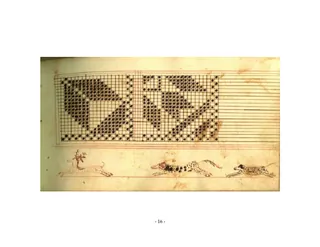
Draught and Cording [weaving manuscript]
Cyrus Uhler · c. 1830
Manuscript · 107 pages · weaving drafts
Handwritten draught and cording book of Cyrus Uhler of Lebanon, Pennsylvania, dated 1830. It consists almost entirely of hand-drawn weaving drafts and drawdowns, many with pattern names and numbers (e.g. Snowballs, Rose Cording, Table Lever Cording, Mad Dog, Patch Work) and German-language notes on threadings, tie-ups, treadling and Jacquard-type setups. Some pages bear dates or signatures, including an 1821 cartouche. The scan is a digital reproduction from Lebanon Valley College's Hiram Herr Shenk Collection, prepared by Ralph Griswold in 1999.
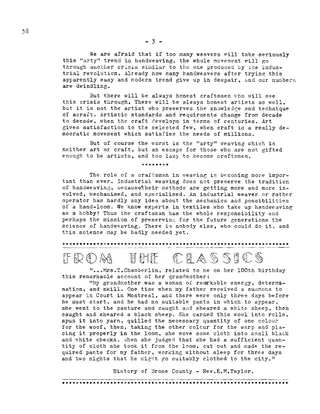
From the Classics
Master Weaver, March 1958
Article · 1 page
A single page from Master Weaver, No. 38, March 1958. It opens with the tail end of an editorial arguing that craft weaving, not "arty" weaving, preserves the knowledge of handweaving, and that handweavers have a responsibility to keep the tradition alive as industrial weaving becomes more mechanised. The "From the Classics" section quotes an account from History of Brome County, in which a woman shears a white and a black sheep, then cards, spins and weaves a small black and white check cloth and sews trousers in three days.
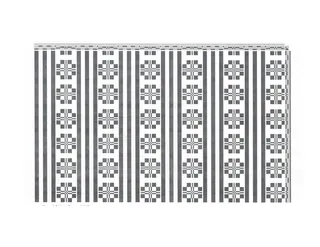
Musterbuch [Pattern Book]
Wilhelm Kiel · 1840
Manuscript · 33 pages · German · weaving drafts
A German weaver's pattern book (Musterbuch) made for Wilhelm Kiel of Langenholzhausen and dated 26 April 1840. It consists of a decorative title page, photographs of loose damaged woven pattern samples, and many large drawdown grids of geometric patterns in black and white or gray: crosses, checks, stepped and diamond motifs, rosettes, and striped plaid-like layouts. A few pages carry notes of warp and weft thread counts or lengths. The scan is landscape and mostly image-based with almost no legible text.
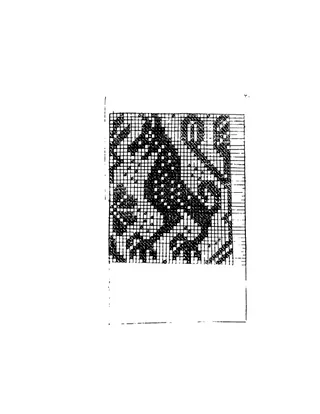
[Photostat copy of a German weaving pattern book, 1691]
1690
Manuscript · 26 pages · German · weaving drafts
Photostatic copy of a German pattern book of woven designs, made in 1958 from an original owned by a Mrs. Thulin. A Swedish note on page 2 describes the original as a German book from 1691 in yellow parchment containing 120 weaving patterns. Most pages are square-grid pattern charts and drawdowns, many with ornamental or figurative motifs, with a few German (Fraktur) and Swedish handwritten captions and annotations. The title page has a blackletter title and the year 1600.
Research
Master Weaver, July-August 1961
Article · 6 pages
An essay from the Master Weaver bulletin (No. 58, July-August 1961) urging handweavers to take up individual research. It divides research into technique (weaves, equipment, weaving methods), designing, and history, with practical suggestions such as studying old and foreign-language weaving books, interpreting old drafts, adapting commercial weaving manuals, and collecting books, drafts, photographs and samples. It closes with proposals for guild research committees and a list of possible historical research topics.
Der Weber zur Zeit des Hans Sachs [The Weaver in the Time of Hans Sachs]
Article · 1 page · German
Short German-language article by F. M. Feldhaus on the weaver and the tapestry maker (Teppichmacher) in the age of Hans Sachs. It centers on a woodcut by Jost Amman from the 1568 book of trades, 'Eygentliche Beschreibung Aller Stände auff Erden', and quotes Hans Sachs's verses for the weaver and the tapestry maker. It explains archaic textile terms such as Handzwehl, Facilet, Bettziechen and gmödelt, and notes that carpets then served as wall hangings, floor coverings and bed and table covers.
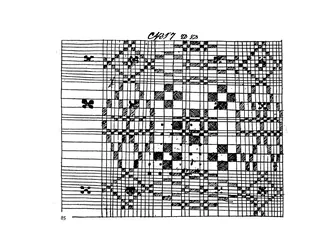
A German Weaver's Pattern Book: 1784 - 1810
Nellie L. Galvin · 1961
Manuscript · 119 pages · German, English · weaving drafts
A 1961 edited presentation by Nellie L. Galvin of a manuscript weaver's pattern book kept in southwestern Germany from 1784 to about 1810, begun by Christian Morath and passed to his apprentice Joseph Murllman. The scan reproduces the handwritten pages: tie-ups and threading drafts for 8 to 20 shafts (double weave and double twill, "straight" and "crooked" threadings), followed by many pages of hand-drawn drawdown pictures, including checks, plaids, tartan-style patterns and lace-like designs. The book also holds a few German-script notes about apprenticeship and wages. Galvin adds an introduction, English translations of the text pages, and her matching of drafts to pictures, noting that these matches are untested on the loom.
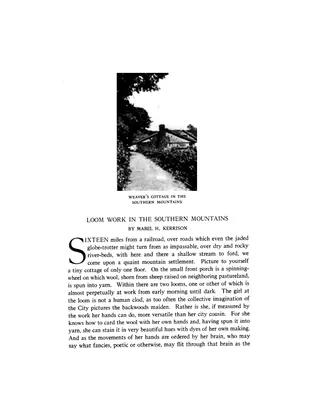
Loom Work in the Southern Mountains
Article · 2 pages
A short 1919 article describing hand weaving in a Southern Appalachian mountain settlement. It portrays a young woman who cards, spins, dyes with walnut, hickory and sassafras, and weaves rugs, curtains, upholstery, bedspreads and linsey-woolsey clothing cloth. It mentions bedspreads woven from old Colonial drafts with traditional pattern names such as "Sun, Moon and Stars" and "Cat Tracks and Snail Trails", and handmade netted lace. It credits the settlement school at Hindman, Knott County, Kentucky, with her training.
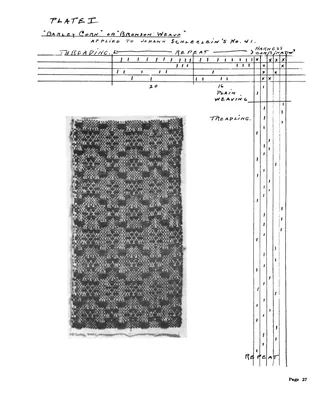
New Patterns from Old Manuscripts
Article · 7 pages · weaving drafts
Article by Marguerite P. Davison on Philadelphia-area weaving history and six surviving manuscripts of early German-American weavers' patterns, dated from 1723 to 1844. She discusses Scandinavian and German influences on Colonial coverlet weaving and selects a few patterns, adapted for modern use, that were woven in Barley Corn (Bronson weave) and overshot. Five plates give drafts with threading, harness combinations and treadling for patterns from the Schleelein and 'Johann D--' manuscripts, with photographs of woven samples. Notes on warp and weft yarns, sett and the treadling notation are included.
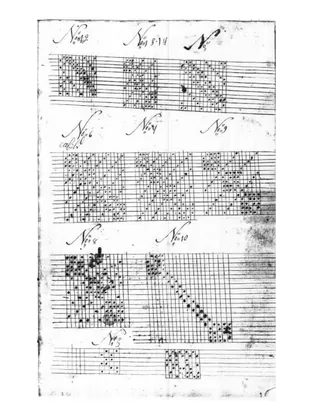
[Pattern and account book of Samuel Hunsberger, Pennsylvania German weaver, 1819-1823]
Samuel Hunsberger · 1819-1823
Manuscript · 57 pages · weaving drafts
A scanned manuscript pattern and account book kept by Samuel Hunsberger, a Pennsylvania German weaver of Franconia Township, Montgomery County, begun in 1819. It opens with a typed biographical sketch, then reproduces the handwritten pattern book: about 110 threading drafts and nearly 60 tie-ups for four to twenty shafts, including point twill, turned twill, double cloth, damask and float work, with numbered patterns and loose sheets. The later pages hold German-language weaving accounts for customers from 1821 to 1823, with yardage and prices for linen, linsey, tow, coverlets and silk.
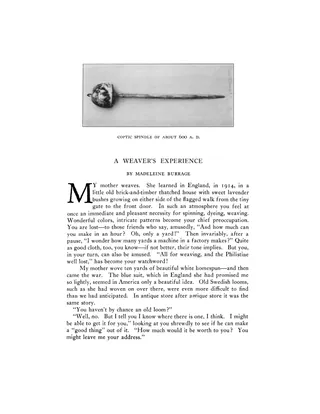
Weaver's Experience
Article · 5 pages
A first-person, humorous account by Madeleine Burrage of her mother's return to hand weaving in America after learning in England in 1914. It follows the search for an old Swedish loom, the purchase of a simple modern loom, and the hunt for real wool, a scourer, carder and spinner. The wool was finally dyed blue and woven into cloth for a suit. It is anecdotal and gives no technical weaving instructions.
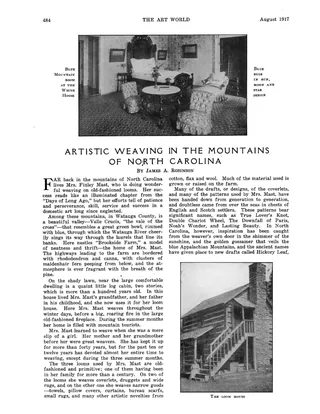
Artistic Weaving in the Mountains of North Carolina
Article · 2 pages
A 1917 magazine article profiling Mrs. Finley Mast, a hand weaver at Brookside Farm in Valle Crucis, Watauga County, North Carolina. It describes her loom house, her three old looms, the coverlets, rugs and towels she weaves from farm-grown cotton, flax and wool, and traditional pattern names. It also covers her fame after the Knoxville exposition and her blue Sun, Moon and Star rugs for the Blue Mountain Room of the White House under Mrs. Woodrow Wilson. Illustrated with photographs of the White House room, the loom house and Mrs. Mast at her loom.
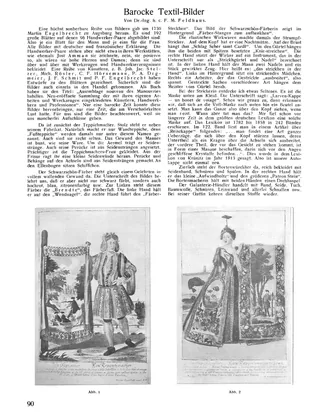
Barocke Textil-Bilder [Baroque Textile Pictures]
Article · 3 pages · German, French
A 1927 German article by F. M. Feldhaus on Baroque engravings from Martin Engelbrecht's Augsburg series of about 1730, in which craftsmen and their wives are shown dressed in the tools and products of their trades. The text discusses the tapestry maker, black-and-fine dyer, stocking knitter, passementier (braid maker) and mercer, describing the tools, materials and costume details shown. It includes a note on a travelling face mask, citing Krünitz's encyclopedia. The plates, with French and German captions, are reproduced on the following pages.
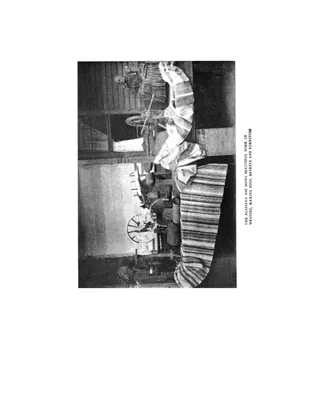
Acadians of Louisiana Still Living and Weaving as They Did Centuries Ago Before Their Exile from Canada
Article · 12 pages
A 1906 magazine article describing a visit to Acadian ("Cajun") families along Vermilion Bayou in Louisiana, where women still grow cotton, spin, dye with indigo and walnut or oak bark, and weave homespun, blankets, coverlets and "Evangeline" spreads on old looms. It recounts the efforts of Miss Patte Gorham Weeks of New Iberia to find markets for the weavers' work, and profiles weavers Madame Jules and Madame Bicou-Bodreaux. It also touches on rag rugs, baskets, chairs, knitted lace, food and daily life. Illustrated with photographs of houses, a spinning wheel and a loom with striped cloth.
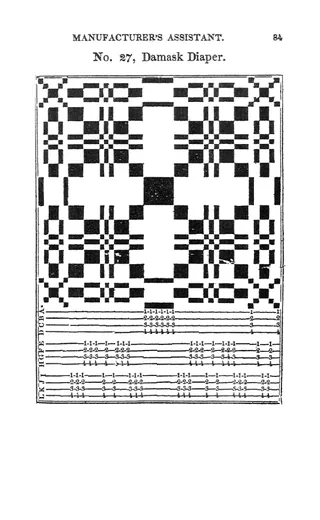
The Domestic Manufacturer's Assistant and Family Directory in the Arts of Weaving and Dyeing
Book · 217 pages · weaving drafts
A 1949 Charles T. Branford Co. reprint of the 1817 Utica handbook by J. & R. Bronson on domestic weaving and dyeing of cotton and woollen goods. It covers looms and utensils, yarn tables and calculations for plaids, checks and shirting, and the preparation of yarn (sizing, warping, beaming, drawing in), followed by about 30+ numbered weaving drafts with cording and treading directions for ticking, bird's eye, diaper, dimity, coverlets, carpet and broad cloth. The second half gives numbered dye recipes for cotton, linen and wool (blue, green, yellow, black, drab, crimson and others), notes on dyestuffs, and miscellaneous household receipts.
Eighteenth Century Weaver's Pattern Book
Article · 18 pages · weaving drafts
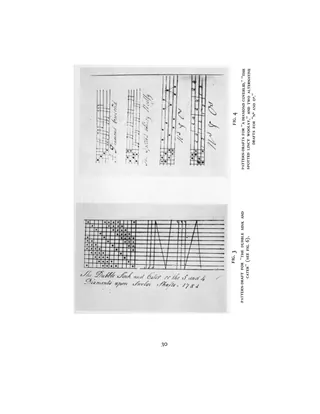
An article by R. J. Charleston describing an eighteenth-century weaver's pattern book kept at the Blaise Castle House Museum near Bristol. The book belonged to Timothy Bent, a Gloucestershire linen weaver, and mixes weaving drafts with riddles, recipes and verses. The article discusses the more than sixty pattern drafts, their names (Huckaback, Calomanco, Bird's Eye, Dubble Sink and Cater, and others), and how the attached fabric samples compare with the drafts. It closes with a short history of the Gloucestershire linen-weaving industry and its decline by about 1890. Photographs of samples and plates reproducing numbered drafts 1-61 with captions are included.
Handgezeichnete Webereibücher aus Tirol [Hand-Drawn Weaving Books from Tyrol]
Monograph · 23 pages · German · weaving drafts
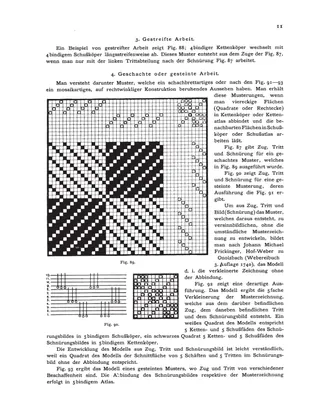
A 1914 offprint by Franz Donat analyzing two hand-drawn weaving pattern books from the Upper Inn Valley in Tyrol, dated 1658 (Thoman Lins) and 1701 (Matheus Berger). The first part explains weaving fundamentals: plain weave, twill, satin, derived weaves, looms, shedding mechanisms, and draft notation on point paper. The second part discusses the books' pattern types (plain work, symmetrical "hin und wieder" patterns, stripes, checkered/block work, and draw-loom figured work) with threading, treadling and tie-up diagrams for 8 and 16 shafts. It reproduces figured borders with eagles, animals, human figures, religious monograms, stars, and plants, shown on plates.
Thomas Jackson, Weaver: 17th and 18th Century Records Portfolio
Other · 3 pages
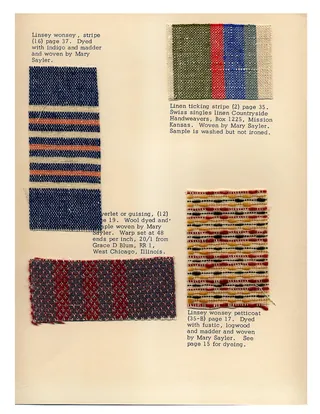
A portfolio of mounted fabric swatches accompanying Harriet Tidball's Shuttle Craft Guild Monograph Thirteen on Thomas Jackson, a 17th and 18th century weaver. Captions give the monograph page for each sample, along with the fibers, dyes, warp sett and weaver. The samples include linsey-woolsey stripes, a linen ticking stripe, a coverlet or bedcover sample, linen damask and diaper weaves, and a happing weave in fours and fives.
The Weaver's Assistant
Book · 68 pages · weaving drafts
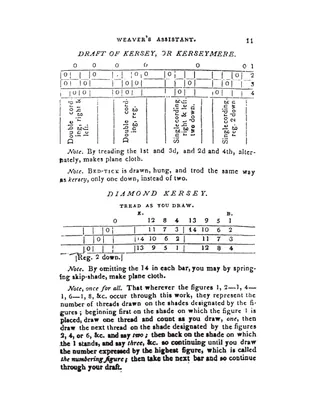
An early American weaving manual printed at Bridgeport, Connecticut, in 1818, explaining the first principles of weaving and giving upwards of eighty drafts for diapers, coverlets and other cloths. It opens with a glossary of loom terms and an explanation of drawing and cording (tie-up) methods on two to four shafts, then presents drafts for kersey, huckaback, dimity, fustian, shawls, floating-work and double carpet coverlets, and diapers on up to sixteen shades. It closes with observations on painting drafts to preview the figure, and an appendix of tables for calculating warp lengths, reeds, beers, bouts and threads, followed by contents and errata.
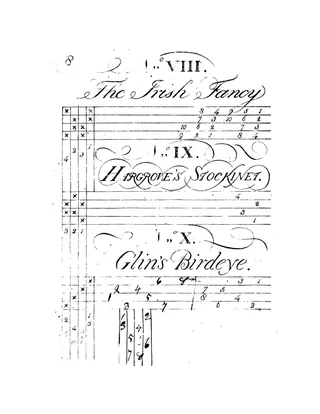
The Weavers Draft Book and Clothiers Assistant
Book · 27 pages · weaving drafts
A 1792 Baltimore weaver's draft book by John Hargrove, addressed to American weavers and cloth manufacturers. After a preface and brief instructions on reading the drafts, it presents about 52 numbered handwritten-style drafts for figured cottons and linens such as cords, dimities, fustians, velverets, satinets, thicksets, stockinets, birdseyes and diapers, with threading, tie-up and treadling. It closes with receipts for sizing cotton warps and for dyeing cotton, linen and wool in blue, green, madder red and black.
WeaveTech Archives, April 1999
WeaveTech, April 1999
Web Doc · 131 pages
Monthly archive of the WeaveTech mailing list for April 1999, consisting of email messages with full headers from list members. Discussions include access to the online copy of Cyrus Uhler's 1830 weaving book (PDF and page images) and how to interpret its tie-ups and threadings, weaving software and algebraic draft entry, fly shuttles and AVL looms, beating, sectional warping and spool racks, and measuring warp yardage. Other threads cover chenille, kuvikas/taquete, incorporating crocheted lace into weaving, photographing work for juries, a napkin exchange and miscellaneous announcements.
Weaving. -- No. I: A Brief Account of its History
Article · 2 pages
The first installment of a series in the engineering periodical Engineering, giving a brief history of weaving from antiquity to the mid-18th century. It covers early weaving in Egypt and Britain, guilds, Flemish and Huguenot immigrant workers, William Lee's stocking frame, silk throwing and Thomas Lombe's Derby mill, and John Kay's fly shuttle and tappet shaft for the Dutch loom. The text is narrative history with no drafts or illustrations.
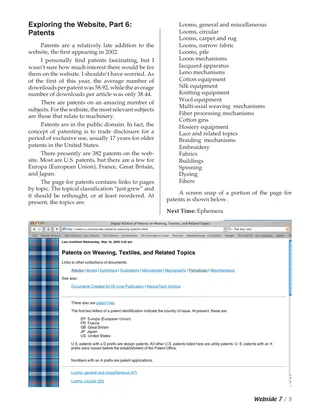
Webside, Number 7 (May 2005)
Periodical · 12 pages · weaving drafts
Issue 7 (May 2005) of Webside, the newsletter about the Ralph Griswold weaving and lace website. It reports recent and planned additions, including Shuttle-Craft Bulletin, Weaver's Journal, Posselt's Textile Journal and Metropolitan Museum Bulletin lace articles. It describes Griswold's photography of Shuttle Service newsletters at the Bentley Library, a column on the website's 382 patents, and a look at the U.S. National Archives. It also has a Lace Corner on needlemade lace by Tess Parrish and a Handweaving.net report by Kris Bruland on drafts from Frickinger (1740) and Ziegler (1677), illustrated with three sample drafts. It closes with a CD list and web links.
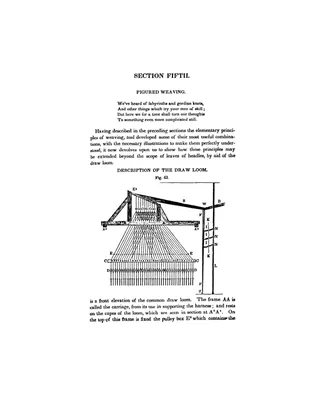
The Art of Weaving, by Hand and by Power
Book · 617 pages · weaving drafts
A comprehensive 1844 American treatise on hand and power weaving by Clinton G. Gilroy, a practical weaver and manufacturer. It opens with a long, partly humorous introductory account of the history of weaving, then covers plain weaving, tweeling (twill), double cloth, velvets, gauze and net weaving, figured weaving with draw looms, barrel looms and the Jacquard machine, carpet manufacture, lace and embroidery, and power-loom weaving with its machinery. The book is heavily illustrated with engraved loom and machine diagrams, includes drafts for twills, satins, quilts and nets, and ends with design paper samples, web calculation tables, Jacquard mounting examples and an index.
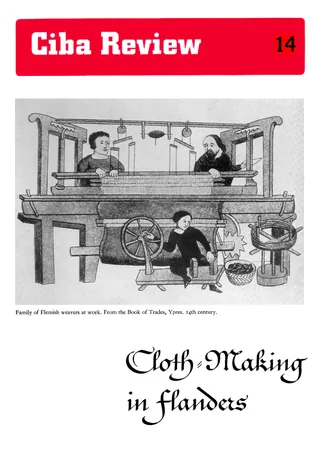
Ciba Review, No. 14 (October 1938): Cloth Making in Flanders
Ciba Review, October 1938
Periodical · 40 pages
Issue No. 14 of the Ciba Review (Basle, October 1938) is devoted to medieval and early modern cloth making in Flanders. A. L. Gutmann's five main essays cover Flemish geography, the role of the cloth industry in Flemish history and in the weavers' revolts, the social organization of the crafts (merchants, weavers, fullers, croppers, dyers), the distribution of the industry across monasteries, towns and the countryside, and technical peculiarities of cloth finishing and dyeing. A final essay treats Flemish cloth in art and fashion. The issue also has a Historical Gleanings section (Flemish weavers in England, trade treaties, fairs, guild and merchant anecdotes), a short scientific note on the tensile strength of natural fibres, and dye-industry advertisements. It is illustrated with period paintings, miniatures, maps and heraldry.
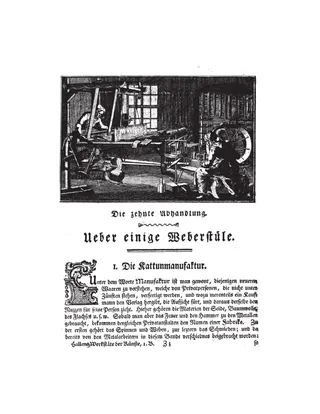
Ueber einige Weberstüle [About Several Looms]; Werkstäte der heutigen Künste oder die neue Kunsthistorie, Die zehnte Abhandlung
Book · 47 pages · German
The tenth treatise from Johann Samuel Halle's Werkstäte der heutigen Künste (1761) describes the textile trades of 18th-century Germany. It covers the cotton manufacture (cleaning and carding, spinning on the Swiss wheel, the cotton loom and its parts, sizing the warp, bleaching, and block printing of calico) and the linen manufacture (flax preparation, spinning, plain and patterned linen and damask weaving, bleaching, dyeing of yarn). Later sections treat sewing and embroidery, laundering, bobbin lace making, kinds of lace and linen, and tables of weights and measures in various cities. There is an engraved frontispiece of a weaving workshop and a plate of equipment, but no weaving drafts.
The Commercial Weaver vs. the Amateur Weaver
Article · 2 pages
A short essay by Mary Meigs Atwater contrasting weaving for profit with weaving for pleasure. She argues that commercial weavers must sometimes compromise beauty for saleability, while amateurs risk being too easily satisfied and should adopt an artist's attitude toward criticism and workmanship. She concludes that amateur weavers carry responsibility for setting standards of beauty and craftsmanship that commercial weavers follow.
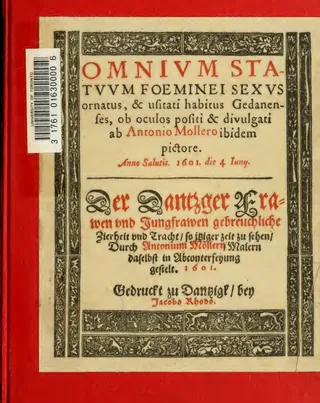
Danziger Frauentrachten [Danzig Women's Costumes]
Book · 44 pages · German
An 1886 facsimile edition of Anton Möller's 1601 Danzig women's costume book, reproducing 20 woodcuts of Danzig women and girls (matrons, brides, widows, servants, brewer's maids, fishwives) with their original Latin and German verse captions. The editor A. Bertling adds an introduction on Danzig's trade and art around 1600, Möller's life and works, the woodcutter, and the Spanish-style dress with fur trimmings, ruffs and cloaks. It closes with a list of the drawings and printing credits. Useful for historians of dress and costume, with some mention of textile and fur use.
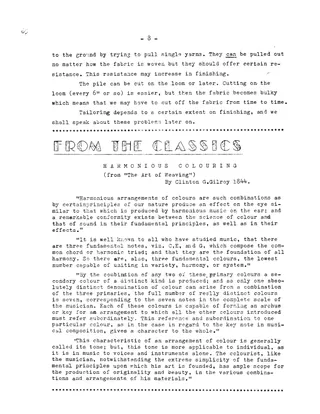
From the Classics - Harmonious Colouring
Article · 1 page
A one-page "From the Classics" excerpt reprinted in Master Weaver, quoting passages on harmonious colour arrangement from Clinton G. Gilroy's 1844 book The Art of Weaving. It compares the science of colour to musical harmony, describing three primary colours, secondary colours, seven distinct colours matching the musical scale, and the idea of a key colour or tone governing an arrangement. The page also begins with the end of an unrelated passage on cutting pile fabric.
A Letter of the Curious Mr. Henry Barham, R. S. Soc. to Sir Hans Sloan, Bart., Vice-President of the Royal Society; Giving Several Experiments and Observations on the Production of Silk-Worms, and of their Silk in England, as made by Him Last Summer
Article · 3 pages
A 1719 letter from Henry Barham to Sir Hans Sloane, printed in the Philosophical Transactions, reporting his experiments raising silkworms at Chelsea Park from eggs obtained in Languedoc. He records hatching and spinning dates, counts and weighs cocoons, and measures the silk yield from winding (3,319 cocoons gave about 17 ounces of fine silk). From these figures he estimates the yield from an ounce of eggs and compares it with Augustino Gallo's figures for France and Italy, arguing that silk production in England can match other countries. He also says he can obtain two crops a year and that mulberry trees leaf twice a year in England.
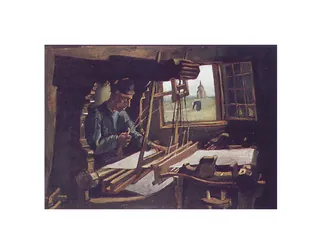
Weaver
Vincent van Gogh · 1884
Illustration · 2 pages
Two-page reproduction of a painting by Vincent van Gogh showing a weaver seated at a wooden hand loom in a dim interior. The weaver works the shuttle and treadles, and a window on one side shows a field with a church tower and a small figure outside. There is no printed text or caption, so the item serves as a visual reference for a handloom and its setting.
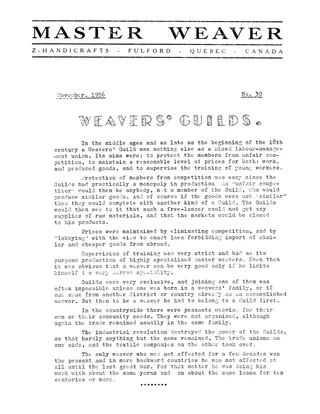
Weavers' Guilds
Master Weaver, November 1956
Article · 3 pages
A short article from the Master Weaver newsletter that compares medieval weavers' guilds with modern handweavers' guilds. It describes how the old guilds protected members from competition, kept prices up and supervised training, and says modern guilds still share those aims. It gives advice on choosing and joining a guild, including checking by-laws, registration and democratic elections, and it distinguishes member-run guilds from commercial guild-like businesses.
An Analysis of Maritime Decorations and Possible Decorators of Ships Depicted on East Devon Bobbins
Brian Lemin · 2010
Web Doc · 23 pages
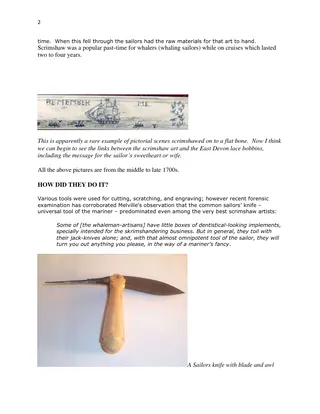
A December 2010 study by Brian Lemin of maritime decoration on East Devon lace bobbins, arguing that ship, anchor, whale, fish and mermaid motifs link the bobbins to sailors' scrimshaw. It begins with the history and tools of scrimshaw, then presents photographs of decorated bobbins grouped by motif (anchors, fish, mermaids, a wedding toast) and by ship type (the ASP, gunship, commercial vessel, fishing boat, Vioktoria, two-ships bobbin). Each bobbin is annotated with possible identifying features such as banding, tail decoration and lettering. Lemin tentatively groups possible decorators or makers, concludes that the maritime genre is linked to scrimshaw, and invites reader input. An endnote quotes Jane Austen's Persuasion on the sloop Asp.
Art of Weaving
Article · 1 page
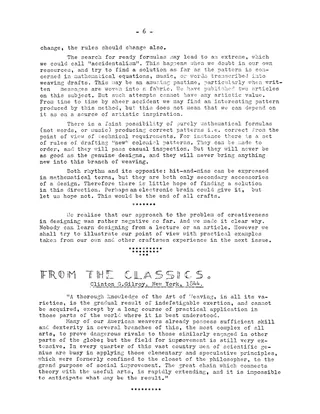
A single page from Master Weaver, No. 22, July 1955. It opens with the end of an editorial on creativity in weaving design, which warns against relying on mathematical formulas, music or words transcribed into drafts as a source of artistic pattern. It closes with a short "From the Classics" excerpt from Clinton G. Gilroy's 1844 book on the art of weaving, which comments on the skill of American weavers and the progress of the textile arts.
A Compendious Account of the Whole Art of Breeding, Nursing, and the Right Ordering of the Silk-Worm
T. B. · 1733
Book · 41 pages
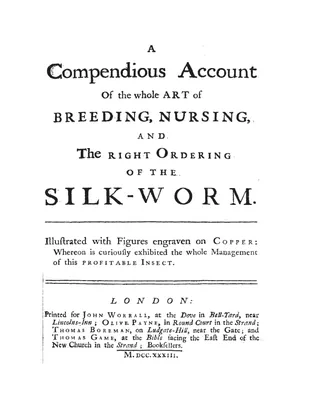
An English treatise of 1733 on raising silkworms and producing raw silk, dedicated to the Trustees for establishing the Colony of Georgia. It covers the history of silk and its introduction into Europe under Justinian, the silkworm's life cycle, hatching eggs, feeding and housing the worms on shelves, spinning, winding silk from cocoons, preserving eggs, profits, and planting mulberry trees. Engraved plates, copied from Le Tellier, illustrate each stage of the work.
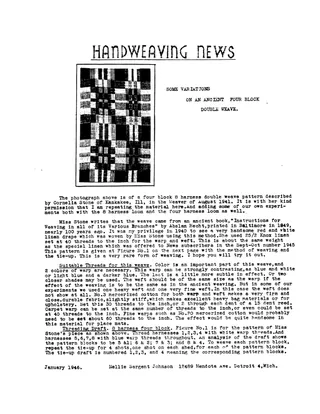
Handweaving News (January 1946): Some Variations on an Ancient Four Block Double Weave
Periodical · 3 pages · weaving drafts
A January 1946 Handweaving News article by Nellie Sargent Johnson on a four-block, eight-harness double weave. It repeats Cornelia Stone's pattern from The Weaver (August 1941), which she traced to Absalom Hecht's 1849 Baltimore weaving instruction book. It gives threading drafts, tie-ups, warp and weft suggestions, and sett information for linen, mercerized cotton and carpet warp, plus four-harness adaptations. The last page lists four weft experiments by Beatrice Carrothers, including rug filler, raffia and heavy doubled weft variations.
Large Book of Textile Designs by Franz Donat
Ralph E. Griswold · November 8, 2004
Web Doc · 264 pages · weaving drafts
A browsing guide to the patterns in Franz Donat's Large Book of Textile Designs, a late 19th-century pattern book. Small black-and-white drawdown thumbnails, derived from WIFs digitized by Kris Bruland, are grouped by size (width first) and labeled with the catalog numbers of the downloadable WIF files at handweaving.net. A short introduction by Ralph Griswold explains the organization, notes that a few duplicate patterns are included, and describes the book's two sections: 16 pages of color patterns and a longer black-and-white section.
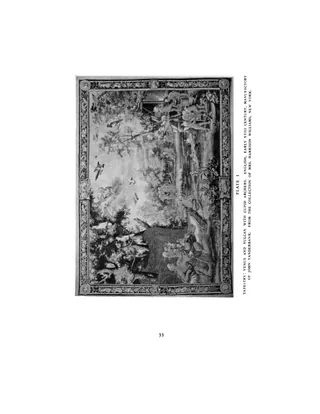
Set of English Eighteenth Century Tapestries
Article · 10 pages
Article describing a set of three early eighteenth-century English tapestries signed by John Vanderbank of the Great Queen Street (Soho) workshop, owned by Mrs. Harrison Williams of New York. The set shows Venus and Cupids scenes: Venus and Vulcan with Cupid Archers, Adonis and the Sleeping Venus, and Nymphs Clipping the Wings of Cupids. The author traces the designs to Francesco Albani's paintings and to earlier Brussels sets, compares the pieces with the Ackermann oil sketches, and describes each tapestry's composition, size and border. Plates show the tapestries, the Albani tondos in the Borghese Gallery, and the weaver's signature band.
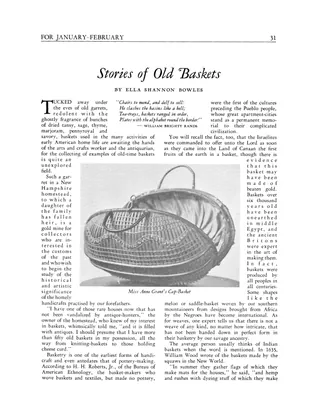
Stories of Old Baskets
Article · 5 pages
A 1930 Handicrafter article on old American baskets, drawing on garret collections in New Hampshire and other regions. It covers basket history, materials such as ash, hickory, willow, pine needles and straw, and uses including farm work, cheese making, knitting and sewing, as well as Berlin work and alum baskets and cap-baskets. The scan also includes a short tip by Ralph A. Hall on converting a rag shuttle into a spool shuttle using dowel spacers and bolts with thumb nuts.
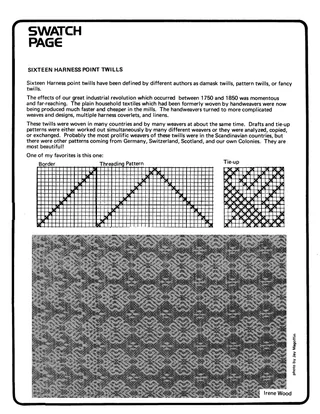
Swatch Page - Sixteen Harness Point Twills
Article · 1 page · weaving drafts
A one-page Swatch Page from Minnesota Weaver in which Irene Wood introduces sixteen-harness point twills, also called damask, pattern, or fancy twills. She briefly links their popularity to handweavers turning to complex weaves after the Industrial Revolution and notes their spread across Scandinavia, Germany, Switzerland, Scotland, and the American Colonies. It includes a threading draft with border, a tie-up, and a photograph of the woven swatch.
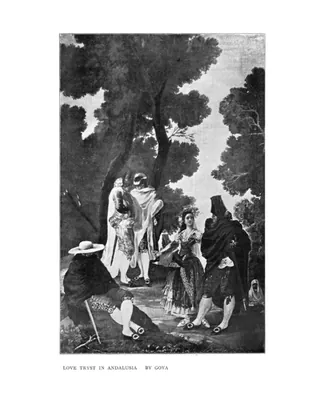
Tapestry: Its Origin and Uses, Part IV: The Goya Tapestries
Article · 5 pages
Part IV of Delia Angela Hart's series in The Connoisseur (December 1903) discusses the tapestries woven at the Madrid works from Francisco Goya's cartoons, made for the Prince of Asturias at El Pardo. It covers Goya's relationship with director Raphael Mengs, the Spanish genre subjects (The Blind Musician, kite flying, love trysts), and the Flemish weavers descended from Van der Gotten's atelier. A closing section on tapestry borders mentions fruit, flowers and birds, the Acts of the Apostles borders and Giulio Romano's designs. Illustrated with reproductions of Goya's Love Tryst in Andalusia, The Crockery Vendor and Kite Flying.
494 documents found