Textile Documents › Publications › Publication: The Bulletin of the Needle and Bobbin Club
337 documents found
Sort: 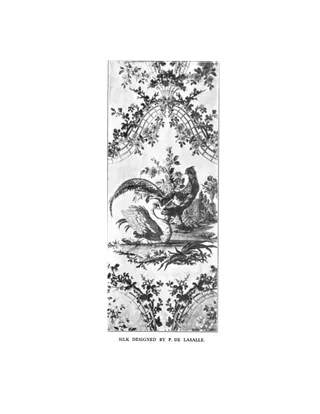
A "Mise en Cartes" of Philippe de Lasalle
Article · 10 pages
Article on a mise en cartes (working pattern for the weaver) by the Lyons silk designer Philippe de Lasalle, recently acquired by the Metropolitan Museum of Art with a group of eighteenth-century brocades bought in Lyons. It sketches Lasalle's life (1723 to 1804), the rococo and naturalistic floral styles of Lyons silks, and Jean Revel's 'point rentré' technique for rendering half-tones. It quotes a tribute by M. Cox of the Musée Historique des Tissus, Lyons, on Lasalle's style and his ruin in the Revolution. Illustrated with portraits, paintings showing brocade gowns, and two reproductions of silks designed by Lasalle.
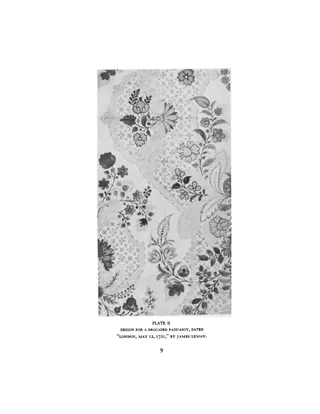
18th Century Silk-Designer's Manual
Article · 25 pages
Peter Thornton examines the chapter on designing patterns for flowered silks in the 1756 edition of G. Smith's Laboratory, or School of Arts, and compares it with surviving Spitalfields silk designs in the Victoria and Albert Museum. He covers the author's reasons why French silk designs were preferred, the qualities required of a silk designer, and the seven classes of flowered silks (brocades, tissues, paduasoys, lustrings, damasks, velvets). He also discusses the designers James Leman, Christopher Baudouin and Anna Maria Garthwaite, and speculates that Garthwaite may have written the essay. Ten plates reproduce designs and a woven silk, and endnotes give sources.
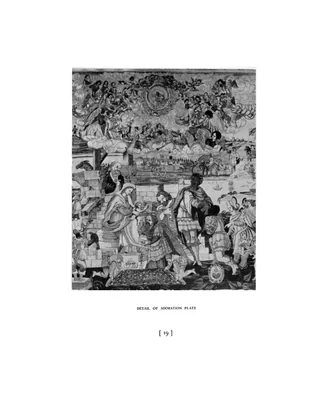
Adoration of the Magi in Embroidery
Article · 7 pages
An iconographic essay by Phyllis Ackerman on a seventeenth-century Italian embroidered altarfrontal showing the Adoration of the Magi. It describes the central scene and the many surrounding episodes (animals, travelers, Old Testament parallels, heavenly choir) and reads them as a Christian allegory of the Fall and Redemption. It also notes Oriental influences such as a Persian-style textile pattern and a Polonaise-type carpet. Illustrations include the altarfrontal, a detail of the Adoration, and a center panel of embroidered netting.
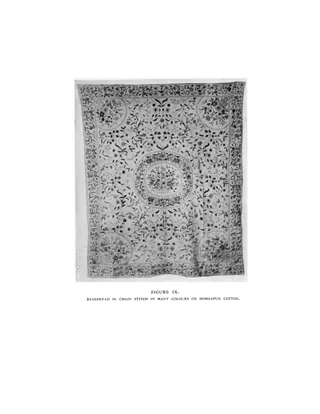
American Colonial Needlework
Article · 8 pages
Part II of an article by Mrs. Luke Vincent Lockwood on needlework in the American colonies, focused on the eighteenth century. It covers crewel work on homespun cotton and linen, a chain-stitch bedspread, petit point chair seats, quilted garments and coverlets, silk-embroidered waistcoats and gowns, and needlework and memorial pictures, including Washington memorials. It closes with remarks on dating pieces by design history. Illustrated with photographs of a bed valance, bedspread, chair seats, gown front, a child's 1765 embroidery, and a memorial picture.
American Federation of Arts
Article · 4 pages
An article by Leila Mechlin describing the American Federation of Arts, founded at a Washington convention in 1909 to unify art organizations across the United States. It covers the Federation's Octagon headquarters, its chapters, its traveling exhibitions (including textiles and handicraft), its illustrated lectures (one on lace by Frances Morris), and its publications, The American Magazine of Art and the American Art Annual. It also mentions regional offices in New York and Lincoln, Nebraska.
American Handicrafts in Vocational Education
Article · 3 pages
Extracts from the December 1918 report of the Federal Board for Vocational Education arguing for the value of handicrafts in vocational training, the reeducation of disabled soldiers, and postwar industry. It discusses the educational and social worth of craft work, leisure and the machine-age worker, and the limits of the arts and crafts movement as an economic enterprise. The last page carries a photograph of an overshot coverlet from the Shuttle-Craft looms in Basin, Montana.
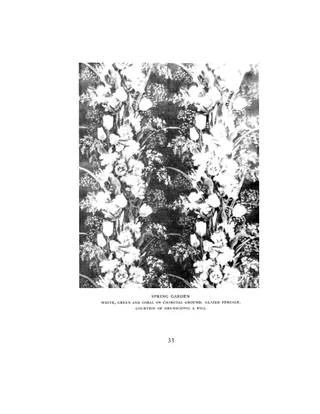
American Screen-Printed Fabrics
Article · 12 pages
An article by Zelina Comegys Brunschwig on the rise of American screen-printed decorative fabrics after the 1929 depression and World War II. It explains how screen printing works (silk screens, one screen per color, long printing tables, squeegee), compares it with wood-block and roller printing, and discusses dyes and the shift from imported to domestic production. Illustrated with printed fabric examples shown at the Slater Memorial Museum exhibition in Norwich, Connecticut, in spring 1948.
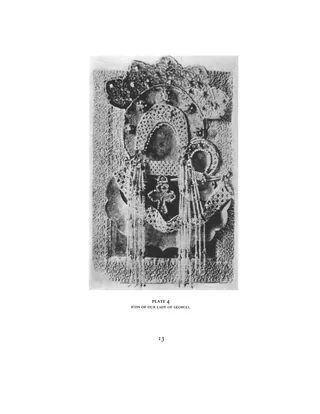
Ancient Russian Ecclesiastical Embroideries
Article · 55 pages
An illustrated article surveying Russian Orthodox church embroidery from the fourteenth to the seventeenth century. It covers icon veils, funeral shrouds, chalice palls, altar frontals and banners, along with the materials and techniques used: split stitch, couched gold and silver thread, silk thread, and pearls and jewels. It also covers the main workshops (Staritzky, Godunov, Stroganov), the painters who supplied designs, and individual dated pieces such as the 1399 veil of Maria of Tver. It has many plates and ends with a bibliography of mostly Russian sources.
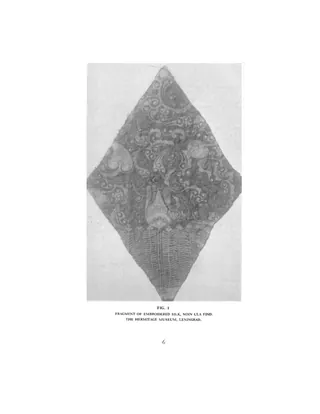
Archaeological Background of Textile Production in the Soviet Russian Territory
Article · 13 pages
An article surveying archaeological finds of textiles in Russian and Soviet territory, from Scythian graves on the Black Sea to Han-period burials at Noin Ula (Mongolia), Oglakty and Pazirik (Siberia), and later T'ang, Sung and Byzantine imports. It describes Chinese embroidered silks and woolen embroideries with tiger-skin motifs, argues for Chinese use of wool in Han times, and discusses how steppe nomads used imported fabrics and felt. Illustrated with photographs of Hermitage fragments; extensive footnotes cite Russian and Western scholarship.
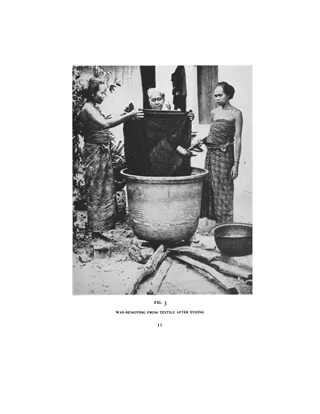
Art of Batik in Java
Article · 78 pages
A monograph-length study by Tassilo Adam, former ethnologist of the Netherlands East Indies Government, on the wax-resist art of batik as practiced in central Java, especially Jokjakarta and Solo. It covers preparation of cotton and silk, wax application with the tjanting, indigo and soga-brown dyeing, and wax removal. A large section classifies traditional designs (swastika-derived, tjeplokkan, kawoeng, parang, floral and wing motifs, forbidden royal patterns) with their Javanese names and meanings. It closes with sections on batik dress forms (headcloth, sarong, dodot), block-printed batiks, a bibliography, an index and a list of illustrations; many plates of line drawings and photographs illustrate the designs.
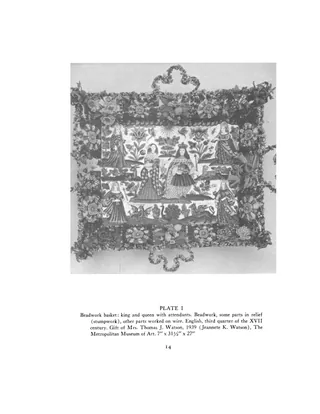
Beads and Bugles
Article · 7 pages
An article on the history and terminology of beads and bugles used in embroidery and beadwork. It describes how glass beads and bugles are manufactured, traces the words through English literature, dictionaries, and London customs records (1696-1776), and discusses the confusion between the terms, with reference to trade beads, Venetian bead makers, and Stuart beadwork. Four plates show museum pieces: a stumpwork beadwork basket, a punto in aria cover, a beadwork casket, and a beaded pin cushion.
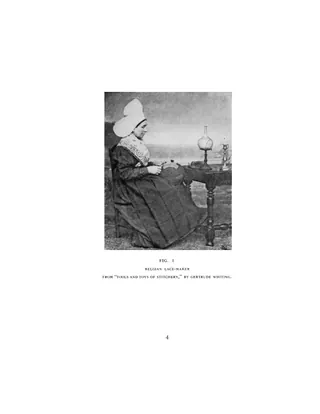
Belgian Lace-Maker
Illustration · 1 page
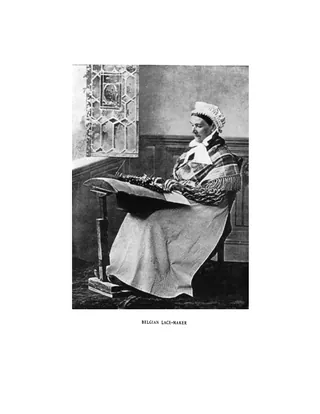
A single page carrying a black-and-white halftone photograph of a Belgian lace-maker seated at a lace pillow and working bobbins. The caption identifies it as Fig. 1, reproduced from Gertrude Whiting's "Tools and Toys of Stitchery." It illustrates bobbin lace-making practice and is an illustration only, with no instructional text.
Belgian Lace-Maker
Illustration · 1 page
A single-page illustration from The Bulletin of the Needle and Bobbin Club, captioned "Belgian Lace-Maker." The photograph shows a seated woman in a white cap and striped shawl making bobbin lace on a pillow mounted on a wooden stand, beside a leaded-glass window. The page has only the caption and no accompanying text.
Belgian Lace-Makers and their Accessories
Article · 16 pages
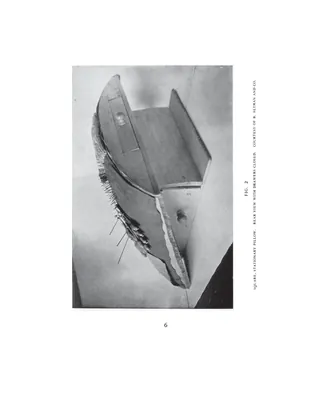
An article from the Bulletin of the Needle and Bobbin Club, translated from the French of Mme. Lucie Paulis by Gertrude Whiting, on Belgian bobbin lace-makers and their equipment. It describes the square stationary pillow and its stand, the revolving round pillow used for Duchesse and other free-hand laces, the bobbins, winders, pins and pricked patterns. It also covers children's apprenticeship, the division of labor among designer, pricker and sampler, the decline in thread quality, and the lace-makers' work before and after the World War. Illustrated with photographs and drawings of pillows, bobbins, a pricking, Binche lace, fond armure mesh and Brussels point de gaze needlepoint medallions.
Belgium's New Lace Schools
Article · 3 pages
A letter from Mme. Mali-Kefer, a member of the Needle and Bobbin Club, describing the postwar revival of Belgian lace-making under the patronage of the Belgian Queen. It covers the society "Les Amies de la Dentelle," a normal school for lace teachers in Bruges using a visual teaching method borrowed from Le Puy, and a lace design school in Brussels. It also mentions relief work for about 45,000 women during the war and American support. The piece closes with a short poem, "Belgium: Nineteen Fourteen," by Blanche Wilder Bellamy.
Bestiary in Lace
Article · 11 pages
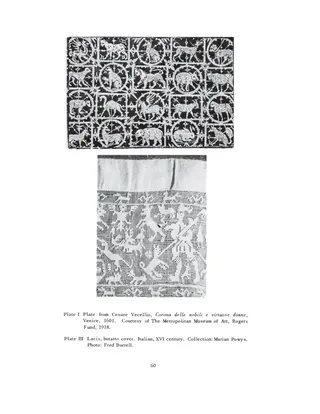
An illustrated article by Marian Powys on animal and bird motifs in historic lace, from 16th-century lacis and drawn work to 18th-century needle and pillow laces. It surveys examples such as Vecellio's pattern book, Spanish filet, Italian buratto, Point de Venise à Rose, Milanese and Flemish flounces, Point d'Alençon and Sicilian knitted lace. Twelve plates with captions give the type, origin, date and collection of each piece, and the text ends with First World War lace designs.
Bohemian Lace Bonnets
Article · 3 pages
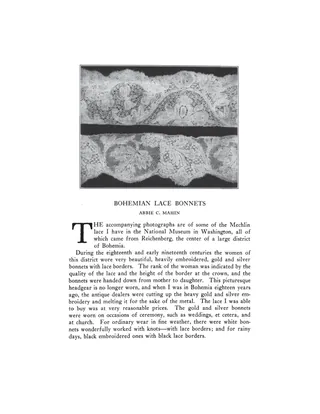
Short article by Abbie C. Mahin on Mechlin-type bobbin lace from Reichenberg (Liberec) in Bohemia, drawn from pieces she placed in the National Museum in Washington. She describes the gold and silver embroidered bonnets with lace borders worn by local women in the 18th and early 19th centuries, how lace quality and border height signaled rank, and the dismantling of old bonnets by antique dealers. She also discusses the possible origin of the wide Mechlin laces and the réseau ground (two braided and four twisted sides), and recounts buying lace from a traveling peddler from the mountains. Illustrated with photographs of lace strips and borders.
La Bonneterie au Moyen-Age [Hosiery in the Middle Ages]
Article · 12 pages · French
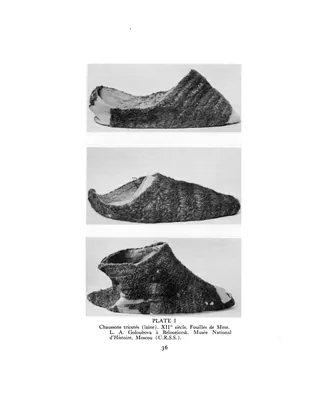
A French-language article surveying the history of hand knitting from its obscure origins through the Middle Ages and into the 16th century. It reviews theories about early knitting (Norbury's Arab frame hypothesis), Coptic Egyptian socks of the 3rd-6th centuries, 12th-14th century finds from Russia and Poland, liturgical gloves, Spanish pillow covers and gloves from Las Huelgas, English knitters' guilds and masterpiece requirements, and silk stockings. Illustrated with four plates of museum pieces.
Brocades of Banaras
Article · 33 pages
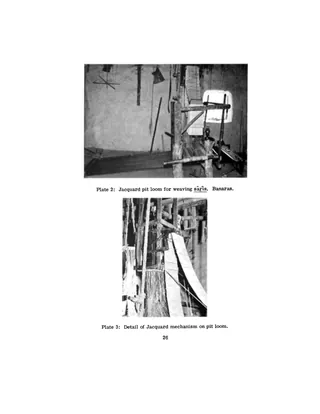
An article analyzing the development of pattern in Banaras (Varanasi) silk and gold brocades during the 19th and 20th centuries. It covers the terminology of brocade, broché and lancé, the shift from the jalla drawloom to the Jacquard, and the main motif types (buta, phulari, jhaldar trellis, shikargah hunting scenes, stripes and borders), tracing Mughal, Persian and Kashmiri influences and the effects of commercialization and western markets. It closes with footnotes, a bibliography and 21 plates of textiles, looms and designs with captions giving dates and repeat sizes.
Brocades or Embroideries? Seventeen Textiles from Pachacamac, Peru
Article · 26 pages
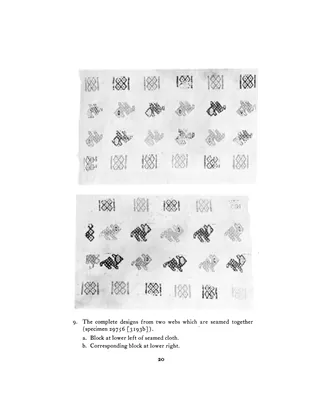
Study of seventeen wool-on-cotton patterned textiles from the temple site of Pachacamac, Peru, collected by Max Uhle and held by the University Museum, University of Pennsylvania. The author examines whether each piece is brocade (woven supplementary yarns) or embroidery (sewn), finding two clear brocades, three clear embroideries, and the rest a mixture or indeterminate. It describes the design types (reversed diagonal bands, diapered repeats, simple repeats, rectangular block figures), colors, yarn spin and diameters, and construction details. A table of yarn data and many photographs and motif drawings are included, and the author argues for finding looms with unfinished cloth to resolve the classification.
The Bulletin of the Needle and Bobbin Club (c. 1916-1988)
Periodical · 46 pages
A cumulative author and subject index to the first 70 volumes (1916-1987) of the Bulletin of the Needle and Bobbin Club, compiled by Anne Dahlgren Hecht in 1988. Entries give volume, part and page numbers for articles, authors, book reviews, lectures, exhibitions, obituaries and illustrations, with cross-references. Major subject headings include lace, embroidery, textiles, rugs, tapestry, shawls, spinning and looms. Front matter includes a dedication and acknowledgements, and the final pages carry advertisements.
The Bulletin of the Needle and Bobbin Club (c. 1943-1960)
Periodical · 50 pages
A cumulative subject, name and title index to volumes 27 through 44 of the Bulletin of the Needle and Bobbin Club, covering 1943-1960, compiled by Marcia C. Harty and Eugenia Tolmachoff and published in New York in 1962. Entries give volume and page numbers, with plate and figure references, for articles, authors, museums, collections, textile types, embroidery, lace, tapestry, costume, weaving and club activities. Topics include Russian ecclesiastical embroidery, Persian and Shiraz silks, Altai (Pazyryk) textiles, Peruvian and Guatemalan weaving, Tibetan appliqué, Spanish and Italian silks, lace pattern books, and an 18th-century English weaver's pattern-book.
The Bulletin of the Needle and Bobbin Club (c. 1943-1962)
Periodical · 56 pages
A cumulative subject, author, and title index to volumes 27-44 (1943-1960) of the Bulletin of the Needle and Bobbin Club, compiled by Marcia C. Harty and Eugenia Tolmachoff and published in New York in 1962. Entries cite volume and page numbers, with plates and figures, and cover embroidery, lace, tapestry, silk and other textiles, costume, pattern books, and weaving. They also cover places, museums, collectors, and Club lectures and hostesses. It is useful as a finding aid to articles on Russian ecclesiastical embroidery, Formosan, Peruvian, Altai (Pazyryk), Persian and Spanish textiles, Swiss lace patterns, and an 18th-century English weaver's pattern book.
The Bulletin of the Needle and Bobbin Club, Vol. 1, No. 1 (1916)
Periodical · 39 pages
The first issue of the Bulletin of the Needle and Bobbin Club, a New York lace-collectors' club founded in 1916. It contains a foreword by the club president, an illustrated article on lace bobbins from England, Italy, France, Spain, Switzerland and elsewhere, a memoir of the Bruges Beguinage lace makers, and reports of club lectures on Coptic network and Moro lace makers. It also has club notes, by-laws, a list of members, and a long bibliography of lace and embroidery books. Advertisements for lace dealers, teachers and hand-loom weavers fill the front and back pages.
The Bulletin of the Needle and Bobbin Club, Vol. 1, No. 2 (1917)
Periodical · 46 pages
June 1917 issue (Vol. 1, No. 2) of the Bulletin of the Needle and Bobbin Club, a New York collectors' club for lace and needlework. It reports on the Club's first exhibition of Binche and Valenciennes laces, with plates of lappets and panels from members' collections. It also has an article distinguishing "German Val" and "Val de Dieppe" from true Valenciennes, and a paper on the Belgian lace industry covering lace-makers' wages, working conditions, schools and the effects of the war. Other sections include club notes with new members and rules, a note on Nottingham lace wages, library and lace-pattern notes, a bibliography supplement on lace and embroidery, and many dealers' advertisements.
The Bulletin of the Needle and Bobbin Club, Vol. 1, No. 3 (December 1917)
The Bulletin of the Needle and Bobbin Club, December 1917
Periodical · 48 pages
Issue of the Bulletin of the Needle and Bobbin Club, December 1917, a New York club for lace, embroidery and weaving. It contains articles on church embroidery, embroidery and Coptic weaving in ancient Egypt, and three kinds of American hand-weaving (overshot, Summer and Winter, double cloth) by Ella Mary Shinn. Other items include a London Times reprint on Chinese weaves of the second century A.D., notes on Navajo weaving, club notes on lace collections and a weaving industry, a list of club weaving pattern names, a members list, a bibliography on lace, and period advertisements. Illustrations show vestments, Coptic and Hellenistic textiles, coverlet samples, laces and a petit-point pattern chart. No weaving drafts are included.
The Bulletin of the Needle and Bobbin Club, Vol. 10, No. 1 (1926)
Periodical · 40 pages
Issue of the Bulletin of the Needle and Bobbin Club (New York), vol. 10 no. 1, 1926. It contains G. Saville Seligman's historical notes on the umbrella and parasol, with an editor's note on their use in antiquity, and Margaret Taylor Johnstone's illustrated study of Ragusa (Dalmatian) needle lace, covering punto avorio, punto di Ragusa and punto in aria across four chronological groups. It also has club notes on exhibitions of fans, shawls and laces, book notes (Spanish regional costume, hand-made rugs), a field note on a spinning wheel from a Victorian letters book, a filet lace piece 'Le Combat', and advertisements.
The Bulletin of the Needle and Bobbin Club, Vol. 10, No. 2 (1926)
Periodical · 37 pages
Issue of the Bulletin of the Needle and Bobbin Club (Vol. 10, No. 2, 1926) with a Hawaiian theme. Gertrude Whiting's article on Lydia Brown reports on the introduction of spinning, weaving and knitting to Hawaiian women in the 1830s, quoting missionary letters and mission minutes and adding notes on cotton growing. Further pieces cover silkworm culture in Hawaii and a photographic series of Hawaiian and South Pacific handicrafts from the Bishop Museum: bamboo printing stamps, tapa beaters, tapa and kapa bark cloth, a feather gorget and a feather cape. The issue also has club notes, an erratum, a field note on Tönder lace in Denmark, club officer lists and period advertisements for lace and silk dealers.
The Bulletin of the Needle and Bobbin Club, Vol. 11, No. 1 (1927)
Periodical · 41 pages
Issue of the Bulletin of the Needle and Bobbin Club (New York), Vol. 11 No. 1, 1927. It contains Eleanor Saxe's article on the embroidered and woven eighteenth-century gentleman's waistcoat, drawn from a Metropolitan Museum exhibition, and Philip A. Means's catalogue of a group of ancient Peruvian tapestry and basket-weave fragments (Tiahuanaco and Chimu styles), with plates. It also has a report on a retrospective exhibition of Lyons silks from the H. A. Elsberg collection, a biographical note on the designer Jean François Bony, club notes, book notes, and period advertisements for lace and handweaving shops.
The Bulletin of the Needle and Bobbin Club, Vol. 11, No. 2 (1927)
Periodical · 41 pages
Issue of the Bulletin of the Needle and Bobbin Club, a New York club for needlework, lace and weaving enthusiasts. The main article, by Frances Little, surveys crewel embroidery from antiquity through English work of the late 17th and 18th centuries, its Indian palampore influences, and colonial American examples, illustrated with museum pieces. A second article transcribes the royal warrant lists for the trousseau, bridesmaids' gowns and bridal chamber furnishings of Princess Elizabeth, daughter of James I, for her 1613 marriage. Club Notes report 1927-28 meetings, including a showing of Eva Palmer Sikelianos's handwoven costume fabrics, and Book Notices review works on domestic needlework and painted and printed fabrics.
The Bulletin of the Needle and Bobbin Club, Vol. 12, No. 1 (1928)
Periodical · 46 pages
Issue of the Bulletin of the Needle and Bobbin Club (New York) devoted largely to Germaine Merlange's study and catalogue of the Elsberg Collection of Egypto-Arabic embroideries of the medieval period. The catalogue describes numbered fragments (tapestry borders on wool gauze, embroidered linen borders with Kufic inscriptions, a fringed scarf) with notes on stitches, colors, dating and find-spots such as the Fayoum and Fostat. It also includes a short article on a Medici brocade at the Metropolitan Museum, Club Notes (including a talk on opus Anglicanum), Book Notes, club officer lists and period advertisements.
The Bulletin of the Needle and Bobbin Club, Vol. 12, No. 2 (1928)
Periodical · 36 pages
Issue of the Bulletin of the Needle and Bobbin Club (New York) covering lace history, relief embroidery, and religious art. Marian Powys describes a 1661 English bobbin lace collar with royal crowns and inscriptions associated with Charles II and Catherine of Braganza, comparing it to Honiton lace. Other articles cover an embroidered altar frontal of St. George and the Dragon in Barcelona, stumpwork-style relief embroidery, and tapestries and a chasuble illustrating the doctrine of Transubstantiation. The issue also has club notes on a Spanish collection (rugs, tapestries, laces), book notes on needlework and Sheldon tapestries, officer lists, and advertisements.
The Bulletin of the Needle and Bobbin Club, Vol. 13, Nos. 1 & 2 (1929)
Periodical · 64 pages
A combined 1929 issue of the Bulletin of the Needle and Bobbin Club (Vol. 13, Nos. 1 & 2). It contains Madame L. Paulis's study of 17th and 18th century Flemish needle laces, with plates of Italian pattern-book pages and Brussels museum lace. Phyllis Ackerman writes on Polish woven belts and their signed factory pieces, Eleanor B. Sachs on a set of English 18th century Vanderbank tapestries of Venus and Cupids, and Marian Hague on dated embroideries including the 1756 Miriam Webb bed hangings. The issue closes with club notes, book notes and a list of officers, and has advertisements at the front.
The Bulletin of the Needle and Bobbin Club, Vol. 14, Nos. 1 & 2 (1930)
Periodical · 66 pages
This combined 1930 issue of the Bulletin of the Needle and Bobbin Club is devoted mainly to the 1660s struggle in France over sumptuary laws on lace and passementerie. It reprints in French the satirical 1661 poem La Révolte des Passements (Paris, Charles Sercy), in which laces, points, and embroideries rebel against the edict of 1660. It also gives the 1660 declaration against luxury in dress and the 1665 royal proclamation establishing the Points de France manufacture, all annotated by Miss Whiting with English footnotes. Plates show 17th-century laces from the Metropolitan Museum of Art and period engravings and portraits. The issue ends with Club Notes on lectures and meetings, Book Notes, and a list of officers.
The Bulletin of the Needle and Bobbin Club, Vol. 15, Nos. 1 & 2 (1931)
Periodical · 73 pages
Double issue (Vol. 15, Nos. 1-2, 1931) of the Bulletin of the Needle and Bobbin Club, devoted mainly to Charles F. Iklé's illustrated article on ikat technique and Dutch East Indian ikats. The article defines ikat (resist-dyeing of warp and/or weft threads before weaving), distinguishes it from batik and plangi, and describes the binding and dyeing process. It surveys ikats island by island (Sumatra, Java, Bali, Borneo, Celebes, the Timor group, Soemba, New Guinea), covers double ikat from Tenganan and Indian patola, the toempal motif, the spread of ikat worldwide, and native customs and beliefs around dyeing and weaving. It closes with a bibliography, followed by Club Notes for 1931-1932 with illustrated textiles and costumes, Book Notes, officers, and advertisements.
The Bulletin of the Needle and Bobbin Club, Vol. 16, No. 1 (1932)
Periodical · 42 pages
Issue of the Bulletin of the Needle and Bobbin Club (New York) for 1932. It contains Jan Six's article on early Dutch lace, which uses Santvoort's 1638 painting of the Amsterdam Spinhuis regentesses to argue that narrow bobbin lace was made there in a style close to Flemish work, with photographs of cuffs, edgings and a Rijksmuseum lace made for William V. John Goldsmith Phillips's article on Peruvian textile motives based on man, puma, bird and fish is illustrated with Metropolitan Museum tapestries in Nazca, Chimu and Tiahuanaco styles. The issue also has Club Notes (lectures, collection visits, a members' exhibition), Book Notes on Mannowsky's Danzig vestments and Marillier's Teniers tapestries, officer lists and advertisements.
The Bulletin of the Needle and Bobbin Club, Vol. 16, No. 2 (1932)
Periodical · 49 pages
Issue of the Needle and Bobbin Club's bulletin devoted mainly to lace and embroidery. It opens with Mme. Lucie Paulis's account of Belgian lace-makers, their pillows, bobbins, winders and prickings, and the differences between mesh laces on stationary pillows and detached-motif laces on revolving pillows. Other articles cover Spanish-American coverlets, a reredos and a dated sampler from New Mexico, Venetian gros point lace with figurative scenes in the Greenleaf collection, and a 14th-century German embroidery in cushion/Florentine stitch with working patterns. Club notes describe members' collections of Near Eastern textiles and Greek Island embroideries; book notes, officer lists and advertisements follow.
The Bulletin of the Needle and Bobbin Club, Vol. 17, No. 1 (1933)
Periodical · 60 pages
Issue of the Needle and Bobbin Club's Bulletin (vol. 17, no. 1, 1933) with three illustrated articles. H. A. Elsberg describes two 9th-century Byzantine and Near Eastern twill-weave silks with animal and bird designs, preserved in the binding of the Lindau or Ashburnham Gospels in the Pierpont Morgan Library. A. J. B. Wace surveys English domestic embroidery from Elizabeth to Anne, covering black-work and polychrome pieces, petit point, needlework bindings, caskets, samplers, purses and quilting, with pieces from Judge Untermyer's collection. Marian Hague writes on 14th-century Italian embroidered panels, including work signed by Geri Lapi. The issue ends with club notes for 1933, a list of officers and magazine notes.
The Bulletin of the Needle and Bobbin Club, Vol. 17, No. 2 (1933)
Periodical · 49 pages
Issue of the Needle and Bobbin Club Bulletin (vol. 17, no. 2, 1933). It is dominated by Margaret Harrington Daniels's two-part essay on early printed pattern books (Modelbücher) for lace and embroidery of the 16th and 17th centuries, a review of Arthur Lotz's Bibliographie der Modelbücher. It traces German, Italian, French and English pattern books and their copying across countries, and is illustrated with woodcut title pages, pattern pages and lace and drawnwork made from them. The issue also has a checklist of the Metropolitan Museum of Art's pattern books, Frances Morris's article on the Elephant Medallion silk (East Iran, 10th or 11th century) in the Cooper Union Museum, and Club Notes with a list of officers.
The Bulletin of the Needle and Bobbin Club, Vol. 18, Nos. 1 & 2 (1934)
Periodical · 96 pages
Double issue (Vol. 18, Nos. 1 & 2) of the Needle and Bobbin Club Bulletin, devoted mainly to Tassilo Adam's long illustrated study of batik in Java. The article covers the history and name of batik, preparing cotton and silk, the tjanting wax pen, wax-resist and indigo and soga brown dyeing, and a classified survey of designs (parang, kawoeng, semen, and others) with many line plates. It also treats court-proscribed patterns (larangan), headcloth and sarong dress, and block-printed batik, and ends with a bibliography, index and list of illustrations. The back matter has Club notes, exhibition notices (American embroideries, Peruvian weaves, the Arthur B. Davies textile collection), current notes on lace classes, and short magazine reviews.
The Bulletin of the Needle and Bobbin Club, Vol. 19, No. 1 (1935)
Periodical · 40 pages
This 1935 issue of the Bulletin of the Needle and Bobbin Club surveys modern American embroidery. It opens with Frances Morris's profile of Georgiana Brown Harbeson, followed by Harbeson's articles on Mrs. Theodore Roosevelt, Jr.'s needlepoint and petit point panels, on four modern crewel "needlepainters" (Zorach, Stebbins, Crisp and Harbeson herself), and on the 1935 "Needlework of Today" exhibition at the Vernay Galleries. A note on Jean Lurçat's gros point "tapestries" is followed by Club Notes and a list of officers. About twenty plates show embroidered panels, screens, a chair and a bench, along with a plate of stitch diagrams.
The Bulletin of the Needle and Bobbin Club, Vol. 19, No. 2 (1935)
Periodical · 26 pages
Issue of the Needle and Bobbin Club Bulletin containing two articles. Margaret Harrington Daniels's "Embroidery and Botany" traces how Pierre Vallet, embroiderer to the French king, and the botanist Jean Robin produced the flower pattern book Le Jardin du Roy (Paris, 1608), and links it to French parterre gardens and the origins of the Jardin des Plantes. Phyllis Ackerman's "An Adoration of the Magi in Embroidery" interprets the iconography of a late Renaissance embroidered panel. Club Notes report a lecture on Javanese batik and an exhibit of the Anna Blakesley Bliss lace collection, followed by lists of officers and directors.
The Bulletin of the Needle and Bobbin Club, Vol. 2, No. 2 (1918)
Periodical · 44 pages
June 1918 issue of the Bulletin of the Needle and Bobbin Club, a New York society of lace and needlework collectors. It contains Charles E. Pellew's article on mediaeval dyestuffs (madder, kermes, cochineal, woad, indigo, iron buff and black dyes), Marian Hague's notes on laces with hunting subjects, a report on a loan exhibit of laces at the Carnegie Institute in Pittsburgh, and Frances Morris's article on fifteenth-century Umbrian weaves and the Renaissance household loom. Field notes cover lace-making in war-zone France, Belgium and Italy and the revival of spinning in America, followed by club notes, a members list, an appeal to support refugee child lace-makers, and a club 'rag market'. The issue has many plates of laces, a 1766 sampler and a filet pattern, plus advertisements from lace and needlework dealers.
The Bulletin of the Needle and Bobbin Club, Vol. 20, Nos. 1 & 2 (1936)
Periodical · 86 pages
This double issue of the Bulletin of the Needle and Bobbin Club is devoted almost entirely to an English translation of a Russian technical study of textiles from the Noin-Ula burial mounds in Mongolia, excavated by P. K. Kozlov in 1924-25. It covers methods of microscopic, chemical and photographic analysis, silk fabrics, a large felt-appliqué and tapestry-weave carpet, and woolen fabrics. The analyses give yarn thickness, twist, strength, elasticity, dyes (including madder), thread counts and weaves, with plates, micrographs and graphs. A closing note by Eleanor B. Sachs describes the weaves of related silk fabrics in the Pennsylvania Museum of Art, and Club Notes and a list of officers follow.
The Bulletin of the Needle and Bobbin Club, Vol. 21, Nos. 1 & 2 (1937)
Periodical · 85 pages
Volume 21, Nos. 1 & 2 (1937) of the Bulletin of the Needle and Bobbin Club is devoted to a single study, "Notes on a Study of the Trade Routes of Central Asia," from material assembled by Rudolph M. Riefstahl and edited by his wife Elizabeth Riefstahl. It surveys the overland and sea routes between China and the West, with silk as the key commodity. Sections cover the beginnings of transasiatic trade, the Siberian, Ili-Dzungarian, Chinese Turkestan, Tibetan and minor routes, and the sea routes through the Indian Ocean and Red Sea. It includes three maps (A, B, C), photographs and plates, and a chronology of travelers.
The Bulletin of the Needle and Bobbin Club, Vol. 22, No. 1 (1938)
Periodical · 41 pages
Issue of the Needle and Bobbin Club's Bulletin (Vol. 22, No. 1, 1938). Gertrude Whiting describes Marshal Richelieu's seven-volume collection of dated, priced textile, ribbon, gauze and lace samples from 1732-1737 in the Bibliotheque Nationale, with plates. Frances Little traces the eighteenth-century Irish cotton and linen printing industry, its Dublin-area factories, copperplate printing and the 1783 'Volunteer Furniture' chintz. The issue also reprints John Taylor's 1634 poem 'The Praise of the Needle', and has book reviews (including Christie's English Medieval Embroidery and Reath and Sachs's Persian Textiles and Their Technique), club notes and a list of officers.
The Bulletin of the Needle and Bobbin Club, Vol. 22, No. 2 (1938)
Periodical · 41 pages
Issue of the Bulletin of the Needle and Bobbin Club (1938) dominated by George Middleton's illustrated article on machine-made imitations of hand-made lace. It surveys the machines involved (bobbinet-Jacquard, Levers, Barmen, schiffli embroidery) and presents 31 numbered plates comparing hand-made laces with machine copies, including Chantilly, Valenciennes, Binche, Venetian points and Irish crochet. The issue also has book notices (Lamm on cotton in medieval Near Eastern textiles, Harbeson's American Needlework, Lou Tate's Kentucky Coverlets) and Club Notes on 1938-1939 exhibitions and lectures.
The Bulletin of the Needle and Bobbin Club, Vol. 23, No. 1 (1939)
Periodical · 30 pages
Issue of the Bulletin of the Needle and Bobbin Club containing Part II of George Middleton's article on machine imitations of hand-made lace. It gives non-technical descriptions of the bobbinet, bobbinet-Jacquard (Pusher), Levers, schiffli embroidery, Barmen and Swiss hand-embroidery machines, with plates of the machines and of laces they produced, including early knitted laces, a Washington portrait, Point Milan and Duchesse imitations, and burnt-out lace. The issue also has Club Notes for 1939 covering meetings, exhibitions and lectures, and a list of the Club's directors.
The Bulletin of the Needle and Bobbin Club, Vol. 23, No. 2 (1939)
Periodical · 36 pages
This issue of the Needle and Bobbin Club Bulletin is devoted to Agnes J. Holden's article on Jean-Baptiste Huet, chief designer of copperplate-printed cotton toiles at the Oberkampf factory at Jouy from 1783 to 1811. It covers Huet's life, his three design styles, and Oberkampf's factory, with sixteen plates of toiles, a tapestry, and drawings. It also prints a catalogue of the February 1939 Huet exhibition at the Brearley School, a list of museum holdings of his work, a bibliography of mostly French references on printed cottons, club notes, and a list of club officers.
The Bulletin of the Needle and Bobbin Club, Vol. 24, Nos. 1 & 2 (1940)
Periodical · 68 pages
Combined issue (Vol. 24, Nos. 1 & 2, 1940) of the Bulletin of the Needle and Bobbin Club, devoted mainly to an English translation of N. Sobolev's 1912 study of hand-block printed textiles in Russia, translated by Eugenia Tolmachoff. It traces Eastern, Byzantine and Western (French, woodcut, gingerbread-mold) influences on printed fabric designs used for vestments, kerchiefs, curtains, book bindings and tents, with many halftone illustrations from Moscow and Brooklyn Museum collections. It also includes excerpts from V. Klein on cotton fabrics (mitkal, kutnia, zenden, kindiak), a glossary-style appendix of Russian textile terms, a bibliography, and the Club's notes for 1940-1941.
337 documents found