Textile Documents › Authors › Author: Madame L. Paulis
5 documents found
Sort: 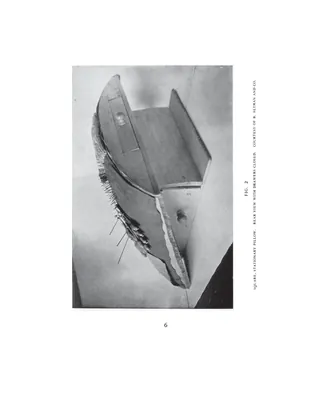
Belgian Lace-Makers and their Accessories
Article · 16 pages
An article from the Bulletin of the Needle and Bobbin Club, translated from the French of Mme. Lucie Paulis by Gertrude Whiting, on Belgian bobbin lace-makers and their equipment. It describes the square stationary pillow and its stand, the revolving round pillow used for Duchesse and other free-hand laces, the bobbins, winders, pins and pricked patterns. It also covers children's apprenticeship, the division of labor among designer, pricker and sampler, the decline in thread quality, and the lace-makers' work before and after the World War. Illustrated with photographs and drawings of pillows, bobbins, a pricking, Binche lace, fond armure mesh and Brussels point de gaze needlepoint medallions.
La Dentelle aux Fuseaux: Première Partie, Dentelles à Fil Continu. I. — Cluny (Manuels Techniques) [Bobbin Lace: Part One, Continuous-Thread Laces. I. — Cluny (Technical Manuals)]
Book · 100 pages · French
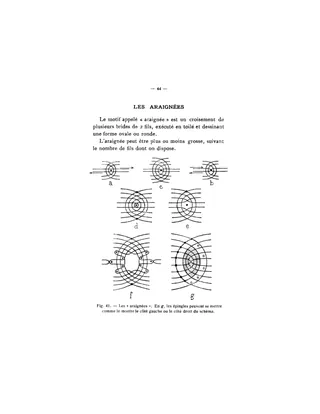
A French-language technical manual on Cluny bobbin lace (continuous-thread laces) by Madame L. Paulis, published in Brussels in 1921 for Les Amies de la Dentelle. It covers the technical resources of Cluny lace (braids, crossings, picots, point d'esprit, toilé, twisted passes, spiders), then analyzes antique laces by element (decorated lines and crossings, circular motifs, festoons). Further parts treat design and composition, making the pricking pattern, and motifs worked on a movable pillow for insertion. It is illustrated with many thread-path diagrams and a few photographs of lace.
Notes on the Lace Industry in Belgium in the Nineteenth Century
Article · 8 pages
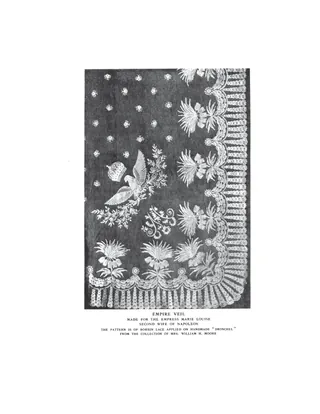
Article from the Bulletin of the Needle and Bobbin Club surveying the Belgian lace industry from the French Revolution through the early 1920s. It covers the effects of the Empire period, machine-made net, and the Paris Expositions of 1867 and 1878, quoting Belgian and French reports on competition between the two countries. It also discusses the number of lacemakers and the postwar decline of lace as a rural cottage craft. Illustrations include an Empire veil made for Marie Louise, a portrait of Queen Maria Cristina of Spain, and a Brussels bobbin lace lappet.
'Le Pompe': A Study of the technique of Sixteenth Century Bobbin Laces
Article · 11 pages
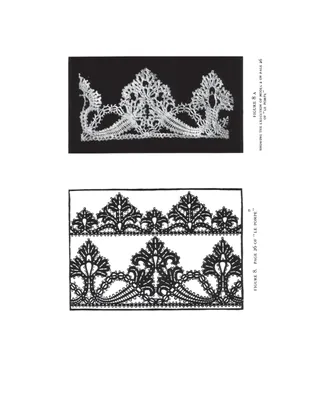
Article by Mme. L. Paulis on the technique of the sixteenth-century bobbin lace designs in the pattern book "Le Pompe" (Venice, 1557), the earliest known pattern book for bobbin laces. She divides the designs into a geometric plaited group and a group of curving cloth-stitch designs, and explains how difficult crossings, loops and star motifs would be worked. She discusses accrochage, adding and removing threads, change of weavers, possible engraver's errors, and the close relationship between lace and passementerie. Illustrations include reproductions of pattern pages, explanatory diagrams and photographs of worked samples.
Seventeenth and Eighteenth Century Needle Laces of the Low Countries
Article · 11 pages
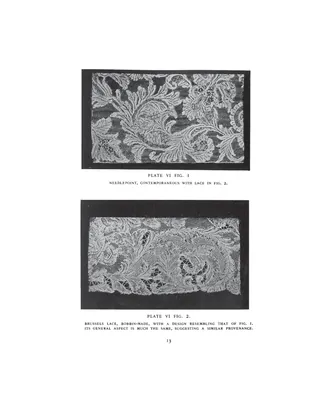
A translated study by Madame L. Paulis, Curator of Laces at the Musées Royaux d'Art et d'Histoire in Brussels, on the history and identification of Flemish needlepoint lace. She starts from the 'ponti fiamenghi' in the Italian pattern books of Vecellio (1617) and Lucretia Romana (1620). She then follows Flemish needle lace through the influence of French Points de France, the bobbin-made 'drochel' ground of Brussels, and the later point de gaze ground. She argues that some pieces classed as Italian or French, such as Point de Sedan, flat point and Point de Venise à réseau, may be Flemish. Illustrated with pattern-book pages and plates of lace in the Musée du Cinquantenaire.
5 documents found