Textile Documents › Publications › Publication: Handicrafter
99 documents found
Sort: 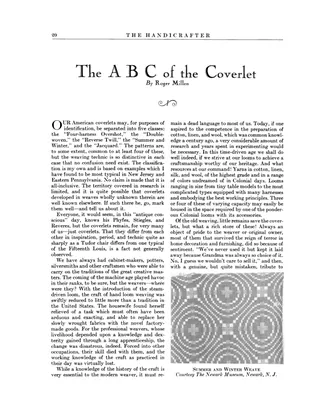
The A B C of the Coverlet
Article · 4 pages
A 1929 Handicrafter article in which Roger Millen sorts American coverlets into five classes (four-harness overshot, double-woven, reverse twill, summer and winter, and Jacquard) based on examples from New Jersey and eastern Pennsylvania. He describes the materials, colors, and structural features that distinguish each type, with illustrations of each, and comments on the history of coverlet weaving and on machine-made imitations. The article closes with a short note on the magazine Mountain Life and Work.
An Adaptation of the Honeysuckle Pattern
Article · 1 page · weaving drafts
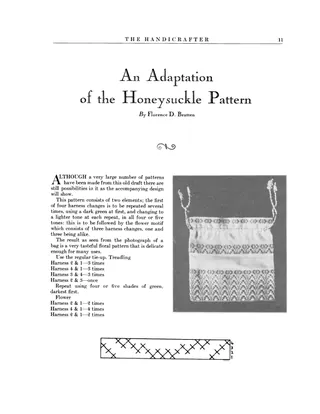
A one-page article from The Handicrafter giving an adaptation of the old Honeysuckle overshot pattern. It describes a two-part treadling: a four-change element repeated in four or five graduated shades of green, followed by a three-change flower motif. A photograph of a woven bag shows the result, and a small four-shaft diagram and treadling directions are included.
Adjustments
Article · 1 page
A short 1930 article by C. J. Burchard on the correct adjustment of the tie-up on a handloom, covering the lamms, treadles and the cords joining them. He recommends placing a rigid support under the treadles and a clamp or rod on the lamms, then tying each cord from the back forward with even tension. He says this gives a clean shed, treadles in alignment and good clearance above the floor.
Adventures with Fabricspun
Article · 2 pages
Roger Millen describes his experience weaving suiting fabric from Fabricspun, a domestic wool yarn, building on an earlier article by Howard C. Ford. He explains why he changed from a 30-ends-per-inch warp threaded double in a 15-dent reed to 22 ends per inch threaded single in a 22-dent reed, which gave a balanced basket weave and easier shed changes. He also covers warp knots, warping methods, weaving in the oil versus scoured, laundering and pressing, shrinkage, and weaving twill or herringbone on the same warp.
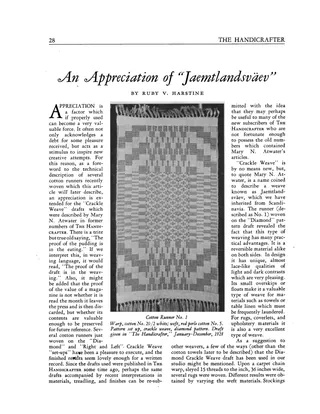
An Appreciation of Jaemtlandsväev
Article · 6 pages · weaving drafts
A 1932 Handicrafter article in which Ruby V. Harstine revisits Mary N. Atwater's crackle weave (Jaemtlandsvaev) drafts and reports on cotton runners, towels, rugs and coverlets woven from them. It gives detailed materials, sett, treadling and finishing instructions for Cotton Runners Nos. 1-3 (Diamond and Right and Left crackle patterns, with a pick-up border on No. 3) and for Towels 4-5 and Runner 6 on a Swedish draft from Sigrid Palmgren's Vavbok II. It includes drawdowns of the two crackle patterns and the Swedish pattern, plus photographs of the finished runners.
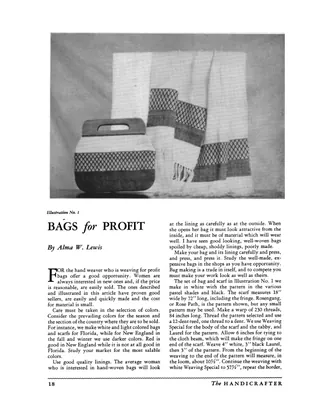
Bags for Profit
Article · 4 pages
A 1932 Handicrafter article by Alma W. Lewis on weaving handwoven bags and matching scarves for sale. It gives warp and weft counts, reed sizes, yarns and weaving sequences for a Rosengang (Rose Path) scarf and bag, a warp-faced Log Cabin bag woven on two harnesses with carpet warp, and a bag using the Queen's Delight pattern. Advice covers choosing colors for the market, linings, interlining, pressing and attaching wood tops and handles, with photographs and a bag pattern diagram.
Balance
Article · 1 page
A one-page article by C. J. Burchard on the problem of unbalanced harnesses in four-harness, four-treadle hand looms, caused by side pull between treadles and heddle shafts. He describes a device, the "JIB", that lets the heddle shafts hang between the pilasters just behind the reed and move in fixed planes, giving a larger shed. The page also carries the end of a raffia craft article on weaving a rectangular place mat on an easel-type loom, and an announcement of the fourth annual Penland Weaving Institute, led by Edward F. Worst.
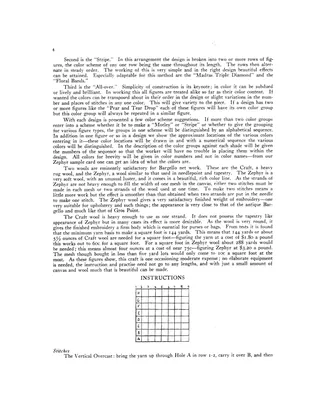
Bargello Net Work
Handicrafter, February 1928
Article · 6 pages · weaving drafts
An article from the first issue of Handicrafter (February 1928) introducing Bargello net work, a form of wool embroidery on coarse cotton net using the Vertical Overcast and Step stitches. It explains design and color handling (Motley, Stripe and All-over schemes), wool choices (Craft and Zephyr), yarn quantities, costs and stitch instructions. Charts with numbered color schemes are given for patterns including Diamond, Hectagon, Floral Bands, Heart, Pear and Tear Drop, Ogive Pole, Bargello and Madras Trefoil Diamond.
The Batik
Article · 2 pages
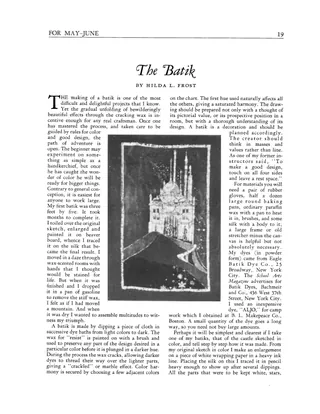
A short how-to article by Hilda L. Frost on making a batik on silk using paraffin wax resist and successive dye baths from light to dark. She covers materials, dye suppliers, design and color harmony, and walks step by step through making a batik of a castle scene. Two photographs show finished batiks, a castle scene and a floral design.
Bead Technique
Article · 9 pages
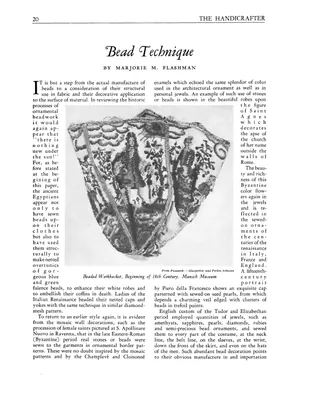
An article from The Handicrafter (Jan/Feb 1930) on the history and methods of beadwork, focusing on bead bags. It surveys beads in dress from ancient Egypt and Byzantium through the Renaissance, Stuart England and the 18th-19th centuries, then explains five methods of making bead bags, including sewing on canvas or cloth, chain-stitch with a crochet hook on a net foundation, and crocheting with pre-strung beads. Plates illustrate stitches, stringing beads, crocheting a tubular bag, slitting the bag for a hinged top, and mounting the top and lining, along with museum photographs of historic beadwork.
Bedroom in Right and Left Crackle Weave
Article · 3 pages · weaving drafts
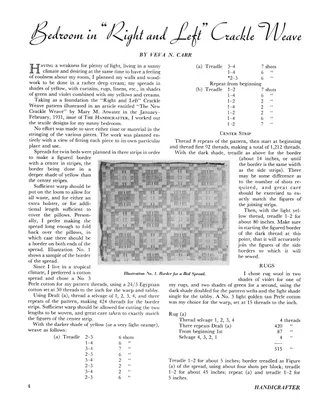
Veva N. Carr describes weaving a coordinated set of bedroom furnishings in the "Right and Left" crackle weave, based on Mary M. Atwater's 1931 article "The New Crackle Weave." She gives threading counts, sett, yarns and treadling sequences for twin bed spreads, rugs in two color schemes, window curtains, a dresser scarf and towels. Two threading drafts with a tie-up and four illustrations of borders and finished pieces accompany the text.
Camp Girls Response to Card Weaving
Article · 5 pages
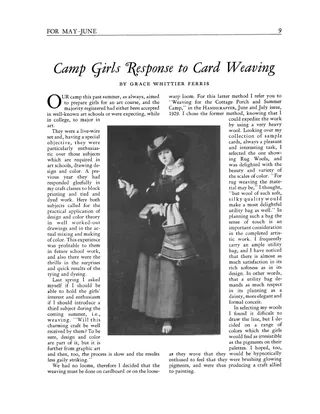
Grace Whittier Ferris describes teaching card weaving to girls at an art-preparatory summer camp, where weaving was done on cardboard cards without looms. She gives practical instructions for making the card loom (cutting, scoring, and punching the board, warping with handspun wool over cords, folding and tying) and for weaving a utility bag in tapestry technique with rug wool. She also covers design, color choice, the slit tapestry method, finishing, lining, and cords, with photographs of finished bags.
Chain or Crochet Weaving
Article · 3 pages
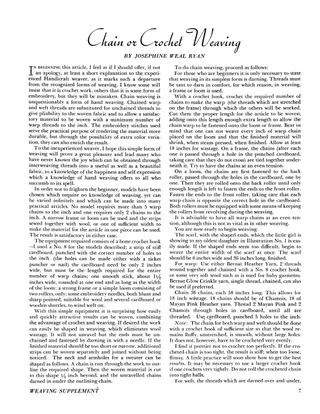
Josephine Weal Ryan describes chain (crochet) weaving, a form of hand weaving in which crocheted chains serve as both warp and weft and are darned over and under on a simple frame or two-roller loom. She lists the equipment (bone crochet hook, punched cardboard spacer, smooth stick, shuttles, needles), gives step-by-step directions for two scarves with shaped ends, and describes a child's sleeveless bed jacket with woven trim bands. Yarns are specified (Bernat Heather, Spanish Stocking Worsted) along with finishing by steam pressing. Photographs show the finished articles.
The Creed - Flemish Tapestry
Handicrafter, February 1928
Article · 1 page
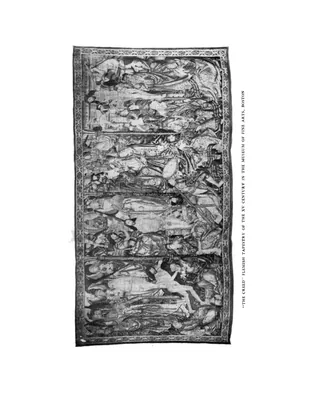
A single-page illustration from the first issue of Handicrafter (February 1928) showing a photograph of "The Creed," a 15th-century Flemish tapestry held by the Museum of Fine Arts, Boston. The tapestry is arranged in several horizontal registers of figures, foliage and animals within a decorative border. The page carries only a caption and no accompanying article text.
The Design of Hooked Rugs, I -- Primitives
Article · 4 pages
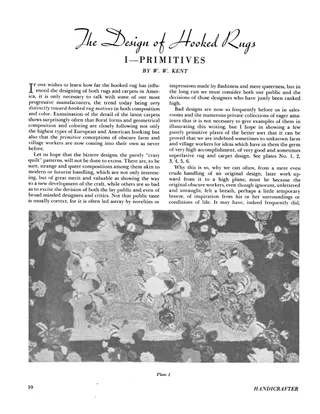
An essay by W. W. Kent on the design qualities of early American hooked rugs, arguing that the primitive work of anonymous farm and village makers, especially in Maine and Nova Scotia, offers ideas for modern rug and carpet design. It is illustrated with ten plates of hooked rugs with captions giving size, motifs, colors and collections. Kent also discusses the origin of hooking, citing his book The Hooked Rug, Scandinavian practice and the possibility that Coptic shaggy fabrics were hooked.
Double Weaving on Four Harnesses - the Finnweave
Article · 5 pages · weaving drafts
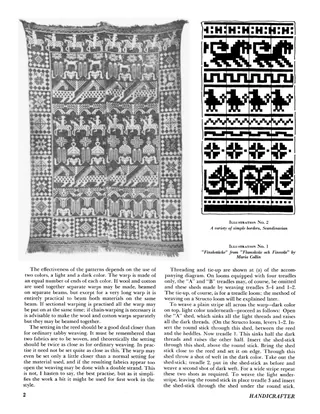
Mary Meigs Atwater introduces the Finnweave, a method of weaving pattern-figured double plain cloth on an ordinary four-harness loom, to American weavers. She explains the equipment (round stick, pattern stick, shed-stick), yarn choice and sett, and step-by-step instructions for weaving plain stripes and pattern rows on treadle and Structo looms. The article includes a threading and tie-up diagram, a worked bag pattern, borders, a coverlet pattern, and two figure motifs (a trumpeter and a peasant woman) adapted from an old Finnish piece.
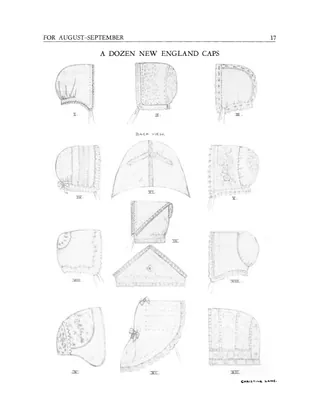
A Dozen New England Caps
Article · 3 pages
A 1929 article from The Handicrafter describing twelve antique New England caps (mostly babies' and night caps) collected by the author, with notes on the fabric, cut, and decoration of each. Materials include cross-barred muslin, cotton mull, lawn, and handkerchief linen, with trims of crochet lace, hand embroidery, seed-stitching, fagoting, and an Ipswich, Massachusetts bobbin lace cap. A page of line drawings illustrates the twelve caps, though the scan of it is badly degraded. The scan also ends with a short excerpt on the history of tapestry (Raphael cartoons and the Gobelins).
Editorial
Handicrafter, January-February 1932
Article · 3 pages
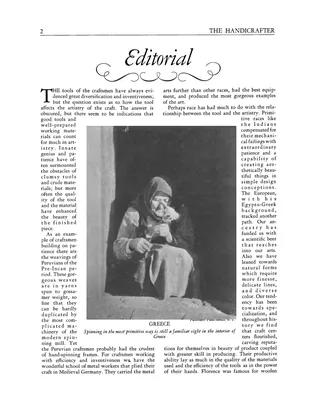
A 1932 editorial from The Handicrafter on how tools and working materials affect the artistry of handcrafts. It draws examples from pre-Incan Peruvian textiles, Navajo Bayeta blankets, Florentine woolens, the Gobelin tapestry works, and Rodier's fabrics, as well as metalwork, porcelain, ivory and glass. It argues that craftsmen should adopt improved tools and scientific methods rather than revert to primitive ones. Photographs show hand spinning in Greece and Egypt, Navajo rug weaving in Arizona, and cloth weaving in a Czechoslovakian home.
A Fascinating Handicraft
Article · 2 pages
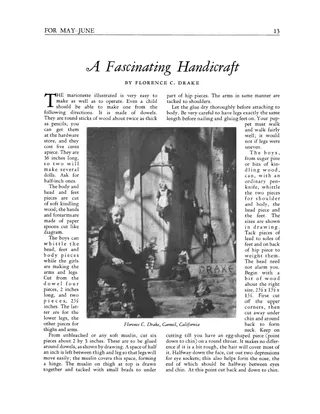
A short 1932 magazine article giving instructions for making a simple string marionette from wooden dowels, kindling wood and muslin hinges. It covers carving the head, jointing the limbs, weighting, painting and hair, stringing with seven strings, and making two controller sticks from a yardstick. It ends with suggestions for improvising a puppet theatre. It includes a photograph and an actual-size pattern drawing, and has nothing on weaving.
Further Notes on the Speck Drafts
Article · 6 pages · weaving drafts
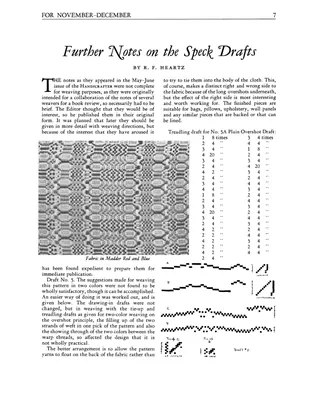
Follow-up article by R. F. Heartz giving full weaving directions for several of the Speck Drafts, which were first published only in brief in the May-June issue. It provides tie-up and treadling sequences for Drafts 5, 7, 9, 11, 53 and 54, with variations in overshot, double-face and summer and winter, in solid and two-color versions. It closes with a comparison to the John Landes Book of Drafts as arranged by Mrs. M. M. Atwater. The scan also includes the end of an article on the pros and cons of fly-shuttle weaving.
Gauze Weaving
Article · 5 pages
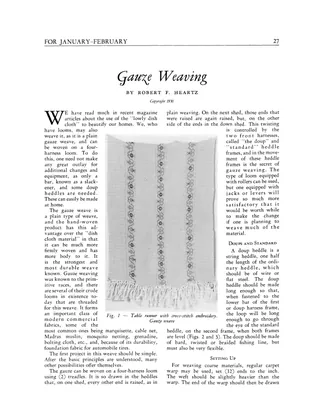
A 1930 magazine article explaining how to weave plain gauze (leno-type) cloth on a four-harness loom using doup heddles and a slackener. It covers the doup and standard heddle frames, threading order, tie-up for jack and roller looms, and the weaving procedure, with line diagrams of the shed arrangements. It also suggests stripe and check variations and uses of the cloth as a foundation for embroidery and rugs, illustrated with items made at Kings Park State Hospital.
Gleanings from the Penland Institute, Article I -- Pillow Tops
Article · 4 pages · weaving drafts
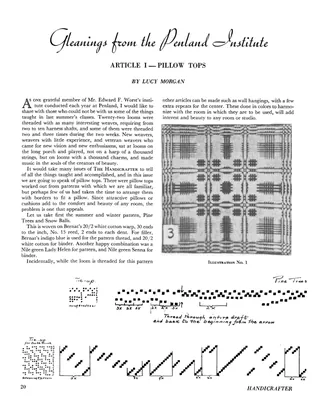
First article in a series by Lucy Morgan reporting on classes at Edward F. Worst's summer weaving institute at Penland. It covers woven pillow tops, with threading drafts, tie-ups and treadling (tramping) sequences for Pine Trees and Snow Balls in summer and winter, a 16-harness double weave version, Whig Rose, Spring Flowers, and Crackle weave. Warp and weft materials, sleys, and sett are given for each, mostly using Bernat cottons, Perle, Senna and homespun yarns.
Hand Knit Sweaters
Handicrafter, May-June 1932
Article · 5 pages
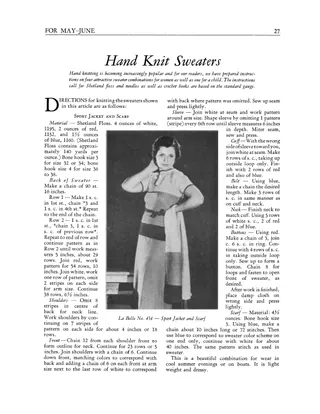
A magazine article giving written instructions for five hand-knit and crocheted outfits in Shetland Floss yarn: a crocheted sport jacket and scarf, a blouse and beret, a lace blouse and turban, a child's sweater and beret, and a cardigan outfit with scarf and hat. Each pattern lists materials, needle or hook sizes, stitch counts, shaping and finishing, and suggests color combinations. Each outfit is illustrated with a photograph and a pattern name and number.
Hand Weaving for the House
Article · 4 pages · weaving drafts
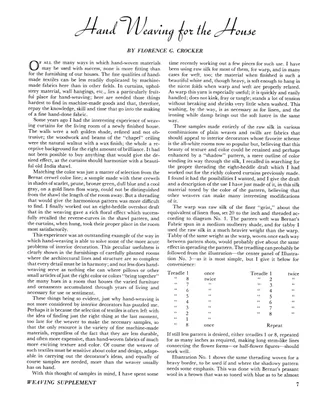
A 1930s article from Handicrafter on using handwoven fabrics for home furnishings such as curtains, upholstery and pillow covers. Crocker describes samples woven mainly on raw silk warp, including an eight-heddle overshot draft, modified summer and winter pieces taken from Mary M. Atwater's Shuttle-Craft Guild Recipe Book, and inexpensive mercerized cotton and monk's cloth curtains in twill. Threading diagrams, tie-ups, treadling sequences, yarn choices and photographs of the finished samples are included.
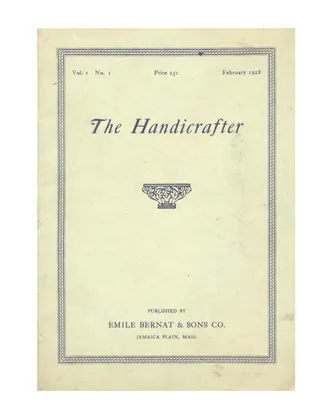
Handicrafter, Vol. I, No. 1 (February 1928)
Handicrafter, February 1928
Periodical · 27 pages · weaving drafts
First issue of The Handicrafter (February 1928), a house bulletin of Emile Bernat & Sons Co. of Jamaica Plain, Mass., devoted to textile arts. It contains Paul Bernat's article on Bargello needlework on cotton net with charted designs and color schemes, and Mary Meigs Atwater's article on a Scandinavian open-work weave with drafts for a curtain and a scarf or shawl. Grace Corbett Reed contributes "Raised" weaving, which treadles overshot patterns in shaded stripes with three patterns including Honeysuckle, and basket weaves in linen floss. The issue also has Spanish rug-hooking designs, a yarn news column and a Bernat Weavrite yarn price list.
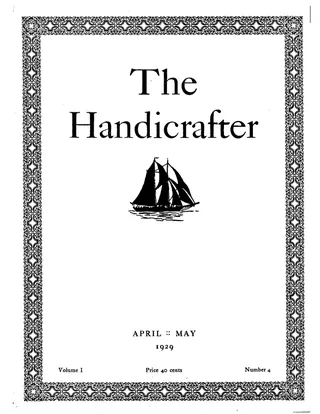
Handicrafter, Vol. I, No. 4 (April-May 1929)
Handicrafter, April-May 1929
Periodical · 33 pages · weaving drafts
Issue of The Handicrafter (Vol. I, No. 4, April/May 1929), a handcraft magazine published by Emile Bernat & Sons, Jamaica Plain, Mass. It covers hand-weaving, including a review of a Snow Looms exhibition at the Art Center in New York, Mary M. Atwater on flax and linen, and Roger Millen's classification of American coverlets (overshot, double-woven, reverse twill, summer and winter, Jacquard), with drafts. Other articles cover a honeysuckle pattern adaptation for a bag, a potter's story, school samplers, quilting and patchwork with quilt block patterns, and ship models, plus editorials, craft supply advertisements and a loom announcement.
Handicrafter, Vol. I, No. 6 (August-September 1929)
Handicrafter, August-September 1929
Periodical · 44 pages · weaving drafts
Issue of The Handicrafter (Vol. I, No. 6, August/September 1929), a crafts magazine published by Emile Bernat & Sons Co. It includes articles on the weaving revival at Gatlinburg, Tennessee, making handmade Christmas cards by the blueprint method, an experimental dancer-weaver's notes on warping and napped wool, New England caps, tooled leather purses and bags, and costume jewelry. Mary M. Atwater's "Pink or Blue!" gives baby blanket instructions with threading drafts for striped, check, overshot and double-weave blankets, and Edith Huntington Snow writes on modern tapestry and embroidery weaves with a beginner's sampler. Editorials, book notices and many weaving-supply and craft advertisements fill the rest.
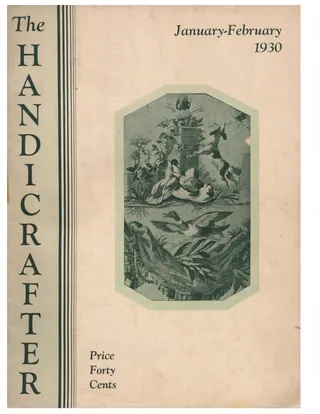
Handicrafter, Vol. II, No. 2 (January-February 1930)
Handicrafter, January-February 1930
Periodical · 52 pages · weaving drafts
Issue of The Handicrafter (Vol. II, No. 2, January-February 1930), a craft magazine published by Emile Bernat & Sons. It includes articles on marionette making, Southwestern Pueblo and Spanish Colonial arts, weaves for upholstery and curtain fabrics with sample drafts, candle making, bead technique, gauze weaving on a four-harness loom, old baskets, and enamelling. It also has editorials, book reviews, a 'Looking at the Crafts' news section on tapestry weaving and studio shops, and many advertisements for looms, yarns and weaving schools.
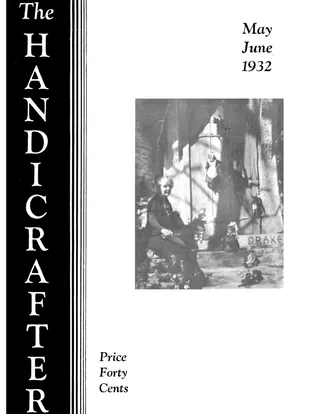
Handicrafter, Vol. III, No. 6 (May-June 1932)
Handicrafter, May-June 1932
Periodical · 36 pages · weaving drafts
Issue of The Handicrafter (May/June 1932), a general craft magazine with a strong weaving component. The lead article by Agnes K. Nielsen gives warping and weaving directions for block patterns (Lasting Beauty, Four O'Clock, Queen's Patch, Sugar Loaf, Monk's Belt) on the Daga and Kircher looms. Other textile content includes card (cardboard loom) tapestry weaving for camp girls, and R. F. Heartz's analysis of a sixteenth-century Spanish overshot linen with a draft and treadling table. The issue also covers marionettes, leather tinting and a leather scrap cushion, batik, clay preparation, envelope-lining crafts, book reviews, and knitting and crochet instructions for sweaters, plus loom and supply advertisements.
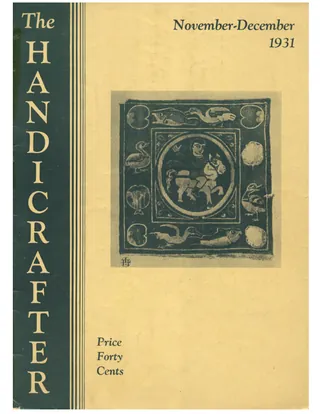
Handicrafter, Vol. III, No. 7 (November-December 1931)
Handicrafter, November-December 1931
Periodical · 44 pages · weaving drafts
Issue of The Handicrafter (Nov.-Dec. 1931), a handcraft magazine published by Emile Bernat & Sons with a strong handweaving emphasis. Weaving content includes Virginia Doan's handwoven curtains and coverlet using a Whig Rose and Chariot Wheel overshot pattern with full threading and treadling directions, R. F. Heartz's notes on Speck drafts (overshot and double-face four- and eight-harness drafts), a profile of the Shuttle-Craft Guild of Hand-Weavers, and part II of Cecelia Cleveland Willard's article on weaving on the Kircher frame loom. Other items cover a traveling hand weaving exhibit, fly-shuttle weaving, the 1931 Weaving Institute at Penland led by Edward Worst, and non-weaving crafts such as Christmas gifts for children, block-printed cards, etched silver bookends and bracelet, and felt utility bags. Advertisements for looms, yarns and craft shops are included.
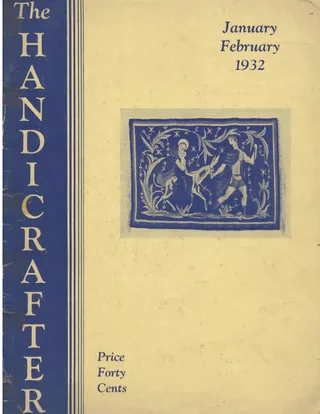
Handicrafter, Vol. III, No. 8 (January-February 1932)
Handicrafter, January-February 1932
Periodical · 44 pages · weaving drafts
Issue of The Handicrafter (January/February 1932), a U.S. craft magazine published by Emile Bernat & Sons. Weaving content includes Agnes K. Nielsen's directions for weaving four-harness block patterns (Monk's Belt, Queen's Patch, Lasting Beauty, Four O'Clock, Sugar Loaf/Window Sash) on a two-harness loom, with treadling sequences and drafts. Luther Hooper's article covers the history and technique of tapestry weaving, with loom construction drawings. Ruby V. Harstine writes on crackle-weave runners and towels and a Swedish Jämtland pattern, with drafts and treadling. The issue also has non-weaving crafts (Mimbres-style pottery, a New Mexico wood-carver, pewter work, paper lamp shades, coping saw work), a note on a tapestry school in New York, book reviews including Atwater's Shuttlecraft Recipe Book, and loom advertisements.
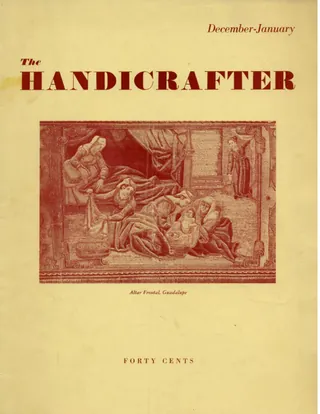
Handicrafter, Vol. IV, No. 3 (December/January 1932-1933)
Handicrafter, December/January 1932-1933
Periodical · 36 pages · weaving drafts
Issue of The Handicrafter, a magazine published by Emile Bernat & Sons, covering weaving, knitting and embroidery. Weaving content includes the second installment of a series on the history and technique of tapestry weaving (making a warp, healds and headle-rod), a piece on harness tapestry woven from silk rags and stocking weft, and Fred L. Copp's article on designing new overshot-style patterns by combining unrelated patterns in an experimental warp. Other articles cover applique and embroidered bags, Pauline Schindler's essay on design and Navajo sand paintings, Swedish painted wall hangings, and Spanish embroidery stitches. The issue also has knitting patterns in Bernat Glow Crinkle yarn (sweater, lace dress, hat, three-piece suit), an editorial on cooperative craft production, and advertisements for weaving suppliers and courses.
Handicrafter, Vol. IV, No. 4 (April 1933)
Handicrafter, April 1933
Periodical · 36 pages · weaving drafts
April 1933 issue (Vol. IV, No. 4) of The Handicrafter, a quarterly published by Emile Bernat & Sons Co. It is led by Part II of Josephine Estes's article on miniature hand-weaving patterns (Wreath Rose, Maltese Cross, Wheel of Fortune, The Cross), with treadling drafts for four-treadle looms. Other articles cover the 1932 Weaving Institute at Penland taught by Edward Worst, weaving in a Toledo high school, Fabricspun, bookbinding, stamped gesso boxes, old embroidery patterns, raffia craft, and modern handloom textiles by Pauline Schindler. The issue also has knitting and crochet instructions in Bernat yarns (Boucle, Glow Crinkle), an editorial on modern design, and advertisements for looms, supplies and weaving courses.
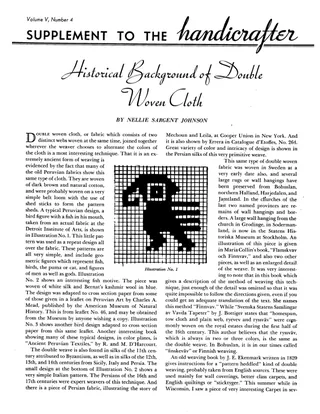
Handicrafter, Vol. V, No. 4, supplement
Periodical · 16 pages · weaving drafts
A supplement to The Handicrafter (Vol. V, No. 4) with five short articles. Nellie Sargent Johnson traces double woven cloth from ancient Peruvian, Byzantine, Persian and Swedish examples to American colonial coverlets, and explains how to design patterns on cross-section paper for it. Josephine Weal Ryan describes chain (crochet) weaving, with scarf and jacket directions. The remaining pieces cover primitive hooked rug design (W. W. Kent), a weaving school at Sätergläntan in Sweden (Gertrude Hostrup), and Swedish embroidery weave (Myra L. Davis).
Handicrafter, Vol. VI, No. 1, Part II
Periodical · 24 pages · weaving drafts
Part II of Volume VI, No. 1 of Handicrafter, a handweaving periodical. It opens with Mary M. Atwater's instructions for Finnweave, a double-plain cloth woven on four harnesses with a pattern stick, round stick and shed-stick, with diagrams and a bag pattern. Other articles cover Maria Steinhof on modern, experimental approaches to weaving, Dorothy Milne Rising on unusual color schemes and an embroidered buffet runner, and Marie Olsen on the Säterglåntan weaving school in Dalecarlia, Sweden, with a photographic section of rose-step, geese-eye, monk's belt and Leksand patterns. Lucy Morgan's Penland Institute article gives pillow-top drafts and treadling for pine tree and snowball double weave, Whig Rose, Spring Flowers and crackle weave. The issue ends with a Bernat yarn advertisement.
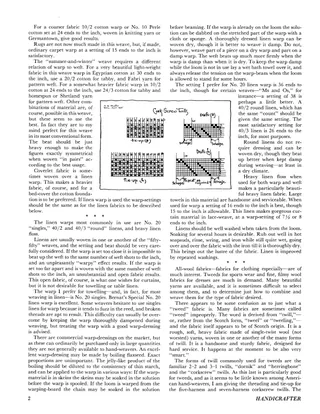
Handicrafter, Vol. VI, No. II, Part II (c. 1934)
Handicrafter, c. 1934
Periodical · 16 pages · weaving drafts
A weaving supplement from The Handicrafter (Vol. VI, No. II, Part II) with several articles. Mary Atwater's "Warps and Wefts" covers warp settings, yarn choices and fabric texture for coverlets, linens, tweeds and suitings. Veva Carr describes a bedroom woven in "Right and Left" crackle weave (spreads, rugs, curtains, dresser scarf, towels), and Florence Crocker writes on hand weaving for the house. Atwater's "New Techniques in Summer and Winter Weave" gives drafts and treadlings, including the "Botanical Garden" couch cover, and Waldon Fawcett profiles the Willow Cottage Weavers of Nantucket.
Handweaving on Loom Frames, The Kircher Loom
Article · 6 pages
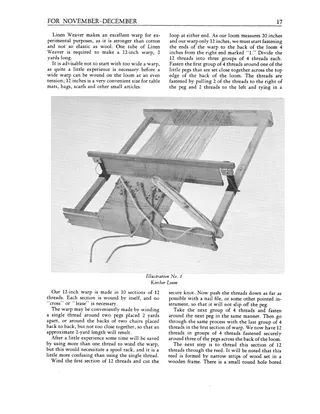
Part Two of Cecelia Cleveland Willard's four-part series on handweaving on loom frames, devoted to the Kircher loom, a small German-made hardwood frame loom with a reed that raises both sheds and serves as a beater. It gives directions for assembling the loom, making and winding a 12-inch linen warp, threading the reed, and weaving plain (tabby) weave. It also covers a striped and patterned border on a luncheon mat in two colors, advancing the warp, and fixing common errors such as threading mistakes and doubled weft. A short note at the end describes a traveling exhibit of bag weaving assembled by Mrs. Nellie S. Johnson of Detroit.
Handwoven Curtains
Article · 4 pages · weaving drafts
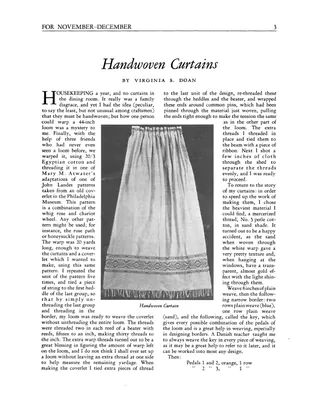
A 1931 magazine article in which Virginia S. Doan describes weaving dining-room curtains, and a matching coverlet, on a 44-inch four-harness loom. The warp is 20/3 Egyptian cotton threaded to Mary M. Atwater's adaptation of a John Landes coverlet pattern combining Whig Rose and Chariot Wheel, with Rose Path and Honeysuckle as alternatives. It gives the border color sequence and pedal order, a 'key' of all pedal combinations, the plain-weave stripe used for measuring, and notes on shrinkage, fringe knotting, and hanging the curtains on rings. Threading and treadling instructions and drafts are included, with a treadling for the coverlet.
Harness Tapestry
Handicrafter, December/January 1932-1933
Article · 3 pages · weaving drafts
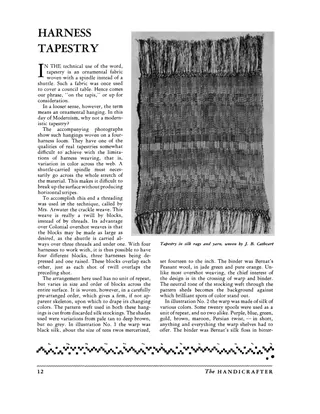
Article describing how to weave modernistic wall hangings ("harness tapestry") on a four-harness loom using the crackle weave, with pattern weft cut from discarded silk stockings and a contrasting binder of wool or silk floss. It explains the structure, warp and binder choices for two hangings woven by J. B. Cathcart, how to cut and wind the stocking weft, how to manage width and draw-in, and finishing. Treadling tables for both illustrations are given, along with a tabby pattern draft and threading draft.
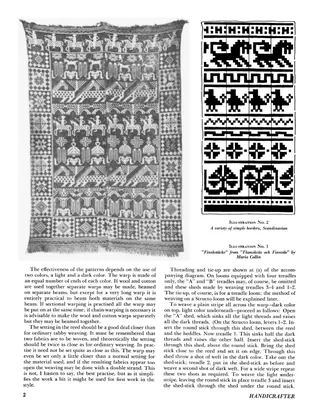
Historical Background of Double Woven Cloth
Article · 6 pages
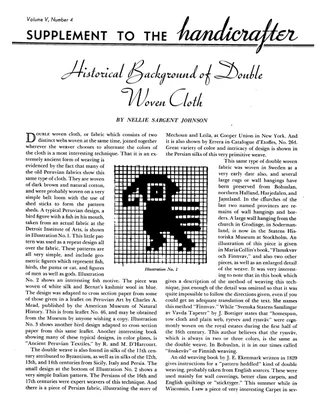
An article by Nellie Sargent Johnson tracing the history of double woven cloth, from ancient Peruvian belt-loom fabrics through Byzantine, Sicilian, Italian and Persian silks and Swedish wall hangings (Finnvav) to American Colonial coverlets. She compares a hand-loom coverlet dated 1870 with a Jacquard coverlet and describes her own double woven silk piece. The last pages advise on designing patterns on cross-section paper for four-harness double weave, including warp counts per block, and point to her separate lesson on the method. No weaving drafts are given, only pattern charts and photographs of pieces.
The History and Technique of Tapestry Weaving, Article II: Making a Warp
Handicrafter, December/January 1932-1933
Article · 5 pages
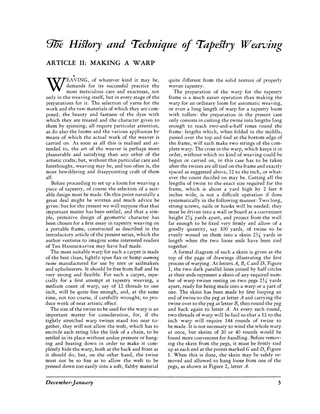
Second article in a series on tapestry weaving from The Handicrafter, explaining how to make and mount a warp on a portable tapestry frame loom. It covers choice of flax or hemp seaming twine at 12 ends per inch, winding skeins on pegs, cutting and mounting the twines in the reed-wire stretcher bar, taking the cross with colored cords, and making and attaching healds to a heddle-rod. Numbered figures and illustrations show the skein, loop knots (snitches), loom frame and heald construction.
Knitted Suit of Glow Crinkle Yarn
Handicrafter, 1932
Article · 2 pages
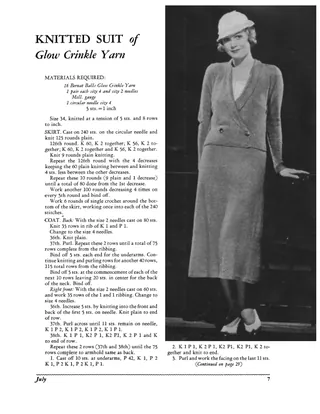
Knitting instructions for a woman's three-piece suit (skirt and coat) in Bernat Glow Crinkle Yarn, size 34, at 5 stitches and 8 rows to the inch. It gives materials, a circular-needle skirt with regular decreases, and a coat with back, fronts with ribbed facings, and sleeves, finished with single crochet seams and edging. The second page holds only the continuations of other articles from the same Handicrafter issue, on a two-harness Bronson lace weave, bedspreads, women potters, Indian bracelets, and bags.
Laboratory Notes of a Dancer Loomer
Article · 4 pages
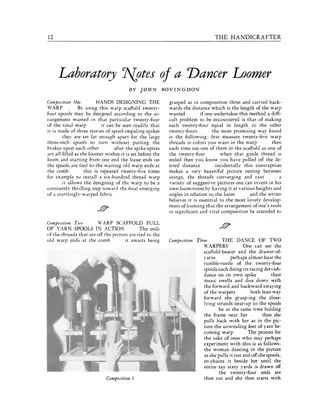
An illustrated first-person article by dancer John Bovingdon describing his experiments with handweaving as a form of movement. He explains a warp scaffold of spool-impaling spikes that holds twenty-four spools for designing and drawing off a warp, and how two people can warp rhythmically, chaining the yarn into masses to be passed through the loom comb. He also describes napping weft yarn with a wire brush on Shetland warp and a hanging piece exhibited in San Francisco. Six photographs labeled Compositions 1-6 illustrate the steps.
Lace Dress with Hat in Glow Crinkle
Handicrafter, December/January 1932-1933
Article · 2 pages
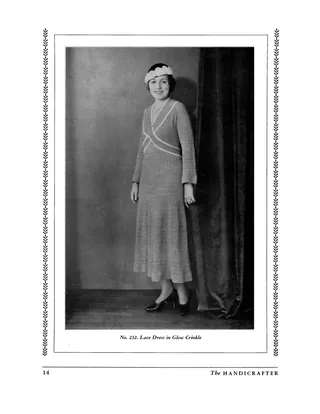
Two-page magazine article from The Handicrafter giving knitting instructions for a one-piece red lace dress (No. 232, size 16-18) with a matching brimmed hat, worked in Glow Crinkle yarn. It lists materials (Glow Crinkle in red, white brush wool, bone and steel needles) and gives row-by-row lace and yarn-over patterns, plus directions for the neck, sleeves, and skirt. Photographs show the dress and the hat with brim; the instructions continue on a later page not included here.
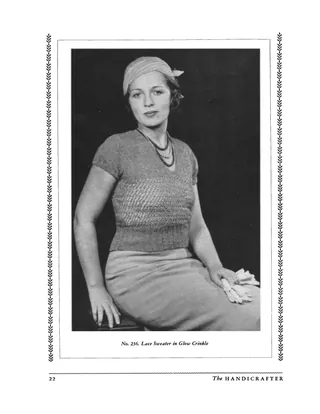
Lace Sweater in Glow Crinkle
Handicrafter, 1932
Article · 2 pages
A two-page knitting pattern from The Handicrafter for a slip-on lace sweater (No. 236, size 34-36) in Bernat Glow Crinkle yarn. It gives materials, stitch counts, an eyelet lace pattern, and directions for the back, front, puff sleeves and finishing, with a photograph of the finished sweater. The second page also carries the end of the pattern for a Three-Piece Boucle Suit (belt, coat, sleeves).
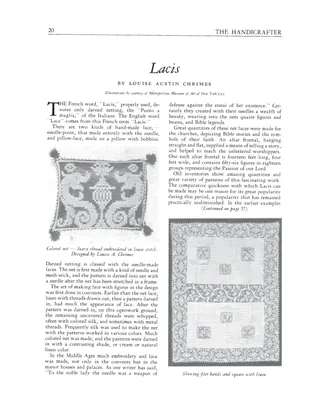
Lacis
Article · 3 pages
A short illustrated magazine article on lacis, the darned netting lace (punto a maglia) in which patterns are darned into a hand-knotted net stretched on a frame. It covers the origin of the term, the distinction between needle-point and pillow lace, and the medieval history of net lace made in convents and manor houses, including church altar frontals with Bible scenes. The photographs show cushions, filet panels, and samples of linen stitch, Sardinian weave, linen darning, shadow work, and embroidered net.
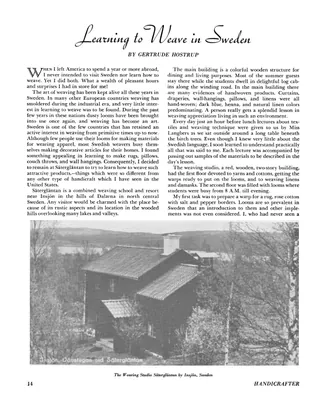
Learning to Weave in Sweden
Article · 2 pages
A first-person account by an American student of a summer learning to weave at Sätergläntan, a weaving school and resort near Insjön in Dalarna, Sweden. She describes daily lectures, the weaving studio, and her progression from a two-shaft rug warp through Rose Path pattern weaving, a table square threaded from a draft, double weave, napkins and furniture-covering samplers, to Dukagång (embroidery weaving) on a pillow and a finger-woven tapestry wall hanging. Also notes Swedish practice of linen warps with wool wefts and the instructor's advice on choosing colors from nature.
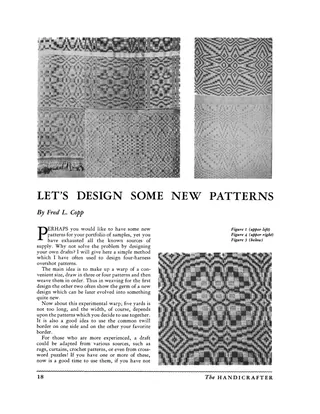
Let's Design Some New Patterns
Article · 4 pages · weaving drafts
Fred L. Copp describes a method for designing new four-harness overshot patterns by threading an experimental warp with three or four different drafts and weaving them side by side. He recommends weaving each block in both "star" and "rose" fashion, using leftover yarns and a different color for each pattern, and keeping records. He illustrates the method with a sequence of figures (Figures 1-6) that enlarge a butterfly-wing motif derived from Big Pine Burr, Honeysuckle and a Swedish pattern, and argues weavers should adapt Colonial drafts rather than just copy them.
Linen
Article · 3 pages
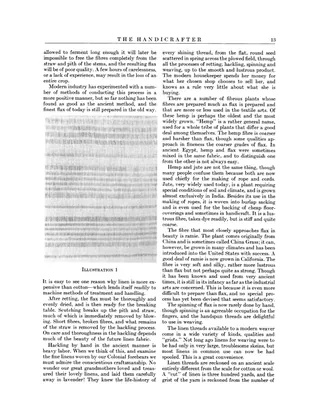
A 1929 magazine article by Mary Meigs Atwater on linen, covering the history of flax, its cultivation, retting, scutching and hackling, and related fibers such as hemp, jute and ramie. It then turns to practical advice for handweavers: how linen yarn is graded (cuts per pound), line versus round linen, warp versus weft linen, the cost of dyed linen, and which weaves suit linen. It touches on overshot, which tends to look stringy in linen, and damask, which it calls the best weave for linen. Illustrations include a flax-processing photograph and a draft-like grid.
Looking at the Crafts
Article · 3 pages
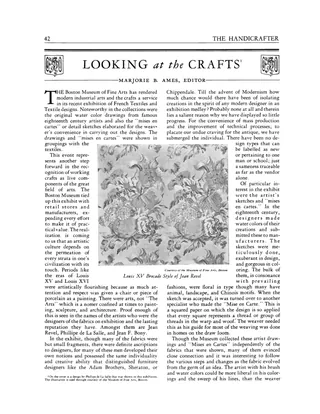
A column from The Handicrafter (January/February 1930) edited by Marjorie B. Ames. It reviews the Boston Museum of Fine Arts exhibition of French 18th-century textiles, designers' watercolors and "mises en cartes" (squared-paper weaving guides for draw looms), and describes the new Craftsmen's Guild studio shop in Boston. It also announces a new course in tapestry and Oriental rug weaving at the Master Institute of Roerich Museum, New York, taught by Mme. Verita de Bertalan. The scan ends with a page carrying the continuation of a marionette-making article and advertisements.
99 documents found