Textile Documents › Topic: Cotton
1,140 documents found
Sort: 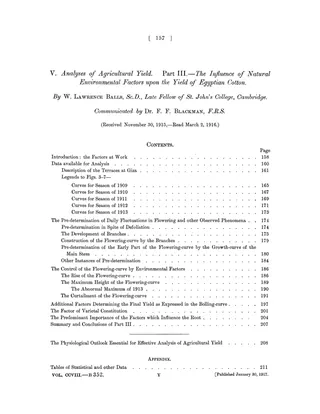
Analyses of Agricultural Yield. Part III. The Influence of Natural Environmental Factors upon the Yield of Egyptian Cotton
Article · 67 pages
A scientific paper by W. Lawrence Balls, Part III of his series on analyzing agricultural yield, studying how environmental factors such as water-table, soil fertility, soil depth, temperature, sowing date and variety affect flowering and bolling in Egyptian cotton. It draws on field experiments at Giza (the Terraces, 1909-1911, and spacing and sowing-date trials, 1912-1913), Talbia, Gemmaiza, Salaka, Mit Khalaf and Neguila. It discusses how daily flowering fluctuations can be pre-determined from main-stem and branch growth, and how a rising water-table curtails flowering. It includes many flowering-curve graphs and an appendix of data tables.
Cotton and the General Agricultural Outlook
Article · 10 pages
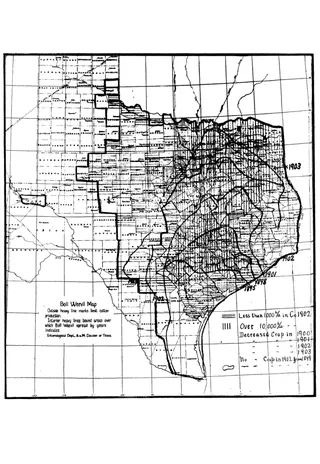
A 1904 address by D. F. Houston on the outlook for American cotton production, focusing on the spread of the Mexican boll weevil through Texas since 1892-93 and its effect on yields. It includes a boll weevil spread map of Texas and county production comparisons. It also covers farm methods to cope with the pest, tenancy and yield statistics from the census, and the broader post-Civil War agricultural progress of the South (corn, forage, livestock, truck and fruit farming, farm numbers and values).
Cotton Caterpillar
Article · 1 page
A short letter to the editor of the Commercial Review, dated New Orleans, October 26, 1846, from Wheelock S. Upton. He reports a seed-soaking solution, composed chiefly of blue stone (copper sulfate), that German farmers used on wheat, rye and tobacco seed against fly and worm. He suggests it can also protect cotton from the cotton caterpillar, says trials on Red River and in Iberville parish succeeded, and gives the cost as about one dollar per acre of seed.
Cotton Field
1869
Illustration · 1 page
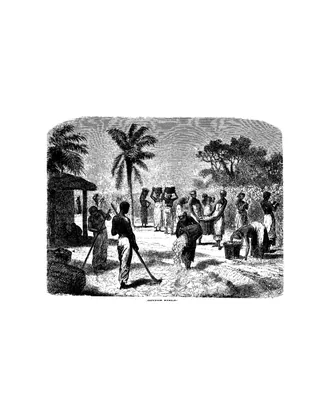
A single engraved illustration titled "Cotton Field." It shows workers in a sunlit field of cotton plants, with a palm tree and a thatched shelter at left. Some figures carry baskets or bundles on their heads, while others stoop among the plants. The only text is the printed caption.
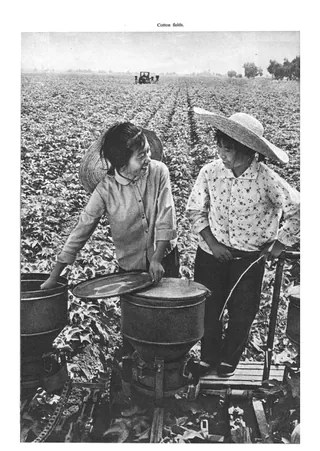
Cotton Fields
China Pictorial, 1976
Illustration · 1 page
A single page from China Pictorial (1976, No. 9) with a black-and-white photograph of a cotton field. Rows of cotton plants run to the horizon, with a tractor and equipment in the distance and trees along the right edge. The only text is the caption "Cotton fields." The catalog notes place the scene in the Sinkiang Uighur Autonomous Region.
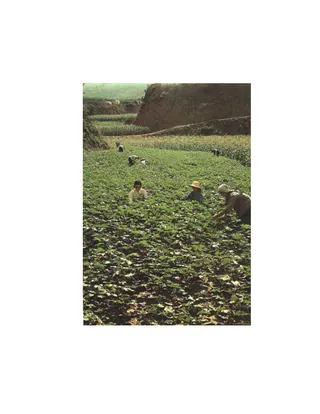
Cotton Fields on a Man-Made Plain
China Pictorial, 1975
Illustration · 1 page
A single photograph from China Pictorial, 1975, No. 4, showing workers tending a cotton field on a terraced hillside, with a large earthen embankment at upper right. The catalog notes place it in the Taihang Mountains of Shansi Province. The page has no readable text and no weaving content, so it is useful only as an illustration of cotton cultivation in China in the 1970s.
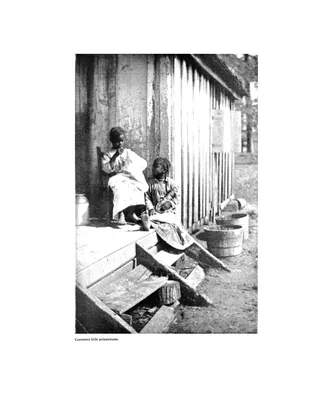
Cotton Patch Life in Tennessee
Article · 10 pages
A 1905 magazine article by Clifton Johnson describing rural life among Black cotton farmers near Memphis, Tennessee. It covers cotton planting and picking, rents and debt, cabins and roads, recollections of an elderly man and his wife about the 1833 meteor shower and the Civil War, a debating society, and barbecues. It is illustrated with the author's photographs of cabins, fieldwork, a well, and two women at a spinning wheel; it has no weaving content beyond that image.
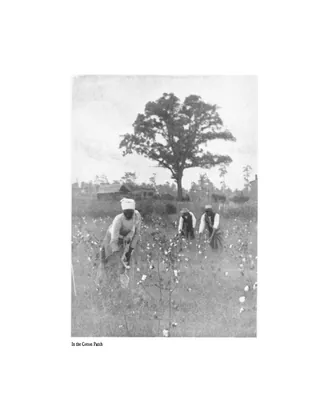
Cotton Pickers
Article · 9 pages
A 1902 magazine article by Clifton Johnson describing a visit to South Carolina in early October to observe the cotton harvest. It covers cotton patches of various sizes, how pickers gather cotton in bags and blankets, and the daily life of Black farm families, including rice pounding, peanut growing and recollections of slavery. It is illustrated with photographs of cotton picking, plantation quarters, a cart, a well and a rice mill.
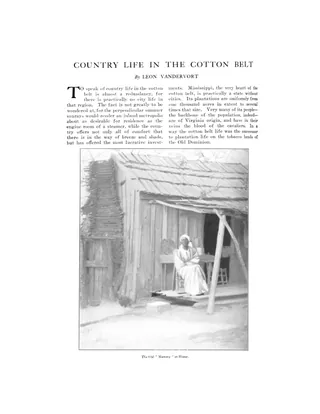
Cotton Pickers Country Life in the Cotton Belt
Article · 6 pages
A 1904 magazine article by Leon Vandervort describing country life on the plantations of the Mississippi cotton belt, from the antebellum era through the postwar period. It covers plantation houses, climate adaptations, recreations, the effects of the Civil War and the shift to tenant farming, and a modern diversified farm near Birmingham as a model for the future. It is illustrated with six photographs of plantation scenes; it does not discuss textile production or weaving.
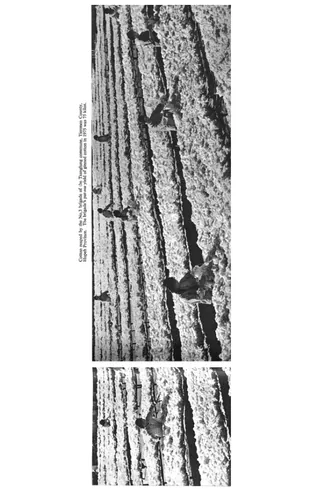
Cotton Reaped
China Pictorial, 1976
Illustration · 1 page
A single-page illustration from China Pictorial showing workers harvesting cotton in a field. The caption says the cotton was reaped by the No. 3 brigade of the Tangjiang commune in Tienmen County, Hupeh Province, which produced 75 kilos of ginned cotton per mu in 1975.
The Cotton-Picking Season
American Missionary, November 1894
Article · 2 pages
A short 1894 article by an anonymous missionary in the American South describing the cotton-picking season among African American communities. It discusses how families, including preachers and teachers, leave town for the fields during hard times, the drop in school attendance, and the moral conditions of the cotton camps. It also touches on drinking, debt to grocers, and fear surrounding public debate on lynching. It concerns social conditions, not textile production or weaving.
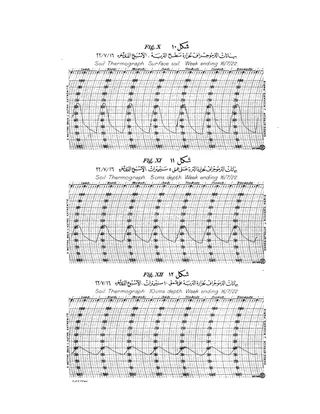
Experimental Work on Cotton
Article · 17 pages
Excerpt from a 1922 report of the Chemical Section of Egypt's Cotton Research Board on the sharaqi period, the fallow summer period when land is left without water. It presents soil thermograph records from Giza at depths from the surface to 30 cm, with tables of monthly and maximum temperatures, daily ranges, and hours above 55 and 35 °C. It then tests the protozoan theory of partial sterilization on Egyptian soils, discusses the decline in cotton yield, and gives a glossary of Arabic agricultural terms and a map of the Nile Delta. The document concerns soil science and cotton agriculture, not weaving.
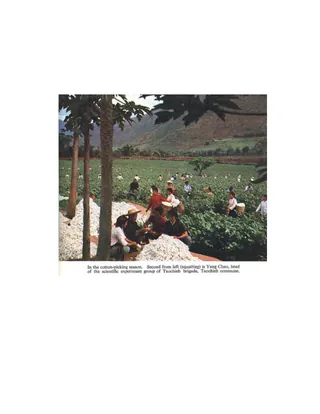
In the Cotton Picking Season
China Pictorial, 1976
Illustration · 1 page
A single color photograph from China Pictorial, 1976 No. 10, showing workers harvesting cotton in a field with mountains in the background. The caption identifies Yang Chao, head of the scientific experiment group of Taochieh brigade, Taochieh commune. The catalog notes place the scene in the Nunkiang River Basin.
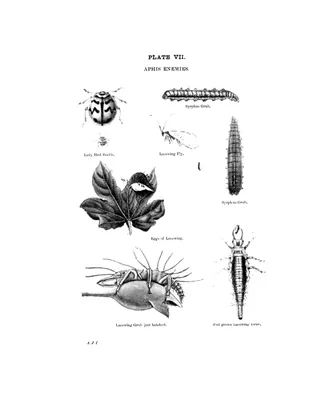
Insect Pests of Cotton in India
Article · 17 pages
An 1906 article by the Government of India's entomologist surveying the main insect pests of cotton in India. It covers the cotton aphis and its natural enemies, the red cotton bug, the spotted and pink bollworms, the cotton stem borer and the stem weevil. For each it describes life history, the damage done to lint and seed, and practical control measures such as hand-picking, burning infested plants, kerosene traps, spraying and seed fumigation. It closes with separate recommendations for ordinary cultivators and for experimental farms, and includes four plates of insects.
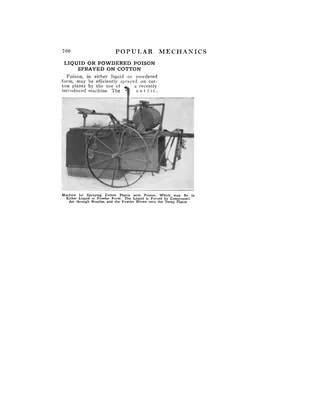
Liquid or Powdered Poison Sprayed on Cotton
Popular Mechanics, 1923
Article · 1 page
A one-page item from Popular Mechanics describing a recently introduced wheeled machine for spraying cotton plants with insecticidal poison in liquid or powder form. A photograph shows a tank on a wheeled frame with a spray boom and compressed-air apparatus; the caption says liquid is forced through nozzles by compressed air and powder is blown onto damp plants. The text is cut off after the opening sentences.
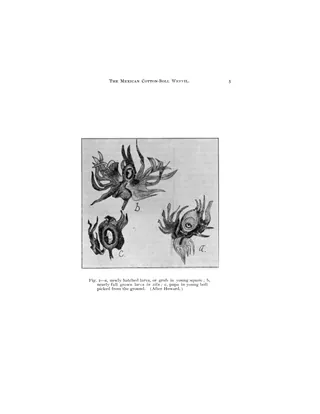
The Mexican Cotton-Boll Weevil
Article · 6 pages
Circular No. 17 of the Mississippi Agricultural Experiment Station (February 1904) by Glenn W. Herrick, introducing the Mexican cotton-boll weevil (Anthonomus grandis) to cotton growers. It describes the insect's origin in Mexico and spread through Texas toward Mississippi, estimated crop losses, the adult's appearance, the four-stage life history, overwintering habits, rate of increase, feeding, migration, and the danger of spreading it in cotton seed, hay and baled cotton. Two illustrations show the adult weevils and the larva and pupa stages. It is an agricultural pest bulletin with no weaving content.
[New Cotton Strain]
China Pictorial, 1975-1976
Illustration · 1 page
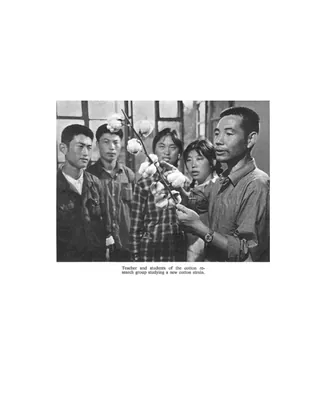
A single black-and-white photograph from China Pictorial showing a teacher and five students of a cotton research group examining a branch of a cotton plant with open bolls. The caption identifies them as studying a new cotton strain. There is no further text or technical content.
One Man Sows and Another Reaps
Harper's Weekly, July 6, 1861
Other · 1 page
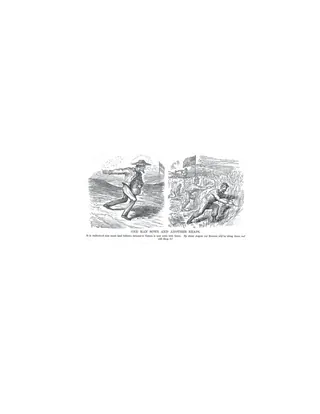
A single-page cartoon from Harper's Weekly, July 6, 1861, early in the American Civil War. The left panel shows a Southern planter sowing grain on land formerly used for cotton, and the right panel shows Union Zouave soldiers reaping the crop. The caption says the Zouaves will arrive about August to harvest it. It is political satire on the Southern shift from cotton to grain crops and has no weaving content.
Picture postcards
Ephemera · 1 page
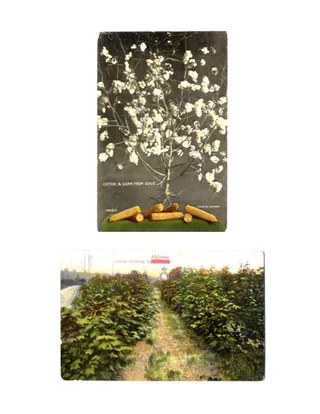
A single page showing two hand-colored picture postcards on the subject of cotton. The top card, captioned 'Cotton & Corn from Dixie', shows a cotton plant with open bolls alongside ears of corn. The bottom card shows a field of cotton plants and is labeled with Alabama and a cotton-growing caption. Useful as visual ephemera on cotton cultivation in the American South.
Picture postcards and photographs
Cotton Picking, c. 1900-1962
Ephemera · 15 pages
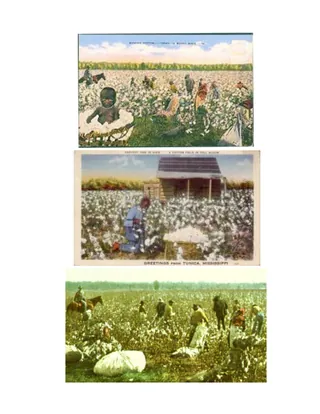
A set of reproductions of picture postcards and photographs showing cotton picking and harvesting, mostly in the American South. Scenes include hand-picking in fields, baskets and piles of picked cotton, bales, drying cotton, and a comparison of picking by hand with a mechanical picker. Captions name places such as Tunica, Mississippi; Humboldt, Tennessee; Beaumont, Texas; Shawnee, Oklahoma; Fresno County, California; Arizona; Memphis; New Orleans; and Louisiana. One image is of women harvesting in China in 1962.
Agrarian Unrest in the South
New Republic, September 11, 1915
Article · 3 pages
A 1915 New Republic article on tenant farming and financial control of the cotton economy in the South. It draws on Joseph T. Holleman and federal commission figures for Georgia and Texas to argue that absentee landlords and local merchant-bankers impose the single-crop cotton system. It ends with proposed remedies, citing Texas under Governor Ferguson, state banking ideas and the Federal Reserve Act. It has no weaving content.
[Agriculture; Cotton] from The Khedive's Country; The Nile Valley and its Products
Monograph · 25 pages
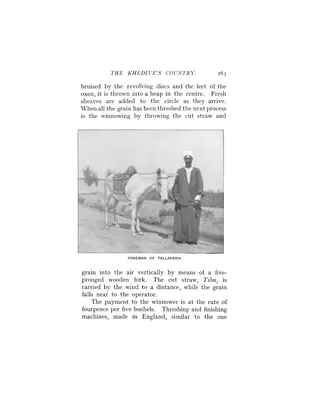
Two chapters (XVI and XVII, pp. 147-171) from a 1904 Cassell volume on the Nile Valley, describing modern farming in Egypt's Delta. Cotton is treated first and in most detail: crop rotation, ridging and irrigation, sowing, picking, yields, costs per acre, varieties (Mit-Afifi, Abbassi, Yannovitch, Ashmouni) and pests. Later sections cover beans, maize, water melons, clover, wheat, barley, sesame and dourra, with threshing methods, wages and prices. It has two photographs of Egyptian farm and river scenes and no weaving content.
American Cotton Association
Article · 12 pages
An article by Robert P. Brooks on the American Cotton Association, a cotton producers' organization founded in New Orleans in May 1919 under president J. Skottowe Wannamaker. It reviews the economic troubles of Southern cotton farmers (one-crop farming, crop liens, poor marketing), then describes the Association's constitution, by-laws, dues and organization. It also covers its warehousing and financing plans, using Spartanburg County, S.C., as an example, and closes with an appraisal of the movement's prospects and criticisms of it.
Breeding and Improvement of Cotton
Article · 11 pages
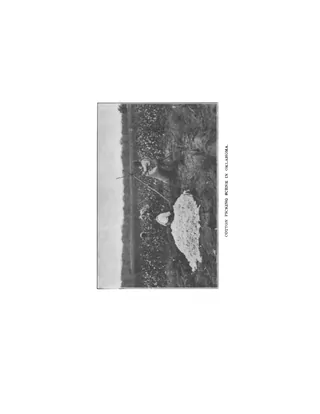
An address by Dr. H. J. Webber of the U.S. Department of Agriculture, delivered at the Short Course at the A. & M. College in Stillwater, Oklahoma, on January 9, 1906, and printed in the Oklahoma Territorial Board of Agriculture's biennial report. It explains how farmers can breed and improve cotton by variety testing, selecting superior plants, combing seed to judge lint length, ginning plants separately, and growing isolated plant-to-row breeding patches with pedigree numbering. Illustrations show a cotton picking scene and plates of seed and lint demonstrating increased fiber length across selection generations.
Cash certificate
Ephemera · 1 page
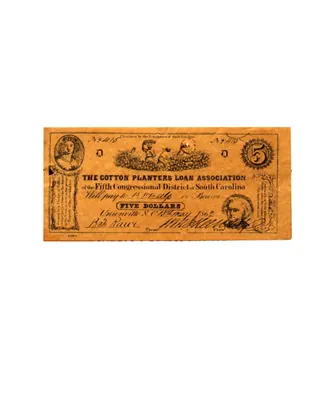
A single-page printed cash certificate (banknote-style scrip) for five dollars, issued on 1 May 1862 at Unionville, South Carolina, by the Cotton Planters Loan Association of the Fifth Congressional District. It is payable to B. Z. Tuttle or bearer and signed by the association's president. The design includes an oval portrait, a vignette of two figures harvesting cotton bolls, and a large numeral 5. It is marked COPY.
Cause of Sanded Cotton
Scientific American, 1859
Article · 1 page
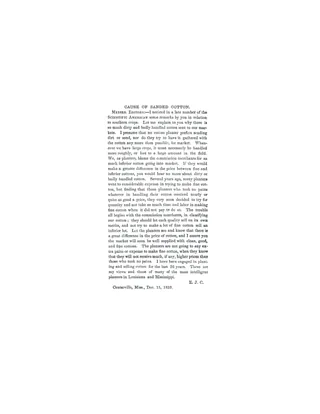
A letter to the editors of Scientific American, signed E. J. C. of Centerville, Mississippi, dated December 15, 1859. A cotton planter with 26 years of experience explains why so much dirty and sanded cotton reaches market, blaming commission merchants who do not pay a sufficiently higher price for fine cotton over inferior grades. He argues that planters therefore have no incentive to take extra care in picking and handling.
Collecting Confiscated Anglo-Rebel Cotton in the Southwest
Harper's Weekly, May 2, 1863
Illustration · 1 page
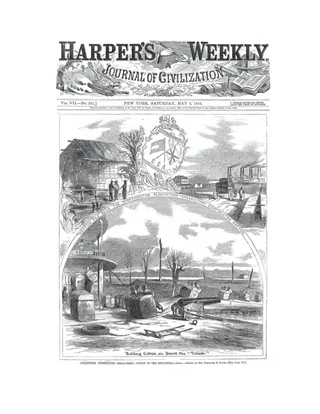
A single-page wood engraving from Harper's Weekly, May 2, 1863, showing the collection of confiscated cotton on plantations in the Southwest during the American Civil War. The scenes include a cotton pile near the Worthington plantation, bales marked 'C S A 1861' stacked in a barn, and bales being rolled aboard the steamboat 'Tatum' at a landing. The engraving is based on a sketch by Theodore R. Davis.
Colonial Cotton and Wheat Growing
Article · 8 pages
A 1911 article from The English Review arguing that British capital should be invested in cotton growing in Egypt, the Sudan, British East and West Africa, South Africa and India, to reduce Lancashire's dependence on American cotton. Monson proposes rotating cotton with wheat to raise the food supply as well. It quotes figures on cotton exports, world crops and national consumption, discusses declining Egyptian yields and their causes, and proposes a government commission of investigation. It is about the economics and agriculture of the raw material supply, not weaving or textile techniques.
Consumption of Cotton in Europe
Article · 1 page
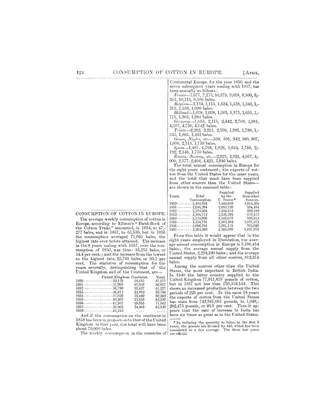
A short 1859 journal article presenting statistics on cotton consumption in Europe from 1850 to 1857, with some 1858 figures for the United Kingdom. Tables give weekly consumption for the United Kingdom and the Continent, country-by-country figures for France, Belgium, Holland, Germany, Trieste, Spain, Russia and others, and total annual consumption compared with U.S. exports. It closes by comparing the growth of cotton supply from British India with that from the United States.
Cotton
English Encyclopedia, 1867
Article · 2 pages
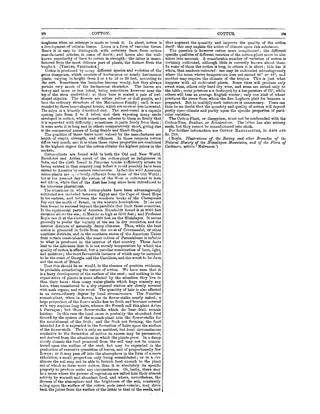
A two-page encyclopedia entry on cotton as a botanical product, from the English Encyclopedia. It explains that cotton is the seed hair of Gossypium species, compares its cellular structure under the microscope with the woody tissue of linen, and describes the plant. It also covers the wild and cultivated range of cotton in the Old and New World, how climate affects staple length and quality, and the difference between the cotton plant and the cotton tree (Bombax).
Cotton and its Cultivation in the West Indies
Hawaiian Forester and Agriculturalist, January 1904
Article · 4 pages
A 1904 agricultural article summarizing Dr. Morris's recommendations for reviving cotton growing in the West Indies, especially Sea Island cotton, on former sugar cane land. It covers upland versus Sea Island varieties, soils, plant spacing, planting and picking times, seed rates, yields and costs from Texas farms, and cotton by-products (linters, oil, meal, hulls). It deals with raw fiber production, not weaving or textiles.
Cotton Crop
Article · 1 page
A one-page article on the cotton crop of the United States in the early 1900s. It describes the cotton belt, acreage, yield, and the leading producing states, with a note on sea island cotton. It also covers production costs per pound, the state of Southern agriculture and harvesting labor, and the waste of cotton left in the fields.

Cotton Culture
Nation, 1865
Article · 2 pages
A short 1865 article from The Nation on the postwar prospects of American cotton growing. It estimates the 1865-66 supply, expected prices, and U.S. and English consumption, and argues that high prices will secure good order in the Southern states. It also discusses how free-labor planters should organize and pay black laborers, favoring piece or job work over the old task system or crop-sharing, and cites experience on the Sea Islands.

[Cotton exhibits of North Carolina and Brazil at the World's Columbian Exposition, 1893]
The Book of the Fair, 1893
Illustration · 1 page
A single illustration page from The Book of the Fair (1893), the account of the World's Columbian Exposition in Chicago, showing two photographs of cotton exhibits. The top photograph shows North Carolina's display of raw cotton bales piled in a rounded mound topped with a woven basket. The lower photograph is captioned as Brazil's cotton display.
Cotton Experiments in California
Overland, 1871
Article · 10 pages
An 1871 magazine article in which a Mississippi cotton planter explains why he is growing cotton in California's Merced and Los Angeles County lands. He compares per-acre costs, yields and profits against the Cotton States and against California wheat, using his own plantation account books, agricultural reports and the proceedings of a Southern commercial convention. He reports sample classifications of California cotton and argues that cotton would diversify the state's grain-dependent agriculture and support local manufacturing.
Cotton is King
Stimson & Co., 1861
Other · 1 page
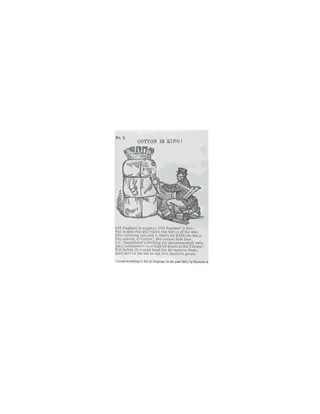
A single-page Civil War-era satirical envelope vignette titled 'Cotton is King!', numbered 'No. 2' in a series. It shows a crowned cotton bale seated beside a John Bull-type figure reading a newspaper, with a verse mocking England's dependence on Southern cotton and on slave labor. It concerns the cotton trade politics of 1861 and has no weaving content.
[Cotton Output]
China Pictorial, 1975
Illustration · 1 page
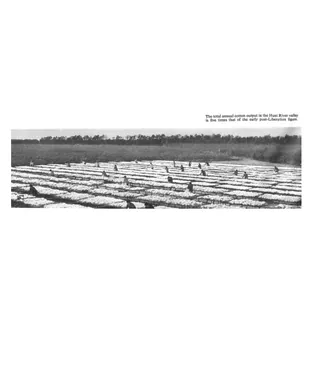
A single black-and-white photograph from China Pictorial, 1975, showing cotton spread out in rows across a large field with workers standing among the rows. The caption states that total annual cotton output in the Huai River valley is five times the early post-Liberation figure.
Cotton Picker
Article · 2 pages
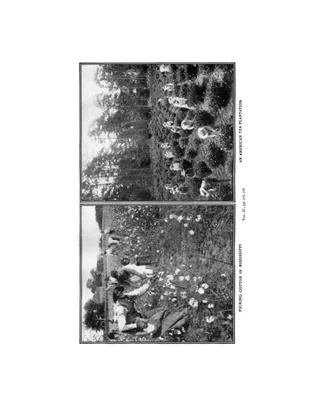
A short early-twentieth-century encyclopedia article describing how cotton is picked by hand in the American South. It covers the work of men, women and children in the fields, pay rates per hundred pounds, daily picking averages, the hemp picking sack and basket, and the repeated pickings of a field. A page of photographs shows cotton picking in Mississippi and an American tea plantation.
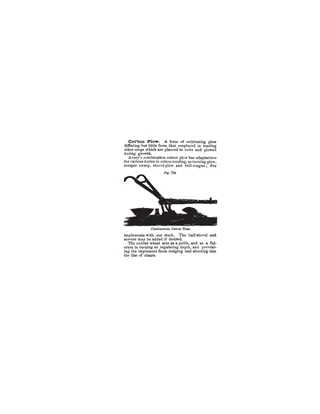
Cotton Plow
Article · 1 page
A short dictionary entry from Knight's New Mechanical Dictionary describing the cotton plow, a cultivating plow used for tending cotton grown in rows. It describes Avery's combination cotton plow, which serves as a turning plow, scraper sweep, shovel-plow and bull-tongue on one stock, and the role of its rudder wheel. Includes one line illustration (Fig. 704).
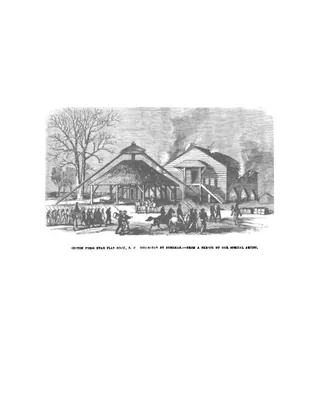
Cotton Press Near Flat Rock , S. C. Destroyed by Sherman
Frank Leslie's Illustrated Newspaper, April 8, 1865
Illustration · 1 page
A single engraved illustration from Frank Leslie's Illustrated Newspaper, April 8, 1865, showing a cotton press building near Flat Rock, South Carolina, after its destruction by Union forces under General Sherman during the American Civil War. The image is based on a sketch by the newspaper's special artist and shows a gabled building with a cupola and open sheds, with a large bare tree at left. The caption is the only text.
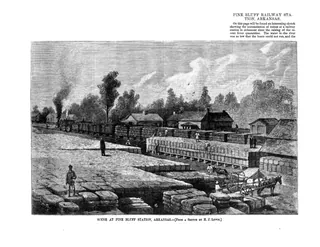
[Cotton Shipping at Pine Bluff, Arkansas]
1879
Illustration · 1 page
A single-page wood engraving of the railway station at Pine Bluff, Arkansas, showing bales of cotton piled on the platform and along the tracks. The accompanying caption says the cotton accumulated after a fever quarantine was lifted and low river water kept boats from running. The sketch is credited to H. J. Lewis.
Cotton Situation
Iron Age, 1915
Article · 1 page
A short 1915 trade-journal editorial on the cotton market in the autumn of that year. It reports that a government crop forecast of under two-thirds of a crop sent cotton prices up to about 13 cents per pound, from under 10 cents a month earlier and 6 to 7 cents a year earlier. It also notes that the 1915 crop was baled entirely with American-made steel hoops, because European supplies were cut off, even though cotton ties were on the free list under the Underwood-Simmons tariff act.

Cotton Sweep
Article · 1 page
A very short dictionary entry defining the cotton sweep, an agricultural plow used to cultivate the balk between cotton rows and also in corn cultivation. It includes a line drawing of the implement (Fig. 706) showing handles, a long beam, and a flat share.
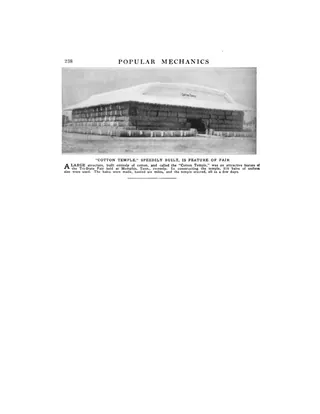
Cotton Temple, Speedily Built, is Feature of Fair
Popular Mechanics, 1923
Article · 1 page
A short Popular Mechanics item describing the "Cotton Temple," a large structure built from 510 uniformly sized cotton bales for the Tri-State Fair in Memphis, Tennessee. The bales were made, hauled six miles, and the temple erected within a few days. A photograph shows the temple-like building with columns and a rounded roof.
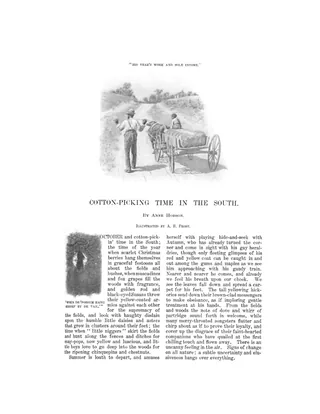
Cotton-Picking Time in the South
Article · 7 pages
A 1902 magazine article by Anne Hobson, illustrated by A. B. Frost, describing the autumn cotton-picking season in the American South. It combines scenic description of the fall countryside with a long monologue in imitated Black dialect by a cotton picker, then describes wagons of cotton bales going to the depot and Saturday town visits by pickers. The piece is a romanticized, condescending period portrait that uses racial slurs and caricatured dialect, and it offers little technical information about cotton or textiles.
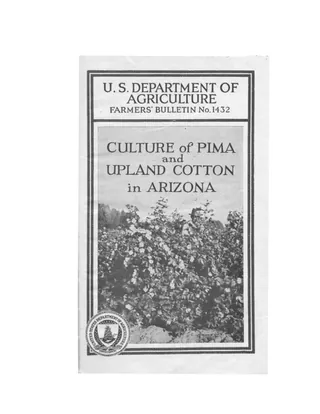
Culture of Pima and Upland Cotton in Arizona: Farmer's Bulletin 1432
Monograph · 16 pages
USDA Farmers' Bulletin 1432 by O. F. Cook and R. D. Martin describes how Pima (Egyptian) and Upland cotton are grown in the irrigated Salt River Valley of Arizona. It covers variety selection, land selection and preparation, planting, cultivation, plant spacing and thinning, early, summer and fall irrigation, picking, and roller ginning. Photographs of Pima plants at different growth stages and a drawing of a planter attachment illustrate the text. It is agricultural rather than textile-craft material, useful as background on cotton fiber production.
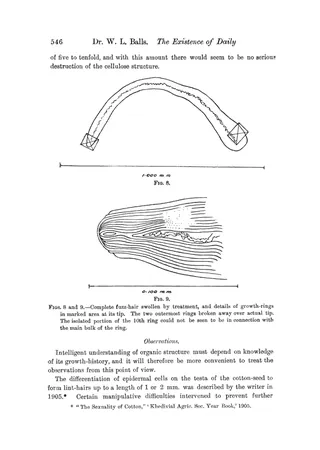
The Existence of Daily Growth-Rings in the Cell Wall of Cotton Hairs
Article · 17 pages
A 1919 research paper by W. Lawrence Balls reporting that the cell wall of cotton seed-hairs (lint and fuzz) is built of concentric layers, each representing one day's growth. Swelling the hairs with carbon disulphide and sodium hydroxide makes the layers visible, and counts on Egyptian cotton fruits of known age (9 to 50 days) match the expected 25 rings in mature lint. The paper covers the method, microscope setup, counts for each stage, an anomalous hair with a double wall, and conclusions. Line drawings and micrographs on plates 14-16 illustrate the rings.
Fostering the Growing of Cotton
Textile World Record, November 1913
Article · 2 pages
A two-page editorial from Textile World Record on U.S. government support for cotton growing, prompted by Carl S. Schofield's paper on Egyptian-type cotton in the Southwest. It lists the Bureau of Plant Industry's experiments, farmer seed distribution, and record-keeping from 1902 to 1912. It argues that cotton growing is more directly protected than cotton manufacturing. It also criticizes the Southern Cotton Corporation's 1912 proposals to Lancashire spinners, which it sees as a step toward a cotton trust.
Further Observations on Cell-wall Structure as seen in Cotton Hairs
W. Lawrence Balls; Mr H. A. Hancock · Proceedings of the Royal Society of London. Series B., June 1, 1922
Article · 16 pages
A 1922 research note by W. Lawrence Balls and H. A. Hancock on the microscopic structure of the cotton hair cell wall. It describes the cuticle, primary wall, and secondary wall, and reports a spiral fibrillar structure (pit spirals) running through the growth rings. It relates this structure to the external convolutions of the hair, using dated boll samples, swelling and pressure techniques, and convolution maps. The note ends with eight numbered conclusions and a plate of nine micrographs of Sakel cotton hairs.
Gatling's Improved Cotton Cultivator
Scientific American, October 6, 1860
Article · 1 page
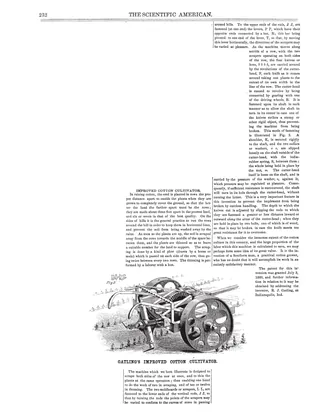
A single-page article from Scientific American (October 1860) describing R. J. Gatling's improved cotton cultivator, a horse-drawn machine that scrapes both sides of a cotton row and thins the plants in one pass. It explains how cotton rows are planted and worked, then details the mechanism: driving wheels, a cutter-head with four knives, adjustable scraper moldboards, and an india-rubber spring clutch that protects the shaft. An engraving shows the machine at work, and the article gives the patent date (July 3, 1860) and the inventor's address in Indianapolis.
1,140 documents found