Textile Documents › Publications › Publication: The Agricultural Journal of India
5 documents found
Sort: 
Benefits of Sheep Dipping
Article · 4 pages
A 1906 article from The Agricultural Journal of India in which a veterinary professor at Lahore argues for introducing sheep dipping in India. He describes the external parasites and skin diseases he found in Indian sheep, including ticks, lice, ringworm and sheep scab, and the tick-borne diseases they carry. He links these to the poor quality and low prices of Indian wool and hides. He compares conditions with Australia, the United States, Argentina and New Zealand, and proposes village dipping stations under veterinary supervision.
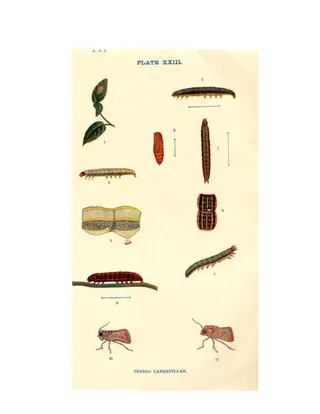
Caterpillar Pest of Indigo in Behar
Article · 14 pages
A 1906 entomological article by H. M. Lefroy, Imperial Entomologist at Pusa, on the caterpillar (Caradrina exigua) that destroys newly sown indigo in Behar. It covers the life history, damage at Surat and Pusa, the effect of east and west winds, identification, distribution and natural enemies. Remedies discussed are sowing Java-Natal indigo, using irrigated lucerne as a trap crop surrounded by a trench, and spraying. A colored plate of the insect's stages and a trench cross-section diagram are included.
Conditions Determining the Area Sown with Cotton in the United Provinces [India]
Article · 7 pages
A 1906 article by W. H. Moreland, Director of Land Records and Agriculture, on why cotton acreage in the United Provinces of India changes over time and between areas. It uses official statistics from 1860 to 1904 to show cotton growing concentrating in the Meerut, Agra and Allahabad divisions, helped by railways and canal irrigation. It also argues that the yearly area follows the ratio of cotton prices to wheat prices, as well as sowing-season rains and the lingering effect of earlier booms and slumps. Two tables give the regional distribution of cotton area and annual area with price ratios for 1861-1904.
Flax Experiments in India
Article · 9 pages
Article by Bernard Coventry, Director of the Agricultural Research Institute at Pusa, reviewing a century of attempts to grow and process flax for fibre in India, from Roxburgh's early trials near Calcutta through the 1839-41 company experiments and the 1856-60 trials in the Punjab and North-Western Provinces. It quotes a planter's account of a heated-tank retting installation at Beerghem, Belgium, and gives figures from recent trials at Dooriah in Behar on seed rates, yields, costs and profit per acre. Coventry concludes that flax can be grown and manufactured in India, but that skilled instruction in retting, breaking and scutching is essential for commercial success.
Insect Pests of Cotton in India
Article · 17 pages
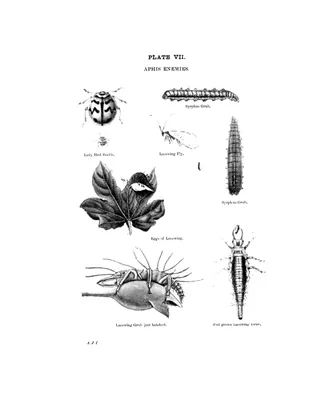
An 1906 article by the Government of India's entomologist surveying the main insect pests of cotton in India. It covers the cotton aphis and its natural enemies, the red cotton bug, the spotted and pink bollworms, the cotton stem borer and the stem weevil. For each it describes life history, the damage done to lint and seed, and practical control measures such as hand-picking, burning infested plants, kerosene traps, spraying and seed fumigation. It closes with separate recommendations for ordinary cultivators and for experimental farms, and includes four plates of insects.
5 documents found