Textile Documents › Publications › Publication: Cotton Research Board, Ministry of Agriculture, Egypt
1 document found
Sort: 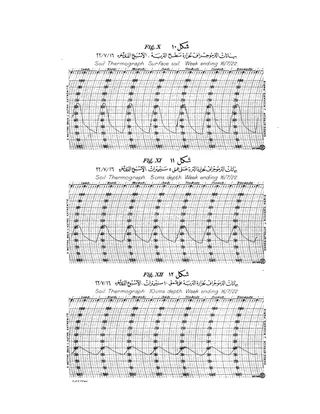
Experimental Work on Cotton
Article · 17 pages
Excerpt from a 1922 report of the Chemical Section of Egypt's Cotton Research Board on the sharaqi period, the fallow summer period when land is left without water. It presents soil thermograph records from Giza at depths from the surface to 30 cm, with tables of monthly and maximum temperatures, daily ranges, and hours above 55 and 35 °C. It then tests the protozoan theory of partial sterilization on Egyptian soils, discusses the decline in cotton yield, and gives a glossary of Arabic agricultural terms and a map of the Nile Delta. The document concerns soil science and cotton agriculture, not weaving.