Textile Documents › Publications › Publication: Knight's New Mechanical Dictionary
65 documents found
Sort: 
Armure
Article · 1 page
A short dictionary entry defining 'armure' as the character of a weave, meaning the system of harnesses a loom uses to produce a particular tissue. It lists four fundamental weave forms (taffeta, twill or Batavia, serge, and satin) with their harness counts, and notes a second sense of armure as a silk and wool French dress fabric.
Asbestos
Article · 2 pages
Two pages from the asbestos entry in Knight's New Mechanical Dictionary (the later part of the article). They list industrial uses of asbestos, such as packing, insulation, lamp wicks, fireproof clothing, paper and roofing, with British and U.S. patents, and a long bibliography of period journal references on its uses and history.
Asbestos Felt
Article · 1 page
A short dictionary entry describing F. A. Gooch's method of making a felt from anhydrous asbestos for use as a filtering material. The asbestos is scraped to a fine down, boiled in hydrochloric acid, washed by decantation, and deposited with a Bunsen pump onto a perforated platinum crucible or fine platinum gauze. It is a laboratory technique, not a textile one.
Baling Press
Article · 1 page
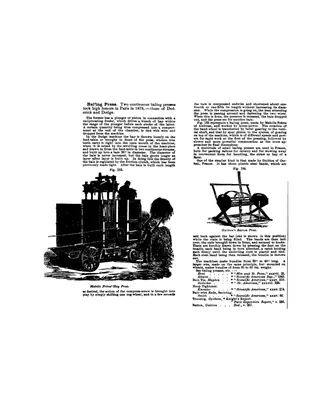
A dictionary entry on baling presses from Knight's New Mechanical Dictionary. It describes the Dederick and Dodge continuous presses honored at Paris in 1878, the horse-powered Mabille Frères hay press of Amboise, and Guitton's small ration press from Corbeil, illustrated with two engravings. It ends with a list of references to periodicals such as Scientific American.
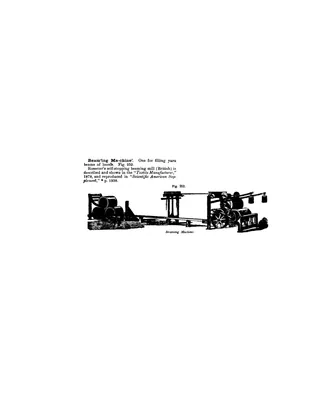
Beaming Machine
Article · 1 page
A short dictionary entry defining a beaming machine as a machine for filling the yarn beams of looms, illustrated with an engraving (Fig. 252). It notes Rosseter's self-stopping beaming mill, a British design described in the Textile Manufacturer in 1878 and reproduced in Scientific American Supplement.
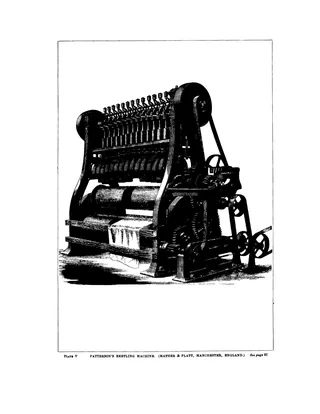
Beetling Machine
Article · 2 pages
A dictionary entry describing the beetling machine, used to finish linen and cotton cloth by hammering. It focuses on the Patterson machine made by Mather & Platt of Manchester, which uses spring-mounted hammers driven by eccentrics at 420 blows per minute, compared with about sixty for older cam-lifted fallers. Three cloth rollers on revolving disks allow continuous operation. An engraved plate illustrates the machine.
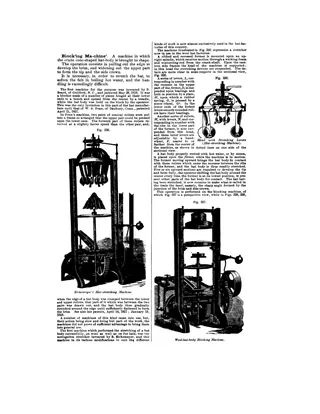
Blocking Machine
Article · 2 pages
A dictionary entry from Knight's New Mechanical Dictionary on hat blocking machines, which shape the felt hat body into brim and crown. It traces the history from D. Beard's 1816 patent through W. A. Fenn's 1857 roller machine to R. Eickemeyer's corrugation stretcher, then describes how the stretching and banding (blocking) machines work. Illustrated with figures of the stretcher, its head with levers, and three positions of the banding machine.
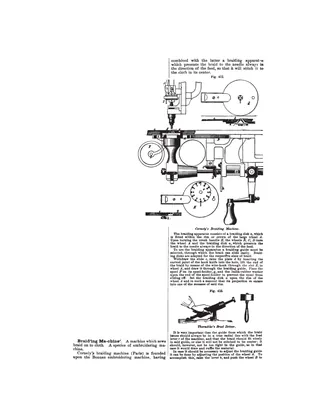
Braiding Machine
Article · 2 pages
A short dictionary entry from Knight's New Mechanical Dictionary on the braiding machine, meaning a machine that sews braid onto cloth, a kind of embroidering machine. It describes Cornely's braiding machine (Paris), based on the Bonnaz embroidering machine, with its braiding disk, wheels, crank and spool. It gives instructions for threading the braid, adjusting the guide, and changing the needle-hole plate, and notes that the Wheeler & Wilson No. 10 sewing machine can also braid.
Brim Stretcher
Article · 1 page
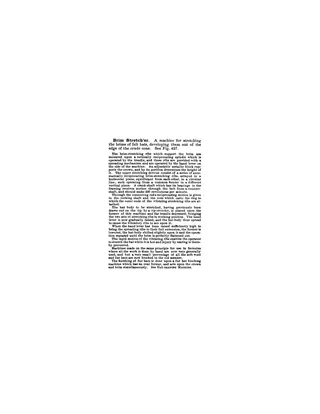
A short dictionary entry describing the brim stretcher, a machine that stretches the brims of felt hats out from the edge of the rough cone-shaped hat body. It explains the treadle-operated spindle, the spreading ribs worked by a hand lever, the crank-driven vibrating ribs and the working sequence. It also notes that such machines had largely replaced the old hand method of blocking soft wool and fur hats.
Brushing Machine
Article · 1 page
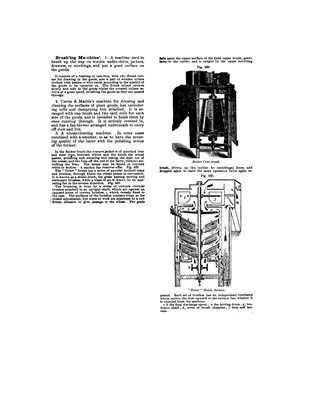
A one-page dictionary entry on the brushing machine from Knight's New Mechanical Dictionary. It describes three senses: a machine that raises the nap on woolen knit garments using teasel or wire-card rollers, Curtis & Marble's machine for dressing and cleaning piece goods, and wheat-cleaning brush machines. Two figures show the Becker Cone-brush and the 'Victor' Brush Scourer, both for wheat.
Calendering Machine
Article · 1 page
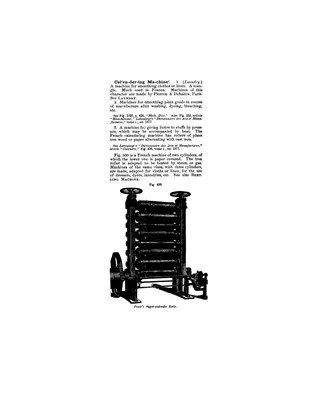
A one-page dictionary entry on calendering machines from Knight's New Mechanical Dictionary. It describes three senses: a laundry mangle for smoothing clothes and linen, machines for smoothing piece goods after washing, dyeing and bleaching, and machines that give lustre to fabrics by pressure and heat. It mentions French machines with alternating wood or paper and cast iron rollers, and includes an engraving of Poole's super-calender rolls.
Calico Printing Machine
Article · 2 pages
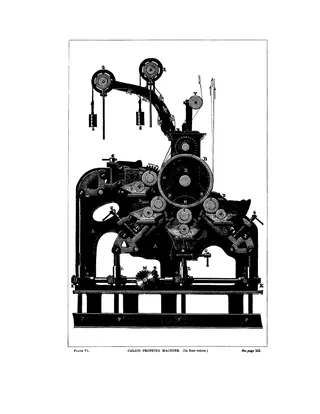
A two-page entry from Knight's New Mechanical Dictionary describing the calico printing machine, with a plate showing a four-colour roller printing machine. The text explains the impression cylinder, engraved colour cylinders, colour troughs, doctor blades, and the fabric, doubler and blanket webs, and ends with references to further sources on calico printing.
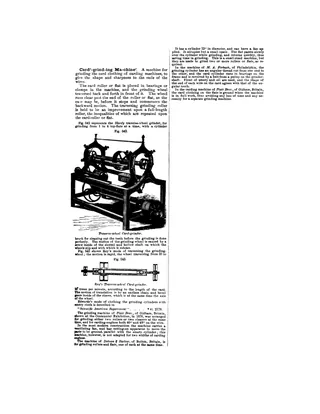
Card-Grinding Machine
Article · 1 page
A dictionary entry describing machines used to grind the card clothing of carding machines so the wire ends are shaped and sharpened. It covers the Hardy and Roy traverse-wheel grinders (Figs. 542 and 543) and the designs of Platt Bros., Dobson & Barlow, and M. A. Forbush, with brief notes on how each works.
Cardigan-Jacket Machine
Article · 1 page
A short dictionary entry defining the cardigan-jacket machine, a circular rib knitting machine that makes the polka (one-and-one) stitch for knit jackets. It describes the Gimson & Coltman machine of Leicester shown at the Centennial, which could form a welt and had a dial counting courses, producing about 6 dozen bodies a day. It also mentions Lamb's machine and refers to G. W. Gregory's report in the Centennial Reports.
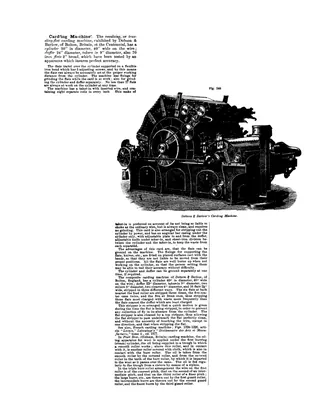
Carding Machine
Article · 1 page
A one-page dictionary entry on carding machines from Knight's New Mechanical Dictionary. It describes Dobson & Barlow's traveling-flat and composite cards shown at the Centennial Exhibition, giving cylinder, doffer, taker-in and flat dimensions and the flat-grinding and stripping arrangements. It also covers Platt Bros.' wool oiling apparatus and triple burr roller arrangement, and includes an engraving of the Dobson & Barlow machine.
Carpet Loom
Article · 1 page
A one-page dictionary entry on carpet looms from Knight's New Mechanical Dictionary. It describes the Dornan ingrain carpet needle loom, which handles 16 colored wefts using a Jacquard mechanism, a carrier needle, a hook and a latch-needle at the selvage. It also covers the Murkland power carpet loom, which weaves ingrain carpets with 20 shuttles and 16 colors under Jacquard control.
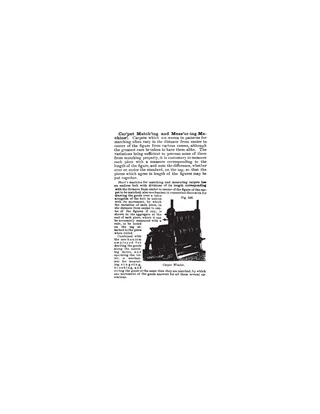
Carpet Matching and Measuring Machine
Article · 1 page
A short dictionary entry describing Short's machine for matching and measuring patterned carpets. It explains why pattern repeats vary from piece to piece and how pieces are measured and tagged so those with matching repeats can be joined. The machine uses an endless belt divided to the pattern repeat and also measures, singes, brushes and rolls the goods in one movement. An engraving (Fig. 546) shows a carpet winder.
Cloth Press
Article · 1 page
A short dictionary entry on cloth presses, machines for pressing woolen cloth in bolt or in transit. It describes the Nussey & Leachman automatic hydraulic press of Leeds, with steam-heated platen and intermittent feed, and the Harwood & Quincy continuous press of Boston, which brushes and presses cloth coming from the shearing machine. It ends with references to further sources.
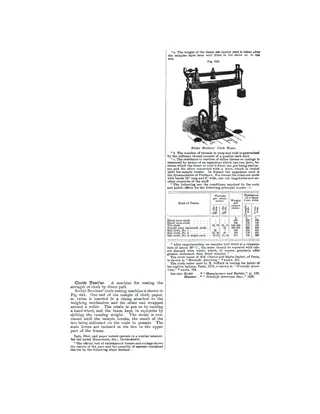
Cloth Tester
Article · 1 page
A single-page dictionary entry on cloth testers from Knight's New Mechanical Dictionary. It describes Riehlé Brothers' lever-and-weight machine that pulls a cloth, paper, or twine sample until it breaks and reads the strength in pounds. It also quotes French official testing methods (drying, thread counts, tensile resistance) with a table of requirements for hand loom cloth, tilt cloth, hammock cloth, and sail cloth, and cites other testers.
Cloth-Cutting Machine
Article · 1 page
A one-page dictionary entry on cloth-cutting machines, describing three power machines shown at the 1876 Centennial Exhibition: Albin Warth's reciprocating-blade machine, Sanson's spring-arm band-saw machine, and Fenno's rotary cutter. It closes with a list of references to periodicals on cutting, finishing, folding, pressing and testing machines for cloth.
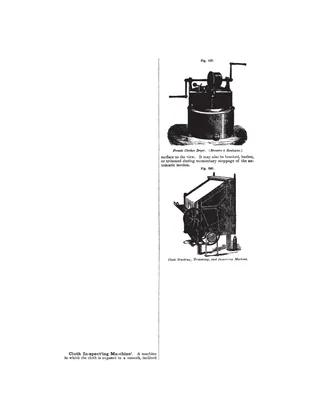
Cloth-Inspecting Machine
Article · 1 page
A single page from Knight's New Mechanical Dictionary defining the cloth-inspecting machine, in which cloth passes over a smooth, inclined surface so it can be viewed, and can be brushed, burled, or trimmed during momentary stoppage of the automatic motion. It includes an engraving of a cloth brushing, trimming, and inspecting machine (Fig. 640) and one of a French clothes dryer (Fig. 639).
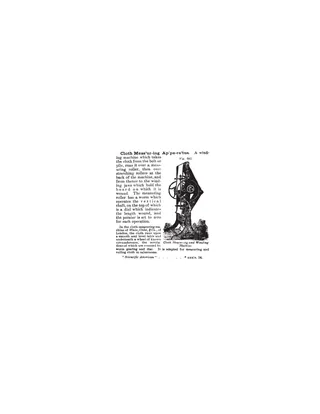
Cloth-Measuring Apparatus
Article · 1 page
A short dictionary entry describing cloth measuring apparatus: a winding machine that draws cloth from a bolt, passes it over a measuring roller and stretching rollers, and winds it onto a board while a dial shows the length. It also notes the White, Child & Co. (London) machine, in which cloth runs under a wheel of known circumference with revolutions counted by worm gearing and dial, for use in salesrooms. Includes an engraving (Fig. 641) of the machine.
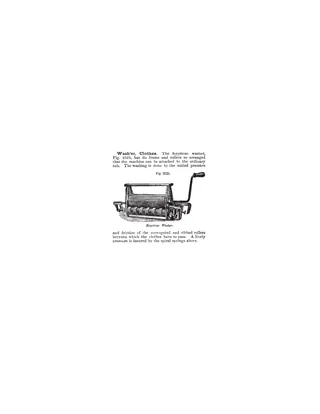
Clothes Washer
Article · 1 page
A short entry from Knight's New Mechanical Dictionary describing the Keystone clothes washer, a hand-cranked machine that attaches to an ordinary tub. Clothes are washed by pressure and friction between corrugated and ribbed rollers, held together by spiral springs. Includes one line drawing (Fig. 2525).
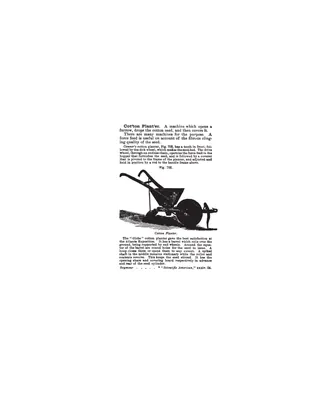
Cotton Planter
Article · 1 page
A short dictionary entry on the cotton planter, a machine that opens a furrow, drops cotton seed and covers it. It describes Conner's planter (Fig. 708), with its front tooth, disk wheel, chain-driven force-feed hopper and coverer, and the barrel-type "Globe" planter shown at the Atlanta Exposition. A line drawing of the Conner planter is included.
Cotton Plow
Article · 1 page
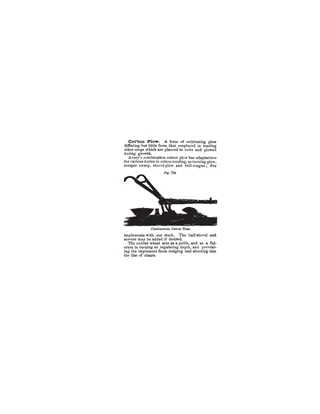
A short dictionary entry from Knight's New Mechanical Dictionary describing the cotton plow, a cultivating plow used for tending cotton grown in rows. It describes Avery's combination cotton plow, which serves as a turning plow, scraper sweep, shovel-plow and bull-tongue on one stock, and the role of its rudder wheel. Includes one line illustration (Fig. 704).
Cotton Spinning
Article · 1 page
A short dictionary entry describing the Clement process for spinning cotton directly from seed cotton. It describes a combined gin and card that makes slivers from seed cotton, covering the 36-inch top-flat self-stripping card, the small gin attachment with 7-inch saws, the brush, combing plates, and the drawing and calender rollers. It cites contemporary journal references from 1879.
Cotton Sweep
Article · 1 page
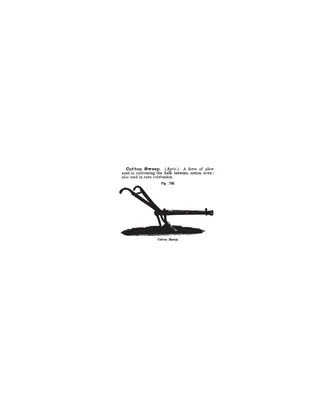
A very short dictionary entry defining the cotton sweep, an agricultural plow used to cultivate the balk between cotton rows and also in corn cultivation. It includes a line drawing of the implement (Fig. 706) showing handles, a long beam, and a flat share.
Cotton Worm Destroyer
Article · 1 page
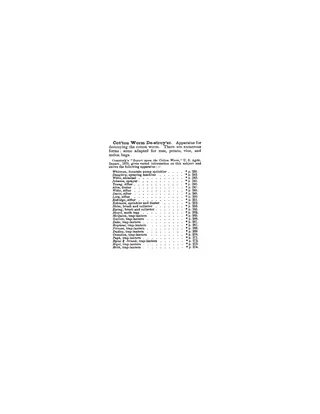
A short dictionary entry on apparatus for destroying the cotton worm, a pest of cotton crops. It notes that many forms exist, some also used against rose, potato, vine and melon bugs, and lists devices (sprinklers, sprayers, sifters, dusters, brush collectors, moth traps and trap-lanterns) with the inventors and page references in Comstock's 1879 U.S. Department of Agriculture Report upon the Cotton Worm.
Cotton-Tie Fastener
Article · 1 page
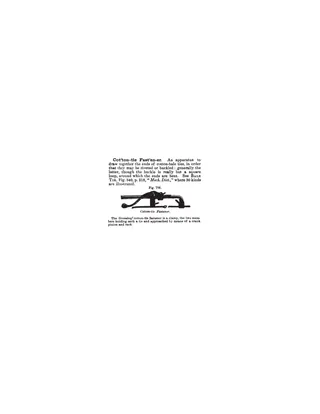
A short dictionary entry defining a cotton-tie fastener, an apparatus for drawing together the ends of cotton-bale ties so they can be buckled or riveted. It describes the Greenleaf fastener, a clamp whose two members each hold a tie and are drawn together by a crank, pinion and rack, and includes a line drawing (Fig. 796). It cross-references the Bale Tie entry, which illustrates 30 kinds.
Darning Machine
Article · 1 page
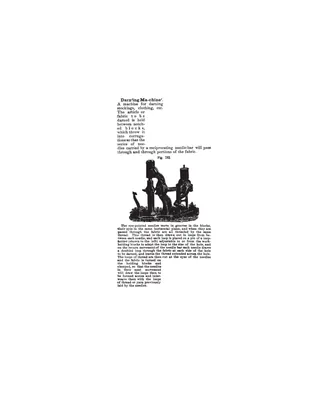
A one-page dictionary entry describing a mechanical darning machine for stockings and clothing, illustrated by Fig. 782. It explains how the fabric is held in notched blocks while a reciprocating needle-bar carries eye-pointed needles through it, and how a loop-holder places the thread loops. The fabric is then turned so a second set of threads is interwoven across the hole.
Embroidering Machine
Article · 1 page
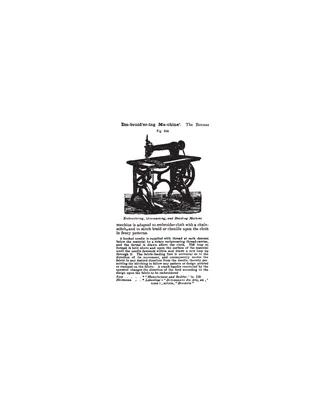
A one-page dictionary entry describing the Bonnaz embroidering, overseaming, and braiding machine, which makes chain-stitch embroidery and stitches braid or chenille onto cloth in fancy patterns. It explains the hooked needle, the rotary thread-carrier, and the universal-direction feed foot that lets the stitching follow a printed or stamped design. An engraving shows the machine on a treadle stand, and references to other sources are listed at the end.
Fulling Mill
Article · 1 page
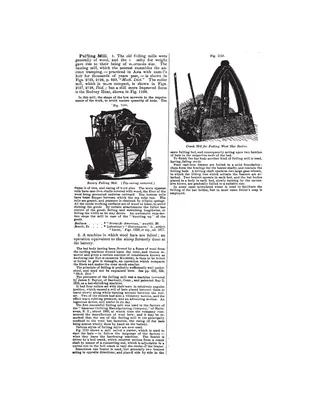
A one-page dictionary entry on the fulling mill from Knight's New Mechanical Dictionary. It first describes fulling mills for woolen cloth, including the beating and roller types and the Rodney Hunt rotary mill (Fig. 1109). It then covers mills for felting wool hat bodies, with a short history from Taylor's 1853 hat-shrinking machine to the first successful mill around 1860, and the pusher (Fig. 1110) and fulling-stock types.
Gin
Article · 3 pages
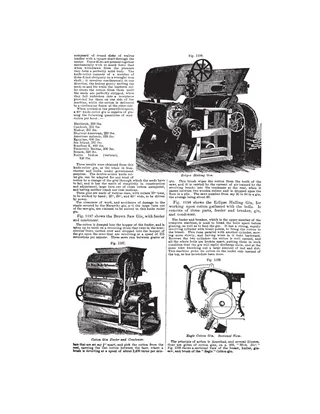
A three-page dictionary entry on cotton gins from Knight's New Mechanical Dictionary. It describes the four main kinds (roller, comb, saw, needle) and details the Macarthy double roller gin, the Dobson and Barlow knife-roller gin, the Brown Saw Gin, the Eclipse Hulling Gin, the Eagle, Clement, Gullett "Magnolia" and Scattergood needle gins. It gives operating speeds, output figures for various cotton types, and illustrations of three machines.
Hardening Machine
Article · 1 page
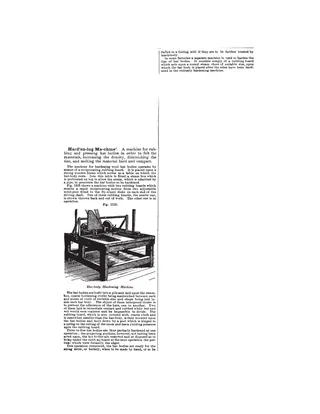
A one-page dictionary entry on the hardening machine used in hat making to felt and compact hat bodies by rubbing and pressing them with steam. It describes the wooden table with a perforated steam box, reciprocating rubbing boards driven by wrist-pins on flywheel disks, and the spring-loaded pressure post. It also explains how hat bodies are piled with separating cloths, partially hardened, and repositioned, and mentions a separate tip-hardening machine. A line drawing of the machine is included.
Hat Making
Article · 2 pages
An encyclopedia entry on the manufacture of felt hats, focused on the United States. It contrasts the older hand methods (bowing fur or wool into bats, felting on the battery, blocking and finishing) with the machinery that replaced them: forming, hardening, fulling, finishing lathes, stretching, blocking, shaping and pouncing machines. It names inventors and companies, distinguishes wool-hat from fur-hat production, and ends with cross-references to other dictionary entries and to Scientific American articles.
Hat Press
Article · 1 page
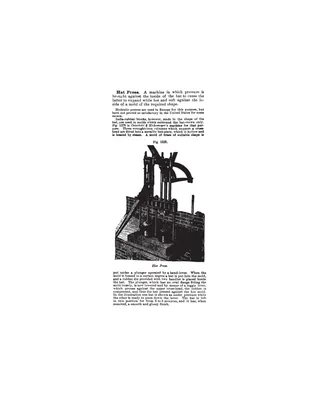
A short dictionary entry describing the hat press, a machine that uses pressure inside a hat to expand it against a heated mold. It describes Osterheld & Eickemeyer's press, with an india-rubber die, a steam-heated bed-plate, a brass mold and a toggle-lever plunger, and notes the 3 to 5 minute pressing time. An engraved illustration (Fig. 1828) accompanies the text.
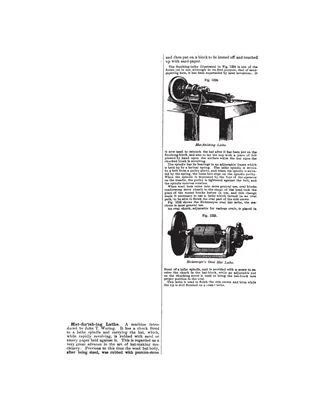
Hat-Finishing Lathe
Article · 1 page
A short dictionary entry describing the hat-finishing lathe, introduced by John T. Waring, in which a hat on a chuck is rotated while sanded or retouched. It explains the treadle-and-belt drive of the basic lathe in Fig. 1324 and the Eickemeyer oval hat lathe in Fig. 1325, which was developed for finishing oval hat blocks. It covers hat-making machinery rather than weaving.
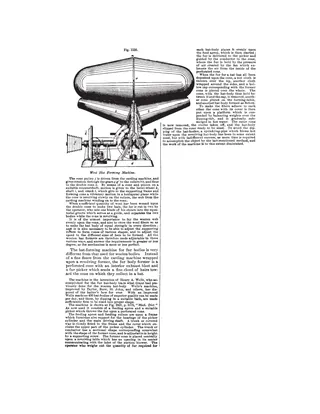
Hat-Forming Machine
Article · 2 pages
A two-page dictionary entry describing machines for forming hat-bodies from wool and fur. It explains the wool hat former, which winds a carded web onto a rotating double cone supported on conical rollers and vibrated by a crank, and the fur former, which uses a perforated cone with suction and a fur picker. It credits Mason, Grant and Henry A. Wells and describes the steps for consolidating the bodies in hot water. One engraving (Fig. 1326) shows the wool hat former.
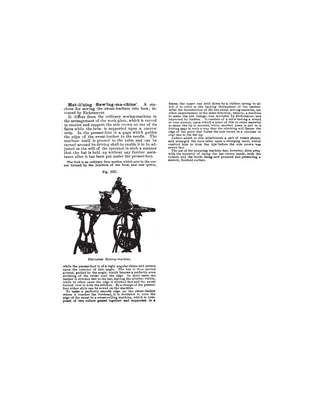
Hat-Lining Sewing Machine
Article · 1 page
A one-page dictionary entry describing a hat-lining (hat-sweat) sewing machine invented by Eickemeyer, with a line drawing (Fig. 1327). It explains the curved work-plate, presser-foot gage and feed that stitch sweat-leathers into hats, and mentions a sweat-rolling machine, a lining-making machine improved by Judson, and the pouncing machine that made lining unnecessary.
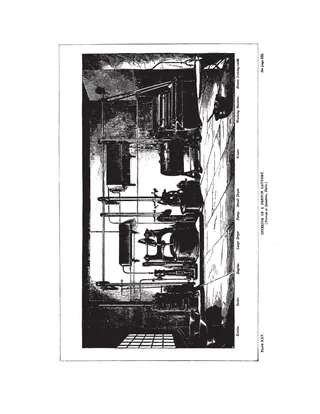
Interior of a French Laundry
Article · 1 page
A single plate from Knight's New Mechanical Dictionary showing an engraved view of the interior of a French laundry, with the equipment labeled: kettles, boiler, engine, large and small dryers, pump, rinser, washing machine and steam ironing-table. The plate credits Pierron et Dehaitre of Paris and refers readers to page 652 of the dictionary.
Ironing Machine
Article · 1 page
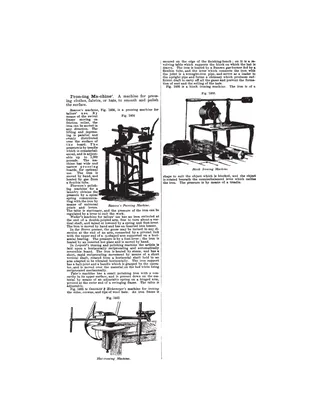
A one-page dictionary entry on ironing and pressing machines, taken from Knight's New Mechanical Dictionary. It describes several 19th-century patented devices for tailors, laundries and hat makers, including those of Sanson, Thurston, Walker, Storrs, Leopold and Tyler. It also covers hat-ironing and block-ironing machines. Mechanisms, pressure systems (treadle, spring, lever) and heating methods (gas, steam, inserted heaters) are explained, with three illustrations.
Lapper
Article · 1 page
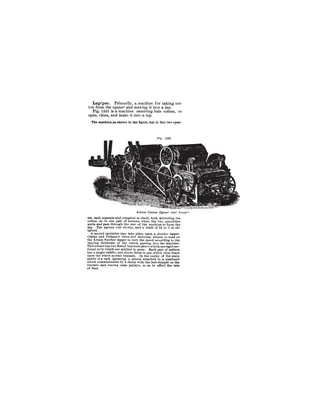
A one-page dictionary entry defining the lapper, a cotton-mill machine that takes opened cotton and forms it into a lap. It describes the Kitson Cotton Opener and Lapper (Fig. 1531), with two openers feeding one pair of screens, and the Kitson finisher lapper with Clarke and Pelham's three-roll sectional evener, which varies feed speed according to the thickness of the cotton.
Laundry Stove
Article · 1 page
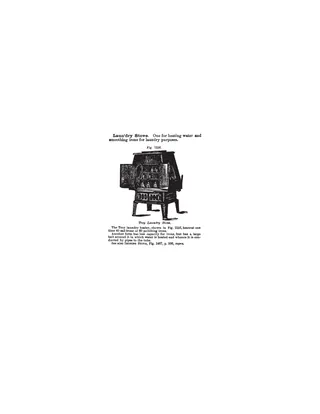
A short dictionary entry on the laundry stove, a stove for heating water and smoothing irons in laundry work. It describes the Troy laundry heater, illustrated in Fig. 1556, which heats 40 sad-irons or 80 polishing irons at once, and another form with a water-heating belt that feeds tubs through pipes. It cross-references the Ironing Stove entry.
Mohair
Article · 1 page
A short dictionary entry on mohair, the fleece of the Angora goat, quoted from Hayes' Centennial Reports. It describes the fiber's silk-like luster, its lack of felting, and its stiffness, which means it is rarely woven alone and is usually paired with cotton, silk, or wool warps. It notes the main use in Utrecht velvet (furniture plush), where the pile is formed of cut mohair warps, and refers readers to Hayes' work on the Angora goat.
Mule
Article · 1 page
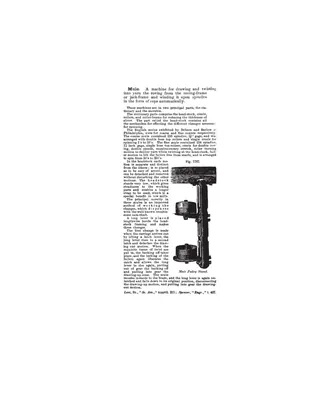
A one-page dictionary entry defining the spinning mule, a machine that draws and twists roving into yarn and winds it onto spindles as cops. It describes the stationary and movable parts and the English mules by Dobson and Barlow shown at Philadelphia, with their spindle counts, gauges and yarn counts. It also explains an improved headstock mechanism that replaces the cam-shaft with a long lever making three changes. An engraving of a mule pulley stand (Fig. 1787) accompanies the text.
Nap Meter
Article · 1 page
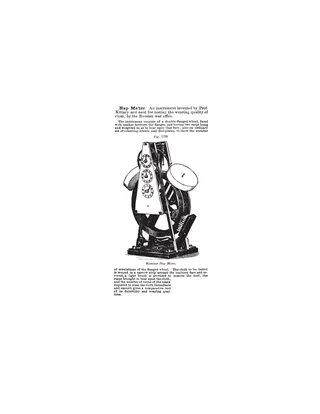
A short dictionary entry describing the Nap Meter, an instrument devised by Prof. Kittary and used by the Russian war office to test the wearing quality of cloth. A strip of cloth is wound on a leather-faced, double-flanged wheel and worn by weighted rasps, and the number of crank turns needed to wear it threadbare gives a comparative measure of durability. An engraving (Fig. 1799) shows the Russian Nap Meter with its dial counters and crank.
Napper
Article · 1 page
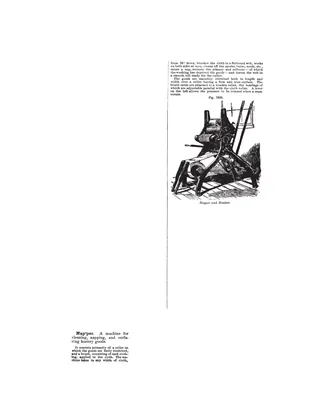
A short entry from Knight's New Mechanical Dictionary describing the napper, a machine for cleaning, napping and surfacing hosiery goods. It explains how the cloth is stretched over a roller and brushed with card clothing to raise a nap and restore softness after washing. Includes an engraved illustration (Fig. 1800) of a napper and brusher.
Needle Loom
Article · 1 page
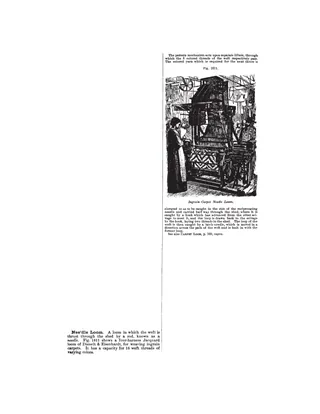
A short dictionary entry on the needle loom, in which the weft is carried through the shed by a needle. It describes the Dienelt & Eisenhardt four-harness Jacquard needle loom for weaving ingrain carpets, with a capacity of 16 weft colors. The text explains how a slotted reciprocating needle carries colored weft halfway through the shed, where a hook takes it and a latch-needle knits the loop at the selvage. An engraving (Fig. 1811) shows the loom.
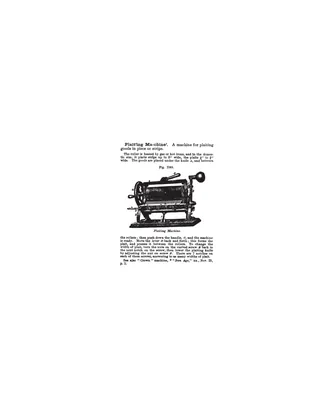
Plaiting Machine
Article · 1 page
A short dictionary entry describing a plaiting machine used to pleat fabric in pieces or strips. It explains the heated roller, the plaiting knife and the levers and screws used to operate the machine and set the plait width (about 1/4 to 3/4 inch, strips up to 6 inches wide). A line drawing (Fig. 1948) labels the main parts, and a cross-reference points to the "Crown" machine.
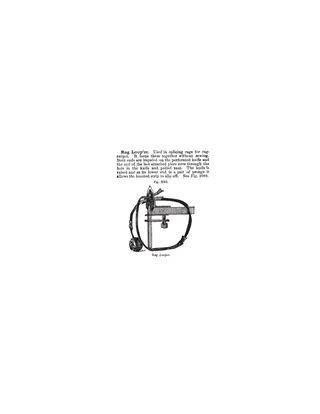
Rag Looper
Article · 1 page
A short dictionary entry from Knight's New Mechanical Dictionary describing the rag looper, a hand device used to join strips of rag for rag carpet without sewing. The rags are impaled on a perforated knife, an end is pulled through the hole to form a knot, and the knife's prongs let the knotted strip slip off. A line drawing (Fig. 2083) shows the tool on its frame.
65 documents found