Textile Documents › Authors › Author: W. Lawrence Balls
5 documents found
Sort: 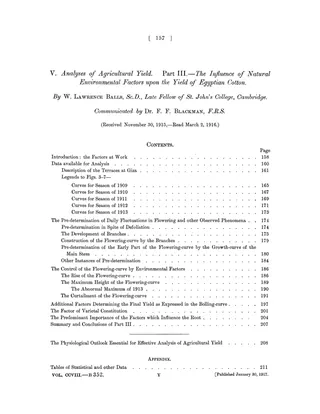
Analyses of Agricultural Yield. Part III. The Influence of Natural Environmental Factors upon the Yield of Egyptian Cotton
Article · 67 pages
A scientific paper by W. Lawrence Balls, Part III of his series on analyzing agricultural yield, studying how environmental factors such as water-table, soil fertility, soil depth, temperature, sowing date and variety affect flowering and bolling in Egyptian cotton. It draws on field experiments at Giza (the Terraces, 1909-1911, and spacing and sowing-date trials, 1912-1913), Talbia, Gemmaiza, Salaka, Mit Khalaf and Neguila. It discusses how daily flowering fluctuations can be pre-determined from main-stem and branch growth, and how a rising water-table curtails flowering. It includes many flowering-curve graphs and an appendix of data tables.
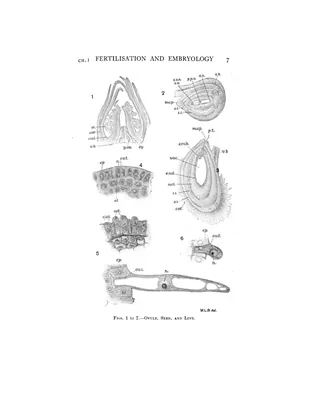
The Cotton Plant in Egypt
Book · 215 pages
A scientific monograph on the physiology and genetics of the Egyptian cotton plant, first published in 1912 and reprinted in 1919. It covers the history of cotton in Egypt, fertilisation and embryology, how temperature, water, roots and light affect growth, flowering and shedding, and the structure and growth of the cotton fibre. Later chapters treat fluctuation, commercial varieties, natural crossing, Mendelian heredity of qualitative and quantitative characters in crosses, and the economics of the Egyptian crop. It includes many graphs, microscope drawings, photographs, statistical tables, a bibliography and an index.
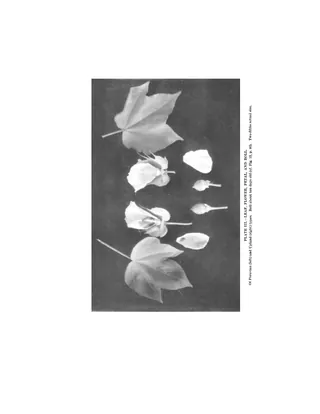
The Development and Properties of Raw Cotton
Book · 250 pages
A 1915 scientific monograph by W. Lawrence Balls, formerly botanist to the Egyptian government, on how raw cotton develops and how its properties arise. It covers pedigree and pure strains, plant development and branching, the structural and environmental development of the boll and lint hair, the link between lint properties and spinning, and cotton-growing in new districts. Appendices describe investigation methods (fibre length, strength, microscopy, grading) and give statistical tables of experiments on dated flowers and daily pickings at Giza, Egypt. Illustrated with plates, plant photographs, and many diagrams and charts.
Further Observations on Cell-wall Structure as seen in Cotton Hairs
W. Lawrence Balls; Mr H. A. Hancock · Proceedings of the Royal Society of London. Series B., June 1, 1922
Article · 16 pages
A 1922 research note by W. Lawrence Balls and H. A. Hancock on the microscopic structure of the cotton hair cell wall. It describes the cuticle, primary wall, and secondary wall, and reports a spiral fibrillar structure (pit spirals) running through the growth rings. It relates this structure to the external convolutions of the hair, using dated boll samples, swelling and pressure techniques, and convolution maps. The note ends with eight numbered conclusions and a plate of nine micrographs of Sakel cotton hairs.
Technology of Cotton Spinning
Article · 3 pages
Text of the Annual Mather Lecture to the Textile Institute (Manchester) by Dr. W. Lawrence Balls, reviewing how scientific methods have changed the cotton industry and forecasting its future. He discusses the variability of cotton hairs, blending versus sorting, competition from artificial silk, a shift of cotton toward engineering uses such as tire cords, Johannsen's pure lines in seed supply, and analysing cotton in terms of single hairs. He also anticipates super-drafting that would bypass flyframes and a continuous ring-spinning machine (his "Rule" frame) resembling the mule.
5 documents found