Textile Documents › Publications › Publication: Hawaiian Forester and Agriculturalist
9 documents found
Sort: 
Cotton and its Cultivation in the West Indies
Hawaiian Forester and Agriculturalist, January 1904
Article · 4 pages
A 1904 agricultural article summarizing Dr. Morris's recommendations for reviving cotton growing in the West Indies, especially Sea Island cotton, on former sugar cane land. It covers upland versus Sea Island varieties, soils, plant spacing, planting and picking times, seed rates, yields and costs from Texas farms, and cotton by-products (linters, oil, meal, hulls). It deals with raw fiber production, not weaving or textiles.
Cotton Industry and its Possibilities in Hawaii
Hawaiian Forester and Agriculturalist, February 1904
Article · 4 pages
A 1904 article from The Hawaiian Forester and Agriculturist considering whether cotton could become a commercial crop in Hawaii outside the sugar industry. It discusses labor conditions, the need for systematic experiments, rainfall and planting time, and the native and introduced Gossypium species. It reprints a letter from a Fall River, Massachusetts mill treasurer appraising Honolulu-grown samples (Upland-type and Egyptian-type) for staple length, quality and price. It closes with a warning about seed selection and the boll weevil.
Fibre Industry in Hawaii: Banana Fibre
Article · 10 pages
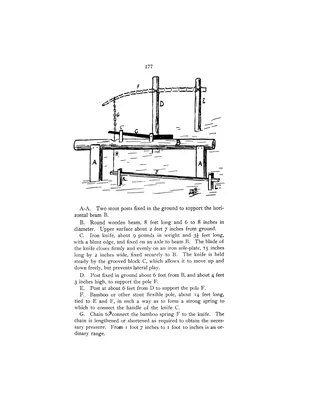
A 1904 article, the second in a series on the fibre industry in Hawaii, assessing whether abaca (Musa textilis, Manila hemp) and other banana fibres could be produced commercially in the islands. It describes Philippine cultivation, hand-and-spring-pole extraction machines (with two line drawings and part-by-part descriptions), fibre grades (bandala, lupis, tupoz), yields and costs. It then reviews Hawaiian climate and sites, wild and cultivated Hawaiian bananas, and the economics of fibre from discarded fruit-banana stems.
Fibre Industry in Hawaii: No. 3 -- Sisal
Article · 21 pages
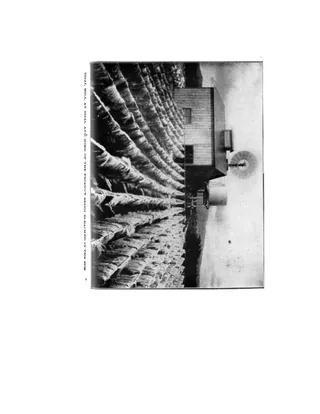
Third article in a series on the fibre industry in Hawaii, arguing that sisal (Agave rigida sisalana) is the soundest fibre crop for the islands. It covers US import values 1894-1903, plant description, soil, propagation, nursery work, transplanting, harvesting, extraction machinery (the raspador type and the Todd machine at Ewa), drying and baling, diseases and pests, and by-products. It closes with a detailed cost and profit account of the Hawaiian Sisal Co. plantation at Ewa, Oahu. Illustrations show the Ewa plantation, a sisal mill, and laborers cutting fibre. A short unrelated item on banana crates for Barbados follows.
Fibre Industry: Conditions in Hawaii at the Present Day -- Ramie
Article · 10 pages
A 1904 article from the Hawaiian Forester and Agriculturalist assessing whether ramie (China grass) cultivation and fibre production could succeed in Hawaii. It lists the fibre's properties (strength, length, lustre, dyeing, durability) and the reasons earlier ventures failed, then covers growing from cuttings and seed, the need for immediate extraction of green stems, and the Faure decorticating machine. It also outlines degumming, spinning and end uses of the yarn, gives rough cost and market estimates for a 100-acre plantation, and ends with prices for Faure and Lehmann decorticators.
Manila Hemp
Hawaiian Forester and Agriculturalist, July 1904
Article · 1 page
A short editorial note from the July 1904 Hawaiian Forester and Agriculturist introducing the second in a series of articles by Leopold Blackman on developing a fibre industry in Hawaii. It discusses abaca (Manila hemp, Musa textilis), its strength as a cordage fibre, its displacement of true hemp, and its earlier introduction to the Islands. The editor urges investigation of Hawaiian banana fibre and other native plants, and suggests an Hawaiian Agricultural College might undertake such work.
Ramie
Article · 2 pages
A short editorial introduction from the Hawaiian Forester and Agriculturalist (1904) to the potential of ramie fibre cultivation in Hawaii. It points readers to L. G. Blackman's comparison of fibre plants in the Bishop Museum Occasional Papers and says ramie is regaining a place in European markets now that machinery can handle it. It advises that planting suit small companies with some capital, notes that degumming is done after the fibre is marketed, and announces later articles on sisal, Manila hemp and coir.
Silkworm Culture
Article · 1 page
A short note in the Hawaiian Forester and Agriculturalist reprinting a U.S. Department of Agriculture circular (No. 488) on silkworm culture in the United States. It explains that the Department distributes free silkworm eggs and a manual to experimenters who have white mulberry or Osage orange for feed, and that it buys dried cocoons at 75 cents to $1 a pound. The editors suggest the U.S. Experiment Station at Honolulu can provide further information.
World's Cotton Supply
Article · 1 page
A short one-page article, quoted from the Journal of the Jamaica Agricultural Society, on the world cotton shortage in the early 1900s. It notes that Lancashire mills and manufacturers in several countries cannot get enough raw cotton, and that the United States imports Egyptian cotton. It argues that Sea Island and Egyptian varieties offer growers a good opportunity.
9 documents found