Textile Documents › Topic: Weavers' guilds and the handweaving revival
560 documents found
Sort: 
Shuttle-Craft Bulletin, Vol. XXX, No. 4 (April 1953)
Periodical · 2 pages
A two-page scan associated with the April 1953 issue of the Shuttle-Craft Bulletin, labeled 'Portfolio'. The first page is a hand-drawn pencil cover illustration of a stylized loom or warp frame with a comb-like reed and looped threads, with handwritten text giving the date and issue number. The second page shows a mounted collage of textile samples, including a purple crocheted or knitted swatch, on a tan background with a yellow triangular panel. There are no weaving drafts or readable article text.
Treasurer's report
Needle and Bobbin Club, 1922
Ephemera · 1 page
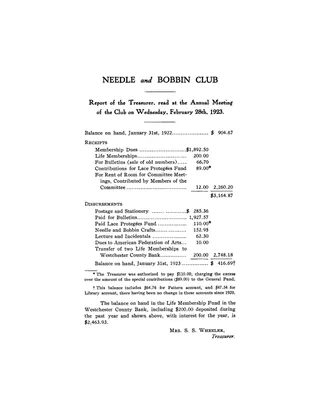
One-page financial report of the Treasurer of the Needle and Bobbin Club, read at the club's annual meeting on February 28, 1923. It lists receipts and disbursements for the year from January 31, 1922 to January 31, 1923, including membership dues, life memberships, bulletin costs, and the Lace Protegées Fund, and gives the closing balance and the Life Membership Fund total.
Treasurer's report
Needle and Bobbin Club, 1923
Ephemera · 1 page
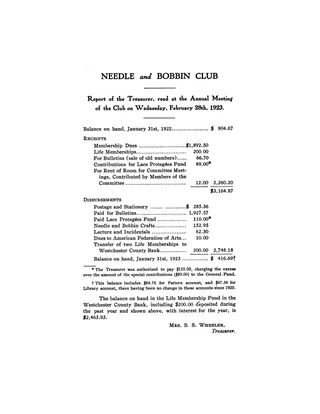
A one-page financial report of the Needle and Bobbin Club, read by the Treasurer at the Annual Meeting on February 28, 1923. It lists receipts (membership dues, life memberships, bulletin sales, Lace Protegées Fund contributions) and disbursements (postage, bulletins, crafts, lectures, dues to the American Federation of Arts), with balances and footnotes on the Pattern and Library accounts and the Life Membership Fund.
The Commercial Weaver vs. the Amateur Weaver
Article · 2 pages
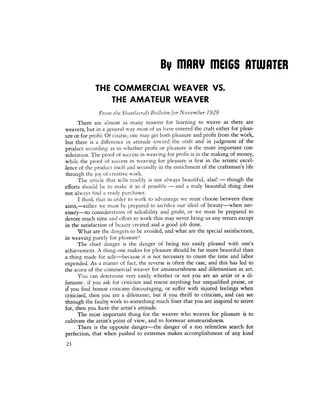
A short essay by Mary Meigs Atwater contrasting weaving for profit with weaving for pleasure. She argues that commercial weavers must sometimes compromise beauty for saleability, while amateurs risk being too easily satisfied and should adopt an artist's attitude toward criticism and workmanship. She concludes that amateur weavers carry responsibility for setting standards of beauty and craftsmanship that commercial weavers follow.
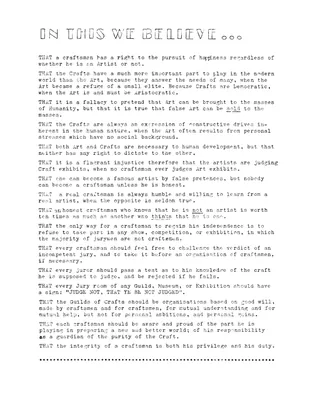
In This We Believe
Master Weaver, November 1958
Article · 1 page
A one-page statement of beliefs about the place of crafts and craftsmen relative to art and artists. It argues that crafts are democratic and answer common needs, while art is aristocratic. It objects to artists judging craft exhibitions and calls for juries made up of knowledgeable craftsmen. It also sets out ideals for craft guilds and for the honesty and integrity of the craftsman.
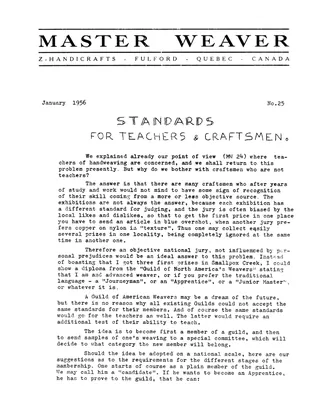
Standards for Teachers & Craftsmen
Master Weaver, January 1956
Article · 3 pages
An article from Master Weaver No. 25 (January 1956) proposing a system of national standards and grading for handweavers and teachers. It outlines tests for four grades (Apprentice, Journeyman, Junior Master, Senior Master), listing the samples, articles and written descriptions required at each level. It also discusses how a jury should be chosen and how entries should be judged anonymously.
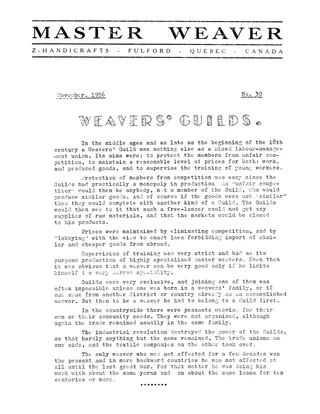
Weavers' Guilds
Master Weaver, November 1956
Article · 3 pages
A short article from the Master Weaver newsletter that compares medieval weavers' guilds with modern handweavers' guilds. It describes how the old guilds protected members from competition, kept prices up and supervised training, and says modern guilds still share those aims. It gives advice on choosing and joining a guild, including checking by-laws, registration and democratic elections, and it distinguishes member-run guilds from commercial guild-like businesses.
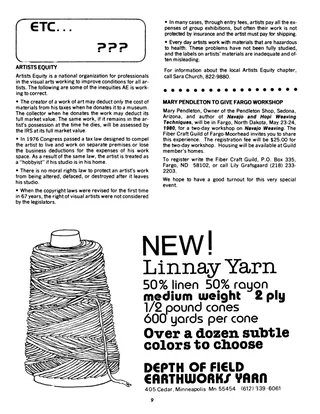
Artists Equity
Minnesota Weaver, February 1980
Article · 1 page
A one-page item from the Minnesota Weaver (February 1980) describing Artists Equity, a national organization for visual artists, and the tax, copyright, moral rights, exhibition and health-hazard issues it works to change. The page also announces a May 1980 two-day Navajo weaving workshop in Fargo given by Mary Pendleton, and carries an advertisement for Linnay linen/rayon yarn from Depth of Field Earthworks Yarn in Minneapolis.
The Demand for Art in America
Article · 5 pages
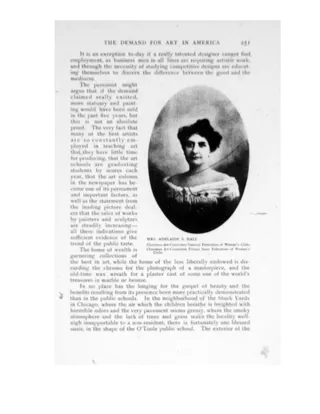
A 1900 essay from Brush and Pencil arguing that public demand for art in the United States is growing. The author cites the Columbian Exposition, art in public schools, women's club art study, and rising interest in craftsmen's work. A short passage mentions rugs and portières made by rural women in Maine, New Hampshire and Georgia under the patronage of Candace Wheeler. The scan opens with the end of an article on E. E. Simmons and includes a halftone of his mural 'The Justice of the Law' and a portrait of the author.
Letter From Alexander Graham Bell To His Sister
Letter from Alexander Graham Bell to his wife Mabel Bell, October 1899
Ephemera · 2 pages
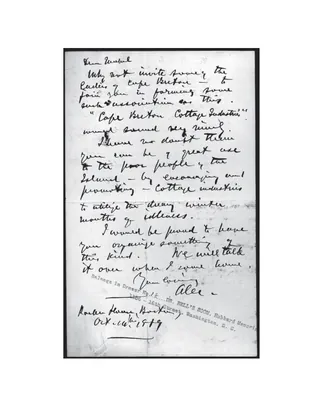
Letter from Alexander Graham Bell suggesting the founding of an association called "Cape Breton Cottage Industries" to give the poor people of the island work during the idle winter months. The scan has a handwritten draft or version and a typed transcript. The letter is addressed to Mabel, his wife, and the two pages differ slightly in wording, salutation and date.
Minnesota Weaver, Vol. 6, No. 4 (December 1980)
Minnesota Weaver, December 1980
Periodical · 4 pages
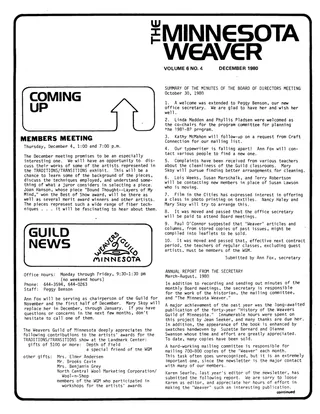
A four-page issue of the Weavers Guild of Minnesota newsletter from December 1980. It carries guild business: board meeting minutes, the secretary's annual report, a report on the newsletter's finances, and the treasurer's report with the 1979-80 balance sheet and income and expense statement. It also has school news announcing a new Work-Study program, a column by Kathy Tilton McMahon on organizational challenge, and a bulletin board of classifieds for looms, wheels, and wanted items.
The Seattle Weavers Guild
Article · 2 pages
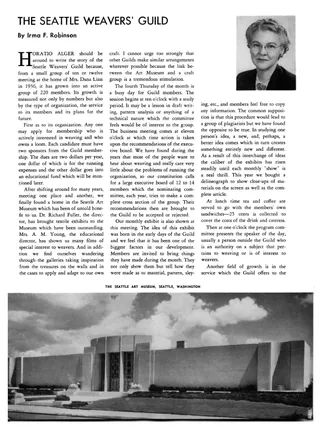
A 1950 article by Irma F. Robinson describing the Seattle Weavers' Guild, which grew from ten or twelve members in 1936 to 220. It covers membership rules and dues, the guild's home at the Seattle Art Museum, monthly meetings with study periods, member exhibits and speakers, a lending library, study groups with rented folding looms, a summer school taught by Victoria Strand, the educational fund and annual sale, and a juried museum exhibit. The scan also includes the start of a news item on the Hand Weavers' Guild of Connecticut.
Weaving in a Westchester Farm House
Article · 3 pages
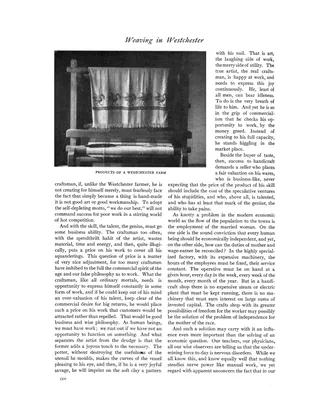
A 1906 essay on the revival of hand weaving and other handicrafts on an isolated Westchester County, New York farm, where a family wove textiles and made furniture and copper utensils in off-hours from farm work. Blatch argues for the economic and social worth of handicraft, discussing consumer demand for hand-made goods, the example of William Morris and Ruskin, the craftsman's need for skill and business sense, and craft work as a solution for married women's employment. It includes photographs titled 'Products of a Westchester Farm' and 'At the Loom'; there is no technical weaving instruction.
Art or Craft?
Master Weaver, March 1958
Article · 3 pages
An editorial from the Canadian periodical Master Weaver arguing that most handweavers are craftsmen rather than artists and should not be pressured to be "creative" or "modern". It contrasts craft, grounded in technique and tradition, with "arty" experimental weaving, cites Scandinavian folk-based design as a model, and says craftsmen preserve handweaving knowledge. It ends with a short "From the Classics" excerpt from the History of Brome County, about a woman who sheared, spun and wove cloth for trousers in three days.
Hand-Weaving Industry
Textile World Journal, June 2, 1917
Article · 1 page
A short 1917 trade-journal note on the Biltmore Industries of Asheville, North Carolina, which grew out of an industrial school begun in 1901 at Biltmore Village under Mrs. George W. Vanderbilt. It reports the sale of the enterprise to F. L. Seely of the Grove Park Inn, the building of new shops on the Inn grounds, and the reputation of Biltmore Homespun, an all-wool, unshrinkable, colorfast cloth. The management also asks for information on carding and spinning machinery.
Minnesota Weavers Guild Calendar (September-October 1982)
Minnesota Weavers Guild Calendar, September-October 1982
Periodical · 4 pages
Bimonthly calendar of the Weavers Guild of Minnesota for September-October 1982. It announces member meetings with Peter Collingwood, Jan Meyers and Mary Walker Phillips, committee and board news, and plans for the 1984 Midwest Weavers Conference. It also reports ribbon winners at the Nordic Fest in Decorah, Iowa, and ends with calendar grids listing classes, workshops and events with fees and instructors.
Standards
Master Weaver, November 1955
Article · 3 pages
A 1955 editorial from the Master Weaver newsletter (Z-Handicrafts, Fulford, Quebec) arguing that handweaving needs recognized standards for teachers and for goods sold. It proposes national or regional weavers' guilds to qualify teachers and to issue uniform approval tags for articles. It also suggests a four-tier classification of woven goods (exclusive, hand-woven, hand-loomed on fly-shuttle looms, hand-made on small automatic looms), with prices set accordingly. It also urges locally characteristic design for the tourist trade, and announces two follow-up articles.
Technical Perfection
Master Weaver, February 1952
Article · 1 page
A short essay from Master Weaver on how much technical perfection handweavers should pursue. The author refers to Mary Atwater's warning about deliberate mistakes and argues that handweaving should not imitate power-loom regularity. The essay discusses threading and treadling accuracy, edges, beating and knots, and contrasts the neatness of industrial weaving with the looser standards of European peasant and American Indian weaving.
Why do We Weave?
Master Weaver, December 1951
Article · 2 pages
Two pages from the first issue of Master Weaver (December 1951). The main piece, "Why Do We Weave?", considers why people take up handweaving as a hobby in a mechanised age, citing emotional attachment to the past and the satisfaction of making a whole product oneself, and invites readers to write in with their views. The pages also include the end of a note on swivel weave technique (warp and weft setting, cutting floats, uses) and a short piece on variations of four-block patterns, showing how block combinations yield 64 symmetrical patterns on 5 frames in swivel or lace.
American Handweaving --- A Mid-Century Viewpoint
Article · 3 pages
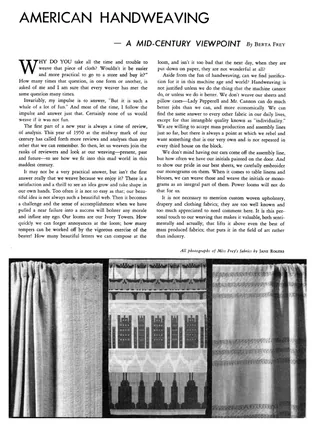
Berta Frey's essay in the first issue of Handweaver and Craftsman reviews American handweaving at the midpoint of the twentieth century. She argues that handweaving is justified as art and individual expression rather than as production competing with machines, and she criticizes the pattern-collecting habits of the 1920s and 30s and the later swing to color and texture. She urges weavers to adapt traditional weaves such as overshot (Honeysuckle) and summer and winter to modern uses. An editorial note describes the accompanying photographs of her fabrics, including threadings, yarns, and commissions.
Craft or Business
Master Weaver, July 1953
Article · 3 pages
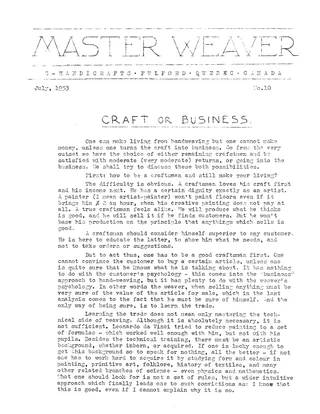
An article from the Master Weaver newsletter (July 1953) discussing whether handweaving should be pursued as a craft or as a business. It compares the craftsman's path, with moderate income supplemented by teaching, lecturing and publishing, with the business path of designing simple-to-weave fabrics for hired "shuttle pushers", pre-made warps and warping mills. A second short piece, "Dropped Weaves", begins on page 3 and introduces weaves in which parts of the fabric are left unwoven as floats, including frame requirements for dropped tabby and twill.
Guild of the Needle and Bobbin Crafts
Article · 3 pages
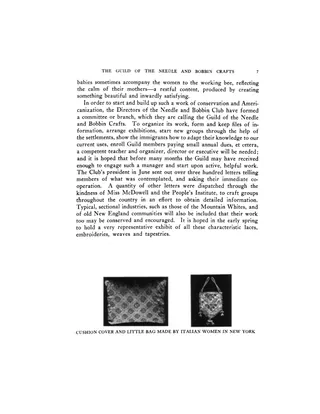
A short article from the Bulletin of the Needle and Bobbin Club announcing the formation of the Guild of the Needle and Bobbin Crafts, a committee of the club. The Guild aims to enlist immigrant women in New York, especially Italian and Ukrainian women, to practice and sell the embroidery, lace and weaving they learned in their native lands, as a form of cultural conservation and Americanization. The text quotes a People's Institute pamphlet on immigrant arts and describes plans for a director, file of information, settlement groups and an exhibition. One photograph shows a cushion cover and little bag made by Italian women in New York.
Handicrafts Back in English Peasant Homes
Article · 10 pages
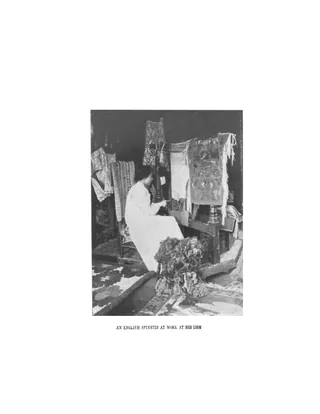
A 1906 Craftsman article by Alice Dinsmore on the revival of hand spinning, weaving and other handicrafts in English cottage communities under the influence of John Ruskin. It describes Marion Twelves's Ruskin Linen Industry in the Lake District (begun 1883), the Keswick School of Industrial Art run by Canon and Mrs. Rawnsley, Miss Clive Bayley's weaving school at Shottery, and the Canterbury weavers. Illustrated with photographs of a woman at a handloom, cottages, and the Keswick school; it contains no weaving drafts.
Minnesota Weaver (July 1976)
Minnesota Weaver, July 1976
Periodical · 2 pages
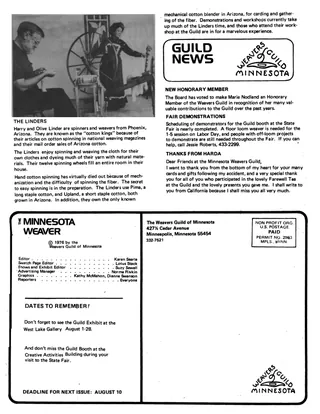
A two-page July 1976 "July Extra" issue of the Minnesota Weaver, newsletter of the Weavers Guild of Minnesota. It announces upcoming workshops: a three-day cotton and wool spinning workshop with Harry and Olive Linder of Phoenix in September 1976, and two workshops by fiber artist Walter Nottingham ("The Figure in Fiber" and a "Critique Workshop"). It also includes short Guild News items on an honorary membership, State Fair demonstrations, and a thank-you note, plus the masthead and dates to remember.
Minnesota Weaver Quarterly, Vol. IV, No. 1 (Fall 1984)
Minnesota Weaver Quarterly, Fall 1984
Periodical · 13 pages
A slimmed-down Fall 1984 issue of the Weavers Guild of Minnesota's newsletter, announcing a change of editor from Phyllis Pladsen to Margaret Jones. It includes a wrap-up of the 31st Midwest Weavers Conference (June 1984, St. Catherine's College, St. Paul, theme 'Byways in Fiber'), a September-October class calendar, Spinning Wheel Day, and instructions for the Fiber Source group-buying system. It also carries guild notices, classified ads, and advertisements for looms, yarn shops and fabric stores.
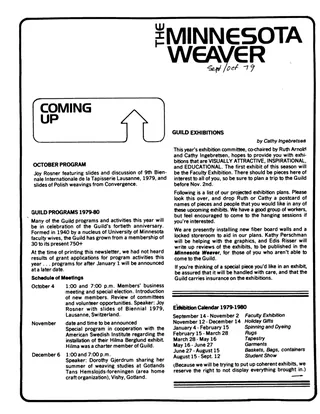
Minnesota Weaver, Vol. 5, No. 1 (September-October 1979)
Minnesota Weaver, September-October 1979
Periodical · 18 pages
Sept/Oct 1979 issue of the Weavers Guild of Minnesota newsletter, with guild news ahead of the guild's 40th anniversary year. It covers the 1979-80 program and exhibition calendars, proposed by-law changes, a weavers co-op task force summary, goals and finance meeting minutes, and a draft 1979-80 budget. Other items include library, school and workshop news (a trapunto workshop with Linda Nelson Bryan), reports on the Midwest Weavers Conference in Milwaukee and guild members' awards, a spinning Q&A column on wheels and spindles, show listings, a bulletin board and advertisements. It contains no weaving drafts.
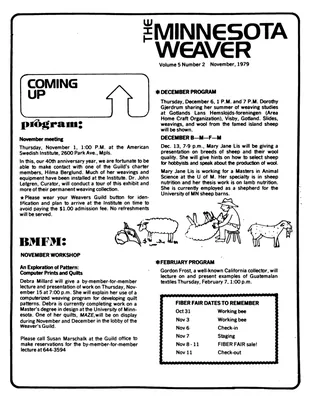
Minnesota Weaver, Vol. 5, No. 2 (November 1979)
Minnesota Weaver, November 1979
Periodical · 12 pages
November 1979 issue of the Weavers Guild of Minnesota newsletter, covering upcoming programs, board and committee news, the Fiber Fair sale (Nov. 8-11), school and exhibit notices, and a president's column announcing a state arts grant. Features include a tribute to charter member Hilma Berglund, whose weavings are now at the American Swedish Institute, and a spinner's humorous essay on fear of new equipment, followed by a Q&A on woods for spinning wheels. It also carries a new members list, shows and exhibits listings, classifieds, and advertisements for yarn shops, looms and Fiberarts magazine.
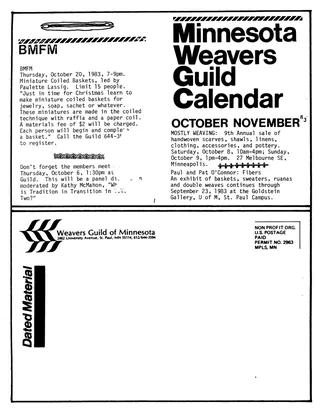
Minnesota Weavers Guild Calendar (October-November 1983)
Minnesota Weavers Guild Calendar, October-November 1983
Periodical · 5 pages
October-November 1983 issue of the Weavers Guild of Minnesota's calendar newsletter. It has a co-president's message, board minutes from July 1983, an announcement of a feltmaking workshop with Rowen Schussheim, committee news (Harrisville Yarns feature), and bulletin board ads for looms. The last page is a calendar of classes, workshops, member meetings and the November Fiber Fair, with instructors and fees.
Plying the Needle and the Bobbin To-Day
Article · 5 pages
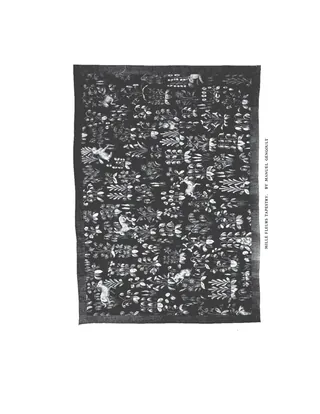
A 1919 essay by Florence N. Levy of the Art Alliance of America arguing that hand needlework, lace, embroidery, tapestry and handweaving deserve encouragement in the United States. She links handicraft to industrial design, employment and social welfare, and cites efforts to revive tapestry weaving in Scotland and to train disabled men. She also mentions village handweaving in France and Italy and Scottish hand-made tweeds. She closes with proposals for the Needle and Bobbin Club to cooperate with the Art Alliance, and a photograph shows a Mille Fleurs tapestry by Manuel Gengoult.
Plymouth Colony Farms
Handweaver and Craftsman, April 1950
Article · 2 pages
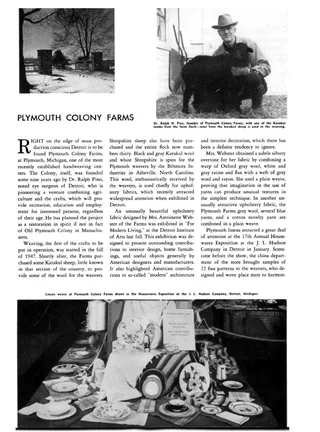
A short article from the first issue of Handweaver and Craftsman describing Plymouth Colony Farms in Plymouth, Michigan, a handweaving center founded by Detroit eye surgeon Dr. Ralph Pino. It covers the farm's Karakul and Shropshire sheep, wool spun by Biltmore Industries, upholstery fabrics (including a plain weave design by Antoinette Webster shown at the Detroit Institute of Arts), and place mats and linens woven for a J. L. Hudson Company exhibition. It also notes the shop's custom orders and the individual-instruction weaving school.
Quality of Charity - On What Basis Should Weaving be Offered for Sale
Handweaver and Craftsman, May 1950
Article · 3 pages
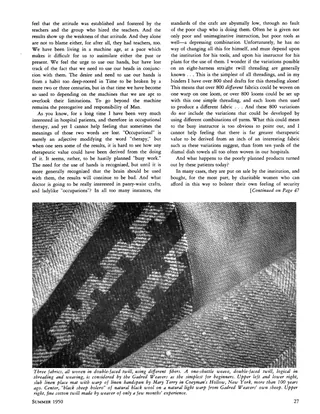
An essay by the Gadred Weavers of New Scotland, New York, framed as an exchange of letters between "McGad" and "Chase". It criticizes handwoven goods sold at charity and craft sales for poor quality, such as unwashed fabrics and routine overshot patterns, and blames weak teaching and low standards, including in hospital occupational therapy. It argues for better planning, knowledge of tools, materials and history, and for selling on quality rather than charity. A photograph shows three double-faced twill fabrics, and the pages end with the start of a section on finishing, fulling and scouring handwoven fabrics, plus an advertisement for a braided rug book.
A Revival of Feminine Handicrafts
Article · 5 pages
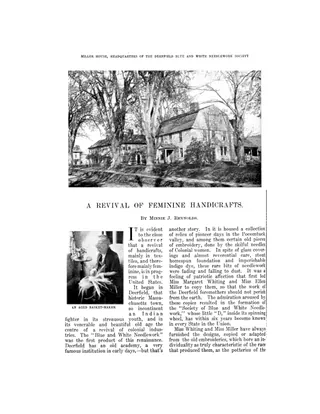
A 1902 magazine article surveying the American revival of handicrafts, especially textiles, led by women. It describes the Deerfield, Massachusetts Blue and White Needlework society and its cooperative payment scheme, Deerfield basket-making and hand-woven rag rugs, the Cranberry Islands hooked rugs, and the Abnakee pulled rug. It also covers the Sabatos yarn rugs and hand-woven fabrics of Centre Lovell, Maine, and a planned tapestry settlement in Ohio or West Virginia. It closes with a defense of handwork against machine production. Illustrated with photographs of the Miller House, basket-makers, rug warping and weaving, and Sabatos rug designs.
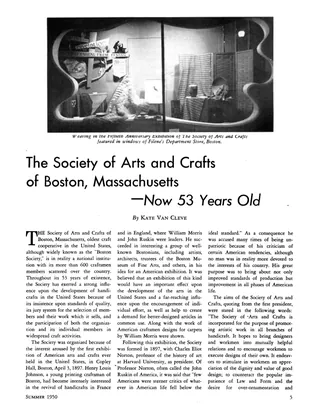
The Society of Arts and Crafts of Boston, Massachusetts -- Now 53 Years Old
Article · 5 pages
Article tracing the history of the Society of Arts and Crafts of Boston, the oldest American craft cooperative, from its founding after the 1897 Copley Hall exhibition through 1950. It covers the jury system, craftsman/master/medalist ranks (including weaving requirements for master craftsman), major exhibitions, the Newbury Street salesroom, and director Humphrey Emery's comments on trends in handweaving and the craftsman's role. Photographs show handwoven linens, scarfs and ties, silver, and showrooms; page 1 carries captions for two drapery fabrics, and the last page has a short note on the Contemporary Hand Weavers of Texas.
Threadbender Newsletter (1952)
Periodical · 10 pages
A collection of 1952 Threadbenders newsletter sheets from the Shuttle Craft Guild of Virginia City, Montana, issued by Harriet D. Tidball to Guild members. The January, February and May sheets cover the Handweaver's Bulletin, a curtain project with yarn prices, and a rise in Guild membership dues. The letters of August, September, November and December give news of suppliers, yarn sources, books, student certificates, exchange contacts, corrections to the Bulletin's weave classification and Christmas gift offers.
Threadbender Newsletter (1954)
Periodical · 11 pages
Monthly Threadbenders News Letter from the Shuttle Craft Guild (Kelseyville, California) for January through July 1954, the cover letters that accompanied the Guild's Bulletin. They report on the Ceylon Fund, which raised money for looms for Dr Edith Ludowyk's village weaving workshop, and on Guild business, instruction schedules and visitor policy. They also review and announce books, folios and yarn suppliers, including Mrs Atwater's Byways in Handweaving, Malin Selander's Vavmonster, and Mary Black's Handweavers' Reference. The issues include a Directory of Sources of yarns for handweavers, a note on the Bateman weaves and the Home Study Course.
Warp & Weft, Vol. 7, No. 10 (December 1954)
December 1954
Periodical · 8 pages · weaving drafts
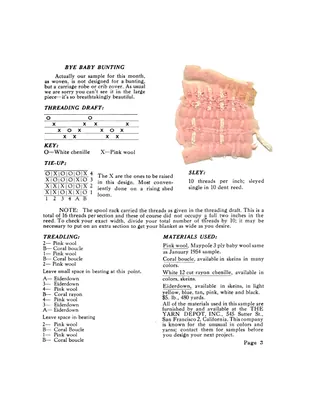
December 1954 issue of Warp & Weft, a small handweaving newsletter. It reports on a Twin Cities Weavers' Guild meeting featuring Canadian weavers, a loom donation to Hull House, and stoles by Lenore Tawney and Florence Parsons. The monthly sample, "Bye Baby Bunting," is a crib cover or carriage robe in pink wool, white chenille, coral bouclé and eiderdown, adapted from Lois Lesher's "Blue Spruce" upholstery in Elmer Hickman's folio New Weaves from Old, with a threading draft, tie-up, sley and treadling. Other items cover a color exhibit by Louis Cheskin, a woven Christmas card idea, humor pieces, a short verse drama, and a holiday greeting page of advertisers.
The Weaver Craftsman in the Contemporary Scene
Article · 3 pages
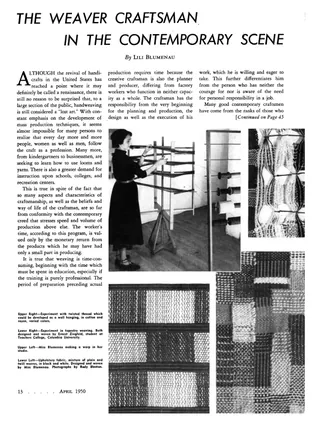
An essay on the place of the handweaver as a craftsman in mid-twentieth-century America. Blumenau discusses the revival of handicrafts, the craftsman's responsibility for both design and execution, and the contrast with mass production. She sets out the weaver's basic principles: studying yarns and fibers, mastering plain, twill and satin weaves, and working with color. She argues for combined artistic and technical training and against copying historical patterns. Photographs show student and instructor work, including a tapestry experiment, a twisted-thread wall hanging and an upholstery fabric.
Weaving in the Far West
Handweaver and Craftsman, April 1950
Article · 3 pages
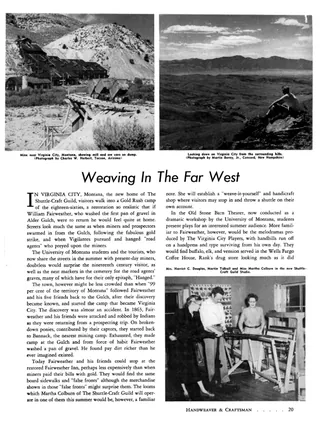
An article from the first issue of Handweaver & Craftsman describing the move of The Shuttle-Craft Guild to restored Gold Rush-era Virginia City, Montana. It covers the town's history and restoration by Charles Bovey, the Guild's history from Mary Atwater to Harriet Douglas, and the new log studio with twenty looms. It also gives details of summer courses, beginner classes, university credit and veterans' training, and includes photographs of the town and Guild fabrics.
An Experiment
Article · 6 pages
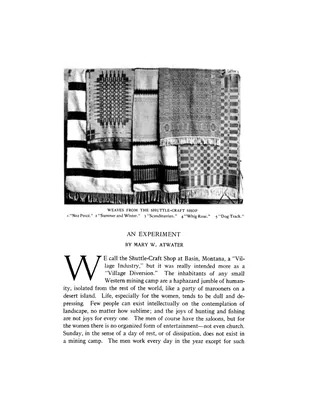
Mary Meigs Atwater describes the Shuttle-Craft Shop, a small weaving enterprise she founded in the mining camp of Basin, Montana, as a diversion for isolated local women. She discusses which groups of women took to weaving and how the shop moved from four-harness overshot to Summer and Winter weave. She describes the pieces shown in the illustrations (rugs, knitting bags, pillow top, card-woven girdle), mentions blue-print drafts of old patterns including John Landes patterns, and appeals to club members to share old drafts. It contains no weaving drafts.
Handweaving in the South Today
Article · 2 pages
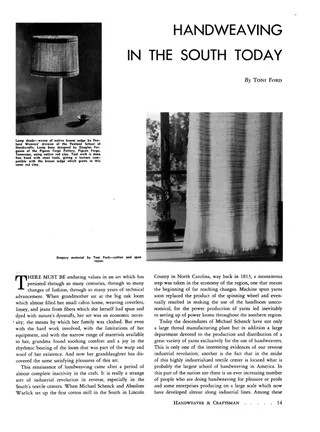
A short overview essay on the revival of handweaving in the American South around 1950. It traces the move from household weaving to mill production, beginning with the first southern cotton mill in 1813, and then to a modern craft movement. It mentions schools and producers such as Penland, Black Mountain College, the Southern Highland Handicraft Guild, Biltmore Industries and Churchill's of Kentucky. Photographs show a broom sedge lamp shade, drapery fabric and place mats woven from broom sedge and wood strips.
Higher Standards the Need of American Crafts
Article · 3 pages
A 1919 essay urging American industrial arts and handicrafts to raise their standards of design and workmanship in the postwar period. Bach points to the growth of the American dyestuffs industry during the war as a model, warns of renewed European competition, and calls for design schools, museum use, and craftsmen who guide manufacturers by example. A short piece by G. W. follows, asking club members to take responsibility for American decorative art standards.
It's Pretty - But is it Art?
Article · 3 pages
Mary M. Atwater responds to Anni Albers' article "Handweaving Today" and the Henning-Rees article from the January-February 1941 Weaver. She rejects the ideas that handweaving exists to make models for industry, that it should be "free-formed" and not meant for use, and that durability does not matter. She also disputes the claim that texture and color alone are real design elements and that pattern weaving is outdated, and she defends pattern, usefulness and "approved repetition." The scan also includes Cornelia Stone's article on double weaving on eight harnesses, based on an 1849 Baltimore weaving manual by Abslam Hecht.
The Kitsap Weaving and Spinning Guild
Article · 3 pages
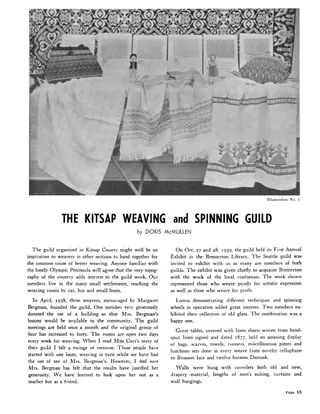
An article by Doris McMullen describing the Kitsap Weaving and Spinning Guild of Kitsap County, Washington, founded in April 1938 with the encouragement of Margaret Bergman. It reports on the guild's First Annual Exhibit at the Bremerton Library in October 1939, covering coverlets, a Ghiordes-knot rug, Swedish aprons in rose path, Dukagang wall hangings, and silk yardage, with six photographic illustrations of the display.
Minnesota Weaver, Vol. 3, No. 4 (December 1977 - January 1978)
Minnesota Weaver, December 1977 - January 1978
Periodical · 18 pages · weaving drafts
December 1977/January 1978 issue of the Weavers Guild of Minnesota newsletter. It covers guild business (open house, board meeting summary, officer profiles, workshops and classes, yarn co-op, ads and classifieds) along with member news, exhibits and a humorous president's column. Features include a reprinted humorous piece by a weaver's husband, a report on the Minneapolis Institute of Art textile collection, and Suzanne Baizerman's article on ancient Peruvian double-cloth with structure diagrams and threading drafts.
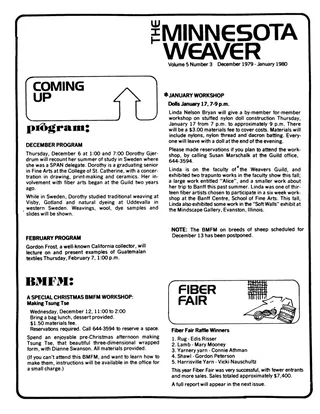
Minnesota Weaver, Vol. 5, No. 3 (December 1979-January 1980)
Minnesota Weaver, December 1979-January 1980
Periodical · 14 pages
Issue of the Weavers Guild of Minnesota newsletter for December 1979-January 1980. It covers Guild programs and workshops (Swedish study report, Tsung Tse and doll workshops, Guatemalan textile lecture), the fiscal year-end financial report, board meeting summaries, proposed by-law changes, and announcement of the Traditions/Transitions juried exhibit planned for April 1980 for the Guild's 40th anniversary. Also includes faculty profiles, Guild exhibits (quilts by Debra Millard), a dyeing Q&A column, a humorous Penelope fable, a notice of the MIA lace exhibition, supplier advertisements and classifieds.
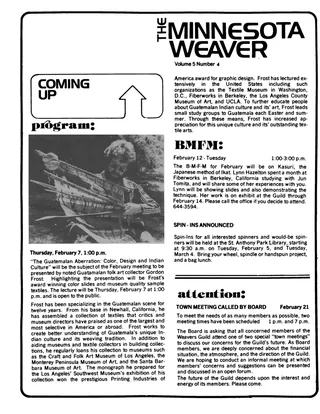
Minnesota Weaver, Vol. 5, No. 4 (December 1979-January 1980)
Minnesota Weaver, December 1979-January 1980
Periodical · 12 pages
Combined December 1979-January 1980 issue of the Weavers Guild of Minnesota newsletter. It announces the February 1980 guild program (Gordon Frost on Guatemalan textiles), a Kasuri/ikat program, spin-ins, and a town meeting on the Guild's finances. It also carries a treasurer's report, board minutes, a review of the Spinning and Dyeing Exhibit, a dye garden report with a dye-plant and mordant chart, a Mayan cotton myth, HGA and Convergence '80 news, group orders, ads and a bulletin board.
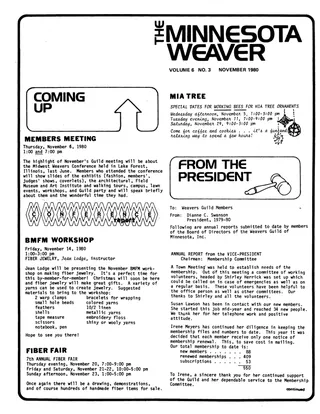
Minnesota Weaver, Vol. 6, No. 3 (November 1980)
Minnesota Weaver, November 1980
Periodical · 14 pages
November 1980 issue of the newsletter of the Weavers Guild of Minnesota. It carries guild business: the November meeting, a fiber jewelry workshop, the 7th Annual Fiber Fair and the MIA Christmas tree ornament bees, plus annual reports from the vice-president, education director, library committee and treasurer. Other items cover guild exhibits of bands and bags, the Fiber Source Committee yarn features, school class news, the Traditions/Transitions juried exhibit awards, a new Lamb's Korner column on sheep housing, a public relations column, a bulletin board and a calendar of dates.
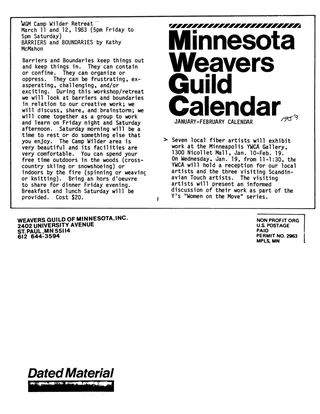
Minnesota Weavers Guild Calendar (January-February 1983)
Minnesota Weavers Guild Calendar, January-February 1983
Periodical · 6 pages
January-February 1983 calendar newsletter of the Weavers Guild of Minnesota. It covers the Scandinavian Touch contemporary textile exhibit at the Science Museum of Minnesota, with artist residencies, a People's Loom Rya project, a members program, a master class and a Charles Talley lecture. It also announces the Camp Wilder retreat, committee news, guild workshops and classes, a president's thank-you for the 1982 Fiber Fair, and classified ads for looms, wheels and yarn. The last page is a January and February calendar grid with class listings.
Minnesota Weavers Guild Calendar (November 1982)
Minnesota Weavers Guild Calendar, November 1982
Periodical · 4 pages
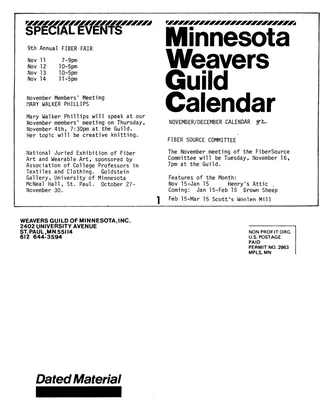
November/December 1982 calendar of the Weavers Guild of Minnesota, listing guild events, workshops and classes. It covers the November members' meeting with Mary Walker Phillips on creative knitting, the 9th Annual Fiber Fair, BMFM workshops on card weaving and fiber jewelry, and a December meeting on after image in color and design. It also includes a message from the presidents on 5-year goal setting, member exhibition notices, help-wanted and for-sale listings, and monthly calendar grids for November and December.
An Old Art Modernized
Article · 3 pages
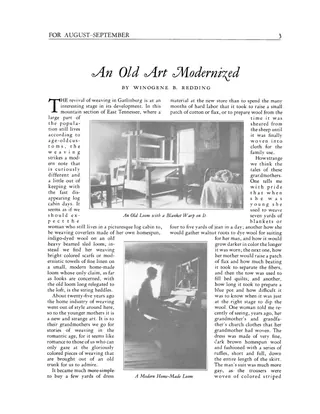
A 1929 magazine article on the revival of hand weaving around Gatlinburg, East Tennessee, where the Pi Beta Phi Settlement School taught weaving in mountain homes. It contrasts the old heavy beamed sled looms and homespun coverlets of the grandmothers with the small modern home-made looms now used for scarfs, towels, runners and linens. It also covers changes in weaving terminology, the economic benefits to about seventy-five weavers, and gift shops selling to tourists. The scan also includes the start of an unrelated note on Greek and Roman furniture.
560 documents found