Textile Documents › Topic: Rib and rep weaves
190 documents found
Sort: 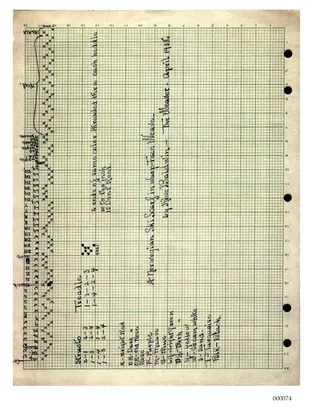
A Norwegian Ski Scarf in Warp-Face Weave
Weaver, April 1938
Ephemera · 1 page · weaving drafts
A single handwritten sheet giving a weaving draft for a Norwegian-style ski scarf woven in warp-face weave, credited to Rose Baldwin. It includes a graph-paper color and threading chart, shed combinations, a treadling sequence, a shading column of colored warp stripes, and a key to color abbreviations (reds, blues, greens, yellow, cream, sand, turquoise and others).
Rep
Article · 1 page
A short encyclopedia entry defining rep (also spelled repp or reps), a cloth of silk, wool or cotton woven with fine cords or ribs across the width. It gives the proposed origins of the name, from French reps or a corruption of "rib". It notes uses: silk rep for dresses and ecclesiastical vestments, wool and cotton rep for upholstery.
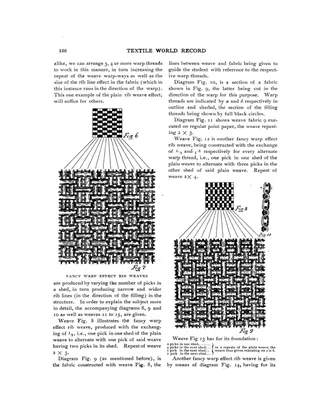
Our Textile Design School: Lesson 2 -- Rib and Basket Weaves
Textile World Record, October 1903
Article · 7 pages · weaving drafts
Lesson 2 of a serialized textile design course from Textile World Record, covering rib and basket weaves derived from the plain weave. It explains warp-effect and filling-effect ribs (plain and fancy), plain and fancy basket weaves, and rib weaves with interwoven backs, stitched warp threads, and strengthening warps. It also covers figured rib weaves, warp and filling combinations, and corded effects with binder and figure warps. Numbered figures show drawdowns and fabric diagrams, and the lesson ends with exercises for students.
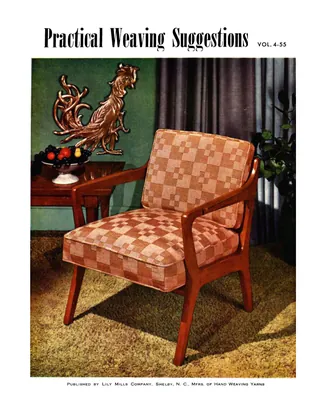
Practical Weaving Suggestions, Vol. 4-55 (1955): An Upholstery Fabric
Periodical · 8 pages · weaving drafts
A Lily Mills leaflet by Berta Frey on weaving a patterned warp-faced rep as an upholstery fabric on four harnesses. It covers yarn choices (pearl cotton and floss warp, heavy and fine weft), sleying and reed choices, take-up, tension, the threading draft, treadling order for sections A-D, and finishing by steam pressing. It also gives the statistics of the illustrated piece, four color combinations, and Lily yarn color charts for Art. 114 and Art. 814.
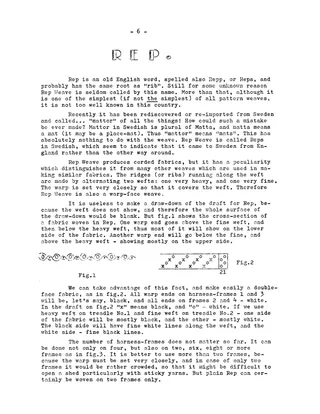
Rep
Master Weaver, March 1957
Article · 4 pages · weaving drafts
A short article explaining Rep weave, a warp-faced corded structure made by alternating a heavy and a fine weft under a very closely set warp. It covers double-face fabrics in two colours, two-block patterns on two or four frames, transcribing Summer and Winter and crackle drafts into Rep, a single block on a plain background, and a variant with weft passing over two warp ends that gives three colour areas. Illustrated with threading drafts, profiles and fabric diagrams.
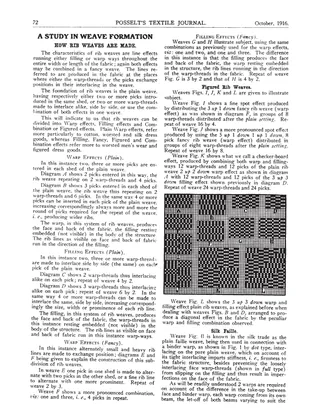
A Study in Weave Formation; How Rib Weaves Are Made
Article · 2 pages · weaving drafts
An article from Posselt's Textile Journal (October 1916) explaining how rib weaves are constructed from the plain weave. It covers warp-effect, filling-effect, fancy and figured rib weaves (diagrams A to L), then silk faille with a binder warp, including threading, reed and sample texture details. It closes with worsted men's wear and dress goods examples (Figs. 2 to 4) giving warp and filling counts, reeds and finishing. A short note on detecting catechu in black silk dyeings follows.
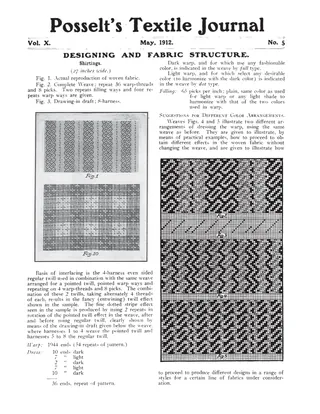
Designing and Fabric Structure
Article · 3 pages · weaving drafts
Three pages from Posselt's Textile Journal, May 1912, on textile design and fabric structure. The first part gives woven shirting and fancy gingham designs with weaves, 8-harness and 6-harness drawing-in drafts, warp dressing color arrangements, and picks per inch. The last page continues a series on rib weaves built with backing or rib picks, explaining diagonal rib effects (Weaves 17-21).
Dictionary of Technical Terms Relating to the Textile Industry
Article · 3 pages · weaving drafts
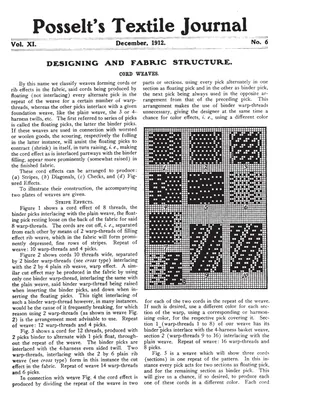
Pages 141-143 of Posselt's Textile Journal, December 1912, from the series 'Designing and Fabric Structure'. The main section explains cord weaves, in which floating picks alternate with binder picks to form stripe, diagonal, check and figured cord effects, with figures 1-15 shown on point-paper drafts and repeat sizes given. Shorter pieces follow on fashion and how it is created, a French process for crinkling fabrics, and a German method for dyeing two sides of cotton cloth in different shades.
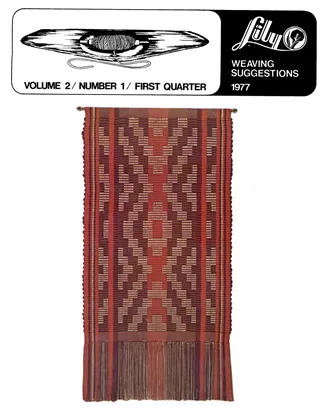
Lily Weaving Suggestions, Vol. 2, No. 1 (1977)
Lily Weaving Suggestions, 1977
Periodical · 8 pages · weaving drafts
First-quarter 1977 issue of Lily Weaving Suggestions, a Belding Lily Company publication, with two projects. Martha Matthews describes a Ripsmatta (Swedish warp-faced rep) wall hanging in Lily Pearl Cotton and Rug Filler on four harnesses, with color blocks, warp calculations, threading, treadling and yarn quantities. Faithe Nunneley gives directions for a weft-faced rug on a four-harness Summer and Winter threading, with materials, threading, tie-ups, color sequences, weaving notes on floating selvages, and finishing.
Questions and Answers
Article · 1 page
A single page from The Weaver (October 1937) with Mary Meigs Atwater's Questions and Answers column. She discusses the difference between 'hand-woven' and 'hand-loomed' fabrics (the latter a trade name for machine imitations), and explains how to produce weft-face and warp-face fabrics by choosing warp spacing, sett and weft size, with rug examples and threading double or triple. The page also opens with closing advice on yarns and twills for garments, and ends with the conclusion of an article on the overshot weave on six harnesses.
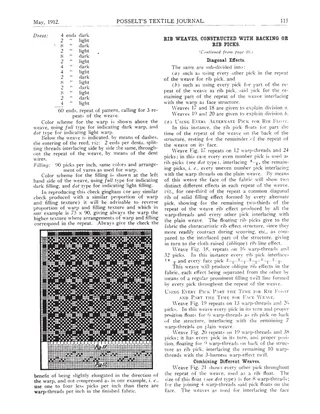
Rib Weaves, Constructed with Backing or Rib Picks
Article · 3 pages · weaving drafts
Three pages from the May 1912 issue of Posselt's Textile Journal (pp. 115-117) continuing a series on rib weaves built with backing or rib picks. It opens with the end of a check gingham example (warp color sequence, reed entering, 75 x 90 texture), then explains diagonal rib weaves (Figs. 17-26), combinations of twill, basket and satin weaves, and herring-bone or broken-twill rib weaves (Figs. 27-32), with repeat sizes and harness requirements. A separate article by James B. Hetherington, "Care in Winding Warp Yarn," begins on the last page and covers inspecting hanks, mixed yarns and knots tied at winding.
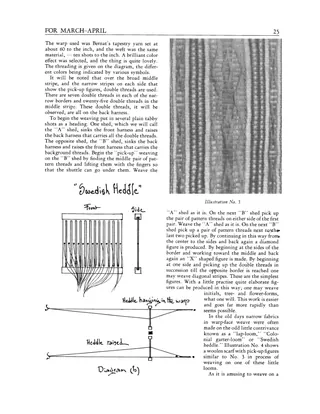
Two-Shed Weaving, III. Some Warp-Face Weaves
Article · 4 pages · weaving drafts
An article from The Handicrafter by Mary M. Atwater on warp-face weaving with two-shed (two-harness) looms. It explains how warp-face fabrics differ from weft-dominant ones and why they suit hand weavers who make items for sale. It covers an Italian bag, striped pattern borders in rayon and linen, and a scarf with pick-up figures, giving warping schemes, setts and weaving procedures. The last part describes the Swedish (lap-loom or garter-loom) heddle, how to build and thread it, and methods of weaving fringes.
Warp-Face Technique
Article · 3 pages · weaving drafts
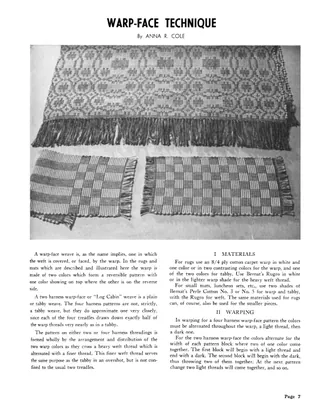
Instructional article by Anna R. Cole on warp-face weaving, in which two contrasting warp colors form reversible patterns while the weft is hidden. It covers materials (carpet warp, Bernat's Rugro, perle cotton), warping, threading for two- and four-harness "Log Cabin" patterns, weaving with alternating pattern and tabby wefts, and finishing fringes. Drafts are given for Log Cabin table mats with six treadling variations, Log Cabin rugs, and a Whig Rose rug. It closes with advice on adapting overshot, crackle, summer and winter, and double weave patterns, plus references to earlier issues of The Weaver.
Questions and Answers
Article · 1 page
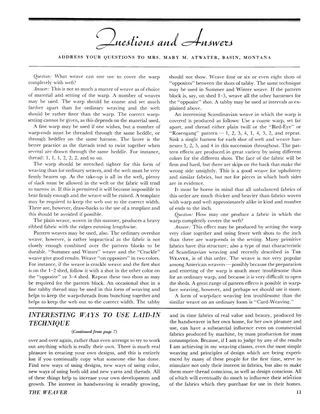
A single-page Questions and Answers column by Mary M. Atwater from The Weaver, 1937. It answers how to cover the warp completely with weft (weft-face weaving) and how to make a warp-face fabric, covering warp setting, tension, beating, use of a template, and suitable pattern weaves such as Summer and Winter and crackle woven on opposites. It also describes a Scandinavian covered-warp twill or Bird-Eye/Rosengang weave and mentions card weaving. The page ends with the concluding paragraph of an article on laid-in technique, continued from page 7.
Warp & Weft, Vol. 11, No. 9 (November 1958)
November 1958
Periodical · 8 pages · weaving drafts
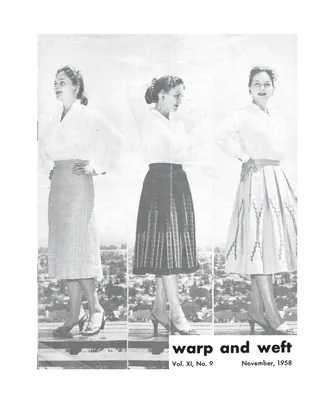
Issue of Warp and Weft, a monthly handweaving newsletter from Robin & Russ Handweavers of Santa Barbara, California. The featured sample is Cannele, a ribbed fabric woven on four shafts with a black 20/2 cotton warp and heavy pattern wefts, with a threading, tie-up, full treadling and color sequence, plus yarn costs and design suggestions. Other items include an editor's column announcing a subscription price rise, a profile of Hartland Area Crafts in Michigan, a description of the cover skirts with overshot inlay, a review of the Finnish book Pellavasta kudottua, 1936 loom prices, classified ads, and loom and yarn advertisements.
Warp & Weft, Vol. 4, No. 10 (August 1951)
August 1951
Periodical · 8 pages · weaving drafts
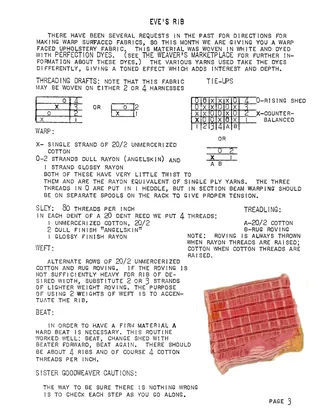
August 1951 issue of Warp & Weft, a monthly published by the Norwood Loom Company in Chicago. The main project, "Eve's Rib," gives threading, tie-up, sley and weft directions for a warp-faced cotton and rayon rib upholstery fabric, woven on 2 or 4 harnesses and dyed with Perfection dyes. A companion piece suggests variations (taffeta, faille, grosgrain, ottoman ribs), and an article explains warp-faced versus weft-faced fabrics. The issue also has guild news (Chicago, Elgin, Seattle, Manistee), a letter, a visit to Karen Bulow's Montreal studio, a review of Zielinski's Encyclopedia of Hand-Weaving, a poem, a question on finishing fabrics, and advertisements.
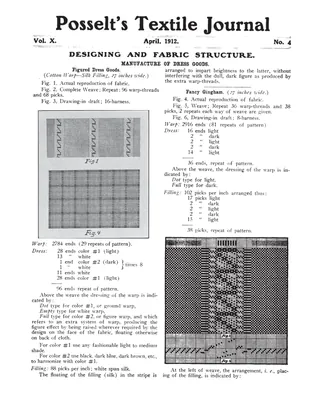
Designing and Fabric Structure
Article · 4 pages · weaving drafts
Four pages from Posselt's Textile Journal, April 1912, covering dress goods design and fabric structure. It gives analyses of a figured dress fabric and a fancy gingham with weave diagrams, drawing-in drafts, warp dressing and filling picks, then explains rib weaves built with backing or rib picks (uniform ribs, varying rib sizes, two ground weaves). The final page continues a series on gauze or leno weaving, describing slackeners and rear-heddle threading for Jacquard gauze.
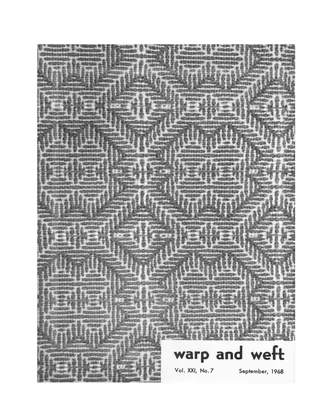
Warp & Weft, Vol. 21, No. 7 (September 1968)
September 1968
Periodical · 8 pages · weaving drafts
September 1968 issue of Warp & Weft, a monthly bulletin from Robin & Russ Handweavers of McMinnville, Oregon. It includes the editor's summer news, a note on a shadow weave cover photograph, a review of Gladys Reichard's Spider Woman, a project for a double-size twill saddle blanket, and the 'Amber Glow' rib-effect worsted yardage pattern with a four-shaft draft, treadling, tie-up and costs. It also announces a forthcoming 2/18 Fabri-type worsted yarn, with a photo of a worsted combing machine, followed by classified ads and display ads for yarns, books, looms and a weaver's tour.
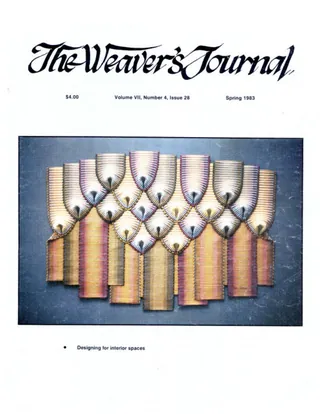
Weaver's Journal, Vol. VII, No. 4 Issue 28 (Spring 1983)
Weaver's Journal, Spring 1983
Periodical · 84 pages · weaving drafts
Spring 1983 issue of The Weaver's Journal, themed on designing textiles for interior spaces. It features a series on rep weave (warp-faced and weft-faced) with projects by several weavers, an introductory article on computers for weavers, and articles on rug weaving by Barbara Hand and Anne Brooke. Other items include a quick thick Summer and Winter rug, a handwoven wedding chuppa, four-shaft double weaves, double weave pick-up, color in summer and winter, enlarged patterns in waffle weave and Dukagang, table tapestries, plaited twills, a baby blanket and a dyed cotton overshot rug. Also includes fashion trends, book and product reviews, study opportunities, and many advertisements.
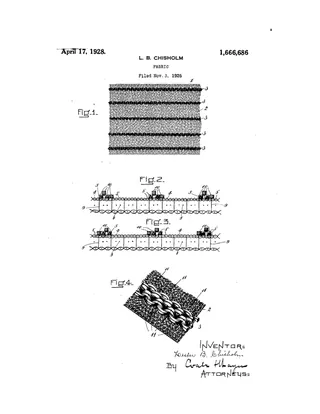
Fabric, US Patent No. 1666686
Patent · 4 pages
US Patent 1,666,686, granted 17 April 1928 to Lester B. Chisholm of Melrose, Massachusetts, assignor to Everlastix, Inc. It describes a non-slipping woven fabric in which parallel rubber strands are bound into a two-ply backing at staggered intervals, forming raised, crowded loops (bights) that give a rough, chainlike rib texture. The patent includes drawings (plan, cross-sections and a perspective view), a description of weaving tension, and five claims.
Swatch Page - Galloon Braid
Article · 1 page
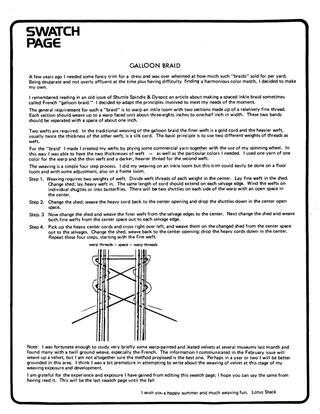
A one-page Swatch Page column by Lotus Stack explaining how to weave a galloon braid, a spaced inkle-woven trim with two narrow warp-faced bands separated by a gap and joined by crossed weft cords. She describes the warping, the use of a fine and a heavy weft, and a four-step weaving sequence, illustrated by a line diagram. A closing note revises her earlier advice on weaving velvet and announces the last swatch page until fall.
Beitrag zur Kenntnis der Kreppbindungen [Contribution to the Knowledge of Crepe Weaves]
Article · 2 pages · German · weaving drafts
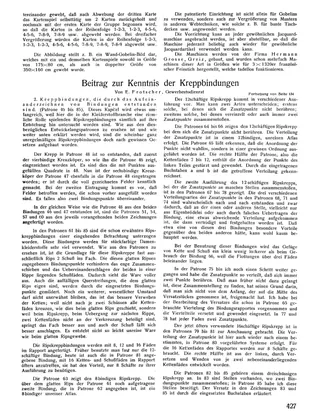
Installment of E. Frotscher's article on crepe weaves (Kreppbindungen), covering crepe weaves produced by superimposing one weave on another (patterns 46 to 85). It explains how the combined weaves are built, with particular attention to rib crepe weaves (Ripskreppbindungen) used for piece-dyed women's dress fabrics. It describes 8-, 12- and 16-end repeats, the placement of added binding points on a plain 2-pick rib base, and the 3-pick rib crepe, and notes the advantages over plain rib. The second page has the drawdown grids numbered 46 to 85. The text begins with the end of an unrelated note on a patented Jacquard enlarging device for tapestry.
Novelties in Dressgoods from Abroad
Article · 1 page · weaving drafts
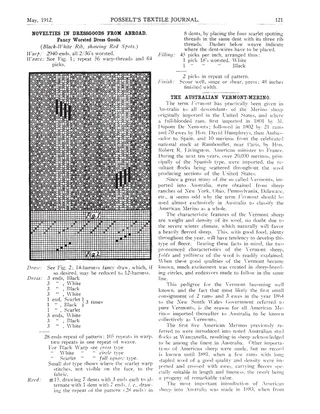
A single page from Posselt's Textile Journal, May 1912, giving full manufacturing details for a fancy worsted dress fabric, a black-white rib with red spots. It lists warp, weave repeat, a 14-harness fancy draw (reducible to 12), color dressing, reed, filling and finish, with two weaving draft grids. The lower part of the page begins a separate article on the Australian Vermont-Merino sheep and the history of American Merino imports into Australia.
A Study in Weave Formation; Tricot Weaves
Article · 1 page · weaving drafts
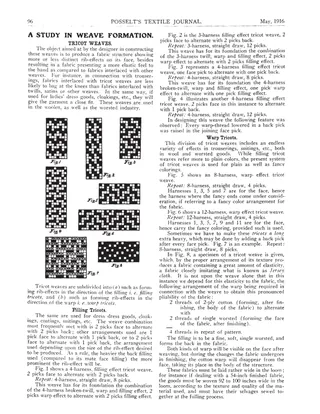
A single-page article from Posselt's Textile Journal (May 1916) explaining the design of tricot weaves, which produce rib effects and an elastic fabric used for trouserings, dress goods, cloakings and suitings. It divides them into filling tricots and warp tricots and describes eight drawdown figures (3-, 4-, 8- and 12-harness) with repeats and their twill foundations. The last example is a Jersey-cloth imitation built on a cotton and worsted warp arrangement, with notes on loom width and fulling.
Various Types of Moire Effects and Their Production, Part 1
Article · 3 pages
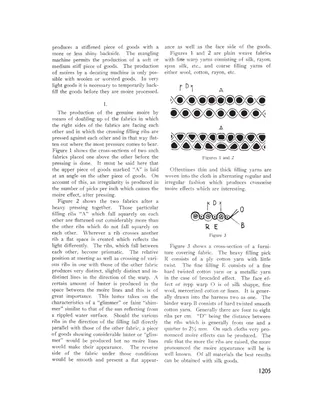
A 1929 trade-journal article by E. Ullrich of Krefeld on the types of moire effects in fabrics and how they are produced. It distinguishes genuine moire from pressed, impregnated or imitated moire. It explains that genuine moire needs plain-weave rib fabrics with fine, closely set warp and heavy filling, and describes how two fabrics are doubled face to face and pressed, with cross-section diagrams. It also covers calenders, mangling machines, plate presses and decating machines, and tips for keeping picks parallel. Part 1 of a series, ending "To Be Continued".
Varying the M's and O's Draft
Article · 4 pages · weaving drafts
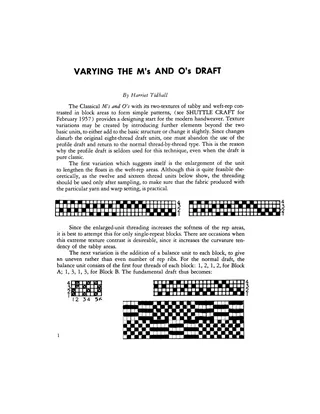
An article from the Shuttle-Craft Bulletin by Harriet Tidball on variations of the classical M's and O's draft, a four-shaft weave that contrasts tabby and weft-rep blocks. It covers enlarging the threading units to lengthen rep floats, adding a balance unit, using three or five threads per rep rib to avoid overlapping blocks, and adding twill or broken twill areas. It also describes a ten-thread unit with added tabby threads. Threading and drawdown diagrams illustrate each variation, and the last page shows a woven sample.
Warp & Weft, Vol. 14, No. 3 (March 1961)
March 1961
Periodical · 9 pages · weaving drafts
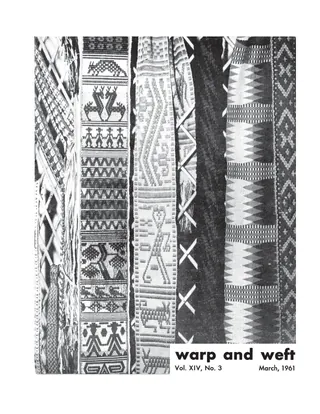
March 1961 issue of Warp and Weft, a monthly handweaving newsletter from Robin & Russ Handweavers in Santa Barbara. It includes the editor's report on a Pacific Northwest lecture trip, a profile of the Penland School of Handicrafts in North Carolina, and a 4-harness Swedish Rib project (raised warp stripe borders for skirts) with threading, tie-up, treadling, color key, reed, yarn costs and a sample. The issue ends with classified ads for yarns and supplies and advertisements for looms and books.
An Adventure for the Adventurous
Article · 3 pages · weaving drafts
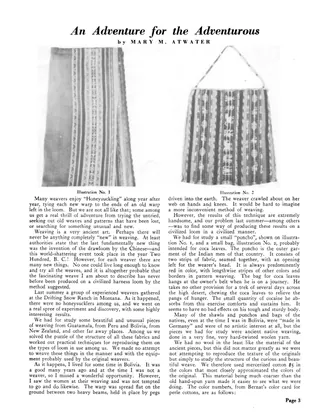
Mary Atwater describes a warp-face pattern weave studied from a Bolivian poncho and coca-leaf bag, which she and a group of weavers reproduced on a harness loom at a Montana summer gathering. She gives the warp color plan and sett (48 ends per inch, 4 per dent in a 12-dent reed), treadling for the dark and light square figures, and pick-up stick directions for an X-figure. She also covers a technique for beating up the dense fabric, possible uses, and the needle-woven braid edging on the originals. The last page has the draft with tie-ups and 6- and 4-harness threadings.
Handweaving News (July 1946): Threads -- The Weaver's Materials
Periodical · 3 pages
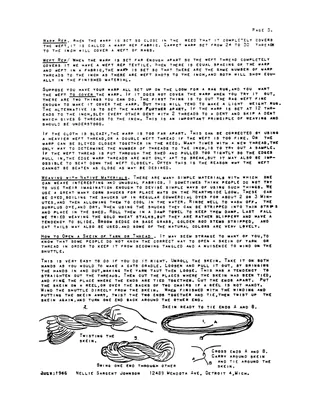
An article from Handweaving News (July 1946) by Nellie Sargent Johnson on choosing yarns and threads for handweaving. It covers fiber classes, matching thread to end use and technique, making and labeling samples, checking color fastness, and sleying with 12, 15 and 20 dent reeds. It also explains warp rep and weft rep, weaving with native materials such as corn shucks and grasses, and how to open and tie a skein, with four line drawings.
A Norwegian Ski Scarf in Warp-Face Weave
Article · 1 page · weaving drafts
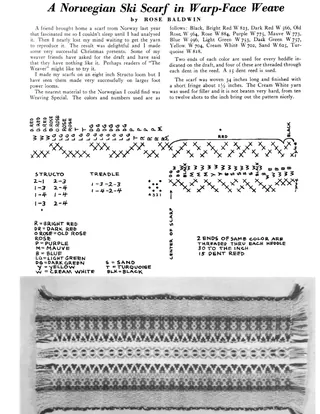
Rose Baldwin describes how she analyzed and reproduced a Norwegian ski scarf woven in warp-face weave. She gives the yarn colors and numbers (Weaving Special), sett (30 ends per inch, 15-dent reed, four ends per dent), finished length (34 inches with a short fringe) and weft notes (cream white filler, 10 to 12 shots per inch). A color-coded threading draft with tie-up and treadling for Structo and treadle looms accompanies the text.
Questions and Answers
Article · 1 page
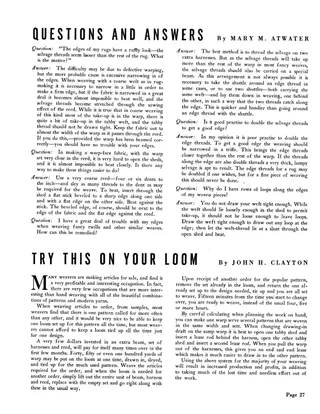
A one-page spread from The Weaver with Mary M. Atwater's question-and-answer column, covering weaving problems with selvedges and edges (ruffly rug edges, loops, doubled selvage threads, fancy twills) and how to beat and open sheds in close-set warp-face fabric. The page also carries John H. Clayton's short piece 'Try This on Your Loom', which advises keeping extra beams, harnesses and reeds pre-set for a popular pattern to cut changeover time for weavers working to order.
Ribbons, Trimmings, Edgings, Etc.
Article · 1 page · weaving drafts
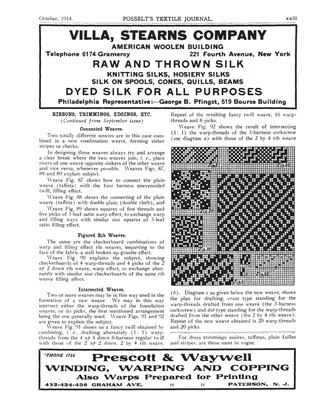
A single-page installment of a serialized article on ribbons, trimmings and edgings, continued from the September issue. It covers connected weaves, figured rib weaves and intersected weaves, with explanations of Figs. 87-92 and their weaving draft diagrams. The page includes advertisements for silk and textile-winding firms.
Warp & Weft, Vol. 20, No. 8 (October 1967)
October 1967
Periodical · 8 pages · weaving drafts
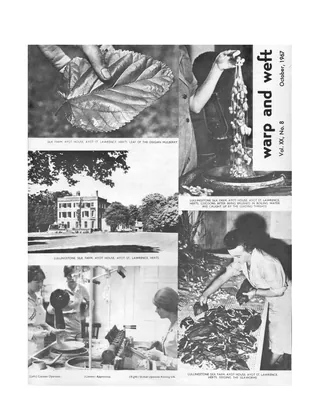
October 1967 issue of Warp & Weft, the monthly handweaving newsletter published by Robin & Russ Handweavers of McMinnville, Oregon. It includes the editor's account of a visit to the Lullingstone Silk Farm at Ayot House in England, with postcard photographs of silk production. It also has a weaving project, 'A Sheen of Cream', a 4-shaft rib weave in 7/2 spun silk with threading, tie-up, treadling, and cost breakdown. A review of Linton's The Modern Textile Dictionary and pages of classified ads for yarns, silks, and equipment complete the issue.
August, 1913
Article · 1 page
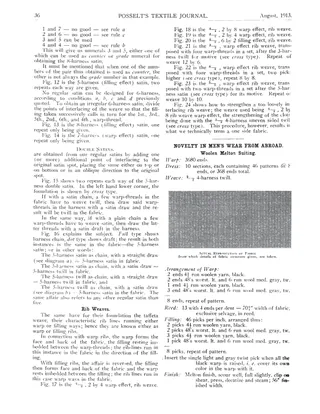
A single page from Posselt's Textile Journal, August 1913, continuing a series on fabric weave construction. It finishes the discussion of regular satins (8-, 5-, 6- and 7-harness), then covers double satins, satin drafting versus straight drafting, and rib weaves (warp and filling ribs, Figs. 17-24). It closes with the start of a mill-style fabric analysis of a woolen melton men's suiting on a 4-harness twill, giving warp and filling arrangement, reed, picks per inch, and finishing.
Frame Loominations
Article · 1 page
A column from the Minnesota Weaver on creative possibilities for the two-harness rigid heddle frame loom. Mary Temple lists categories of techniques, including open work weaves, pile weaves, weft-faced rep, pick-up weaves, texture patterns, inlay, tapestry, non-loom techniques, added materials, warp effects, and finishes. She closes with double weave using two rigid heddles and announces her class on the subject at the Weavers Guild. A small advertisement for a St. Paul needle art shop appears on the page.
The Manufactures of Upholstery Fabrics: Repp Ottoman
Article · 2 pages
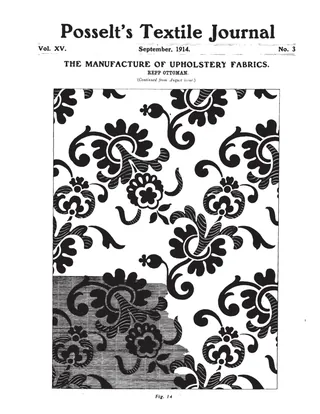
Installment of a serial on upholstery fabric manufacture from Posselt's Textile Journal, covering a repp ottoman fabric. It gives a second sketch example (Fig. 14) and details the warp and filling arrangement (face and binder warp, binder and stuffer picks), fabric texture, and Jacquard requirements (900-hook machine, 480 cards cut on Royle Piano and Repeater machines). Point paper designs (Figs. 15 and 16) illustrate the working design and the introduction of stuffer picks. A short unrelated item follows on applying effects to artificial silk fabrics by steam treatment, per an English patent by Courtauld and Linfoot.
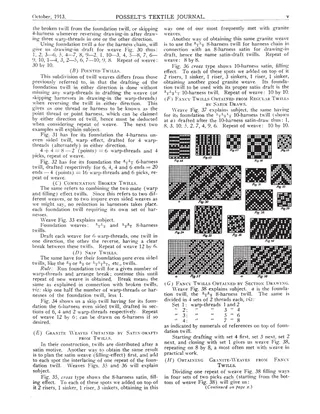
October, 1913
Article · 2 pages · weaving drafts
Two pages from the "Manufacture of Narrow Wares" series in Posselt's Textile Journal, October 1913, continuing the section on rib weaves for ribbons, trimmings and edgings. It covers strengthening rib structures with an extra binder warp or pick, basket weaves, and subdivisions of twills (broken, pointed, combination broken, skip, granite via satin drafts, and fancy twills by satin draw or section drawing). Weave drafts (Figs. 25-38) with drafting instructions and repeat sizes accompany the text. The first page also carries an advertisement for peroxide bleaching.
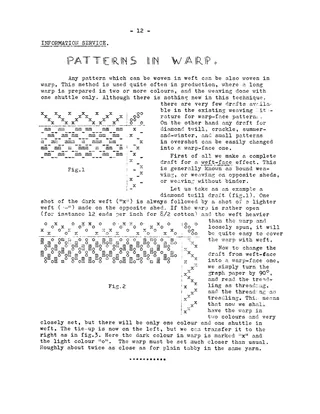
Patterns in Warp
Master Weaver, November 1955
Article · 1 page · weaving drafts
A one-page article from the Master Weaver information service explaining how to convert weft-face (bound weaving) drafts into warp-face pattern drafts. The method is to turn the graph paper 90 degrees and read threading as treadling and the reverse. It uses a diamond twill example with x and o marks for dark and light yarns, and notes that the warp must be set about twice as close as for plain tabby. Figures show the weft-face drafts with tie-ups.
Poplin
Article · 1 page
A short encyclopedia entry on poplin, a corded fabric. It gives the etymology from Avignon, the papal residence, and notes the fifteenth-century silk papeline. It also covers the introduction of the manufacture to Ireland in 1775 by French Protestant refugees. It describes modern poplin as a silk warp with a heavier worsted weft, giving a rep-like corded surface, and mentions double poplin.
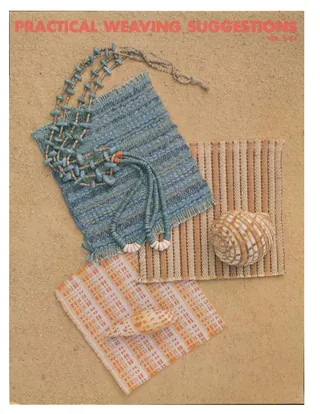
Practical Weaving Suggestions, Vol. 2-64 (1964): Textures Inspired by Nature
Periodical · 8 pages · weaving drafts
An issue of Practical Weaving Suggestions from Lily Mills in which Mary E. Snyder presents five weaving projects inspired by natural objects such as shells, turquoise and rock. Each project has a tie-up, threading draft, treadling, and yarn and reed specifications using Lily yarns. The projects include a warp-pattern twill on five shafts, M's and O's textured weaves for upholstery and pillows, a deeply ribbed fabric, and a tubular padded rib.
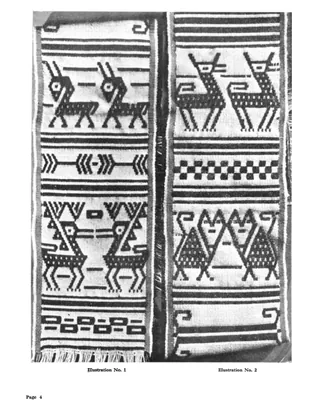
A Primitive Weave
Article · 7 pages · weaving drafts
Mary Atwater describes a warp-face pick-up technique inspired by ancient Peruvian girdles with stylized animal figures, adapted for modern four-harness looms using three harnesses. She gives warp plans, yarns, sleying, treadling and pick-up stick instructions for a Peruvian piece and a Mexican piece, with figure charts and photographs of finished work. She suggests uses such as bags, runners, pillow tops and wall panels, and notes the fabric is decorative rather than hard-wearing.
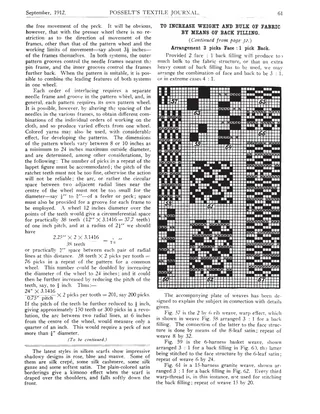
To Increase Weight and Bulk of Fabric by Means of Back Filling
Article · 1 page · weaving drafts
A single page from Posselt's Textile Journal (September 1912), continuing a series on adding weight and bulk to fabric with back filling. It covers arrangements of 3 face picks to 1 back pick, with a plate of weave diagrams (Figs. 57-67) showing a 2 by 6 rib, a 6-harness basket weave and a 15-harness granite weave, each with the back filling stitched to the face by satin interlacings. The page also carries the end of an unrelated article on lappet pattern wheels.
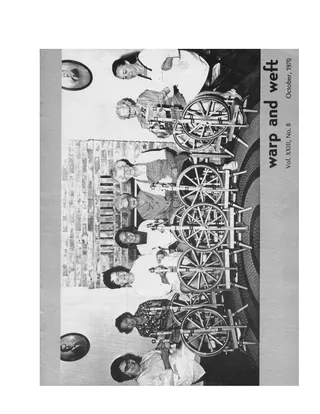
Warp & Weft, Vol. 23, No. 8 (October 1970)
Warp & Weft, October 1970
Periodical · 8 pages · weaving drafts
October 1970 issue of Warp & Weft, a monthly handweaving newsletter from Robin & Russ Handweavers in McMinnville, Oregon. It includes the editor's column, an announcement of the 1971 Pacific Northwest Weaving Conference in Portland, and a cover photo of the Sacramento Weavers Guild spin-in. The two projects are an evening-dress silk fabric in a four-shaft shadow weave variation (peach and grey spun silk with luminex metallic), with threading, treadling, sley, shuttle tips and a cost breakdown, and a warp-faced four-shaft belt or sash in 2/18 worsted with rug-yarn weft. The issue ends with classified ads and a marketplace page for yarns, books, and looms.
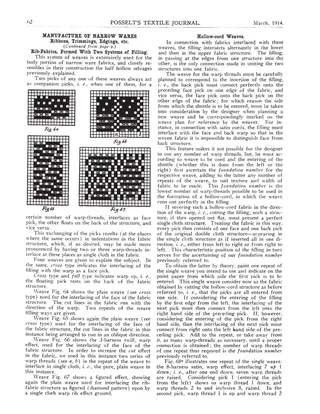
Manufacture of Narrow Wares
Article · 2 pages · weaving drafts
Installment of E. A. Posselt's series on the manufacture of narrow wares (ribbons, trimmings, edgings). It covers rib fabrics formed with two systems of filling (Figs. 64-67) and hollow-cord weaves, including how to find the foundation number for satin and twill hollow cords (Figs. 68-73). The scan also includes the start of an unrelated article on faults in the carbonizing of woolens.
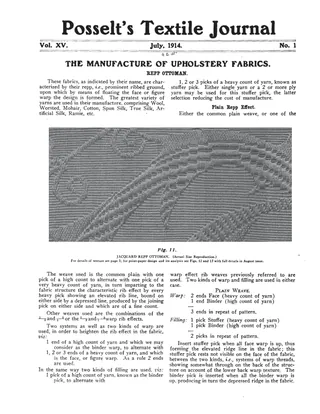
Manufacture of Upholstery Fabrics
Article · 3 pages · weaving drafts
Installment of Posselt's series on upholstery fabric manufacture, covering repp ottoman fabrics. It explains the plain repp structure with face, binder and stuffer warp and filling, rib weaves, figured repp effects based on a 5-harness satin motive, and dobby designs (Figs. 5-10) with their harness requirements. It closes with a Jacquard repp ottoman analysis giving yarns and texture, to be continued in the next issue. A separate short item gives full specifications for a reversible-stripe worsted trousering, including warp arrangement, draft, reed, picks and finish.
Master Weaver, No. 32 (March 1957)
Periodical · 13 pages · weaving drafts
Issue No. 32 (March 1957) of Master Weaver, a bi-monthly bulletin for handweavers published by Z-Handicrafts of Fulford, Quebec. It opens with an article on colour selection for weaving projects, using Munsell hue, value and chroma and three tables of combinations. It then covers Rep weave (warp-faced, alternating heavy and fine wefts) with two-block and four-block drafts and transcription from Summer-and-Winter and Crackle. It concludes with the fourth part of a series on analysing patterns (profile drafts, short tie-ups and short treadling drafts) and two satin projects, a black sateen scarf and an experimental 3D fabric, with sett, yarn and treadling details.
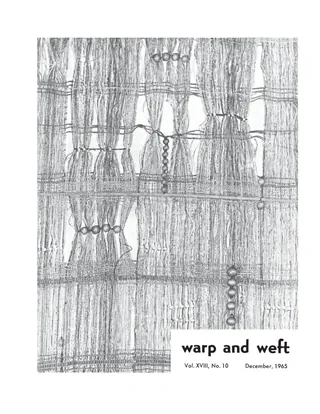
Warp & Weft, Vol. 18, No. 10 (December 1965)
December 1965
Periodical · 8 pages · weaving drafts
December 1965 issue of Warp & Weft, a monthly handweaving bulletin from Robin & Russ Handweavers in McMinnville, Oregon. It gives full directions for two fabrics: a black cotton twill-threaded ribbed upholstery fabric in the Swedish manner, and a semi-sheer linen drapery fabric with a striped boucle warp, each with drafts, treadling, yardages and costs per yard. It also includes the editor's column, a note on a beaded wall hanging on the cover, a review of Anni Albers's "On Weaving", and classified and display advertisements for yarns, books and equipment.
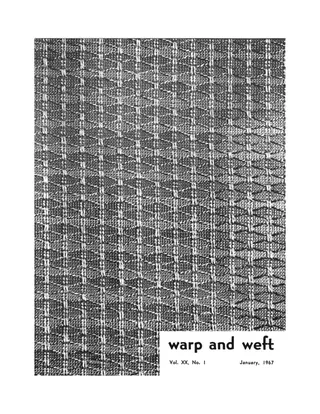
Warp & Weft, Vol. 20, No. 1 (January 1967)
January 1967
Periodical · 8 pages · weaving drafts
January 1967 issue of Warp and Weft, a monthly handweaving newsletter from Robin & Russ Handweavers of McMinnville, Oregon. It has an editor's letter about a planned European buying trip, a review of Harriet Tidball's monograph Color and Dyeing, and a note on the cover weave "Cannelle" from Oscar Beriau's Home Weaving. Two projects with drafts are given: a semi-sheer Scandinavian-style rib linen fabric for curtains, with warp, weft and cost breakdown, and a honeycomb and plain weave upholstery fabric with a 38-step treadling. The issue ends with classified ads for looms, yarns and equipment, and the Weaver's Marketplace advertisements.
Dictionary of Technical Terms Relating to the Textile Industry
Article · 2 pages
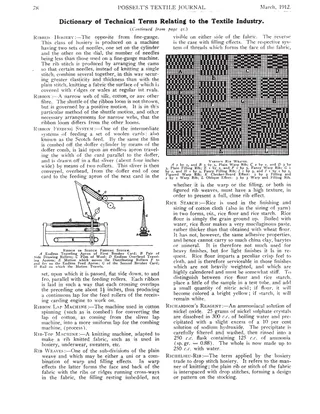
Two pages from the serialized Dictionary of Technical Terms Relating to the Textile Industry in Posselt's Textile Journal, March 1912, covering entries from Ribbed Hosiery through Rococo Lace. Entries deal with knitting, spinning machinery (ring frame, ring, traveler), woolen card feeding, rib weaves, sizing materials, fibers such as flax and Rocky Mountain goat wool, and trimmings. Illustrations include the Scotch feeding system, a chart of rib weave types, a ring, a ring traveler, and a Rocky Mountain goat.
Dictionary of Textile Terms
Article · 4 pages
Installment of E. A. Posselt's serial dictionary of textile terms, covering entries from "Rib" through "Ryeland Sheep". Entries define weaves, spinning and finishing machinery, laces and embroideries, fabrics, cotton and wool varieties, sheep breeds, dye plants, and cotton diseases. The scan also includes a short essay, "Weavers Should Study Their Work," which advises power-loom weavers and loom fixers on broken picks, warp breaks, cross drafting, shed timing, and picker setting.
190 documents found