Textile Documents › Topic: Wool and sheep
995 documents found
Sort: 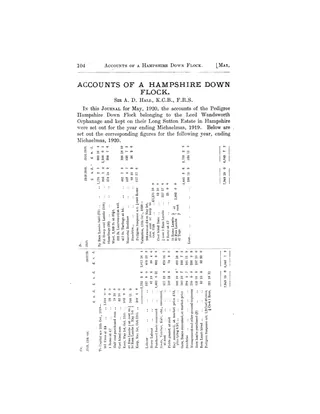
Accounts of a Hampshire Down Flock
Article · 6 pages
An article by Sir A. D. Hall presenting the 1919-20 financial accounts of the pedigree Hampshire Down sheep flock kept by the Lord Wandsworth Orphanage on its Long Sutton Estate in Hampshire, compared with the previous year. It explains the cost-basis bookkeeping and the sharp rise in feed, labour and ram costs, and the improved sales of ram lambs, shearlings and wool. It concludes that the flock made a loss of about £190, and that pedigree ram breeding is unprofitable compared with growing corn unless a flock reaches the top rank in shows.
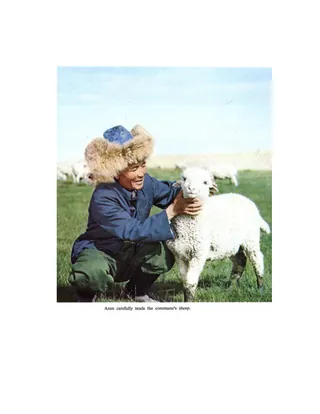
Azan Carefully Tends the Commune's Sheep
China Pictorial, 1976
Illustration · 1 page
A single-page color photograph from China Pictorial, 1976, No. 2, showing a smiling herdsman named Azan crouching on grass and holding a sheep, with other sheep grazing behind him. The only text is a one-line caption saying he carefully tends the commune's sheep. It is of limited use for weaving, but it illustrates sheep raising on a Chinese commune.
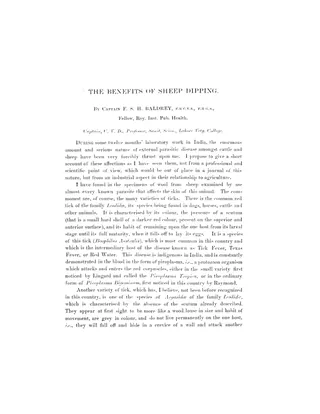
Benefits of Sheep Dipping
Article · 4 pages
A 1906 article from The Agricultural Journal of India in which a veterinary professor at Lahore argues for introducing sheep dipping in India. He describes the external parasites and skin diseases he found in Indian sheep, including ticks, lice, ringworm and sheep scab, and the tick-borne diseases they carry. He links these to the poor quality and low prices of Indian wool and hides. He compares conditions with Australia, the United States, Argentina and New Zealand, and proposes village dipping stations under veterinary supervision.
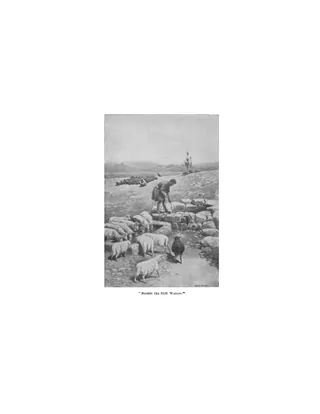
Beside the Still Waters
Illustration · 1 page
A single page with a black-and-white halftone photograph of a shepherd standing among a flock of sheep in a grassy field. The caption reads "Beside the Still Waters." There is no other text and no technical textile content; it is useful mainly as a pastoral or sheep-raising illustration.
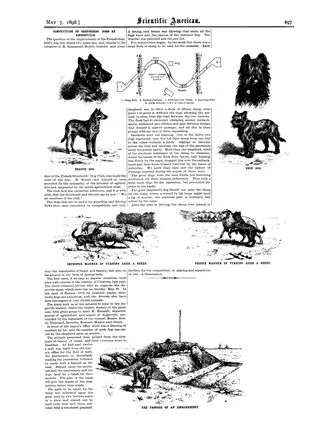
Competition of Shepherds' Dogs at Angerville
Scientific American, May 7, 1898
Article · 1 page
A reprinted article from L'Illustration describing a competition of French shepherds' dogs held at Angerville in the Beauce region, organized by the French Shepherds' Dog Club. It describes the judging for breed and beauty and the herding tests, in which each dog drove fifteen sheep along a marked track with obstacles. Illustrations show a Beauce dog and a Brie dog, proper and improper ways of turning aside a sheep, an embankment passage, and a plan of the track.
Correspondent Report-Raising Sheep
Article · 1 page
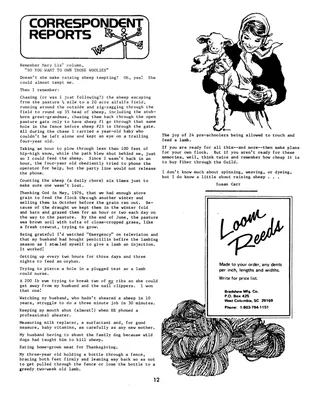
A one-page personal essay by Susan Carr in a guild newsletter's Correspondent Reports column, recalling the hardships and rewards of raising sheep. It responds to an earlier column by Mary Lis on owning sheep and covers chasing escaped flocks, winter feeding, lambing, bottle-feeding orphans, shearing, and drought. The page also carries a Bradshaw Mfg. Co. loom reed advertisement.

Essay on Sheep
Monograph · 10 pages
A short American essay on sheep husbandry, printed in Boston at the New England Farmer office. It covers crossing and the introduction of pure (especially Merino) breeds, how to select sheep for breeding, lambing, weaning, pasture, winter fodder, salt and water, shelter, and washing wool before shearing. The final sections describe sheep diseases and their remedies: rot, mouth and hoof distemper, scab, sheep-pox with inoculation, and reeling sickness.
Fecundity of Sheep
Breeder's Gazette, April 20, 1882
Article · 1 page
Short 1882 news item from The Breeder's Gazette on unusually large litters of lambs reported at a meeting of Missouri wool growers in Sedalia. It cites three cases: a Cotswold ewe bred to a Merino ram that produced five lambs, a full-blood Merino ewe that had five lambs, and a grade ewe that dropped four lambs. It bears on the claim that fine-wool sheep are less prolific than heavier-bodied breeds. It has no textile or weaving content.
Flock of Sheep
Illustration · 1 page
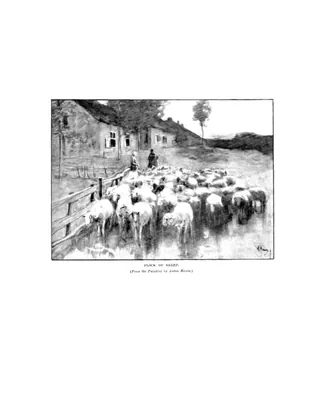
A single-page halftone illustration reproducing a painting of a flock of sheep in a pen beside a fence, with a shepherd figure nearby and trees and sky above. The caption credits the painting to Anton Mauve. It contains no technical textile content.
Flock of Wool
Overland, 1870
Article · 6 pages
A magazine essay from Overland (Feb. 1870) on sheep herding and wool-growing in California. The author discusses the low social standing of shepherds, the kinds of men who take up the work, and anecdotes of a Digger Indian shepherd and his dog. He also covers pasture problems (droughts, annual grasses, bunch-grass), a sample budget of expenses and income for a 15,000-sheep ranch, and the suitability of Merino, South Down, Cotswold and native sheep breeds. It has no weaving content.
The Fold
Illustration · 1 page
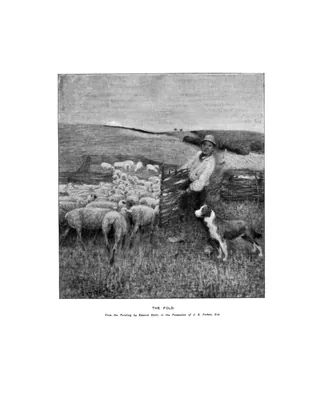
A single-page halftone reproduction of the painting 'The Fold', showing a pastoral scene with a fold of sheep and a partly visible shepherd figure. The caption credits the painting to Edward Stott and notes it was in the possession of J. S. Forbes, Esq. It has no weaving content and appears to be an illustration from the Magazine of Art.
A Hard Chase
Illustration · 1 page
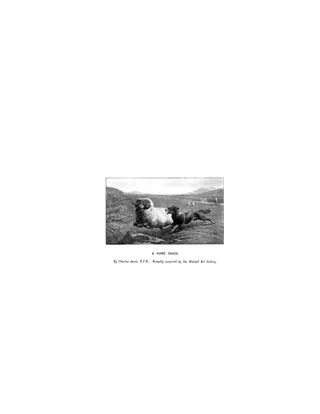
A single-page reproduction of the painting 'A Hard Chase' by Charles Jones, R.C.A., printed in the Magazine of Art in 1899. The caption notes that the work was recently acquired by the Walsall Art Gallery. The image is a dark landscape with a hillside and a pale animal running across the middle ground, possibly a hare or a sheep. There is no weaving content.
Herdwick Sheep
Article · 6 pages
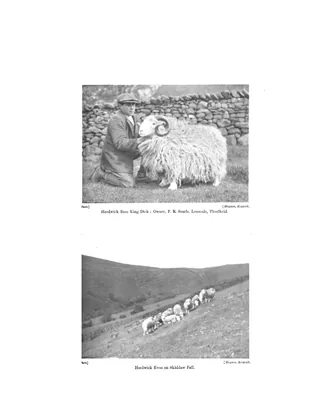
A 1921 article on the Herdwick sheep, a hardy breed of the Cumberland, Westmorland and North Lancashire fells in England's Lake District. It covers the origin of the name, breed characteristics, the custom of letting a 'heaf going' flock with the farm, homing instinct, ram letting, lambing, flock marks, mutton and fleece weights. Wool is touched on briefly as coarse, once used for carpets and then of poor market value. Includes photographs of rams, ewes and lambs on the fells.
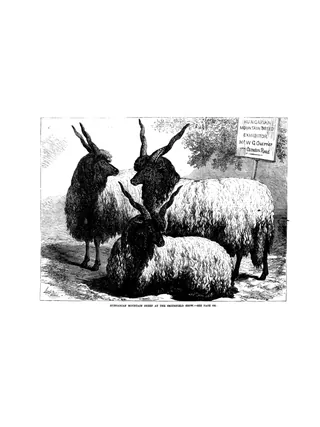
Hungarian Sheep
Illustrated London News, December 26, 1868
Article · 2 pages
A short article from the Illustrated London News of December 26, 1868, describing a pen of three Hungarian mountain sheep shown at the Smithfield Club cattle show. It describes their long, hairy wool, their ibex-like horns, their age and combined weight, and compares them with Lonk and Scotch blackface sheep. A page with an engraving of the sheep accompanies the text.
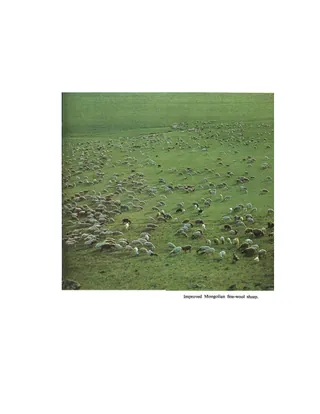
Improved Mongolian Fine-Wool Sheep
China Pictorial, 1976
Illustration · 1 page
A single-page photographic illustration from China Pictorial showing a large flock of improved Mongolian fine-wool sheep grazing on a green grassland slope with hills behind. The only text is a caption identifying the breed. The catalog notes place the scene on the Hulun Buir Steppe.
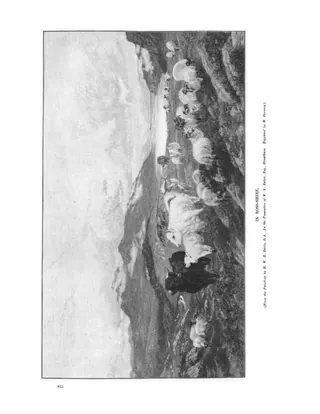
In Ross-Shire
Illustration · 1 page
A single page carrying an engraved illustration titled "In Ross-Shire," reproduced from a painting by H. W. B. Davis, R.A., and published in the Magazine of Art in 1893. The image shows a rocky coastal scene with dark cliffs, surf and rocks in the foreground. The caption credits the engraver as M. Dorway and the owner of the painting as W. Y. Baker, Esq., of Streatham. It has no weaving or textile content.
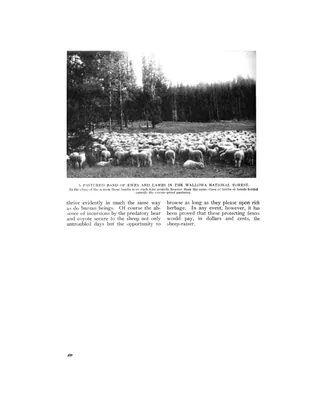
Increasing the Efficiency of Grazing Lands
Article · 4 pages
A 1912 magazine article describing a U.S. Forest Service experiment begun in 1907 on the Wallowa National Forest, Oregon, in which a 2,560-acre coyote-proof fenced pasture was compared with open-range herding of sheep. It reports heavier lamb gains, expected heavier wool clips, lower losses, reduced acreage per sheep and lower labor costs under the pasture system. Illustrated with photographs of the pasture, a ranger and a band of ewes and lambs.
Live Stock: Sheep Industry
Article · 8 pages
An address by W. L. English to the Oklahoma Board of Agriculture in January 1906, promoting sheep raising on Oklahoma farms. It covers the state of the industry, sheep numbers in the Territories, suitable breeds (Merino, Shropshire, Cotswold and others, crossbreeding), diseases, dog attacks, and sheep as weed control. The talk is followed by a short audience discussion on dogs, weeds and breed choice.
Look to the Lambs
Breeder's Gazette, February 16, 1882
Article · 1 page
A one-page 1882 editorial from The Breeder's Gazette advising shepherds on care of pregnant ewes and newborn lambs as spring approaches. It recommends separating in-lamb ewes from the flock, giving exercise, extra feed and dry, sheltered bedding, and stresses that good handling of well-bred animals determines the flockowner's success. It concerns sheep husbandry and has no weaving content.
Management of Rams
Breeder's Gazette, March 2, 1882
Article · 1 page
A short article from The Breeder's Gazette on choosing and managing stock rams for sheep flocks. It covers selecting rams suited to a flock's characteristics and breeding standard, how many ewes a ram can safely serve in a season, and the feeding, exercise and shelter needed before and during the coupling season. It also compares American Merinos with English mutton breeds.
Merino Sheep, Lady Hibbard, Snow Ball and Crook Leg
Breeder's Gazette, February 16, 1882
Article · 2 pages
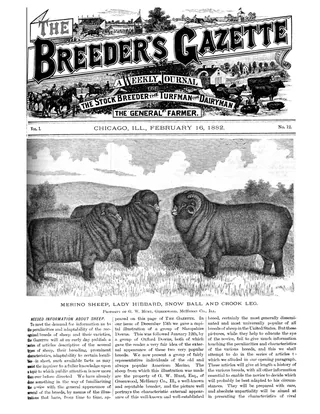
A front-page piece from The Breeder's Gazette (Chicago, February 16, 1882) with an illustration of American Merino sheep owned by G. W. Hunt of Greenwood, McHenry County, Illinois. The accompanying text, "Needed Information About Sheep," announces a coming series of articles on the breeds of sheep, their history, characteristics and suitability for different localities. It recalls earlier illustrations of Shropshire Downs and Oxford Downs.
Millet's Pastels
Illustration · 2 pages
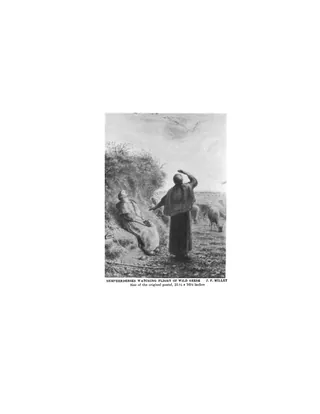
Two-page illustration feature from the American Magazine of Art showing halftone reproductions of two pastels by Jean-François Millet held at the Museum of Fine Arts, Boston. The plates are 'The Return of the Flock' and 'Shepherdesses Watching Flight of Wild Geese', each captioned with the original's dimensions. There is no weaving or textile instruction; the subject matter is pastoral figures with sheep.
Money from Sheep
Outing, 1912
Article · 2 pages
A short 1912 magazine article urging American farmers to take up sheep raising as a profitable sideline. It covers the value of well-bred stock, sheep as weed eaters and soil fertilizers, selecting pure-bred sires, feeding lambs in creeps, and dipping twice a year against ticks, lice and scab. Wool is mentioned only briefly, as a fleece that nearly pays for the animal's keep.
Near the Sea
Magazine of Art, 1895
Illustration · 1 page
A single-page reproduction of a landscape picture titled "Near the Sea," printed in the Magazine of Art in 1895. The caption notes it was in the possession of Lady Sutton. The image is a high-contrast black-and-white view with a cloudy sky, a dark foreground, and a tree at the right. The catalog lists sheep as a topic, though the page overview does not describe any in the image.
The New Born
The Aldine, 1879
Illustration · 1 page
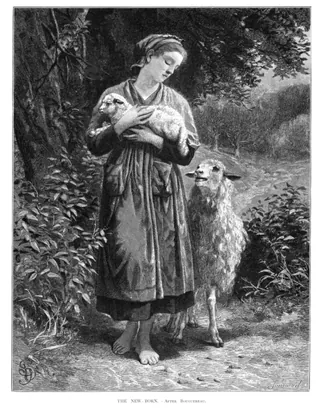
A single-page engraving from The Aldine, titled "The New-Born," printed as a reproduction after a painting by Bouguereau. It shows a young barefoot girl in a head covering and striped dress holding a newborn lamb, with a ewe standing beside her under trees. The page carries only the caption and no accompanying text.
New Sheep for the West
Article · 4 pages
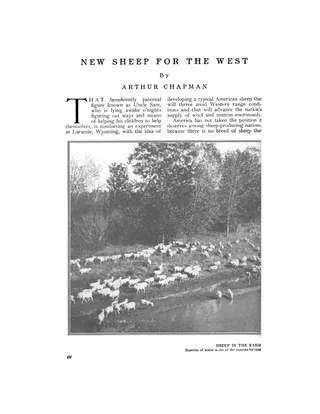
A 1912 magazine article describing the U.S. government's experiment station at Laramie, Wyoming, which aims to breed a typical American range sheep suited to the dry Western high plains. It explains why imported breeds such as the Rambouillet deteriorate in the West, covering forage, water scarcity, alkali, climate and effects on wool yield and fleece weight. It also mentions a private Wyoming breeder's gains and the station's prizes at the Alaska-Yukon-Pacific Exposition. Illustrated with photographs of sheep and the station.
On a New Variety in the Breeds of Sheep (Part 2)
Article · 2 pages
An abstract of Colonel David Humphreys' letter to Sir Joseph Banks describing the Ancon or Otter breed of sheep, a short-legged variety that arose accidentally in Massachusetts in 1791. It covers how the breed was established, its inheritance in crosses, its deformities, and its inability to jump fences. It also notes the Ancon-Merino cross, whose fleece takes on the silky feel of merino wool, and the breed's likely extinction as Merinos spread.
Origin of Black Sheep in the Flock
Article · 2 pages
A short scientific article by C. B. Davenport testing whether black coat color in sheep is a Mendelian recessive trait. Using the records of 877 sheep in Alexander Graham Bell's Beinn Bhreagh flock in Nova Scotia, he applies four breeding criteria for recessiveness and finds that black wool behaves as a Mendelian recessive, with some deviation in matings of two heterozygous parents.
Otter Sheep
Article · 1 page
A short note in the American Naturalist reprinting Timothy Dwight's account, from his travels of about 1798, of the Otter (Ancon) sheep of Mendon, Massachusetts. A short-legged, club-footed breed arose from twin lambs and was propagated by one farmer. The sheep were quiet, could not climb stone walls, and had wool comparable to ordinary sheep. Bristol introduces the passage for naturalists.
Oxford Down Sheep
Breeder's Gazette, January 12, 1882
Article · 2 pages
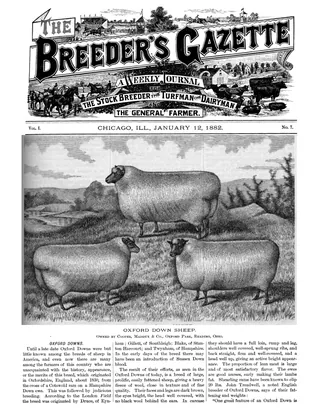
A short 1882 article from The Breeder's Gazette on the Oxford Down breed of sheep. It covers the breed's origin in Oxfordshire around 1830 from a Cotswold ram and Hampshire Down ewe, its physical points, fleece, fattening, hardiness and suitability for American conditions. It also profiles the ram Freeland, owned by Cooper, Maddux & Co. of Oxford Park, Reading, Ohio. It concerns sheep husbandry rather than textiles or weaving.
A Pastoral
Illustration · 1 page
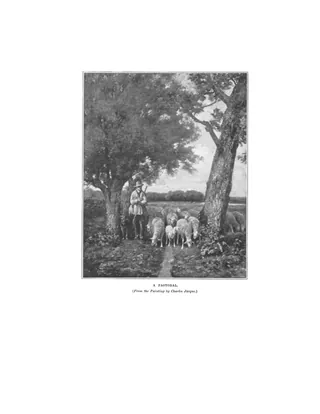
A single-page reproduction of a pastoral painting by Charles Jacque, printed in the Magazine of Art. The high-contrast image shows a large leafy tree with figures and livestock grouped beneath it. The only text is the caption crediting the painting.
Pastoral
Illustration · 1 page
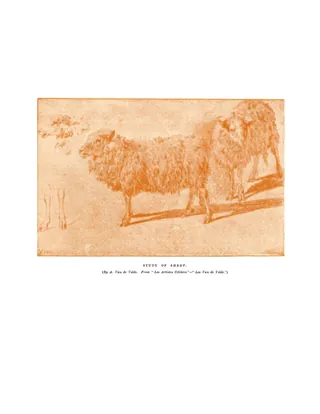
A single-page black-and-white halftone reproduction of a pastoral study of sheep, captioned "Study of Sheep" by A. Van de Velde. It shows two heavily fleeced sheep resting or standing near a low fence against a sparse background. The caption says it comes from "Les Artistes Célèbres" in the volume on the Van de Velde family. It is an illustration with no weaving content.
Pasture in Spring
Illustration · 1 page
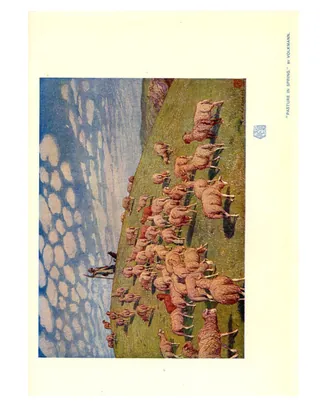
A single color plate titled "Pasture in Spring" by Volkmann, reproduced from International Studio. It shows a flock of sheep grazing on a green hillside beneath a blue sky, with a shepherd at left and a stone outcrop at upper right. The page carries only a caption and has no weaving content.
Pedigree Sheep-Breeding
Article · 5 pages
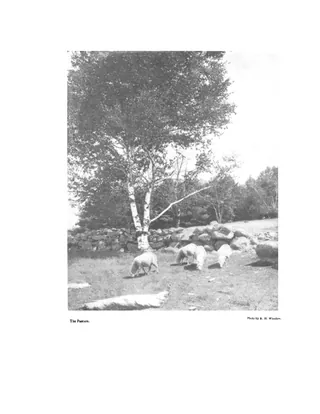
A 1904 magazine article on the history and practice of pedigree sheep breeding. It traces sheep in ancient and biblical times, the Spanish origin and spread of the merino across Europe, and why Britain rejected the breed. It then covers Robert Bakewell's improvement of mutton sheep and the creation of British breeds such as Southdown, Shropshire and Oxford Down. Illustrations show a pasture and rams of several breeds.
[Photographs of sheep breeds in Argentina, from Enciclopedia Comercial]
Enciclopedia Comercial, 1922
Illustration · 4 pages · Spanish
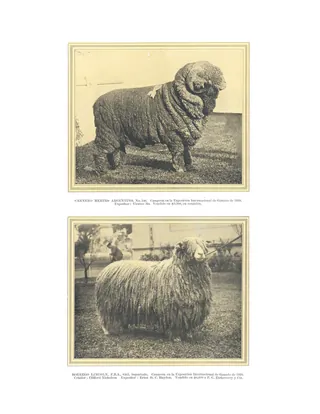
Four plates of photographs of sheep, with Spanish captions, from a 1922 commercial encyclopedia. They show champion Argentine Merino and imported Lincoln sheep from the 1920 International Livestock Exposition, Merino Rambouillet rams and lambs, Lincoln crossbreds, Hampshire Downs, and freshly shorn Lincolns in pastures. The pages have no text beyond the captions.
Picture Postcards
Keystone View Company, c. 1900-1940
Ephemera · 22 pages
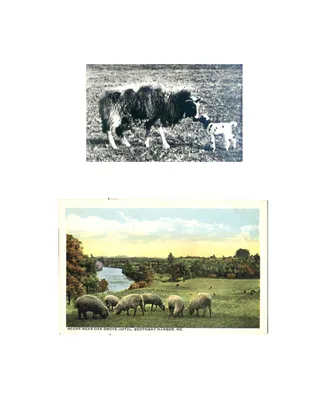
A collection of about 40 vintage picture postcards of sheep, flocks, shepherds and lambs, reproduced two to a page. The cards include hand-colored and sepia photographs and reproductions of paintings by Millet and Rosa Bonheur. Views come from the United States (Boston, Chicago, New Hampshire, Idaho, Washington State), Britain, France, Italy, Switzerland, New Zealand and India. The set has no weaving content and is of interest mainly as sheep and pastoral imagery.
The Ploughman and the Shepherdess
Illustration · 1 page
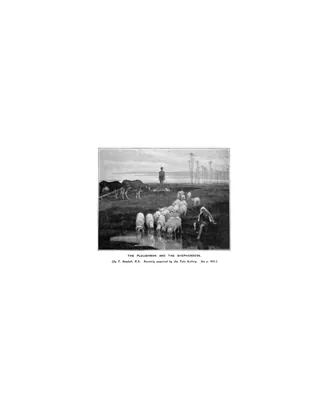
A single-page black-and-white halftone reproduction of the painting 'The Ploughman and the Shepherdess' by F. Goodall, R.A., printed in the Magazine of Art. It shows a shepherdess and her flock of sheep in the foreground among bushes and flowers, with a ploughman and plough team on the distant horizon. The caption notes the painting was recently acquired by the Tate Gallery.
Re: On a New Variety in the Breeds of Sheep (Part 2)
Article · 8 pages
A letter from Colonel David Humphreys to Sir Joseph Banks, read to the Royal Society in January 1813, describing the Ancon or Otter breed of sheep. The breed began in 1791 in Dover, Massachusetts, from a short-legged lamb born to Seth Wight's flock. The letter covers the breed's inheritance, crossing with common and Merino sheep, fleece quality, physical weaknesses, a dissection by Dr. Shattuck, and its decline after Merinos were introduced into New England.
Sheep
Article · 4 pages
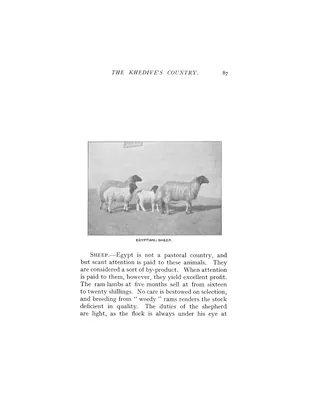
A four-page chapter on sheep keeping in Egypt, taken from a book about the Khedive's country. It describes the neglected state of Egyptian sheep raising, the lack of breed selection, the role of the shepherd, and the need to guard flocks against theft. It also discusses growing demand for mutton and the prospects of ensilage for feeding sheep in the Nile Delta. A photograph of Egyptian sheep with a shepherd is included. It contains nothing on wool or textiles.
Sheep and the Forest Reserves
Article · 7 pages
A 1901 magazine article arguing for the exclusion of sheep from the United States forest reserves, especially the Sierra Reserve in California. The author, drawing on John Muir's remarks and accounts from mountaineers and ranchers, sets out charges that sheep destroy seedlings and grasses, compact or pulverize the soil and cause runoff, contribute to forest fires, and contaminate town water supplies. He concludes that government exclusion of sheep is wise and has majority support.
Sheep and the Forests
Article · 7 pages
A 1901 Forum article by Earley Vernon Wilcox replying to C. S. Newhall's earlier piece condemning sheep grazing in forest reserves. Drawing on observations in Montana, Idaho and Wyoming, Wilcox argues that sheep rarely graze in timber, do not destroy sod or cause erosion, are not a main cause of forest fires, and that pollution of streams is not unique to sheep. He defends sheep raising as a legitimate industry and suggests grazing might be limited by cooperation with the Government.
Sheep Barn
Breeder's Gazette, February 16, 1882
Article · 2 pages
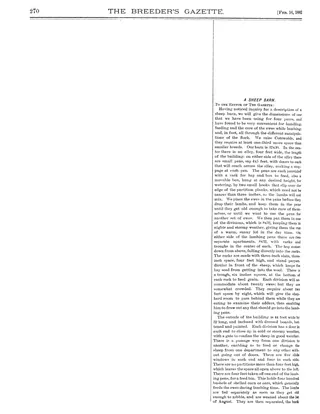
A letter to the editor of the Breeder's Gazette from E. M. Rees of Franklin, Illinois, describing a sheep barn used for four years for a Cotswold flock. It gives dimensions, the layout of lambing pens, hay racks, grain troughs, feed bin, doors and windows, and notes on feeding and weaning lambs. It closes by proposing that county fairs hold annual shearings before exhibiting sheep so judges can assess fleece quality and carcass.
Sheep conformation
Article · 2 pages
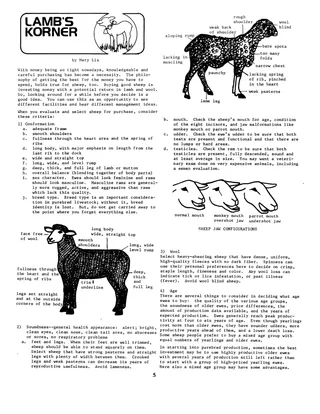
A "Lamb's Korner" column by Mary Lis offering guidance to hand spinners and weavers on buying sheep. It covers conformation, soundness, wool quality, age, performance records, and health certificates. Line drawings show good and faulty conformation and mouth and jaw configurations by age (lamb through broken mouth), along with guidance on ram-to-ewe ratios and breeding ewe lambs.

Sheep Facility Layouts
Article · 2 pages
The first installment of the new "Lamb's Korner" column in The Minnesota Weaver, introducing a series on keeping a sheep flock for guild members. It gives a checklist for choosing and planning sheep housing: site, construction, floors, insulation, water, light, ventilation, lambing pens, alleys and manure handling. It also briefly covers feeding and refers readers to the Sheep Handbook, with two barn floor-plan diagrams for 30 and 50 ewes.
Sheep Foot Care
Article · 1 page
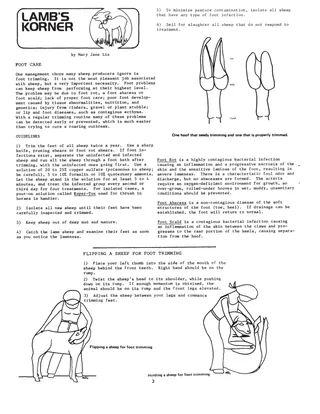
A one-page sheep management column from the "Lamb's Korner" series in Minnesota Weaver. It explains why regular foot trimming matters for sheep health, lists guidelines for trimming and foot baths, and briefly describes foot rot, foot abscess and foot scald. It also gives steps for flipping a sheep to trim its feet, with line drawings of trimmed and untrimmed hooves and of handling positions.
Sheep in the Southwest
Article · 6 pages
A 1905-1906 article by John A. Craig, Dean and Director of the Agricultural College in College Station, Texas, on the sheep industry in the Southwest, reprinted in the Oklahoma Territorial Board of Agriculture's biennial report. It covers market conditions for lamb and wool, the suitability of the Southwest's climate and feed, starting a flock, choosing ewes and rams, dipping for scab and ticks, and feeding. It ends with a photograph of sheep in Oklahoma. The focus is livestock husbandry, not textiles or weaving.
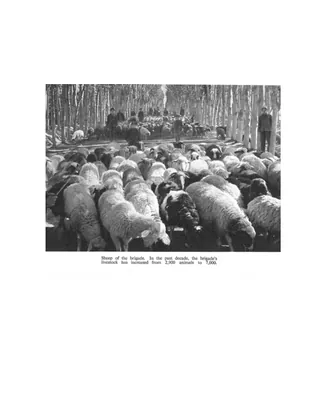
Sheep of the Brigade
China Pictorial, 1975
Illustration · 1 page
A single-page illustration from China Pictorial, 1975, No. 6, showing a photograph of a large flock of sheep driven along a tree-lined road by herders. The caption says the brigade's livestock grew from 2,500 to 7,000 animals over the past decade. It has no weaving content, but it is relevant as background on wool-producing livestock in rural China.
Sheep Raising
Article · 1 page
A short 1906 encyclopedia article on sheep raising in the United States. It estimates the national flock, names the leading sheep-producing states (mainly the Western mountain states), and describes the range "bands" grazed in government reserves. It also discusses the shift in Eastern and Midwestern states from fine-wool Merino flocks toward English mutton breeds. It has no weaving content.
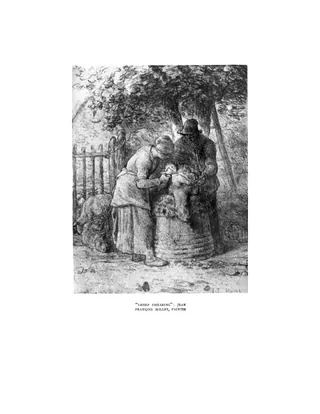
Sheep Shearing
Illustration · 1 page
A single-page reproduction of a sketch by the French painter Jean-François Millet showing sheep shearing. A woman in a headscarf bends over a sheep being sheared while a figure in a wide-brimmed hat stands behind her. The only text is the caption naming the work and the artist; it was printed in The Craftsman.
Sheep, Their Types and Characteristics, No. I
Breeder's Gazette, April 20, 1882
Article · 1 page
A single page from the Breeder's Gazette, April 20, 1882, opening a series on sheep types and characteristics. It discusses the long association of sheep with humans as a source of food and clothing, the development of breeds through selection and feeding, and the prospects for sheep husbandry in the United States. The Gazette announces that later issues will treat the breeds of most interest to American breeders.
995 documents found