Textile Documents › Topic: Needle lace
368 documents found
Sort: 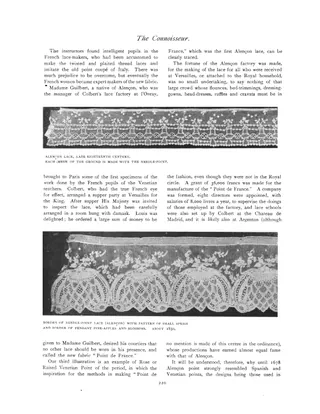
Evolution of Alençon Lace
Article · 5 pages
An illustrated article from The Connoisseur tracing the history of Alençon needle-point lace from its founding under Colbert in the 1660s with Venetian instructors, through its Venetian-influenced early phase and later changes in design, to its decline and revivals in the nineteenth century. It covers French sumptuary laws, the cordonnet padding, the ground (réseau), and Napoleonic commissions, and ends with modern production at Bayeux and Burano. Illustrations show Alençon lace borders from the eighteenth to nineteenth centuries and a piece of raised Venetian rose point.
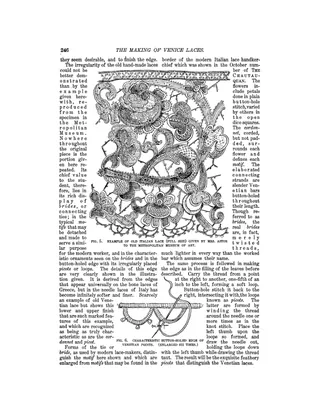
The Making of Venice Laces
Article · 4 pages
A 1902 magazine article by Ada Sterling on how Venetian needle-point lace is made, with illustrations by Louise Willis Snead. It opens with legends of the origin of Venice lace and the role of the button-hole stitch, then gives step-by-step instruction: materials (fine flax thread, needles, parchment patterns), the tracing thread and padding, filling-in stitches, diamond spacing, bullion stitch, joining motifs with brides and bars, and making picots. Six figures show the tracing thread, padding, an enlarged motif, stitch examples, a museum specimen of old Italian lace, and a button-holed edge.
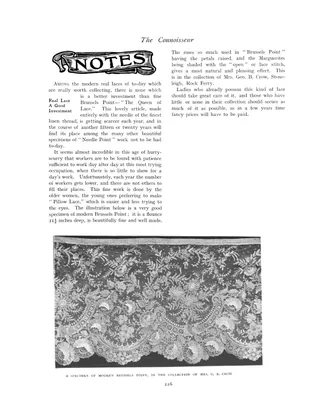
Real Lace a Good Investment
The Connoisseur, 1905
Article · 1 page
A short note from The Connoisseur arguing that fine modern Brussels Point needle lace is a good investment for collectors because it is growing scarce. It says the work is done by older women while younger workers prefer pillow lace, and it describes an illustrated flounce with raised roses and shaded marguerites from a private collection. It ends with advice to care for and acquire such lace.
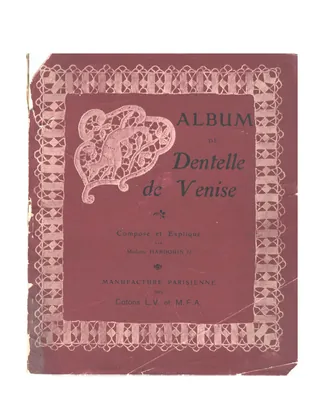
Album de Dentelle de Venise [ Album of Venetian Lace ]
Book · 50 pages · French
A French-language instruction album on Venetian needle lace by Madame G. Hardouin, published by the Manufacture Parisienne des Cotons L.V. et M.F.A. It gives a short history of lace, then explains two ways of making Venetian lace: by hand on Reticella squares, and on a tombolo (lace cushion), with instructions for making the cushion and roller. It describes the stitches (saccola, greco, crema, punte groppo, punte tondo), the net grounds (regular, simple, crackled and picoted brides), and gives many photographed motifs for insertion, trimmings, and English embroidery pieces with Venetian inserts, with thread numbers for each.
Alençon, Part I
Article · 5 pages
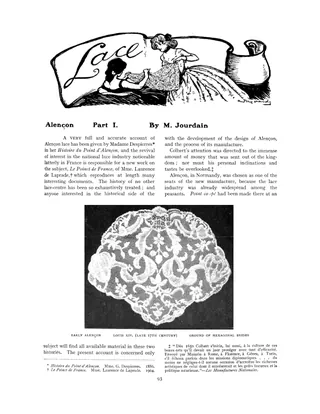
First part of a two-part article by M. Jourdain on Alençon needlepoint lace, focusing on how its design developed and how it was made rather than on its administrative history. It covers the founding of the Points de France manufacture under Colbert in the 1660s, the earlier point coupé industry in Alençon, the imitation of Venetian points, protectionist measures, and the protection of royal lace patterns and designers. Illustrated with photographs of 17th and 18th century Alençon lace from the Victoria and Albert Museum and the Brussels Musée des Arts Décoratifs, including hexagonal brides grounds and a sleeve trimming.
Alençon, Part II
Article · 4 pages
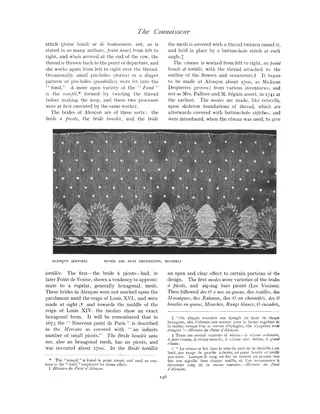
Part II of M. Jourdain's article on Alençon needle lace in The Connoisseur, covering how Point d'Alençon was made: pricking the parchment pattern, the trace, the fond or entoilage, the brides, the réseau ground, the modes (filling stitches), the brode, assembly and finishing. It also covers the horsehair cordonnet, the 1836 attempt to imitate the lace on bobbin net, shading introduced in 1855, the thread supply, and the relation of Alençon to Argentan and Argentella. Illustrated with photographs of Alençon lace (Louis XVI and Empire periods) from the Musée des Arts Décoratifs, Brussels, and the Victoria and Albert Museum. Footnotes cite the Histoire du Point d'Alençon, Mrs. Palliser and others.
Antiquities for the Contemporary Lacemaker
Article · 2 pages
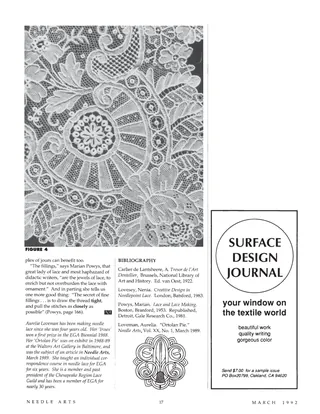
A short article by needle lace artist Aurelia Loveman on the traditional lace 'modes' and 'jours', the small decorative fillings used to relieve large open areas in needle lace. It explains the ring, bar, and picot as basic elements and the seed, chain, and star arrangements for combining them, with line drawings of a chain of rings, rings on festoons, and picoted bars with chained rings. It closes with a quotation from Marian Powys on lace fillings, an author biography, and a bibliography of Carlier, Lovesey, and Powys.
Argentan Lace
Article · 6 pages
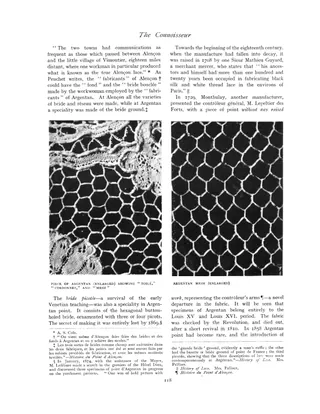
An article from The Connoisseur by M. Jourdain on the history and design of Argentan needlepoint lace, a Point de France lace made at Argentan and Alençon. It covers the characteristic hexagonal bride ground, the relation to Alençon lace, and its decline after the Revolution and with the adoption of cotton thread around 1830. It traces changing design styles from Louis XIV through Louis XV, Louis XVI and the Empire, relating lace motifs to contemporary textiles, brocades and fashion. Illustrated with photographs of Argentan pieces including a flounce, a lappet and enlarged views of the mesh.
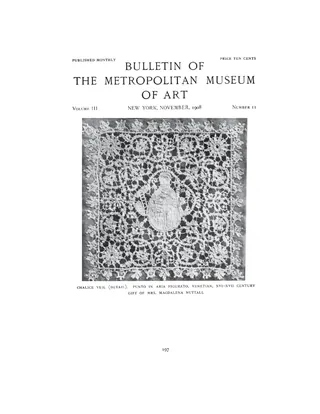
[Chalice Veil]
Article · 1 page
A single-page item from the Bulletin of the Metropolitan Museum of Art, November 1908, showing a photograph of a detail of a Venetian chalice veil. The caption identifies it as punto in aria figurato lace of the 16th to 17th century, given to the museum by Mrs. Magdalena Nuttall. The page carries the photograph and caption only, with no running text.

Dentelle Ténériffe [ Teneriffe Lace]
Book · 41 pages · French
A French-language D·M·C Library album on Teneriffe lace (dentelle Ténériffe), a South American-style lace worked on rubber or metal forms with radiating stretched threads. The text covers tools, needles, threads, how to stretch the thread network, knotting rows, wheels, darning-stitch ornaments, bar twisting, and removing finished work. It also describes an imitation made with ready-made Teneriffe braid, using crochet and basting onto patterns. Twenty plates of photographed circular and other lace motifs follow, and the volume ends with D·M·C thread and publication lists.
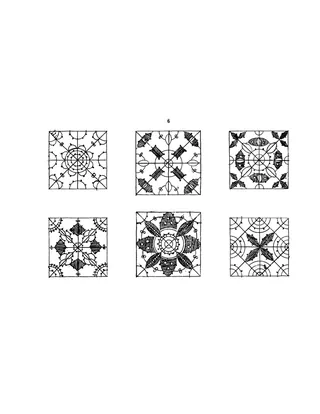
Disegni di Trafori [Openwork Designs]
Cleofe Mingarelli Ricci · 1909
Book · 51 pages · Italian
An Italian pattern album of 240 openwork lace designs in punto in aria (needle lace), compiled by Cleofe Mingarelli Ricci and published in Milan in 1909. After a short preface on the fashion for Aemilia Ars lace and the need for a practical collection of designs, the book consists of numbered plates of line-drawn square tiles, border strips, triangles and circular medallions. The author states that all designs have actually been worked.
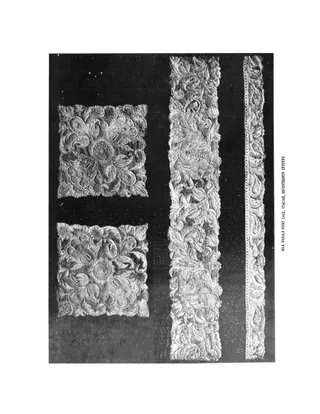
Ecclesiastical Lace Ancient and Modern: A Comparison
Article · 6 pages
Part I of an article by Mrs. F. Nevill Jackson comparing seventeenth-century church lace with nineteenth-century work. It discusses what counts as ecclesiastical lace, lace made for church use versus lay lace later given to the church, and the role of convents in lace-making. It criticizes the weak design of modern lace, using the 1887 Youghal (Co. Cork) convent set made for Pope Leo XIII as its main example. Plates show Italian and Venetian needle-point lace, including an alb and a stole, and modern Irish needle-point.
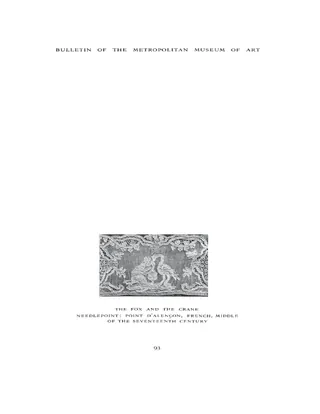
The Fox and the Crane Needlepoint
Article · 1 page
A one-page entry from the Bulletin of the Metropolitan Museum of Art showing a needlepoint lace panel of a fox and a crane, illustrating the fable. The caption identifies it as Point d'Alençon, French, mid-seventeenth century. The page consists of a photograph with a brief caption.

Instructions for Lace Making
Geo W. States · 1873
Book · 66 pages
An illustrated 1873 Boston manual of instructions for making point lace and Honiton lace, edited by Geo. W. States. It covers materials (braids, cords, purl edges, linen lacet thread), how to lay and gather the braid, and the needle-lace stitches (Brussels, Venise, Espagne, Valenciennes, Alençon, Angleterre, Mechlin, Escalier), followed by wheels and rosettes, connecting bars, edgings and picots. The final section gives patterns with materials lists for stars, medallions, borders, handkerchief, cravat ends, neck ties, collars and cuffs. A publisher's advertisement for States' Embroidery Store is at the end.
Italian Laces, Old and New
Article · 6 pages
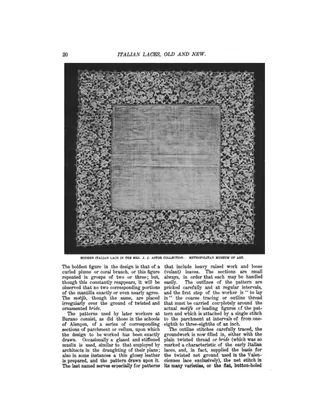
A 1902 magazine article on the history and development of Italian needle lace from the fifteenth to seventeenth centuries, illustrated with photographs of pieces in the Metropolitan Museum of Art. It traces the progression from darned-ground bands through reticella, bride (twisted bar) grounds, raised cordonnet and Venetian picot, and notes the 1870 revival of Italian lace-making. It also outlines how lace was worked on parchment patterns at Burano, from outline thread and ground fillings to cutting the finished lace free.
Lace Collection of Mr. Arthur Blackborne: Part III-- Rose Point
Article · 9 pages
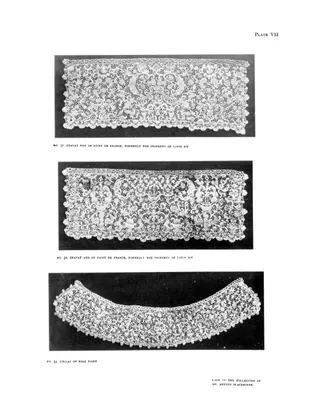
Part III of M. Jourdain's series on Arthur Blackborne's lace collection, devoted to rose point (raised Venetian needlepoint lace). The text first explains how rose point differs from later punto in aria in its conventional scroll design, raised relief, and elaborate brides (bar grounds). It then gives numbered catalogue entries (Nos. 31-47) for cravat ends once owned by Louis XIV, collars, cuffs, lappets, and borders, describing their designs, meshes, picots, and provenance. Four plates (VII-X) reproduce many of the pieces in black and white.
Madame Goubaud's Point Lace Book
Book · 61 pages
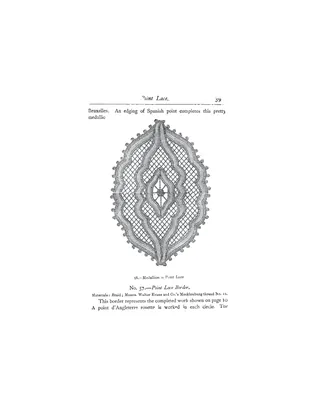
An illustrated Victorian instruction manual for making needle-made point lace, published in London as a one-shilling book (thirty-second thousand, second edition preface). It covers materials such as braids, cords, Mecklenburg linen thread and scissors, how to lay and gather the braid, and then describes dozens of lace stitches (Brussels, Venice, Spanish, Alençon, Angleterre, Mechlin and others), connecting bars, wheels and rosettes, and edgings and picots. The final section gives patterns for stars, medallions, borders, insertions, cravat ends, collars, lappets and an alphabet, each with materials and thread numbers, plus a table of thread sizes for different articles. The book ends with publisher advertisements.
Miss Hadley's Needle work Lessons: Second Lesson: Needle Point Lace
Article · 1 page
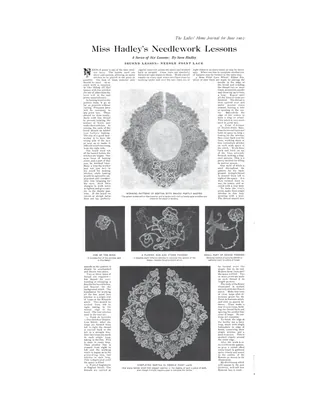
A one-page instalment from Sara Hadley's six-part needlework series in the Ladies' Home Journal, giving instruction in needle point lace. It covers choosing linen braid, basting braid to the pattern, thread sizes, and four filling stitches: Point de Sorrento, Point d'Angleterre, Rose Point wheel and Point d'Alençon bars. It also describes the picot background, the Church stitch flower body, the loop edge, and raised braid outlines on a bertha. Photographs show the working pattern, a bud, a flower section, and the finished bertha.
Modern Lace Making
Article · 1 page
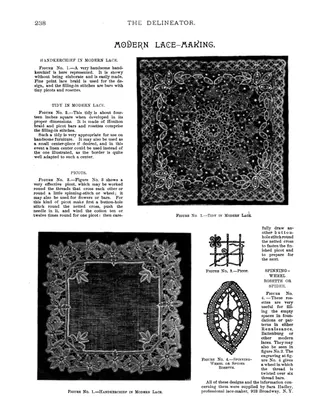
A one-page article from The Delineator on modern needle lace made with commercial braids. It shows and describes a handkerchief in point lace braid and a tidy in Honiton braid, with filling stitches of picot bars and rosettes. It also gives brief instructions for working a wound buttonhole picot and a spinning-wheel (spider) rosette. The designs were supplied by Sara Hadley, a professional lace-maker in New York.
Needle-Made Laces (1st Series)
Book · 69 pages
A D.M.C Library album of needle-made lace edited by Th. de Dillmont, first series. It opens with an introduction on the history of needle lace and a short treatise on tracing patterns, lace stitches, bars and picots, then gives 15 plates of photographed models: Reticella squares and round motifs, imitation Reticella made with braids, Venetian point laces, and small articles trimmed with lace. Thread-size tables list the D.M.C threads to use for each plate, and white-on-black tracing patterns at the back can be detached for working. It ends with D.M.C product and publication advertisements.
New Little Things in Lace
Article · 1 page
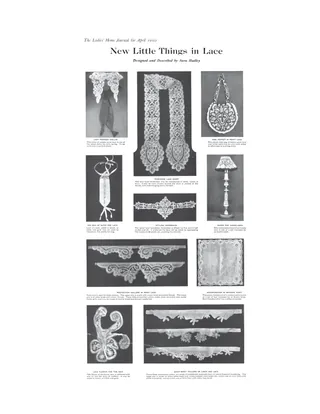
A one-page illustrated feature from the Ladies' Home Journal, April 1902, showing new lace accessories designed and described by Sara Hadley. Short captions accompany photographs of a needle point collar, princesse lace scarf, point lace side pocket bag, fan bag, headdress, candelabra shade, protection collars, handkerchief, hair flower and linen-and-lace shirt waist collars. The captions give brief notes on colors, materials and intended use, such as Easter gifts. No patterns or instructions are included.
Ortolan Pie
Article · 5 pages
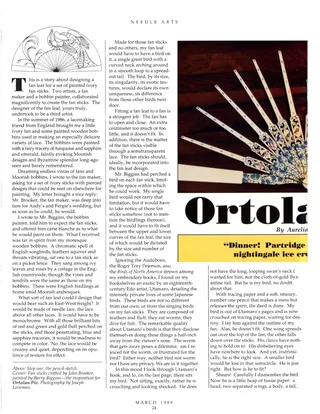
First-person article by lace artist Aurelia Loveman describing how she designed and worked a needle lace fan leaf, "Ortolan Pie," for a set of painted ivory fan sticks. She traces the design of a crouching fire bird adapted from a Utamaro bird book, and explains the stitches used: knotted double buttonhole, cloth stitch, Alen\u00e7on mesh, the "Les Venises" band, and a festoon-stitch ground with a running-stitch armature that she claims as her own invention. Illustrated with photographs of the finished lace and details; includes a short bibliography and author note.
Point de Venise à Réseau; Old Burano Point
Article · 4 pages
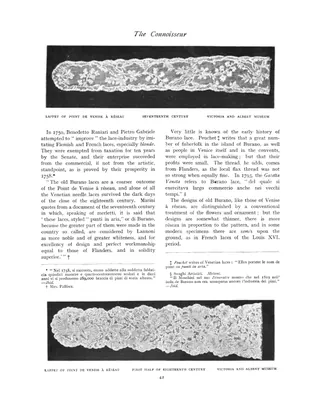
A short illustrated article on Point de Venise à réseau, a Venetian needle lace with a square-mesh ground, and on old Burano point, its coarser descendant. It describes the design and workmanship of the laces, compares them with Brussels and Alençon lace, and outlines their history from about 1650 to the extinction of the industry in 1866. It also gives a description of how Burano point was worked on a pillow. Photographs of lappets in the Victoria and Albert Museum illustrate it, and footnotes quote Italian and French sources.
Punto de Aguja and Point d'Espagne. Part II
Article · 5 pages
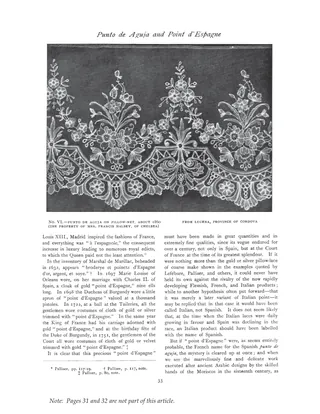
Second part of an article in The Connoisseur arguing that Spanish punto de aguja is the origin of the French 'point d'Espagne'. The authors examine a Lucena lace flounce on pillow-net, other Andalusian specimens and historical references (Gustavus Adolphus's collar, French court inventories, a South Kensington bed-cover). They then propose that the Spanish terms punto and punta (stitch and point) were mistranslated into French, Italian and English lace terminology. Illustrated with five numbered specimens, including a reconstructed net ground (réseau) and Morisco fringe.
Ragusa: The Mystery Spot in Lace-History
Article · 18 pages
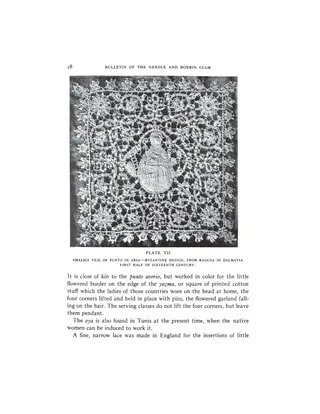
An article by Margaret Taylor Johnstone asking what the lace of Ragusa (Dubrovnik, Dalmatia) actually was, given its fame in France and its scant mention in Italy. She argues that a group of needle laces, mostly in the Metropolitan Museum of Art, should be reassigned from Italy to Ragusa. Her marks of Ragusan work are the knotted punto avorio and punto di Ragusa stitch, Byzantine designs, a double-stitch ground, and rosaces with five, six, ten, twelve or sixteen petals rather than Venice's eight-pointed star. She sorts the laces into four historical groups from the 16th to the early 18th century, from geometric cutwork-like work to grounded laces. She also describes the stitch (after Dillmont), its survival at Parre and Valle Vogna, and related oya lace. Eleven photographic plates illustrate specimens.
Teneriffe Lace
Article · 1 page
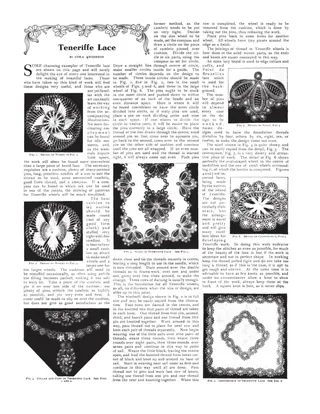
A one-page instructional article on making Teneriffe lace, a wheel-based needle lace worked on a pin cushion. It covers the tools and materials (cushion, pins, needles, mercerized cambric, linen thread, compass), how to draw the circle and set the pins, how to wrap and darn the foundation threads, and how to weave the windmill wheel design. Photographs show wheels, a collar and cuff, a scarf and a centrepiece in Teneriffe lace.
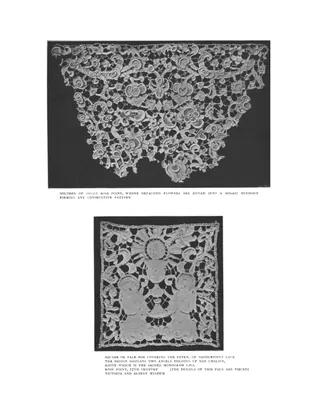
Venetian Needlepoint, Part I
Article · 7 pages
Part I of M. Jourdain's article on Venetian needlepoint lace in The Connoisseur. It covers lace-making as a private and convent enterprise in Venice, the shift from geometric cutwork to curved designs around 1600, the vague use of the term punto in aria, and the features of rose point: conventional pomegranate-scroll designs, raised relief over padded threads, button-hole stitch, and bride grounds. It also discusses pieced specimens with lost brides. Illustrated with plates of laces and embroideries, mostly from the Victoria and Albert Museum and private collections.
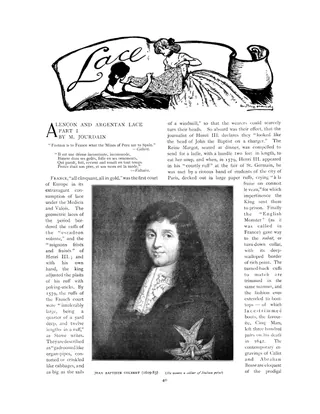
Alençon and Argentan Lace: Part I
Article · 4 pages
First part of an article on the history of Alençon and Argentan needle lace in France. It surveys the French court's extravagant use of lace under the Valois and Louis XIII and XIV, the sumptuary edicts against it, and Colbert's founding of the Point de France industry at Alençon with Venetian workers in the 1660s. It covers the royal privilege of 1665 and local resistance from the lace workers. Illustrated with a portrait of Colbert and photographs of eighteenth-century Point d'Alençon and Point d'Argentan lace.
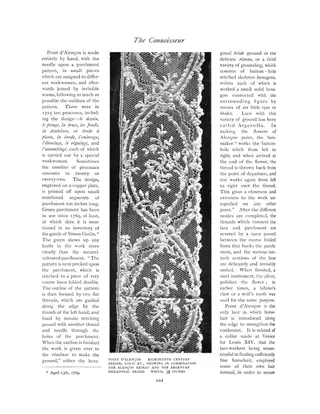
Alençon and Argentan Lace: Part II
Article · 5 pages
Second part of M. Jourdain's article on the history of Alençon and Argentan needle lace in The Connoisseur. It covers French protectionism under Colbert, the Venetian origins of the grounds, the stages of making Point d'Alençon (parchment pattern, réseau and bride grounds, horsehair cordonnet), and changes in design from Louis XIV to Louis XVI. It also traces the history of the Argentan manufacture, including the Guyard and La Leu rivalries and its decline in 1810. Illustrated with photographs of eighteenth-century lace panels and borders.
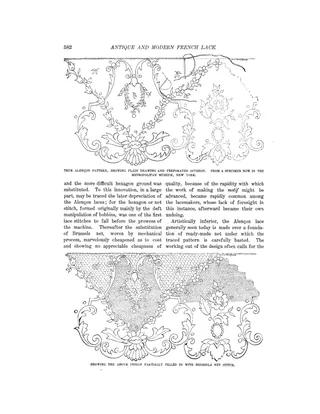
Antique and Modern French Lace
Article · 5 pages
A 1902 magazine article on the history and making of French lace, centered on Alençon and Argentan needle lace. It traces the rise of French lace under Colbert and Louis XIV, the decline of handmade lace under machine competition, and the German Torchon tradition, including a Huguenot lace pillow at New Paltz. The second half describes how Alençon lace is made: pricking the pattern, laying the tracing thread, buttonhole-stitched motifs, the hexagonal net ground, the cordonnet edge, and horsehair stiffening. Illustrations show an Alençon pattern at three stages of working.
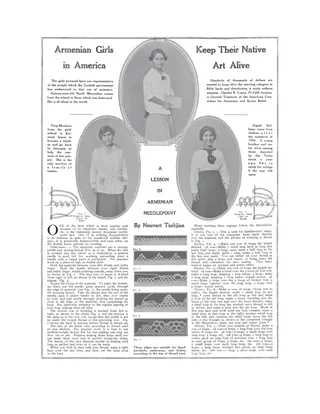
Armenian Girls in America Keep Their Native Art Alive
Article · 1 page
A single-page article from Modern Priscilla pairing a short appeal about Armenian refugee girls in America with a lesson in Armenian needlepoint lace by Nouvart Tashjian. It explains the Armenian knot worked with a sewing needle and fine thread, with row-by-row directions for five edgings (Figs. 3-7) suited to handkerchiefs, underwear and doilies. Line diagrams show the knotting from right to left and left to right, and small lace swatches illustrate the edgings.
La Dentelle Renaissance [Renaissance Lace]
Book · 108 pages · French
A French-language instruction manual in the D.M.C. Library series on Renaissance lace (also called Irish lace or Luxeuil lace), made by sewing lace braids (lacets) onto a pattern and joining them with needle-made bars (brides) and filling stitches. It covers the history of the technique, materials, preparing the pattern, basting and gathering the braids, and the many bride types, picots, wheels (spiders), teeth, entre-deux, numbered lace filling stitches, fillings for leaves and circles, and grounds (fonds). It also covers lace on tulle, mounting lace in fabric, and washing and finishing. The volume has many photographic illustrations of stitch samples, full-page plates of finished lace, and cut-out patterns for the ten plates, followed by a list of D.M.C. publications and products.
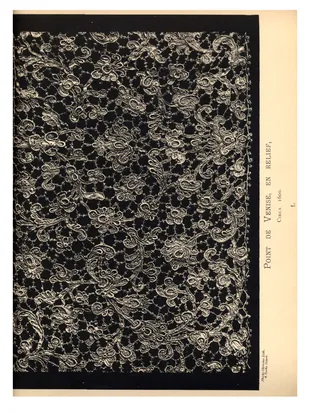
Designs for Lace Making
Book · 47 pages
A privately distributed pattern book of 1870 by S. H. Lilla Hailstone, offering forty photo-chromo-lithographed plates of historic and original lace designs. A text introduction covers the history of needlework and lace, working methods (Point de Venise, Point Coupé, Point Conté, tape and point lace, and cushion lace), materials such as flax thread and leather backing, and how to make the thorns (picots). The plates reproduce 16th to 18th century Italian, English, Greek, Neapolitan and Belgian lace, plus original designs, each captioned with type and date.
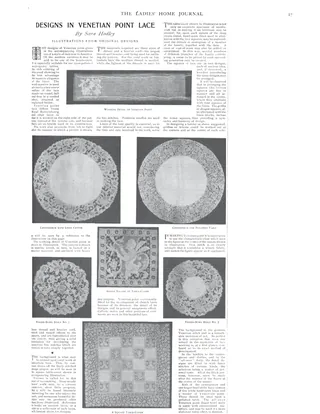
Designs in Venetian Point Lace
Article · 1 page
A 1898 Ladies' Home Journal article by Sara Hadley describing Venetian point needle lace, a style then new to America. It explains how the lace differs from Royal Battenberg (worked on the right side, no braids), how the raised corded outlines and buttonhole-bar background are made, and what threads and needles are needed. It illustrates centrepieces, finger-bowl doilies and a square table-cover alternating lace squares (triton and griffin designs) with hand-spun linen, and suggests uses such as church lace.
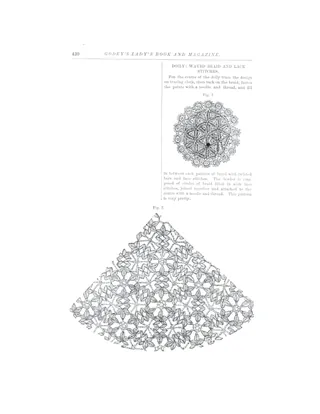
Doily: Waved Braid and Lace Stitches
Godey's Lady's Book and Magazine, May 1878
Article · 1 page
A short instructional piece from Godey's Lady's Book on making a doily from braid and lace stitches. The design is traced on cloth, braid is tacked on and its points fastened, and the spaces are filled with twisted bars and lace stitches. The border is made of braid circles filled with lace stitches and joined to the centre. Two illustrations show a round doily and a fan-shaped braid and lace piece.
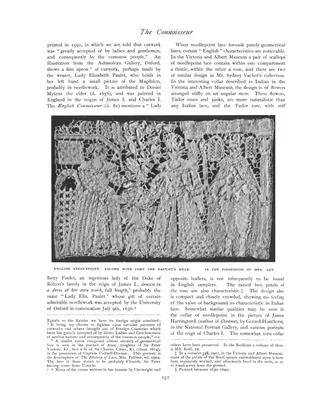
English Lace: I. Needlepoint
Article · 4 pages
An illustrated article by M. Jourdain on English needlepoint lace of the seventeenth century, arguing that its designs and techniques were largely borrowed from Italian and Flemish work and that the flax was imported. It discusses cutwork, Elizabethan wardrobe accounts, the Vinciolo pattern book, and portraits showing lace and cutwork, and notes characteristic English features such as Tudor roses, compact designs and raised petals. It also covers biblical scenes in lace with beads and pearls, the 1635 proclamation protecting home lace, cutwork on samplers, and hollie point. Plates show pieces from the V&A, the Musée des Arts Décoratifs in Brussels and private collections.
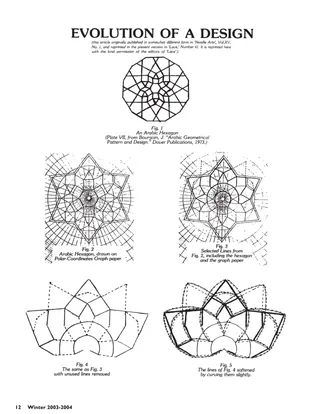
Evolution of a Design
Article · 2 pages
A two-page illustrated article by Aurelia Loveman showing step by step how a lace design was derived from an Arabic geometric hexagon pattern. Figures 1-5 move from the hexagon to polar-coordinate graph paper, then to selected lines that are softened into curves. Figures 6-8 turn the curves into a stylized flower, arrange it in a fan-shaped lace design, and show a needlepoint fan worked from it. The text is limited to figure captions and a note on earlier publication.
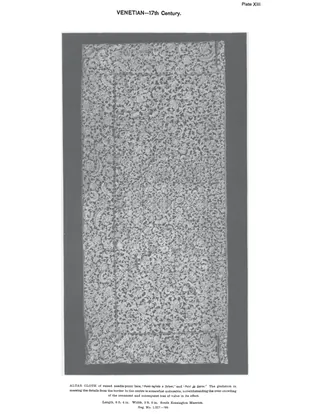
Hand-Made Laces from the South Kensington Museum
Book · 35 pages
A plate book from the 'Studies from the Museums' series, edited by Alan S. Cole, reproducing photographs of 30 hand-made laces from the South Kensington Museum. A short introduction covers the nature of lace, needlepoint lace (reticella, punto in aria, Venetian raised point, French points), pillow or bobbin lace, pattern development, descriptive terms and uses of lace. Each plate has a caption giving origin, century, description, dimensions and museum registration number. Specimens include Italian and German lacis (darned netting), Venetian raised needle-point vestments and flounces, Alençon and Brussels lappets, Mechlin, Valenciennes, English or Danish, and Japanese lace.
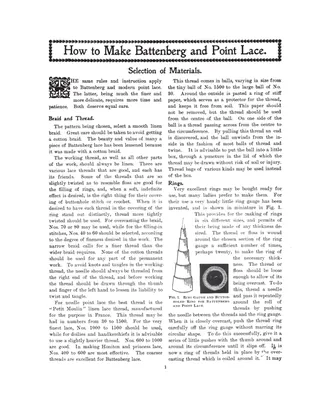
How to Make Battenberg and Point Lace
Book · 47 pages
An instructional handbook on making Battenberg and needle point lace, published by the Priscilla Publishing Company in 1900. It covers choice of linen braid and thread, making rings, basting braid to patterns, and preparing a practice sampler. Most of the book describes lace stitches with numbered figures: bars, wheels (spiders), insertions, network stitches, Point de Venise, Spanish point, Brussels point, Point d'Angleterre, combination stitches, picots and edgings. It closes with advice on washing, starching and finishing lace.
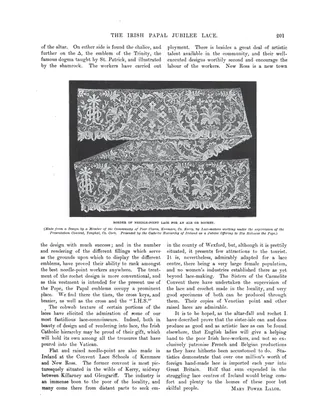
Irish Papal Jubilee lace
Article · 2 pages
A short 1888 magazine article describing the set of Irish needle-point lace presented by the Irish Catholic bishops to Pope Leo XIII for his priestly Jubilee. It covers the design competition among Irish art schools, the winning Kenmare design, and the making of the altar-fall and rochet lace by workers at the Presentation Convent, Youghal. It also notes the lace schools at Kenmare and New Ross and urges English buyers to support Irish lace. Two photographic illustrations show a cuff and a border of the needle-point lace.
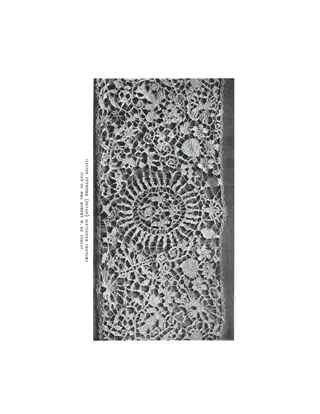
Italian Cutwork
Article · 1 page
A single page from the Bulletin of the Metropolitan Museum of Art (1909) reproducing a photograph of a detail of sixteenth-century Italian cutwork. The caption credits the piece as a gift of Mrs. Robert W. de Forest. The image shows a dense geometric openwork pattern with circular and radiating motifs and buttonhole-stitched bars. No article text is included.
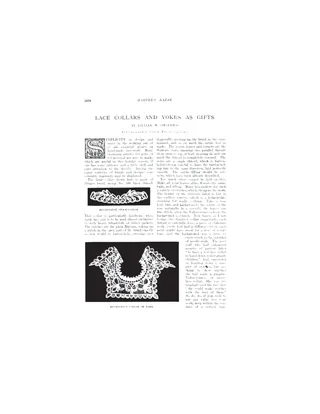
Lace Collars and Yokes as Gifts
Article · 2 pages
A 1900 Harper's Bazar article by Lillian M. Siegfried on making hand-worked braid lace collars and yokes as holiday gifts. It advises using one consistent stitch type per design, describes Russian stitch, Sorrento bars, cobweb filling and French twist, and recommends small collars for beginners. It also gives instructions for a small embroidered thread bag. Photographs show Renaissance, Honiton and Bruges braid collars.
Lace Collection of Mr. Arthur Blackborne: Part 2 -- Later Punto in Aria
Article · 5 pages
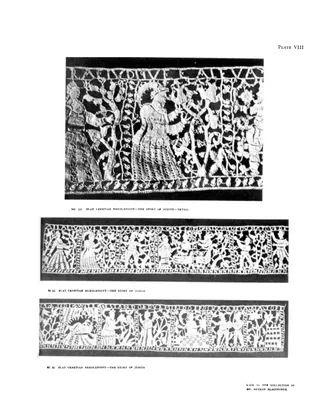
Second part of M. Jourdain's catalogue of Arthur Blackborne's lace collection, covering later punto in aria, the flat needlepoint that moved from geometric designs to scrolls, flowers and human figures. It describes specimens 22 to 30 by size and design, including a long Venetian panel with the story of Judith and Holofernes (with a Portuguese inscription), a figured strip with mediaeval costumed figures, and pieces with a Persian sun motif. The author discusses Persian influence on Venetian lace design. Two pages of photographic plates show the Judith panel and Nos. 25, 28 and 29.
Lace Collection of the Musée des Arts Décoratifs, Paris
Article · 7 pages
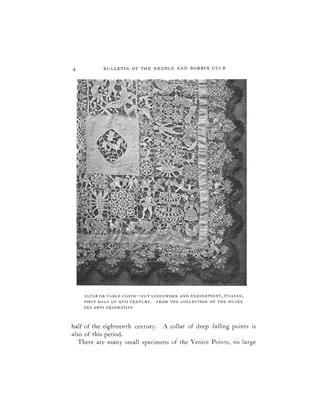
A 1921 article by Margaret Taylor Johnstone describing the lace collection of the Musée des Arts Décoratifs in Paris after its rearrangement. She surveys early Italian linenwork and needlepoint, Venetian points, and the Points de France, Argentan and Alençon, with notes on Flemish rabats. She also discusses the Colbert monopoly, the dispersal of lace-workers after 1685 and 1789, and the difficulty of attributing and authenticating Point de France. Illustrated with photographs of an Italian altar cloth, a Point de France flounce and a Venetian cut parchment pattern.
Marquess of Bristol's Collection at Ickworth, Part III
Article · 3 pages
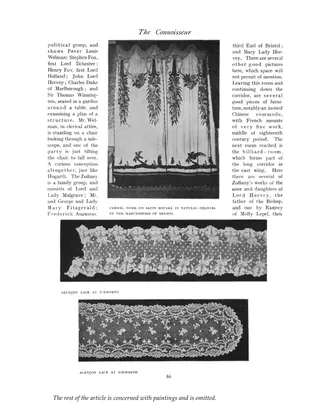
Part III of Leonard Willoughby's illustrated series on the Marquess of Bristol's collection at Ickworth, published in The Connoisseur in 1906. The text covers the Capo di Monte porcelain and its marks, then a walk through the smoking-room and billiard-room with their paintings by Hogarth and Zoffany and some furniture. The plates show a flounce of Point d'Angleterre lace, three fans, Alençon lace pieces, and a crewel-work panel on satin bourré by the Marchioness of Bristol.
Miss Hadley's Needle work Lessons: First Lesson: Marie Antoinette Lace Work
Article · 1 page
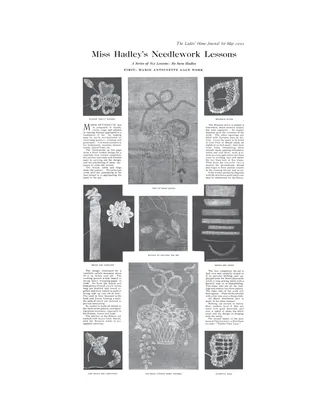
First of a six-part needlework series by Sara Hadley in the Ladies' Home Journal, May 1902, on Marie Antoinette lace work. It explains how braids, cords, rings and stitches are assembled on a pattern and appliqued to a net foundation, using a floral basket vestibule-door curtain (about 28 x 15 inches) as the example. Instructions cover Brussels stitch, Sorrento bars, basting braids to the pattern, applying the net, and pressing; photographs show the steps and the finished curtain.
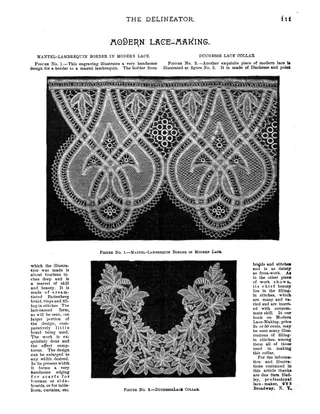
Modern Lace Making
Article · 1 page
A single-page illustrated article from The Delineator describing two pieces of modern (Battenberg and Duchesse) lace. Figure 1 is a mantel-lambrequin border about fourteen inches deep, made of cream Battenberg braid, rings and filling-in stitches; Figure 2 is a Duchesse lace collar of braids and varied filling stitches. The text notes that the magazine's book on Modern Lace-Making illustrates the filling stitches and credits Sara Hadley, a professional lace-maker in New York.
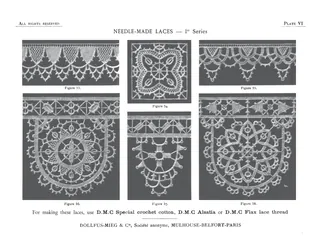
Needle-Made Laces; 1st Series
Book · 105 pages
A D.M.C Library album of needle-made lace patterns edited by Th. de Dillmont. It opens with an introduction on the history of needle lace and a short treatise on stitches and tracing. Fifteen plates follow: nine of Reticella patterns, two of imitation Reticella worked with braids, two of Venetian point, and two showing finished articles trimmed with the laces. Each plate has detachable white-on-black patterns at actual scale and tables of D.M.C thread sizes for the tracing, open-work and close stitches, corded bars and buttonhole stitch.
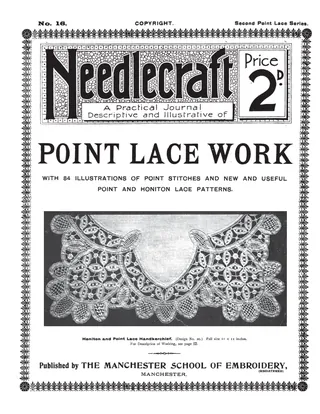
Needlecraft, No. 16: Point Lace Work
Periodical · 16 pages
Issue No. 16 of the Needlecraft journal, published by the Manchester School of Embroidery, is the second point lace series. It introduces point (Renaissance) lace made by filling braid designs with needle stitches, covering materials, braids, linen thread rings, and how to tack, join, finish, and tint the work. It illustrates about 60 numbered stitches (Point de Bruxelles, Point de Venise, Point Turque, Sorrento, spider and ladder stitches, picots, and buttonhole bars). It also gives some 20 lace designs with working notes: handkerchief, fan, table covers, sleeve, collars, tie ends, insertions, and Honiton butterflies. The last pages carry period advertisements.
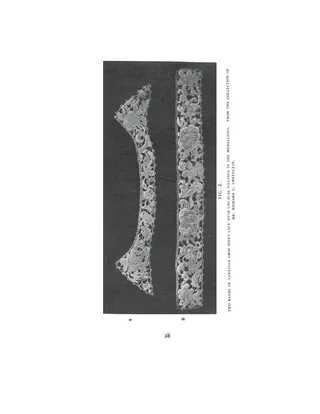
Needlepoint Lace from the Collection of Mr. Richard C. Greenleaf
Article · 5 pages
A short note from the Bulletin of the Needle and Bobbin Club describing two pieces of Venetian gros point needlepoint lace newly acquired by Richard C. Greenleaf, a charter member living in France. The lace has tiny figural scenes in the cartouche-like scrolls, including Daphne turning into a bay tree, episodes from Cupid and Psyche, musicians, and a huntsman. It relates the pieces to a collar in the Metropolitan Museum studied earlier in the Bulletin by Margaret Taylor Johnstone, whose stitch was attributed to Ragusa. The scan also includes a plate of a fourteenth-century German embroidery with identified biblical scenes.
368 documents found