"Arts of Combining Flexible Fibers" in The Useful Arts Considered in Connection with the Application of Science, Vol. II
Sample pages
Page 14, at reduced quality. Open the document to read every page in full.
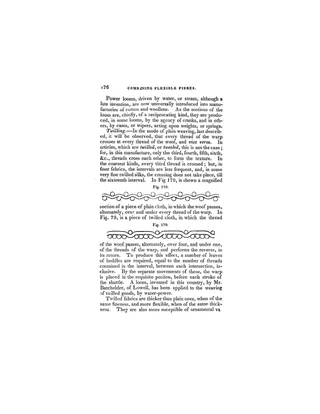
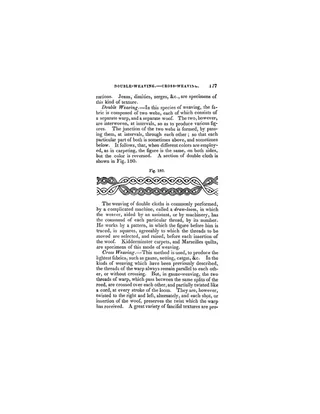
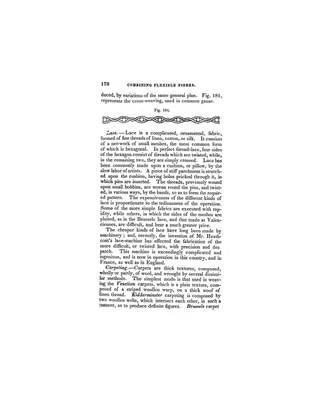
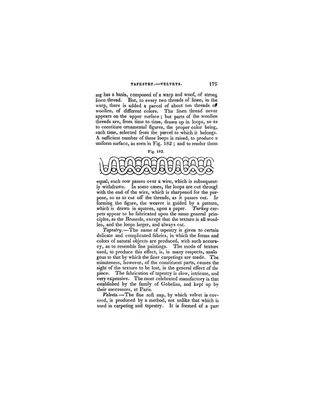
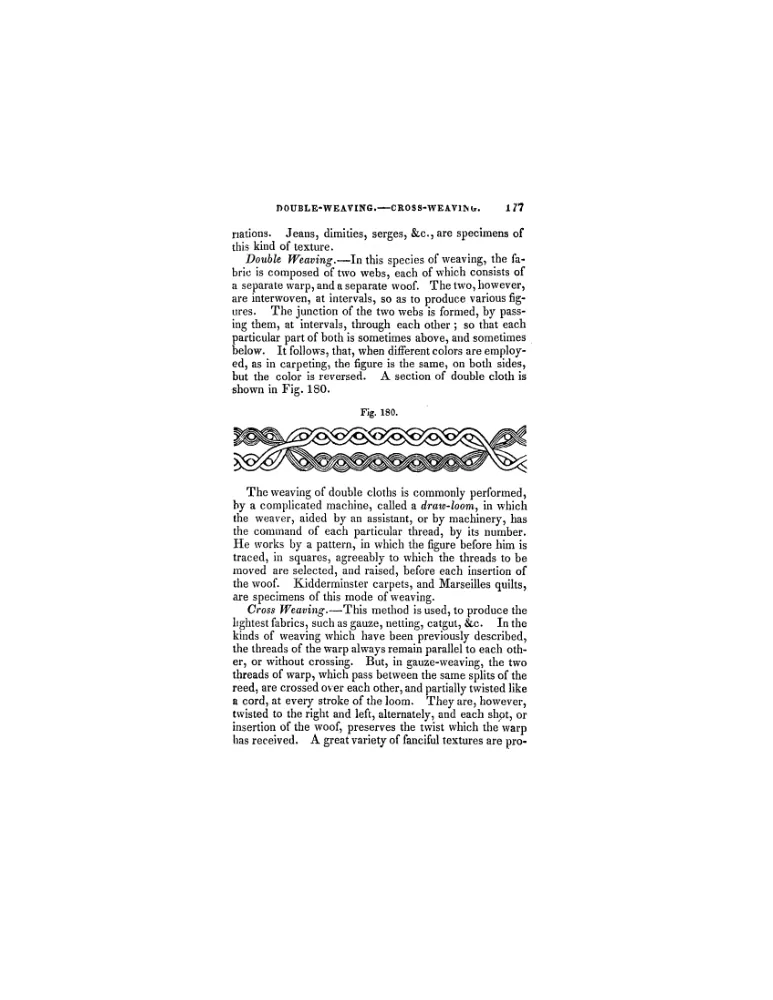
Chapter XVIII of Jacob Bigelow's 'The Useful Arts Considered in Connection with the Application of Science' (1856), covering the arts of combining flexible fibres. It begins with the theory of twisting, rope making and hemp spinning, then describes cotton manufacture stage by stage: batting, carding, drawing, roving, spinning, mule spinning, warping, dressing and power weaving. Short sections cover twilling, double weaving, cross weaving (gauze), lace, carpeting, tapestry, velvets, linen, woollens, felting, paper-making and bookbinding. Four small figures show cloth sections (plain, twill, double cloth, gauze, loop-pile), and a list of works of reference closes the chapter.
- Type
- Monograph
- Date
- 1856
- Language
- English
- Pages
- 24
(A free account is all you need)
From Ralph Griswold's Digital Archive, delivered by the University of Arizona.
Have missing pages or a better copy of this document, or another document to share? Contributing documents »