Textile Documents › Topic: Textile trade, tariffs, and wages
826 documents found
Sort: 
Export Trade and the Bolsheviki
Textiles, August 1919
Article · 2 pages
An editorial from the trade journal Textiles (August 1919) reprinting correspondence between the magazine and representatives of the Russian Soviet government's New York commercial office (A. A. Heller and Santeri Nuorteva). The Soviet side offered an article promoting export trade and a $200,000,000 gold deposit for purchases; the editor refused to publish it and answered with strongly anti-Bolshevik arguments. The piece also covers the June 1919 raid on the Soviet offices and the Lusk Committee hearing, and closes with a political call to oppose Bolshevism.
Alliance of British cotton spinners and slave-holding cotton lords to build up "Free trade." Detroit, Mich.
G. B. S., January 1871
Ephemera · 4 pages
A four-page protectionist tract from Detroit, January 1871, arguing that British cotton manufacturers and Southern slaveholding planters allied to promote free trade at the expense of Northern and Western farmers. It quotes David Christy's essay "The Economical Relations of Slavery" in the pro-slavery volume "Cotton is King" (ed. E. N. Elliott) as evidence. It argues that a home manufacturing market and a protective tariff would serve American labor and agriculture. It concerns the political economy of the cotton trade rather than textile production.
An Assembly of Wool Merchants in 1322
Article · 11 pages
An article from the English Historical Review presenting Chancery writs of 18 May 1322 that summoned the greater wool merchants of each English county to appear before Edward II and his council at York. Davies discusses the background of the wool staple question (ordinance of 1313, assemblies of 1318-1320, later ordinance of 1326) and analyzes the sheriffs' returns, which show where wool merchants were found across England. The Latin returns, with lists of merchants' names by county, are printed in full. The scan ends with the start of an unrelated note on books brought from Spain in 1596.
The British Cotton Policy
New Republic, September 25, 1915
Article · 2 pages
A 1915 editorial from The New Republic by Alvin S. Johnson criticizing Britain's decision to put cotton on the contraband list during World War I. It argues that the policy depresses American cotton prices, costing Southern growers an estimated $300 million, while failing to wear down Germany. The scan also includes the opening of an unrelated article, "The Chances of Being Married."
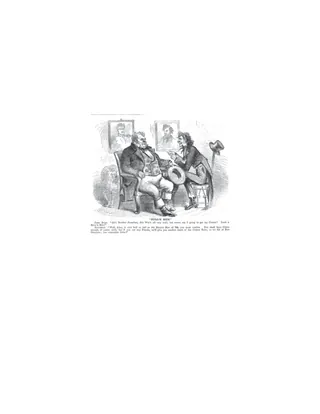
"Bull's Run"
Harper's Weekly, August 21, 1861
Other · 1 page
A single-page caricature engraving from Harper's Weekly, 1861, set during the American Civil War. John Bull complains to Brother Jonathan that the war is cutting off his cotton supply, a pun on the Battle of Bull Run. Jonathan answers that Britain will get cotton if it behaves, and recalls the cotton bales used against the British at New Orleans.

[The Calico Printers' Association, Ltd., Buenos Aires]
Enciclopedia Comercial, 1922
Illustration · 1 page · Spanish
A single page from the Argentine commercial encyclopedia Enciclopedia Comercial, showing the Buenos Aires premises of the Calico Printers' Association, Ltd. Four photographs show the ornate corner building and three interior views of the offices. A short Spanish caption says the association, headquartered in Manchester, is the largest of its kind.
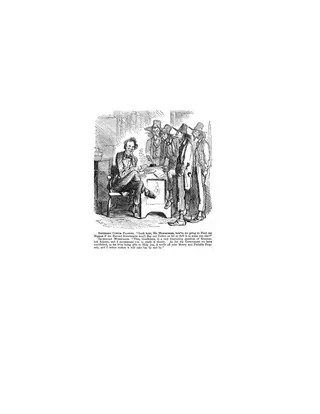
[Cartoon: Southern cotton planter and Secretary Memminger, Harper's Weekly, 1861]
Other · 1 page
A single-page satirical engraving from Harper's Weekly, 1861, with a caption. A Southern cotton planter and other shabbily dressed men confront Confederate Treasury Secretary Memminger in his office, asking how they will feed their slaves if the government will neither buy their cotton nor let them sell it elsewhere. Memminger answers evasively that the new government needs their money and portable property. It is a political cartoon on the Confederate cotton embargo early in the American Civil War, not a weaving or textile-technique document.
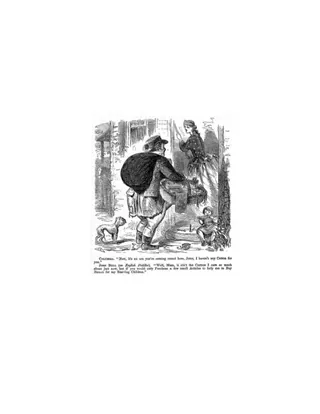
[Columbia and an English Peddler: Cartoon on the Cotton Shortage]
Other · 1 page
A single-page wood engraving from Harper's Weekly, 1861, a political cartoon about cotton and the American Civil War. Columbia, the female personification of the United States, tells an English peddler named Jons Bras that she has no cotton for him. He answers that he is more concerned about selling small articles to feed his starving children. The image alludes to British dependence on American cotton during the Union blockade of Southern ports.
Cotton Association vs. The Cotton Exchange
Article · 3 pages
A 1907 article in Moody's Magazine on the dispute between the Southern Cotton Association and the New York Cotton Exchange. The author argues that speculation, and short selling in particular, does not depress cotton prices, and that overtrading by Southern speculators buying on margin has done the most harm. He concedes that the Exchange's grading methods have some flaws, argues that supply and demand ultimately set prices, and says 10 cents a pound is a fair price.

[Cotton Loan]
Harper's Weekly, May 16, 1863
Other · 1 page
A single-page political cartoon from Harper's Weekly, May 1863, concerning the Confederate cotton loan raised in Britain. John Bull holds a placard reading 'Cotton Loan $5,000,000' and asks Abraham Lincoln for cotton bought at fivepence a pound. Lincoln replies that the Rebels are burning the cotton and that he confiscates the rest.
[Cotton Ties]
Engineering & Mining Journal, May 31, 1913
Article · 1 page
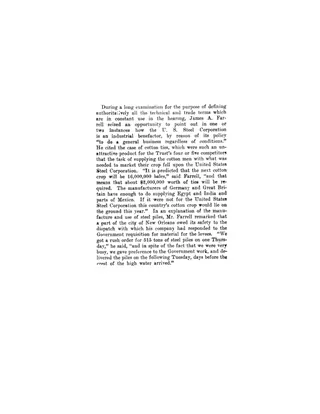
A short 1913 trade-journal item reporting testimony by James A. Farrell in the U.S. Steel Corporation hearing. He says the corporation supplied steel cotton ties when its few competitors found them unprofitable, and that about $2,000,000 worth would be needed for a predicted 16,000,000-bale crop. He also describes a rush order of steel piles for New Orleans levees. The piece concerns the steel industry and the cotton trade, not weaving.
Cotton vs. currency. Ought the cotton trade to be opened?
Ephemera · 1 page
A single-sheet political tract issued by the New England Loyal Publication Society (No. 196, Boston, June 17, 1864). It reprints a letter to the editors of the New York Evening Post on whether the Civil War trade in cotton should be opened, and ties the question to currency and the cotton market. The small print is largely illegible in the scan, so the detailed arguments and statistics cannot be summarized.
Cycles of Cotton Speculation
Article · 4 pages
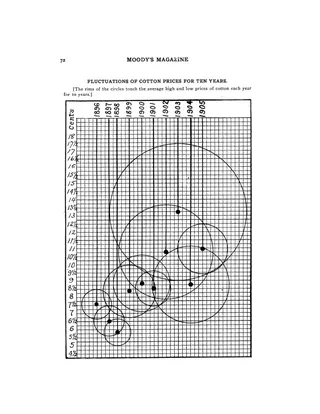
A 1906 magazine article by financial writer Thomas Gibson analyzing ten years of American cotton prices (1896 to 1905) for speculators. It presents tables of seasonal high, low and average prices and of crop sizes in bales, plus a circle chart of yearly price fluctuations. Gibson argues that cotton prices have risen steadily despite normal or large crops, attributing this to a general rise in commodity prices and a declining purchasing power of the dollar rather than to supply and demand.
The Effect of Free Wool in the Northwest, 1893-96
Article · 3 pages
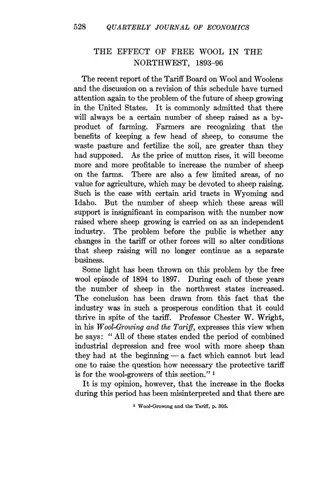
A short economics note arguing that the increase in sheep numbers in the northwestern United States during the free wool period (1894-97) does not show the industry was prosperous without a tariff. The author argues that growers held over flocks in hope of a Republican victory and renewed protection in 1896, citing falling sheep prices, Montana shipment statistics for 1893-98, and a quotation from Senator Warren. It closes by noting that dry land farming, not tariff policy, is displacing large range flocks in Montana.
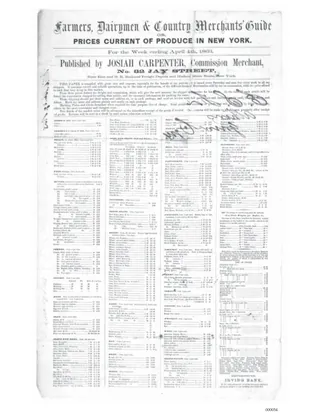
Farmers, dairymen & country merchants' guide or prices current of produce in New York. for the week ending
Carpenter, Josiah, April 4, 1863
Ephemera · 1 page
A single-sheet weekly price current issued by Josiah Carpenter, a New York commission merchant at 82 Jay Street, for farmers, dairymen and country merchants shipping produce to the city. It explains how to ship and mark packages, how advances and returns are handled, and the commission charged. Price tables list agricultural goods and commodities such as butter, cheese, flour, grain, hay, hides, wool, feathers and tobacco, but the figures are too faded to read reliably.
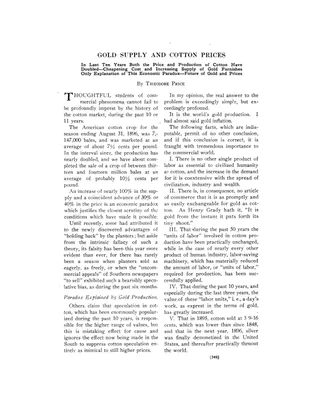
Gold Supply and Cotton Prices
Article · 3 pages
A 1907 article by cotton market analyst Theodore Price arguing that the doubling of both American cotton production and price since 1896 is explained by rising world gold production, which cheapened gold relative to labor-based goods. He lays out nine numbered propositions, forecasts higher prices for cotton and other necessities, and closes with supply and export statistics for the 1906-07 American crop.
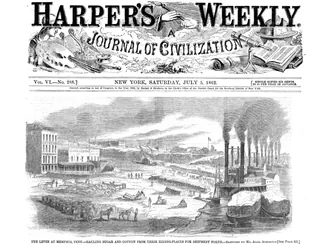
[Hauling Sugar and Cotton from their Hiding Places]
Harper's Weekly, July 5, 1862
Illustration · 1 page
A single wood-engraved illustration from Harper's Weekly, July 5, 1862, showing the levee at Memphis, Tennessee. Workers and carts haul sugar and cotton bales from their hiding places for shipment north during the Civil War. The caption credits a sketch by Mr. Alex. Simplot and refers readers to page 423 for the accompanying text.
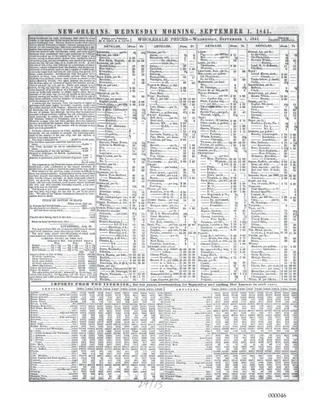
New-Orleans price-current and commercial intelligencer. Wholesale prices
Cook, F. and A. Levy, September 1, 1841
Ephemera · 3 pages
A New Orleans commercial price-current sheet with wholesale prices for goods such as cotton, sugar, molasses, flour, pork, tobacco and domestic goods, plus ten-year tables of imports from the interior. The annual statement covers exports of cotton, tobacco, sugar and molasses, monthly ship arrivals, cotton and tobacco stocks, exchange rates and freight rates. It ends with a cover letter from the commission merchants Maunsel, White & Co. The scan is small and low-contrast, so most table figures are unreadable.
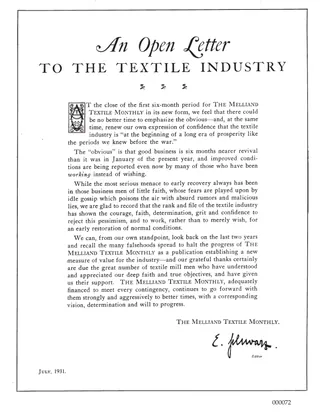
An open letter to the textile industry
The Melliand, July 1931
Ephemera · 1 page
A one-page editorial letter from the editor of The Melliand Textile Monthly, written at the end of the magazine's first six months in its new format. It expresses confidence that the textile industry is moving toward recovery after the Depression downturn and criticizes pessimism and rumor-mongering. It also thanks mill men for supporting the publication and says the magazine is well financed.
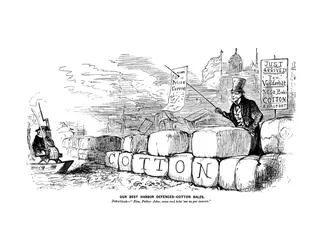
Our Best Harbor Defences -- Cotton Bales
Frank Leslie's Illustrated Newspaper, January 25, 1862
Other · 1 page
A single-page political cartoon from Frank Leslie's Illustrated Newspaper, January 1862, during the American Civil War. It shows Jonathan (the Northern personification) standing on a stack of cotton bales beside a notice of 3,650 bales of cotton arriving from Beaufort aboard the Vanderbilt, inviting John Bull to collect them as per invoice. The caption presents the captured cotton as a harbor defence, alluding to Britain's dependence on Southern cotton and the Union capture of Beaufort, South Carolina.
Our Part in the World's Cotton Goods Trade
Journal of Geography, 1914
Article · 2 pages
A short 1914 article on international trade in cotton goods, giving 1913 figures. World trade was about 900 million dollars, of which the United States supplied 55.5 million (about 7 percent) despite growing over two-thirds of the world's raw cotton. It compares the United Kingdom, Germany, France and the US as exporters, and covers the Orient, especially India and China, as the main market. It notes the decline in American sales to China after 1905 and the Department of Commerce's investigations of foreign markets. It closes by noting that the US exports mostly lower-grade goods and imports finished goods such as laces and embroideries.

Picture
Ephemera · 1 page
A single-page picture, apparently a hand-colored photograph or postcard, showing a large red brick Victorian-style building with a steep slate mansard roof, dormers, arched windows, a spire-like finial and a corner entrance on a city street. The catalog record links it to the Memphis Cotton Exchange. The page carries no legible text.
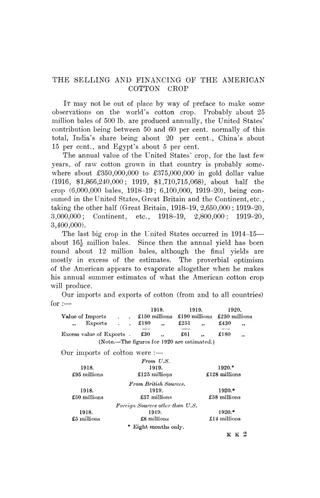
The Selling and Financing of the American Cotton Crop
Article · 11 pages
A 1920 article from the Economic Journal on how the American cotton crop is financed and sold. It covers world and U.S. production figures, British cotton imports and exports, and credit from farmer to storekeeper, factor, gin receipts, bills of lading and banks. It also treats sterling versus dollar pricing and exchange risk, the cotton futures market and hedging, financing in England through acceptances, and postwar economic conditions. It is economic and banking history with no textile technique content.
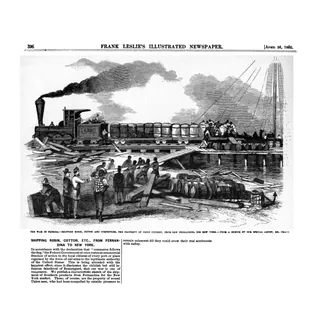
Shipping Rosin, Cotton, Etc. from Fernandina to New York
Frank Leslie's Illustrated Newspaper, April 26, 1862
Article · 1 page
A single page from Frank Leslie's Illustrated Newspaper (April 26, 1862) with an engraved illustration and short commentary on shipping rosin, cotton and turpentine owned by Union citizens from Fernandina, Florida, to New York during the Civil War. The sketch is by special artist Mr. Crane and shows a locomotive and cars loaded with bales and cargo, with workers and onlookers on a wharf. The text explains that the Federal government restored commerce to loyal citizens in regained ports.
To Workingmen: facts
1884
Ephemera · 2 pages
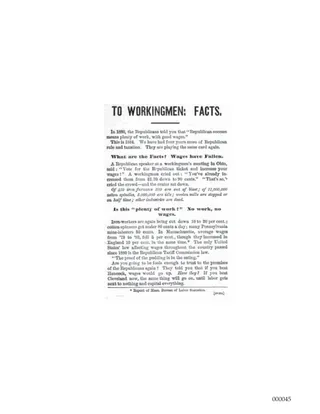
A two-page political broadside from the 1884 U.S. presidential campaign, urging workingmen to vote for Grover Cleveland (Democrat) over James G. Blaine (Republican). It argues that wages fell and industries idled under Republican rule, cites Massachusetts Bureau of Labor Statistics figures, and blames Republican tariff policy and monopolies. It mentions iron furnaces and cotton spindles and mills only in general economic terms, with no weaving content.
Wool Tariff Once More
Nation, 1905
Article · 2 pages
A 1905 editorial in The Nation reviewing C. W. Wright's paper on wool-growing and the tariff since 1890. It argues that wool duties neither saved sheep farming in the agricultural North nor were needed for ranching in the Rocky Mountain West, and that they burden consumers. It compares sheep numbers under the McKinley, Wilson (free wool) and Dingley tariffs and discusses the political role of the wool duty in the protective system.
Wool Trade
Article · 1 page
A one-page article from a 1906 industrial encyclopedia describing how American wool growers sell their clips. It covers sales to buying agents, local dealers and eastern houses, typical agent commissions, and the rise of the wool exchange in Montana, then the largest wool-producing state.
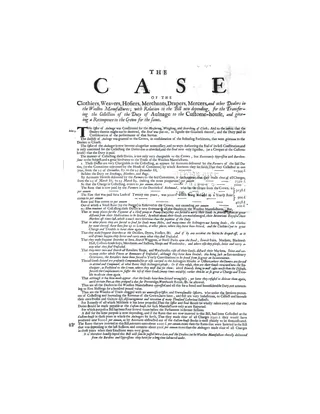
Broadside
Ephemera · 1 page
A single-sheet English broadside of 1691 presenting the case of clothiers, weavers, hosiers, drapers, mercers and other woollen dealers against the Office of Aulnage. It argues that the aulnagers' cloth measuring, searching and sealing is obsolete and oppressive, cites farmers' accounts and the rent paid to the Duchess of Richmond, and supports a bill to move collection of the duty to the Customhouse for exported manufactures only.
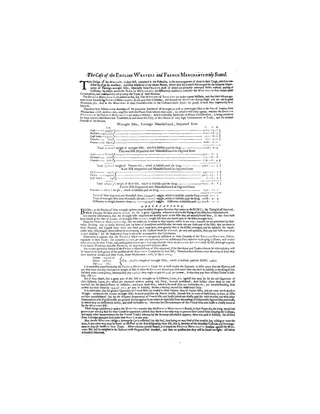
Broadside
Ephemera · 1 page
A single-sheet printed broadside setting out the English silk weavers' side in a dispute with French merchants over a proposed bill. It presents tables from London customs entries (Michaelmas 1668 to 1669) of wrought, thrown, raw and ferret silk imports by country of origin, with weights and subsidy paid. The accompanying observations argue that French silks escape customs duties and discourage English weavers, and defend the proposal for a seal on imported goods.
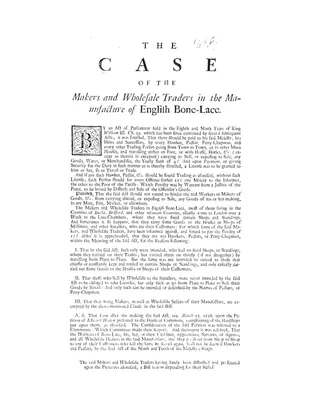
Broadside
Ephemera · 1 page
A one-page English broadside of 1698 setting out the case of makers and wholesale traders of English bone-lace against being treated as hawkers and pedlars under the Act of 8 and 9 William III, ch. 24. It explains the yearly licence fee of 4 l. and the 12 l. penalty, and argues that lace makers and wholesalers with fixed shops and standings in London's Lace-Chambers are exempt. It cites a 1698 House of Commons petition by Edward Hutton and its committee resolution, and notes that a relief bill was pending.
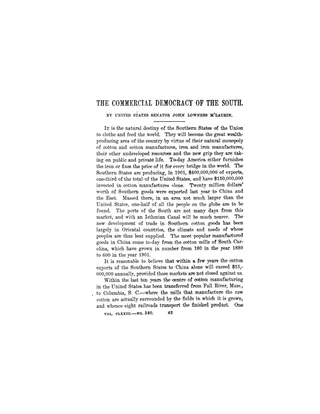
Commercial Democracy of the South
Article · 6 pages
A 1901 political and economic essay by Senator John Lowndes McLaurin arguing for a 'Commercial Democracy' in the South built on industrial development, reciprocity treaties and protective tariffs. It surveys Southern cotton manufacturing (especially South Carolina mills and exports to China), iron, lumber and rice, and urges a three-cent duty on imported raw cotton to counter Egyptian competition. It also discusses cottonseed by-products and integrated ginning, oil and yarn mills. There is no technical weaving content.

Draper
Article · 1 page
A short encyclopedia entry defining 'draper' as a dealer in cloth and textiles. It discusses the etymology of the word (French drap, Low Latin drappus, and the related 'drab'), and briefly covers the Drapers' Company, one of the London livery companies, chartered in 1364. It also notes the trade's combination with millinery and hosiery and a 1908 legal case on the meaning of 'drapery'.
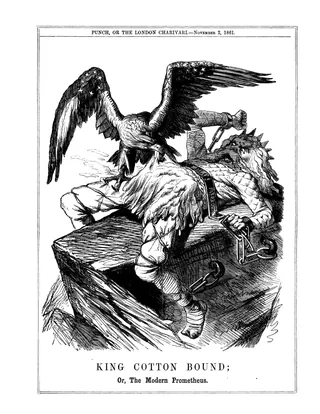
King Cotton Bound; Or, The Modern Prometheus
Punch, 1861
Other · 1 page
A single page from Punch, or the London Charivari, dated November 2, 1861, carrying a satirical wood-engraved cartoon titled "King Cotton Bound; Or, The Modern Prometheus." It shows an eagle with an American flag pattern on its wings pinning down a bound, bearded figure on a rocky ledge, in the manner of the Prometheus myth. The cartoon comments on the Union blockade of Southern ports during the American Civil War and the resulting cotton shortage that affected Britain's textile industry.
Linen Trade of France
Living Age, c. 1855
Article · 2 pages
A two-page economic commentary, reprinted from The Economist, arguing that French protective duties on linen yarn and cloth harmed France. It cites the 1842 duty increases, the fall in British linen and yarn exports to France from 1841 to 1854, and the rise in French flax spindles from 1840 to 1853. It also criticizes the preferential treaty with Belgium and the neglect of agriculture, linking these policies to food shortages and political upheaval under Louis Philippe.
National utility, in opposition to political controversy : addressed to the friends of American manufactures
Ephemera · 1 page
A single-sheet broadside printed in Boston presenting an exchange of letters between Benjamin Austin and Thomas Jefferson. Austin's letter of December 1816 urges Jefferson to clarify his views on domestic manufactures, because opponents were quoting him as favoring foreign over American goods. Jefferson's answer follows, mostly on events in France and the political outlook. The sheet is addressed to friends of American manufactures.
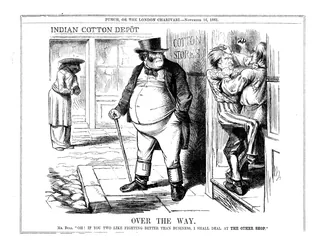
Over the Way. Mr. Bull: If You Two Like Fighting Better than Business, I Shall Deal At the Other Shop
Punch, 1861
Other · 1 page
A single-page Punch cartoon from 16 November 1861 titled 'Over the Way.' John Bull, standing before an 'Indian Cotton Depôt,' tells two quarreling parties that he will buy at the other shop if they prefer fighting to business. It comments on the American Civil War and the Trent Affair, and on Britain turning to India for cotton when Southern supplies were disrupted.
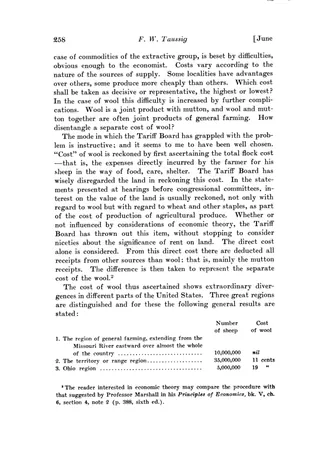
The Report of the Tariff Board on Wool and Woolens
Article · 12 pages
A 1912 review article by economist F. W. Taussig of the U.S. Tariff Board's four-volume report on wool and woolens. It discusses how the Board calculated the cost of wool production in three U.S. regions (general farming, western range, and Ohio), the case for or against the wool duty, and the Board's recommendation to assess duties on scoured content. It also covers the woolen manufacturing section, the compensating duty system and Schedule K, and the reliance of American worsted mills on imported machinery. The content is tariff economics rather than technical textile material.
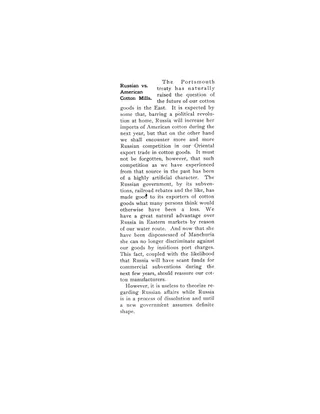
Russian vs. American Cotton Mills
Moody's Magazine, 1905-1906
Article · 1 page
A short 1905-06 magazine piece on the outlook for American cotton goods in Eastern markets after the Portsmouth treaty ended the Russo-Japanese War. It argues that past Russian export competition depended on government subsidies and rebates, and that America's water route gives it a natural advantage. It also holds that Russia's loss of Manchuria and its shortage of funds should reassure American manufacturers, though Russia's political instability makes forecasting difficult.
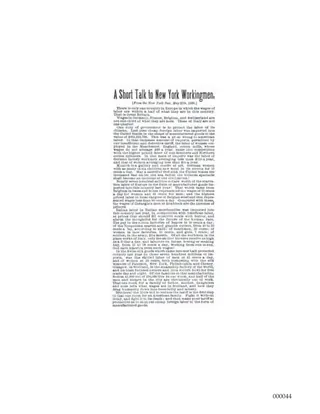
A short talk to New York workingmen
New York Sun, May 27, 1888
Ephemera · 1 page
A one-page newspaper piece reprinted from the New York Sun of May 27, 1888, arguing for protective tariffs to shield American workers from cheap European labor. It compares wages in Great Britain, Germany, Belgium, Italy, Switzerland and Scotland, including cotton mill, lace factory and silk weaving wages. It urges workingmen to oppose the Mills bill to reduce the tariff.
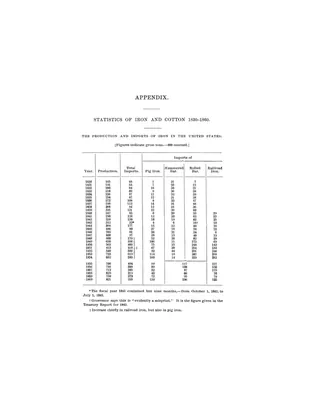
Statistics of Iron and Cotton 1830-1860
Article · 6 pages
An appendix from the Quarterly Journal of Economics (pp. 379-384) presenting statistical tables on U.S. iron production and imports, 1830-1860, and cotton consumption in the United States and Great Britain. The accompanying text discusses the reliability of the sources (Raymond, Carey, Taylor, Grosvenor, Lesley, Swank, Nourse, Hunt, Ellison) and how the figures were converted. It also gives a table of U.S. exports of cotton manufactures, 1826-1860. Useful for the economic and tariff context of the American cotton textile industry; it has no weaving content.
Threatened Confusion in the Textile Industry
Textiles, c. 1919
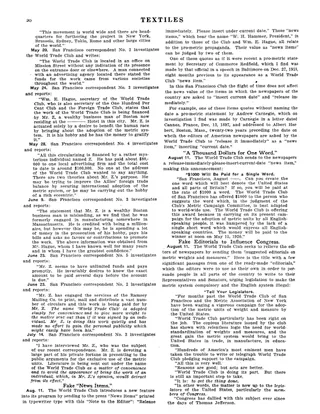
Article · 3 pages
A 1919 article by Samuel S. Dale opposing compulsory adoption of the metric system in the United States and Britain. It defends the English units used in textile manufacturing, then documents a mail campaign run by the "World Trade Club" of San Francisco, secretly financed by a wealthy backer called "Mr. Z." The account is a dated chronology with investigators' reports, press releases and a bill in Congress, and it ends with a call for disclosure of the backers. A short correction about a silk ribbon weight calculation follows.
Unique Wool Market
Moody's Magazine, 1905-1906
Article · 2 pages
A short 1905-06 magazine article on the U.S. wool market, which it calls unique because stocks in eastern markets are the smallest the trade has known. It describes manufacturers adulterating woolen fabrics to hold down prices, and a few large Boston houses gaining unusual control of the wool supply. It also explains why wool cannot be cornered like cotton or wheat, since each lot is sold on its own merits, and notes the 1905 purchases of wool on the sheep's back.
Alleged Decline of the British Cotton Industry
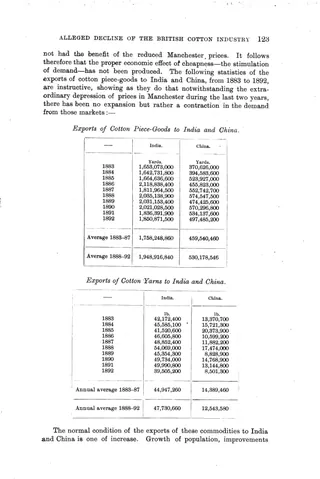
Article · 8 pages
Part II of an 1893 Economic Journal note on whether the British cotton industry is in decline. It argues that the silver-gold exchange disturbance, falling prices and rising effective foreign tariffs have slowed exports, and presents tables of cotton piece-goods and yarn exports to India and China for 1883-1892. It then lists Lancashire's lasting advantages: moist climate, cheap ocean transport, skilled labour, Manchester's commercial organisation and free trade. It concludes that the industry is not in permanent decay.
Broadside
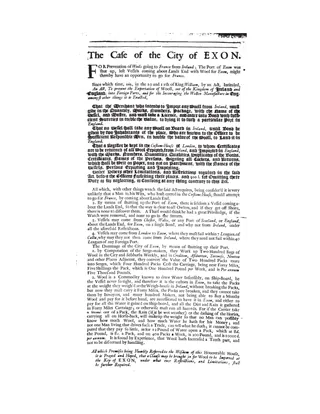
Ephemera · 1 page
A single-sheet broadside arguing the case of the city of Exeter (Exon) against the closing of its port to wool imported from Ireland. It cites the 10 & 11 William III act restricting wool export from Ireland and England, argues that its bonds and registers make smuggling to France unlikely, and claims the closure harms Exeter's serge makers. It estimates yearly losses from overland carriage costs and from water absorbed by wool, and asks Parliament to allow wool to be imported at the quay of Exeter.
The Bulletin of the Needle and Bobbin Club, Vol. 21, Nos. 1 & 2 (1937)
Periodical · 85 pages
Volume 21, Nos. 1 & 2 (1937) of the Bulletin of the Needle and Bobbin Club is devoted to a single study, "Notes on a Study of the Trade Routes of Central Asia," from material assembled by Rudolph M. Riefstahl and edited by his wife Elizabeth Riefstahl. It surveys the overland and sea routes between China and the West, with silk as the key commodity. Sections cover the beginnings of transasiatic trade, the Siberian, Ili-Dzungarian, Chinese Turkestan, Tibetan and minor routes, and the sea routes through the Indian Ocean and Red Sea. It includes three maps (A, B, C), photographs and plates, and a chronology of travelers.
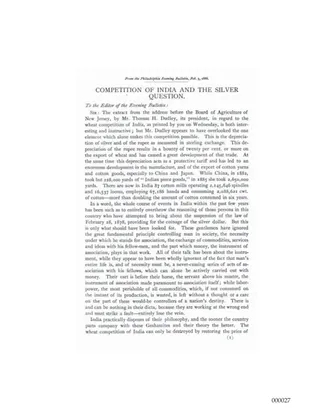
Competition of India and the silver question
Philadelphia Evening Bulletin, February 5, 1886
Ephemera · 2 pages
A letter to the editor of the Philadelphia Evening Bulletin, dated February 4, 1886 and signed Henry Carey Baird. It responds to an address on Indian wheat competition by arguing that the depreciation of silver and the rupee in sterling exchange acts as an export bounty on wheat and as a protective tariff for Indian cotton manufacturing. It cites figures on Indian cotton mills, spindles, looms and exports of cotton goods to China, and argues against suspending the 1878 silver dollar coinage law.
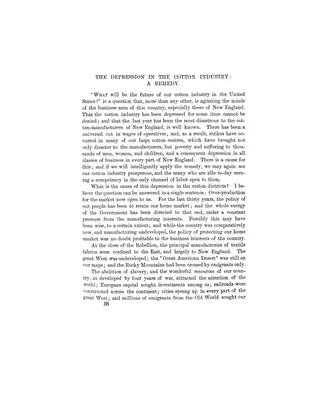
Depression in the Cotton Industry: A Remedy
Article · 5 pages
A 1898 magazine article arguing that the depression in the American cotton manufacturing industry, especially in New England, stems from over-production for the home market. The author, drawing on four years' residence in Colombia, proposes developing export markets in South America, with trade figures for Colombia, Chile, Brazil and Argentina compared with British, French and German exports. He recommends cloth cut in the lengths buyers want, proper packing for mule transport, credit terms, and competent sales agents.
The Duties on Wool and Woollens
Article · 39 pages
An economics article by F. W. Taussig, published in the Quarterly Journal of Economics in October 1893, examining the effects of the U.S. tariff system on wool and woollens established in 1867. The first part treats duties on clothing, combing and carpet wool, covering domestic production, the westward shift of sheep raising, imports and price comparisons. The second part treats duties on woollen and worsted manufactures, their growth, imports, competition from foreign goods, and the likely effects of free wool and reduced woollen duties.
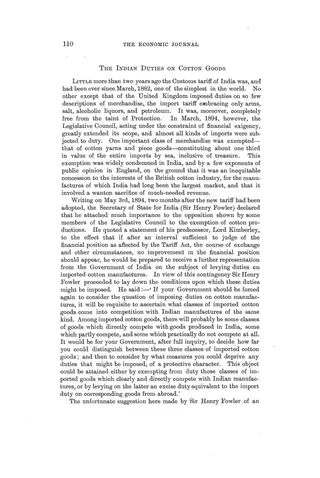
The Indian Duties on Cotton Goods
Article · 5 pages
A 1896 economic article tracing the history of Indian customs and excise duties on cotton yarns and piece goods, from the 1894 tariff exemption through the Act of December 1894 to the February 1896 Act. It explains why the attempt to exempt coarse goods that did not compete with Indian mills failed, citing the 1879-80 'duty frees' experience of substitution of 30s cloths for finer counts. It also covers Lancashire objections, the exemption of handloom goods from tax, and the final uniform 3.5 percent duty on imported and Indian mill-made cloth.
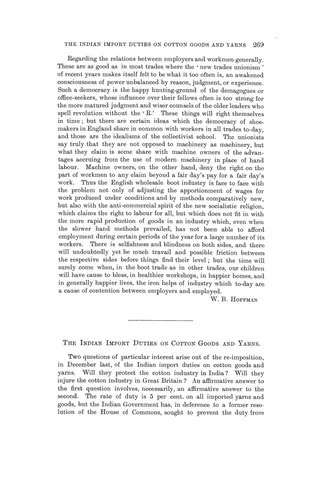
The Indian Import Duties on Cotton Goods and Yarns
Article · 4 pages
An 1895 article from The Economic Journal on the Indian import duty of 5 per cent on cotton goods and yarns, reimposed in December 1894. It argues that the accompanying excise on Indian yarn finer than 20s does not neutralize the protection given to Indian mills, partly through the 'law of substitution'. It also argues that the duties harm Lancashire manufacturers, especially in the Blackburn district. The scan opens with the end of an unrelated article on the boot trade and closes with the start of a note on the prices of the rupee and silver.
826 documents found