A Study of the Textile Art in its Relation to the Development of Form and Ornament
Sample pages
Page 35, at reduced quality. Open the document to read every page in full.
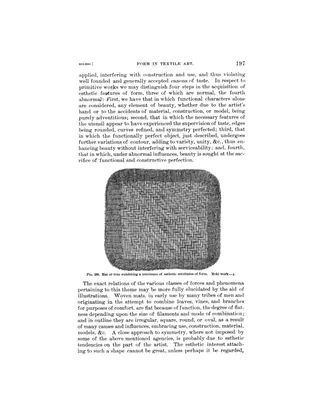
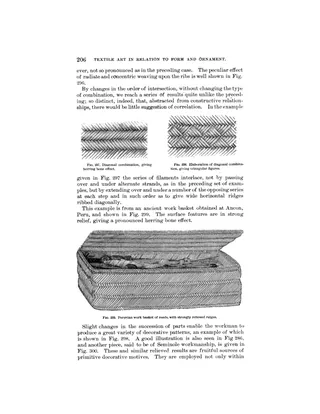
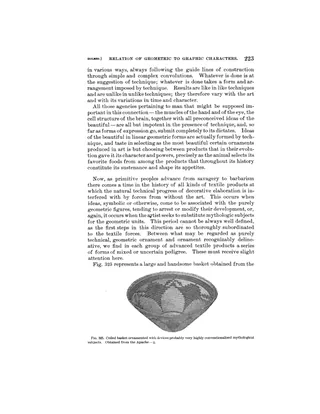
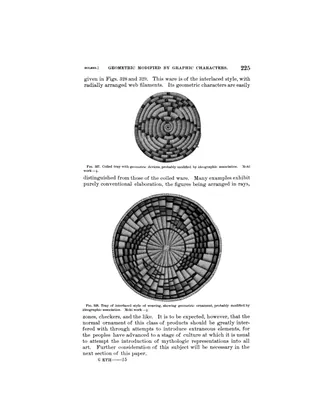
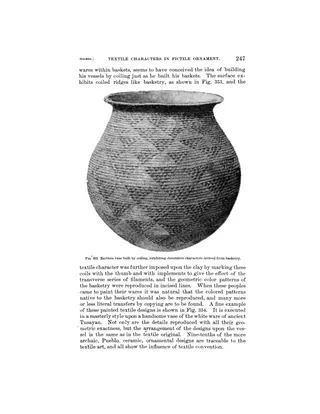
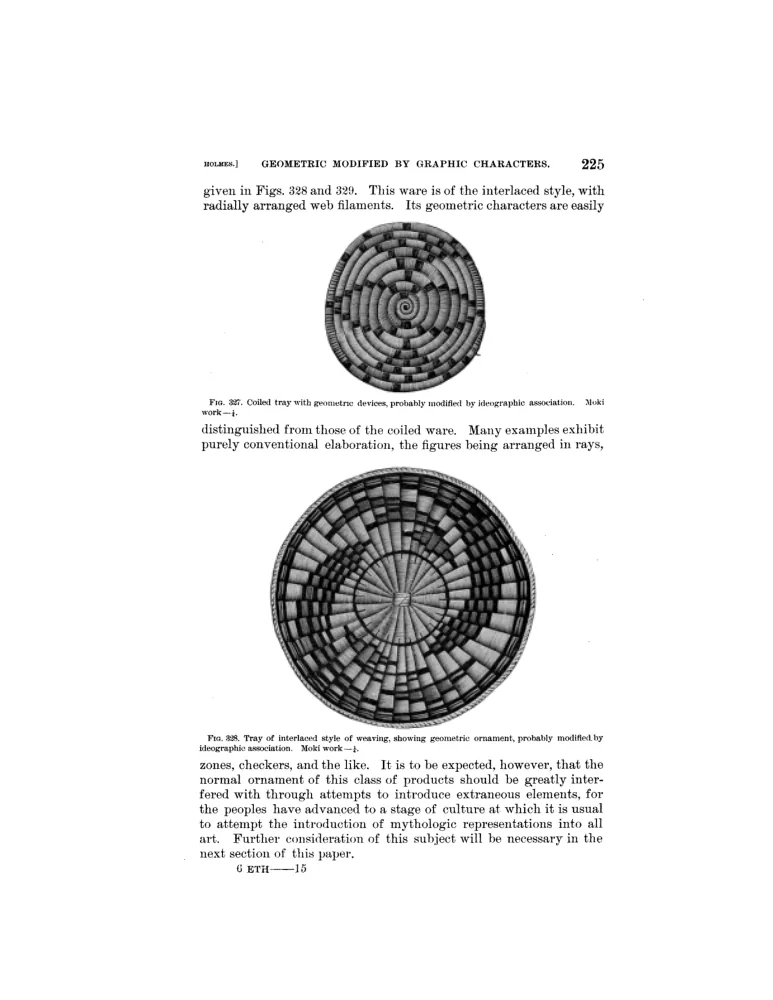
William H. Holmes's study argues that the textile arts (basketry, weaving, embroidery, netting) shaped the development of form and geometric ornament in primitive art. It covers form and color in textiles, then relief and color phenomena arising from construction techniques such as twining, coiling, interlacing and reticulated work, with supplementary features like feathers, pendants and embroidery. It closes with how geometric design was imposed on graphic figures and carried into pottery, carving, tapa stamps and architecture. It is illustrated with many figures (286-358) of Native American, Peruvian and Polynesian baskets, trays and fabrics.
- Type
- Monograph
- Date
- 1888
- Language
- English
- Pages
- 62
(A free account is all you need)
From Ralph Griswold's Digital Archive, delivered by the University of Arizona.
Have missing pages or a better copy of this document, or another document to share? Contributing documents »