Some Shiraz Silks
Sample pages
Page 5, at reduced quality. Open the document to read every page in full.
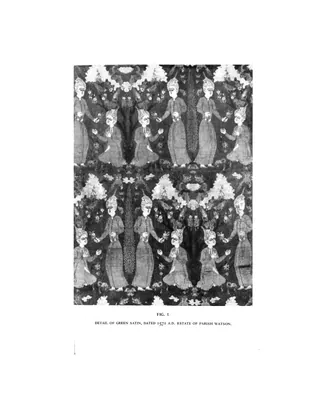
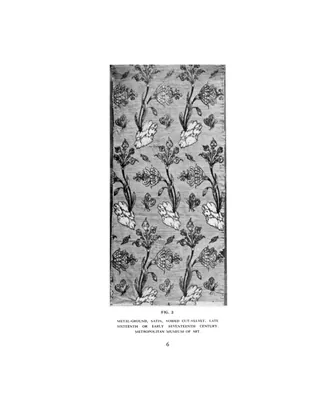
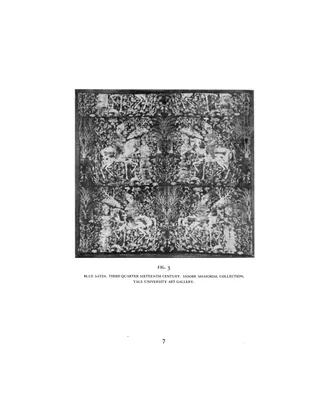
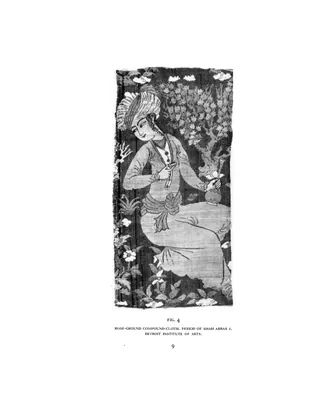
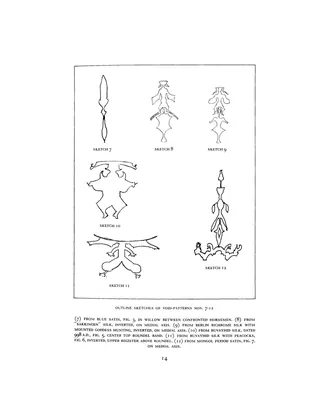
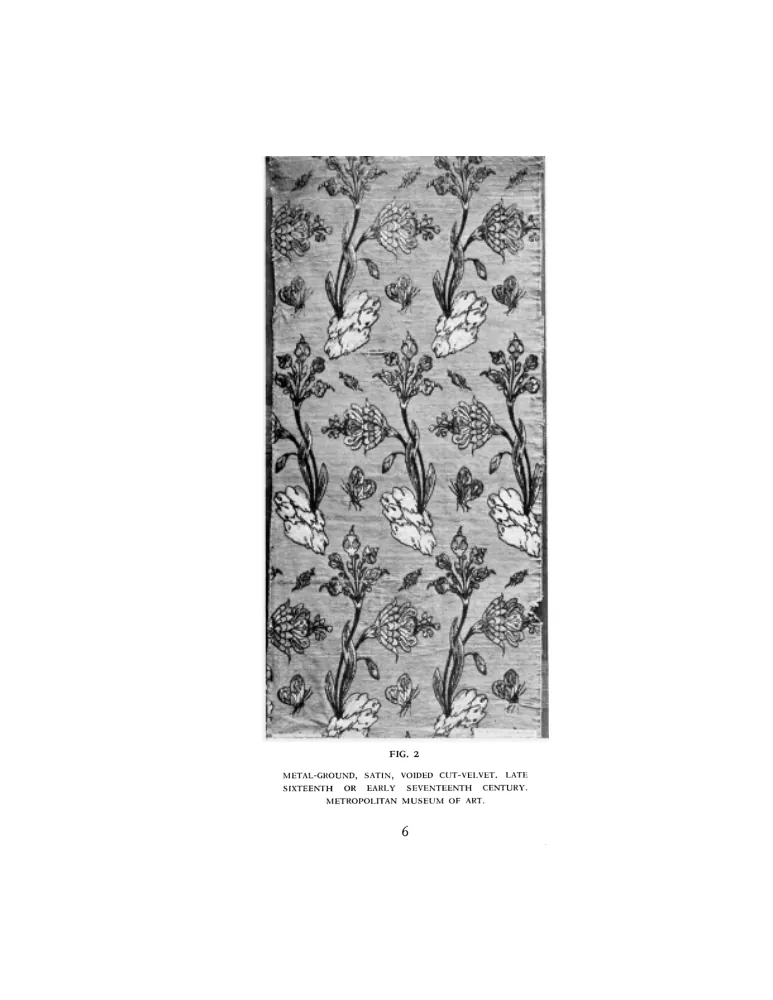
An article by Phyllis Ackerman attributing a group of Safavid silks (satins, compound cloths, a voided cut-velvet and a trimming band) to Shiraz. She argues that concealed figures and void patterns, matching those in Shiraz manuscript painting, mark them as Shiraz work. She traces the void motifs, such as a bow-legged manikin and phallic cypress, back through Mongol, Buvayhid and Sasanian silks. She reads them as Mazdean symbols kept alive by Sufis. The article includes seventeen outline sketches of void patterns, plates of the silks discussed, and footnotes citing the Survey of Persian Art and museum collections.
- Type
- Article
- Date
- 1952
- Language
- English
- Pages
- 24
(A free account is all you need)
From Ralph Griswold's Digital Archive, delivered by the University of Arizona.
Have missing pages or a better copy of this document, or another document to share? Contributing documents »