Use of the Butted Seam by Textile Manufacturers
Sample pages
Page 2, at reduced quality. Open the document to read every page in full.
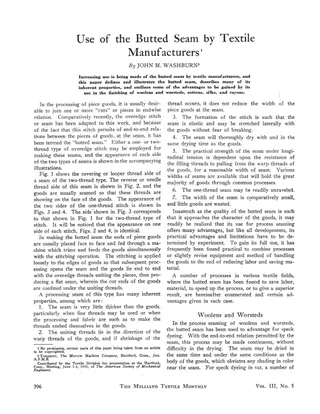
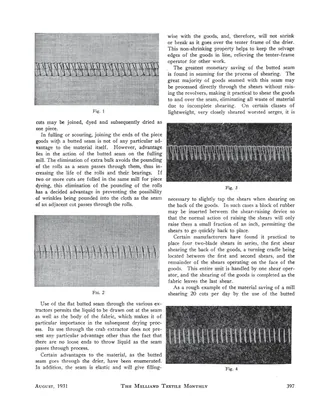
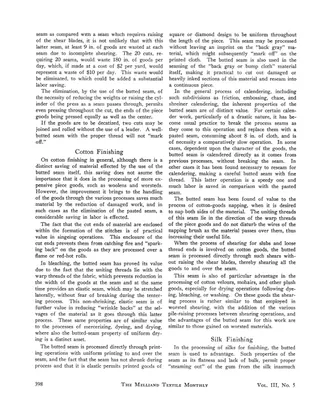
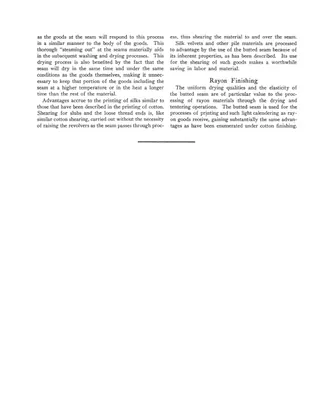
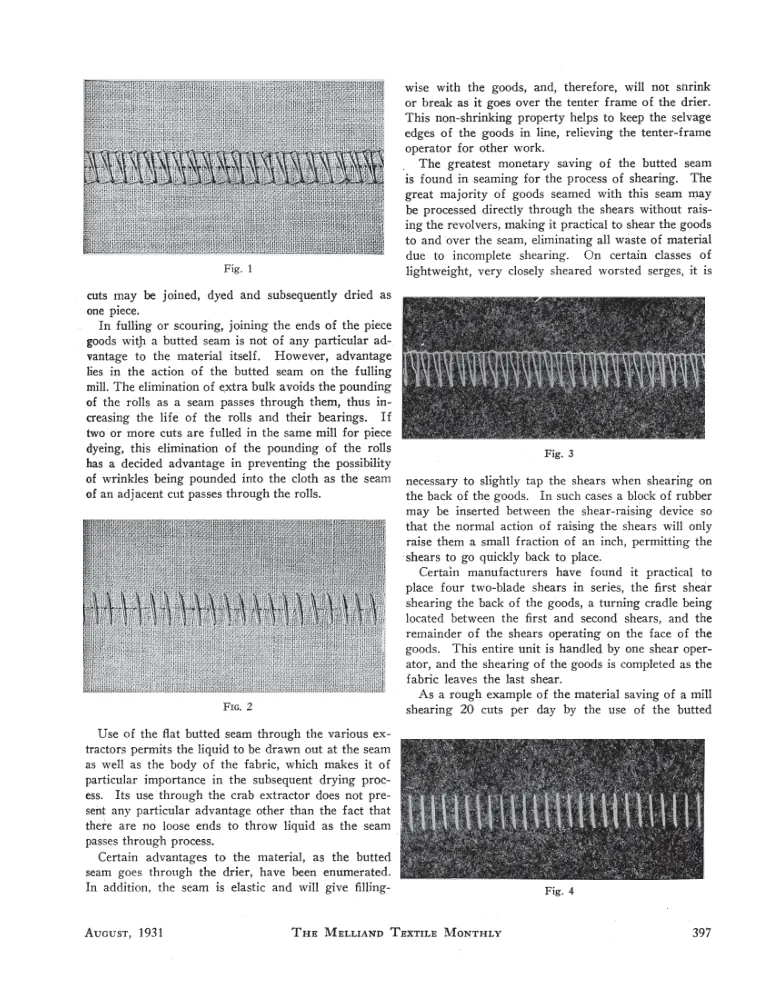
A 1931 paper by John M. Washburn of the Merrow Machine Company on the butted seam, an overedge-stitched seam that joins the ends of piece goods flat, end to end, during finishing. It defines the one- and two-thread types, lists the seam's properties (thin, elastic, dries with the goods, little waste), and describes advantages in processes such as dyeing, fulling, drying, shearing, printing, calendering and napping. Separate sections cover woolens and worsteds, cotton, silk and rayon finishing. Four photographs show the seam types.
- Type
- Article
- Date
- August 1931
- Language
- English
- Pages
- 4
(A free account is all you need)
From Ralph Griswold's Digital Archive, delivered by the University of Arizona.
Have missing pages or a better copy of this document, or another document to share? Contributing documents »