Textile Documents › Topic: Dictionaries, glossaries, and encyclopedias
1,605 documents found
Sort: 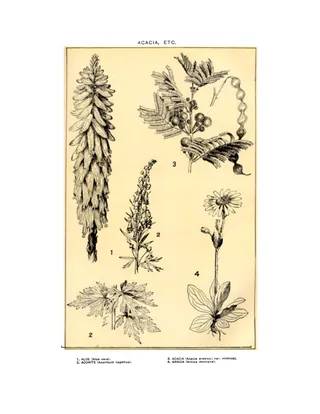
Acacia
Article · 2 pages
An encyclopedia entry on the plant genus Acacia, covering its botany, distribution, and economic uses such as gum arabic, tanning bark (wattle), catechu, and timber. A second page carries a botanical plate showing aloe, aconite, acacia, and arnica. It is general botany and has no weaving content, though the tanning and gum uses touch on materials used in textile and leather processing.
Acacia
Zell's Encyclopedia, 1876
Article · 1 page
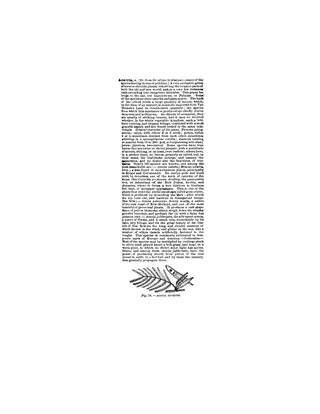
A one-page encyclopedia entry on the genus Acacia, covering its etymology, botanical character, geographic range and uses. It notes species that yield catechu, gum arabic and tannin, describes several notable species, and gives brief propagation advice. An engraving of Acacia catechu accompanies the text.
Bale
Article · 1 page
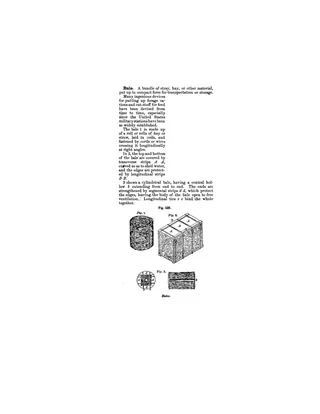
A short dictionary entry on the bale, defined as a bundle of straw, hay, or other material put up compactly for transport or storage. It describes three bale designs for forage, shown in Fig. 588: a coiled cylindrical bale, a rectangular bale with curved cover strips, and a hollow cylindrical bale with end strips for ventilation. The entry concerns hay and straw bales and does not discuss cotton or textiles.
Dictionary of Technical Terms Relating to the Textile Industry, Part 3
Article · 2 pages
Part 3 of E. A. Posselt's serialized dictionary of textile industry terms, covering entries from AAL through BALLING (letters A and the start of B). Entries define fabrics, fibers, dyes and mordants, lace types, mule spinning parts, and finishing and processing terms, with notes on origins in places such as Syria, Turkestan and France. Printed in the December 1907 issue of Posselt's Textile Journal and marked to be continued.
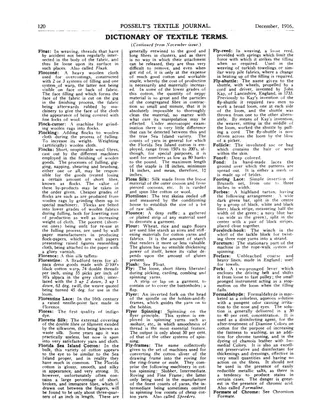
Dictionary of Textile Terms
Article · 2 pages
Two journal pages from the December 1916 installment of Posselt's "Dictionary of Textile Terms," continued from the November issue and covering entries from Float to Frog. Entries define fabrics, fibres, dyeing chemicals, spinning and weaving machinery, laces, tartans and cotton varieties. Examples include fly-shuttle, flocks, frisé, foundation weaves, Jacquard four-scale tie-up, and French drawing-box.
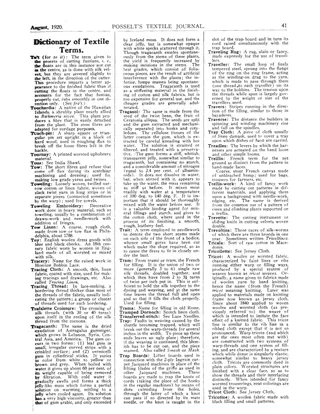
Dictionary of Textile Terms
Article · 2 pages
Two journal pages from a serialized dictionary of textile terms, covering entries alphabetically from 'Tot' through 'Tunic'. Entries define fibers, fabrics, lace and needlework terms, loom and spinning equipment, finishing agents such as tragacanth and tragasol, and weaving faults and practices such as troughing the shed. The installment ends with 'To be continued.'
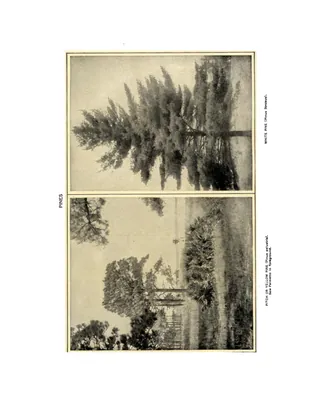
Pine
Article · 6 pages
An encyclopedia article on the pine genus (Pinus) from the New International Encyclopedia. It covers botanical characteristics, classification, and the main North American, European, and Asian species, with their timber, resin, turpentine, and edible seeds. It includes photographs and drawings of pine species and needle groupings, and ends with a bibliography. Weaving is not covered; the article is only peripherally relevant to textile research, for example the mention of pine-needle fibre (pine wool, Waldwolle) used for upholstery stuffing.
Texture
Article · 1 page
A very brief encyclopedia entry defining 'texture' as the arrangement and cohesion of slender bodies or threads interwoven or entangled together, as in spider webs or woven cloths and stuffs. It is a single dictionary-style definition with no technical detail on weaving.
Texture
Rees's Cyclopedia, c. 1802-1820
Article · 1 page
A short encyclopedia entry defining "texture" from the Latin textura, from texo, "I weave". It covers the arrangement and cohesion of threads in woven cloth or spider webs, and the extended use for the cohesion of particles in any body. It notes that a body's texture determines properties such as specific gravity and colour.
Texture
Zell's Encyclopedia, 1876
Article · 1 page
A brief dictionary entry for the word 'texture' from Zell's Encyclopedia. It gives the Latin origin (textura, from texo, to weave) and defines the term as the act or art of weaving, a web or woven thing, and the arrangement or connection of interwoven threads or parts of a body.
Weaver-Bird
Article · 2 pages
An encyclopedia article on weaver-birds (family Ploceidae), the small songbirds known for their elaborately woven nests. It covers the history of the name and classification, the African and Indian species, the nest forms (including the communal nests of the sociable grosbeak), the long-tailed widow-birds, and related seed-eating finches such as waxbills and the Java sparrow. It concerns ornithology, not textile weaving.
Web
Article · 1 page
A short dictionary-style entry from the 1911 Encyclopedia Britannica on the word "web." It traces the word's Teutonic origin from the root meaning "to weave" and lists its senses: woven cloth, a feather vane, the membrane between the toes of aquatic animals, a spider's cobweb, and the stone shell of a vault in architecture. It refers readers to the Weaving and Vault articles.
Web
Zell's Encyclopedia, 1876
Article · 1 page
A short dictionary entry for the word "web" from Zell's Encyclopedia. It defines web as woven texture or textile fabric, a piece of cloth, a spider's spun threads, a film over the eye, and the partition in a block-maker's sheave. It gives the Anglo-Saxon origin (webb).
Acacia
Article · 2 pages
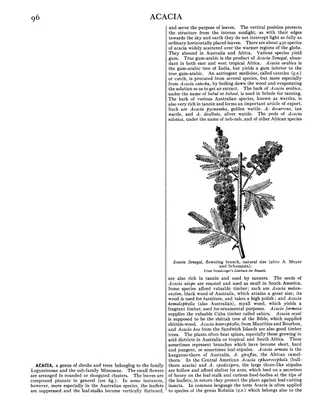
Encyclopedia article on Acacia, a genus of leguminous shrubs and trees with about 450 species in warm regions, especially Australia and Africa. It covers leaf structure, gum arabic, catechu (cutch), tannin-rich barks and pods, timber species, spines and ant associations, and the confusion with Robinia (false acacia). It includes a botanical illustration of a flowering branch of Acacia Senegal.
Agave
Zell's Encyclopedia, 1876
Article · 1 page
A single page from Zell's Encyclopedia containing the entry for Agave, the genus that includes the American aloe or maguey. It covers the plant's botany and slow growth, the Mexican drinks pulque and mezcal made from it, and the leaf fibre known as aloe-fibre, maguey pita or pita hemp. The entry begins on the page and its text starts mid-sentence from the preceding entry.
Baleen
Article · 1 page
A short dictionary entry on baleen (whalebone), the fibrous plates hanging from the upper jaw of the right whale. It describes their number and size and lists uses such as umbrella ribs, corset stiffening, brooms, brushes, flax heckles, and splints for plaiting. It also mentions pressed baleen articles (Kortright's 1841 English patent) and the German artificial substitute called wallosine.
Braid
Zell's Encyclopedia, 1876
Article · 1 page
A short dictionary-style entry for the word 'braid' from Zell's Encyclopedia. It gives the Anglo-Saxon etymology, defines the verb as to weave, knit, intertwine or wreath, and the noun as a texture formed by weaving strands together. Quotations from Dryden and Milton illustrate the usage.
Brown
Rees's Cyclopedia, 1771
Article · 1 page
A short encyclopedia entry on the color brown from Rees's Cyclopedia. It lists the shades dyers distinguish (sad brown, London brown, clove brown, purple brown, walnut-tree brown) and names brown pigments such as bistre, brown ochre, Cologne earth, umber and brown pink. It also describes Spanish brown, a dull red earth pigment used by house-painters and colourmen and dug in parts of England.
Buck
Zell's Encyclopedia, 1876
Article · 1 page
A short dictionary entry on the word 'buck' in the sense of an alkaline lye in which clothes are steeped to cleanse or whiten them. It gives the etymology (Swedish, Gothic and Old French roots), the senses of the clothes so steeped and of the verb meaning to steep or wash in lye, and Shakespeare quotations illustrating each.
Cane Stripper
Article · 1 page
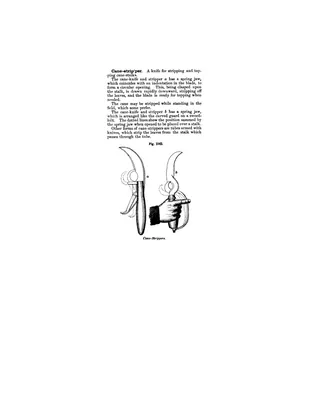
A short dictionary entry from Knight's American Mechanical Dictionary describing cane-strippers, knives used to strip leaves from and top sugar-cane stalks. It describes two knife designs with spring jaws (illustrated in Fig. 1062) and mentions tube-type strippers fitted with knives. The entry concerns agricultural tools for sugar cane, not basketry cane or weaving.
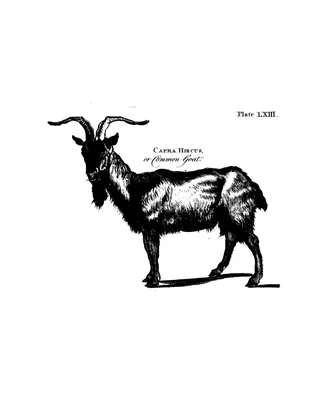
Capra (Goat)
Article · 3 pages
A three-page excerpt from the 1771 first edition of the Encyclopedia Britannica on the genus Capra (goats). It covers goat temperament, breeding, and the uses of goat products such as milk, cheese, flesh, tallow, hair and hides. It then lists species including the ibex, chamois, bezoar goat and antelope. It includes an engraved plate of the common goat (Plate LXIII).
Crotalaria
Zell's Encyclopedia, 1876
Article · 1 page
A short encyclopedia entry on Crotalaria, a large genus of tropical herbs and shrubs in the pea family. It highlights C. juncea (Sun, Sunn or Shunum hemp), cultivated in India for its fibre, which is said to equal or surpass Russian hemp. It also describes the North American rattlebox, C. sagittalis, covering its habitat, stem, leaves, flowers and seed pods.
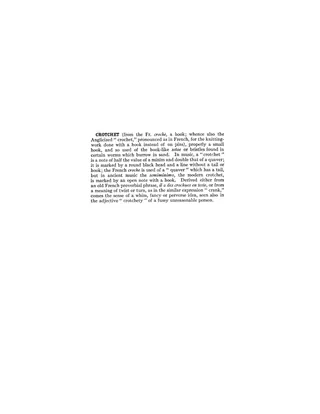
Crotchet
Article · 1 page
A short Encyclopedia Britannica (11th ed.) entry on the word 'crotchet'. It traces the word to the French croche, 'hook', and mentions its relation to the English 'crochet' for hook work. It then covers other senses: hook-like bristles of burrowing worms, the musical note, and a whim or fancy, as in 'crotchety'. It does not describe crochet technique.
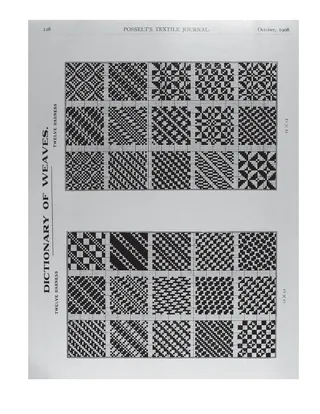
Dictionary of Weaves, Part 6
Article · 1 page · weaving drafts
A single journal page from the Dictionary of Weaves series in Posselt's Textile Journal, October 1908, devoted to twelve-harness weaves. It consists almost entirely of drawdowns, two panels of 12 × 12 weave repeats arranged in a grid, with only headings as text. Useful as a reference for twelve-shaft weave patterns of the early twentieth century.
Duck
Zell's Encyclopedia, 1876
Article · 1 page
A brief dictionary entry defining 'duck' as a coarse, light-textured cloth or canvas used for small sails, bed-sacking, awnings and men's clothing such as trousers. It gives the word's Swedish, German and Low Saxon etymology. No weave structure or construction details are given.
Embossing
Article · 1 page
A very short dictionary entry defining embossing as ornamenting by raised work or figures in relief. It lists applications including stamps on envelopes and paper, book-cover ornaments, leather goods, textile fabrics, and molded glass. Textiles receive only a one-line mention.
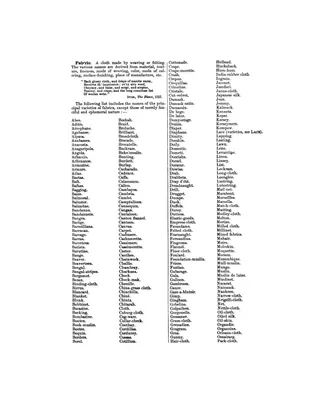
Fabric
Article · 2 pages
A short dictionary entry defining fabric as cloth made by weaving or felting, noting that fabric names derive from material, texture, weave, color, finishing and place of manufacture. It opens with a verse quotation from Dyer's The Fleece (1757) and then gives an alphabetical list of several hundred fabric names, from Abee to Yergas. The entry is a list of names only, with no descriptions of the individual fabrics.
Fibre
Article · 1 page
A very short dictionary entry defining 'fibre' as a thread-like substance, mostly of vegetable origin, with hemp, cotton, flax and coir as examples. It notes that wool and silk have also been called fibres, though the entry says this is improper.

Flasket
Article · 1 page
A one-line dictionary entry defining a flasket as a long, shallow basket with two handles. It comes from Knight's Mechanical Dictionary and gives no construction or weaving detail.
Guanaco
Article · 1 page
Encyclopedia entry on the guanaco, the larger wild South American camelid from which the llama and alpaca are descended as domesticated forms. It describes the animal's appearance, wool-like coat, range from the Andes to Patagonia and Tierra del Fuego, habits, and its use by native peoples for meat and skins. It ends with a short list of references and cross-references to Llama and Vicuña.
Madder
Zell's Encyclopedia, 1876
Article · 1 page
A short encyclopedia entry on madder that gives its Anglo-Saxon origin and refers readers to the entry for Rubia. It then describes pigments prepared from madder for painting: madder carmine (Field's carmine), madder orange, madder purple (Field's purple) and madder yellow. It compares their color, transparency and durability.
Mineral Cotton
Article · 1 page
A short dictionary entry on mineral cotton, a fiber made by blowing a jet of steam through a stream of molten slag to produce fine white threads up to two or three feet long. It notes that the threads are somewhat elastic but break easily, and that the material's poor heat conductivity suggests use as insulation for steam boilers and pipes.
Pine
Article · 7 pages
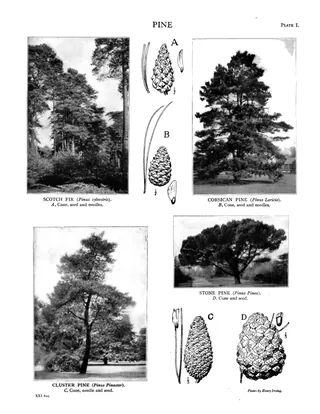
Encyclopedia Britannica (11th ed.) article on the pine genus (Pinus), covering its botanical characteristics, distribution, and many species of Europe, North America, the Himalayas and Mexico. It discusses timber qualities, turpentine and tar production, and uses of the trees. It includes two figure illustrations of Scotch fir and two plates of photographs and drawings of pines and other conifers. A short passage notes that pine needle fibre (waldwolle) has been spun and woven into blankets and garments in Germany and Sweden.
Portable Press
Article · 1 page
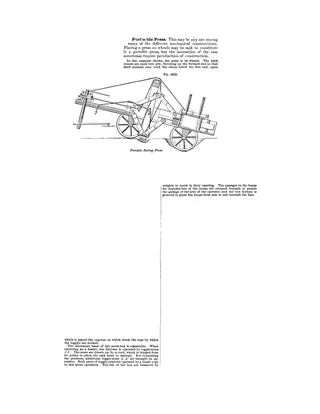
A short dictionary entry on the portable press from Knight's American Mechanical Dictionary, illustrated with a portable baling press mounted on wheels. The text explains how the press works: the rear wheels sit in pits, a sweep worked by draft animals turns a capstan, and toggle-arms driven by a rope compress the bale. It also describes the adjustable abutment head, the balanced lids and the hoop passages.
Quill
Article · 1 page
A one-page encyclopedia entry defining 'quill' as the hollow shaft of a bird's feather, especially the goose, swan or crow feathers used for pens. It also covers the word's uncertain origin, quills used as plectra in stringed instruments and keyboard actions, and the verb 'to quill', meaning to fold lace, muslin or other light fabric into narrow pleats (quilling). It ends with the French 'quillon', the cross guard of a sword hilt.
Quill
Zell's Encyclopedia, 1876
Article · 1 page
A short dictionary entry on the word "quill" from Zell's Encyclopedia (1876). It gives etymology and several senses: a large feather used as a pen, a porcupine spine, a reed on which weavers wind weft thread, a musical plectrum, and a plait in a ruffle. It also covers the verb forms, meaning to plait or to wind yarn on a quill.
Reseda
Article · 1 page
A very short encyclopedia entry on Reseda, a plant genus, giving its botanical classification and floral characteristics. It notes 11 species, two native to Britain: the lutea (base-rocket) and the luteola (wild woad or dyer's weed). The entry has no dyeing instructions, though dyer's weed is a source of yellow dye.
Revolving Press
Article · 1 page
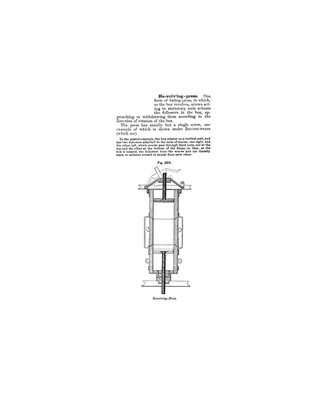
A short dictionary entry on the revolving press, a type of baling press in which rotating the box turns screws in fixed nuts to move the followers together or apart. It describes a vertical-axis example with two followers on opposed right- and left-hand screws, illustrated by a cross-sectional engraving (Fig. 4309). It is about general machinery and has no weaving content.
Shuttle
Zell's Encyclopedia, 1876
Article · 1 page
A one-paragraph dictionary entry for 'shuttle' from Zell's Encyclopedia. It gives the Anglo-Saxon etymology and defines the shuttle as the instrument that passes the weft thread across the cloth between the warp threads.
Starch
Article · 1 page
A one-page encyclopedia entry on starch from the New International Encyclopedia. It covers starch's chemical nature, its formation in plant cells by leucoplasts and chloroplasts, starch paste and soluble starch, and the iodine test. It also notes industrial uses, including dressing cloth and sizing cotton goods, and describes the simple process of extracting starch from potatoes.
Steam Press
Article · 1 page
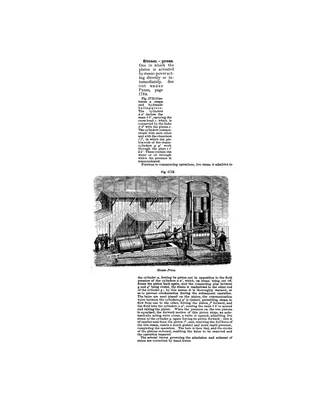
A one-page dictionary entry on the steam-press from Knight's American Mechanical Dictionary, describing a press whose platen is driven directly or indirectly by steam power. It explains a steam and hydraulic baling press (Fig. 5712) with its cylinders, rams, cross-head, platen and valves, and how the working cycle compresses and releases bales. It is an engraved machinery illustration with explanatory text and has no weaving content.
Stuff
Article · 1 page
A very short encyclopedia entry defining "stuff" in commerce as a general term for all kinds of loom-woven fabrics made of gold, silver, silk, wool, hair, cotton, or thread. It lists velvets, brocades, mohairs, satins, taffetas, cloths, and serges as examples.
Swedish-English Weaving Glossary
Other · 27 pages
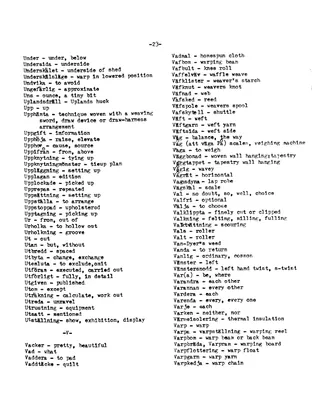
An alphabetical Swedish-to-English glossary of weaving and textile terms compiled by Marie C. Hayes. It covers loom parts, yarns and fibers, dyeing and colors, finishing, weave structures such as huck (dräll), rosepath, twill, honeycomb and damask, and inlay techniques such as rölakan and krabbasnär. It also gives general vocabulary useful for reading Swedish weaving books. Some regional pattern names (Daladräll, Bollnäsdräll, Bohusväv) are explained. The A section appears twice, once with the Swedish diacritics missing and once corrected.
Swedish-English Weaving Glossary
Other · 16 pages
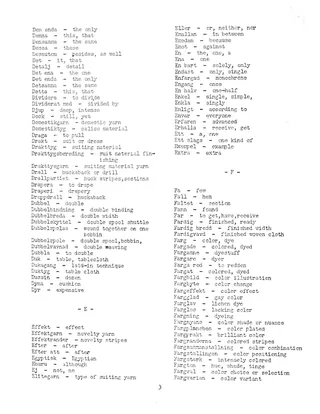
A 16-page Swedish-to-English glossary of weaving and textile terms compiled by Doris Veren and published by Craft & Hobby Book Service, Monterey, California. It lists several thousand Swedish words alphabetically (A through Y), with diacritics omitted, covering looms and loom parts, yarns, fibers, dyeing, colors, fabrics, weave types and everyday words found in Swedish weaving instructions. Conversion tables (centimeters to inches, meters to feet and yards, grams to ounces and pounds, kilograms to pounds and ounces) precede the glossary.
Thread
Article · 1 page
A one-sentence encyclopedia entry defining thread as a small line made from many fine fibres of vegetable or animal origin, such as flax, cotton, or silk, and named accordingly as linen, cotton, or silk thread. It gives only a basic definition, with no discussion of manufacture or use.
Tissue
Zell's Encyclopedia, 1876
Article · 1 page
A short dictionary entry for the word 'tissue' from Zell's Encyclopedia. It gives the French and Latin origins (tissu, tisser, texere, 'to weave') and defines tissue as any woven stuff, especially cloth interwoven with gold or silver or with figured colors. It also gives the figurative sense of a connected series, citing Addison.
Warp
Article · 1 page
A very short dictionary entry defining the warp as the threads of silk, wool, linen, hemp and similar fibers stretched lengthwise on the loom. The weft (woof) threads are passed across them with a shuttle to make cloth, ribbon, fustian or other fabric. It is a single-sentence definition with no technical detail.
Warp
Article · 1 page
A very short encyclopedia entry defining 'warp' as the threads of silk, wool, linen, hemp and other fibers stretched lengthwise on the weaver's loom. The weft threads are passed across them with a shuttle to form cloth, ribbon, fustian and similar fabrics. It is a single-sentence definition with no technical detail or illustrations.
Weaver Bird
Article · 1 page
A one-page encyclopedia entry on weaver birds (family Ploceidae), describing their distribution in Africa, tropical Asia and Australia, their physical features, and the woven nests they build from plant materials. It covers nest forms, such as hanging pouches and tubes, and the communal nests of the social weaver bird of South Africa. It concerns bird biology, not textile weaving.
Web
Article · 1 page
A very short dictionary-style entry from the first edition of the Encyclopedia Britannica defining a web as a tissue or texture of interwoven threads, with the lengthwise threads called the warp and the crosswise threads the woof. It refers readers to the entry CLOTH for more.
1,605 documents found