Unusual Border Construction from Peru
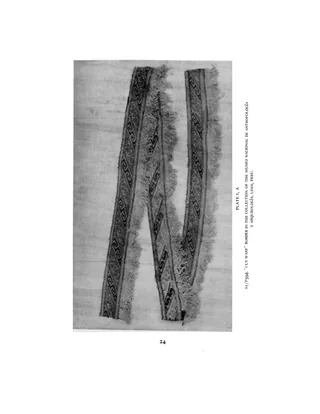
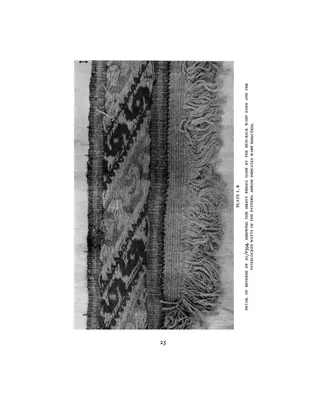
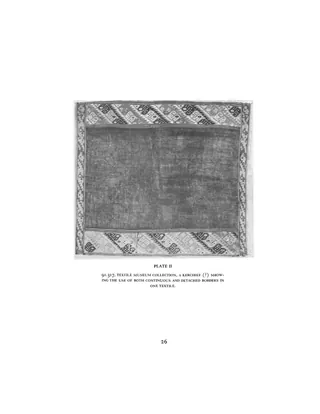
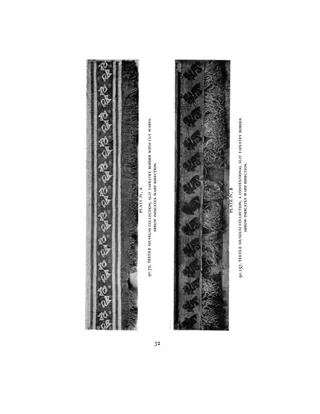
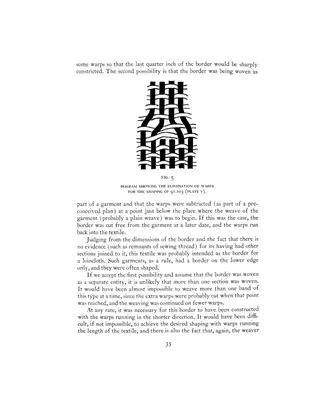
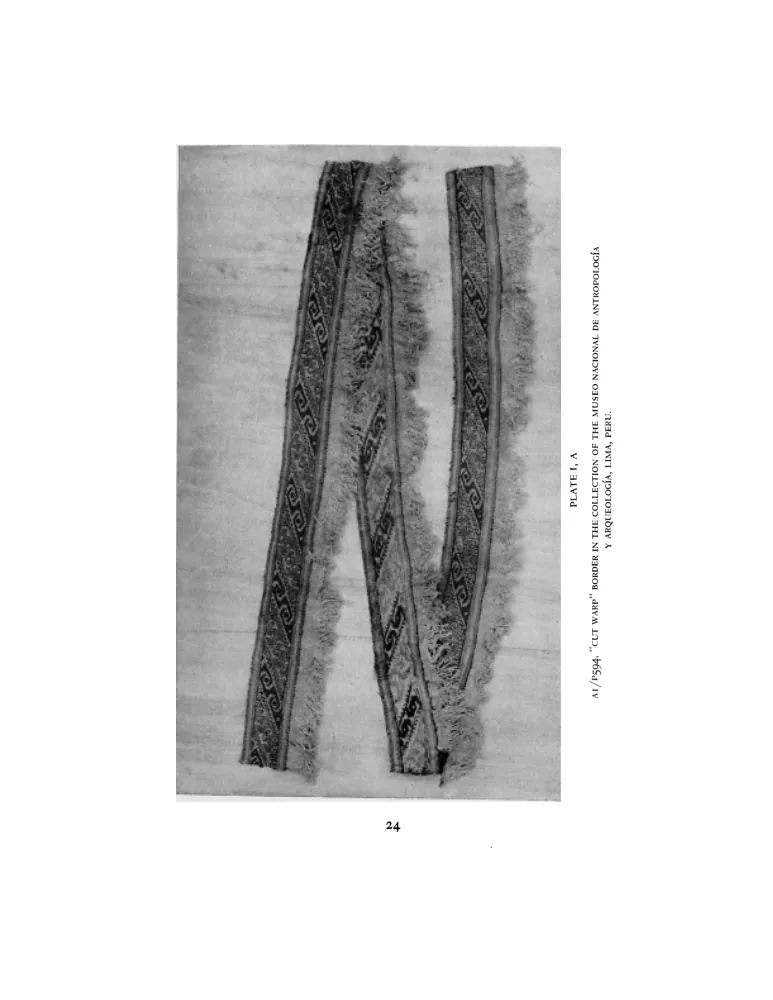
Article by Mary Elizabeth King on a little-known construction method for ancient Peruvian borders, in which narrow weft-faced bands were woven with the warp running in the short direction. Several bands were woven on one loom set-up with bare warp left between them. The warps were then cut and run back into the band edge, and the sections were sewn together into a long border. The study centers on a band from Ancon in the Museo Nacional in Lima and on related Textile Museum pieces in weft-patterned and slit tapestry techniques. It covers loom set-up diagrams, the method of running back cut warps, shaping by subtracting warps, fiber analysis, and theories about why weavers worked this way. The bands are dated to the late coastal periods, about 1300-1532 A.D.
- Type
- Article
- Date
- 1957
- Language
- English
- Pages
- 16