Two-Shed Weaving: I. Possibilities of Plain Weave
Sample pages
Page 1, at reduced quality. Open the document to read every page in full.
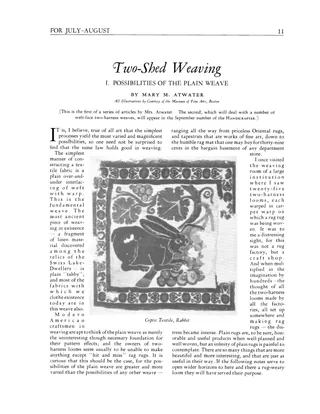
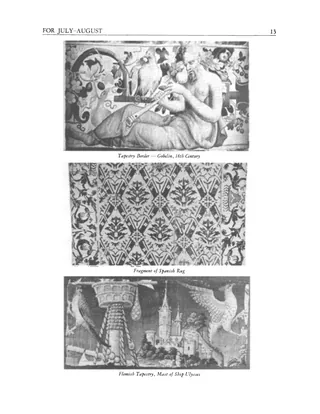
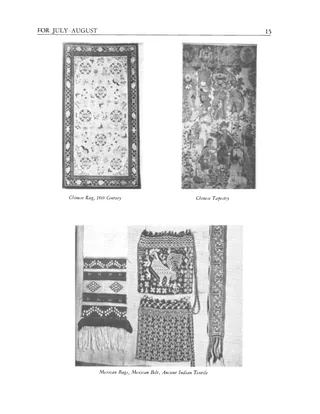
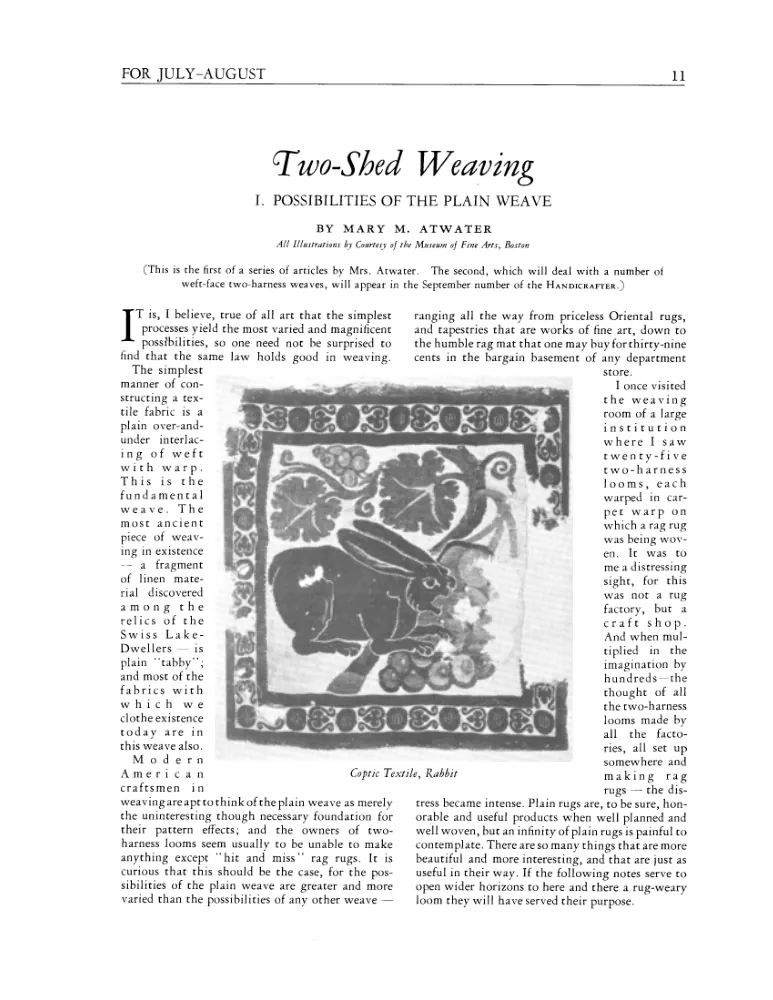
The first article in Mary Meigs Atwater's series for The Handicrafter argues that plain weave offers far more variety than the rag rugs usually woven on two-harness looms. She outlines the range of two-harness fabrics in three groups: weft-face, warp-face, and balanced (half-and-half). The rest of the text covers tapestry: its antiquity, high-warp and low-warp looms, bobbins, beaters, warp setts, design, and the problem of slits. Illustrations are museum textiles from the Museum of Fine Arts, Boston, including Coptic, Peruvian, Gobelin, Flemish, Persian, Chinese and Mexican pieces.
- Type
- Article
- Date
- 1931
- Language
- English
- Pages
- 6
(A free account is all you need)
From Ralph Griswold's Digital Archive, delivered by the University of Arizona.
Have missing pages or a better copy of this document, or another document to share? Contributing documents »