A Primitive Frame for Weaving Narrow Fabrics
Sample pages
Page 15, at reduced quality. Open the document to read every page in full.
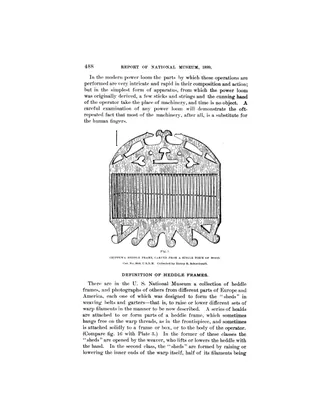
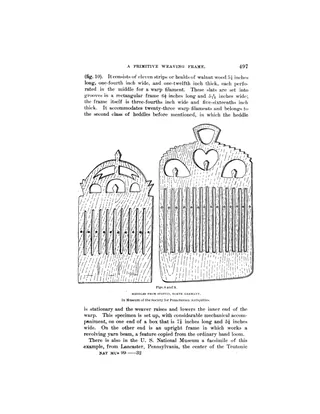
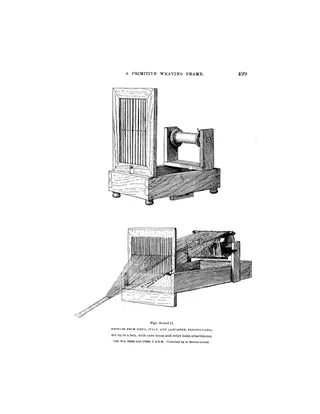
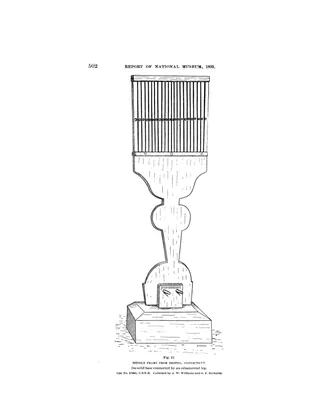
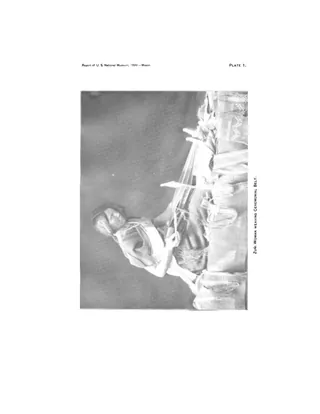
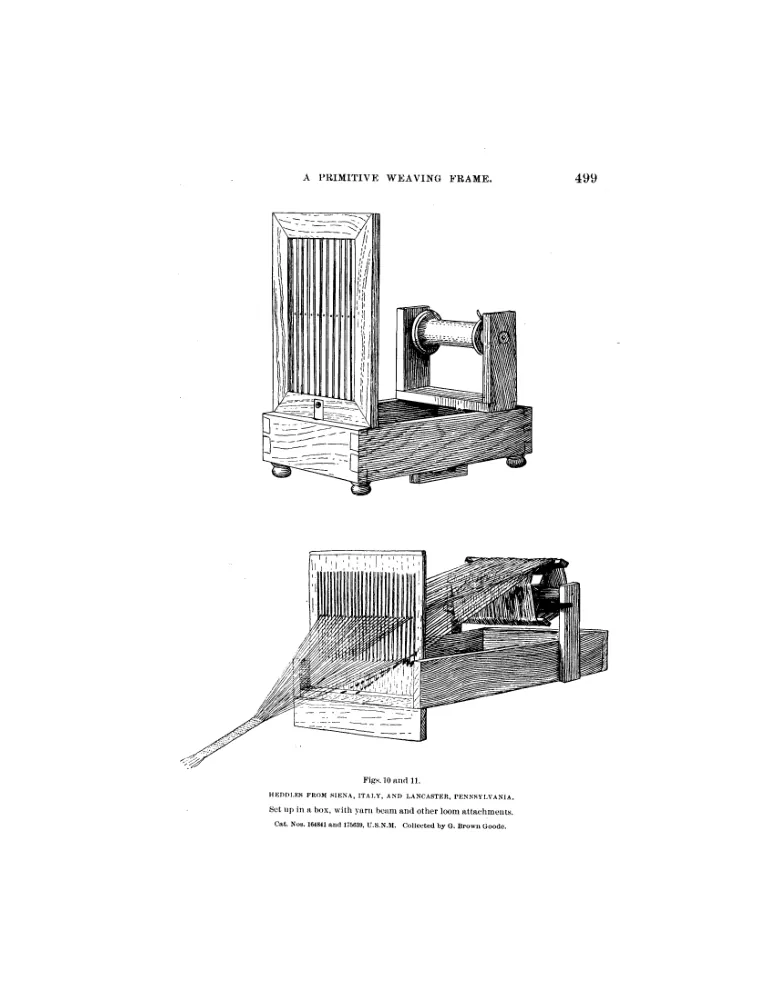
Otis T. Mason's 1901 Smithsonian monograph (reprinted from the Report of the U.S. National Museum) surveys the heddle frame, a hand-held or stationary device that forms the sheds when weaving narrow belts, garters and tapes. It describes specimens in the museum collection from the Chippewa, Masquakie and Pueblo/Zuni peoples, Finland, Germany, Italy, and New England and Pennsylvania. It also covers a patented hand-weaving apparatus and Pueblo battens. Each type is described with dimensions, materials, catalog numbers and method of use, and illustrated with line drawings and nine plates. It argues that the Native American frames derived from European settlers' folk craft.
- Type
- Monograph
- Date
- 1901
- Language
- English
- Pages
- 35
(A free account is all you need)
From Ralph Griswold's Digital Archive, delivered by the University of Arizona.
Have missing pages or a better copy of this document, or another document to share? Contributing documents »