Prehistoric Textile Art of the Eastern United States
Sample pages
Page 25, at reduced quality. Open the document to read every page in full.
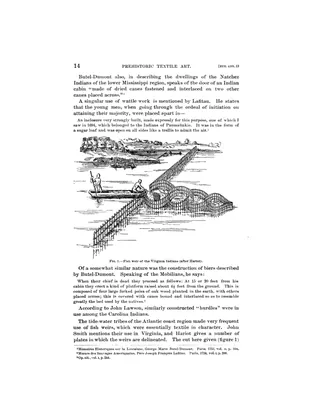
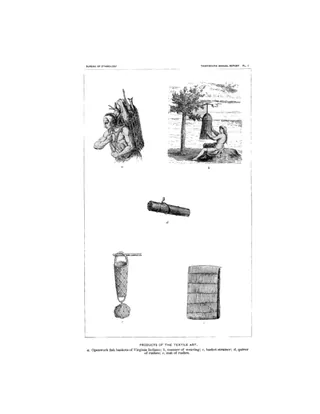
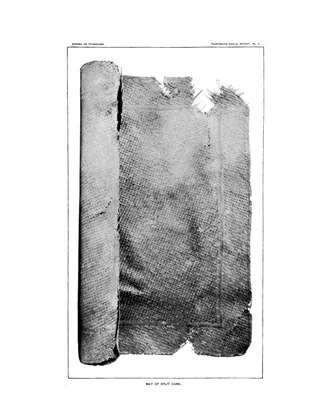
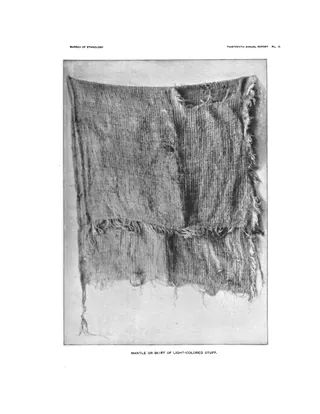
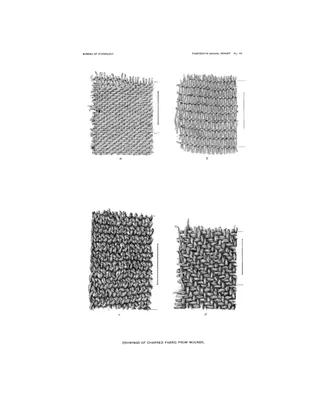
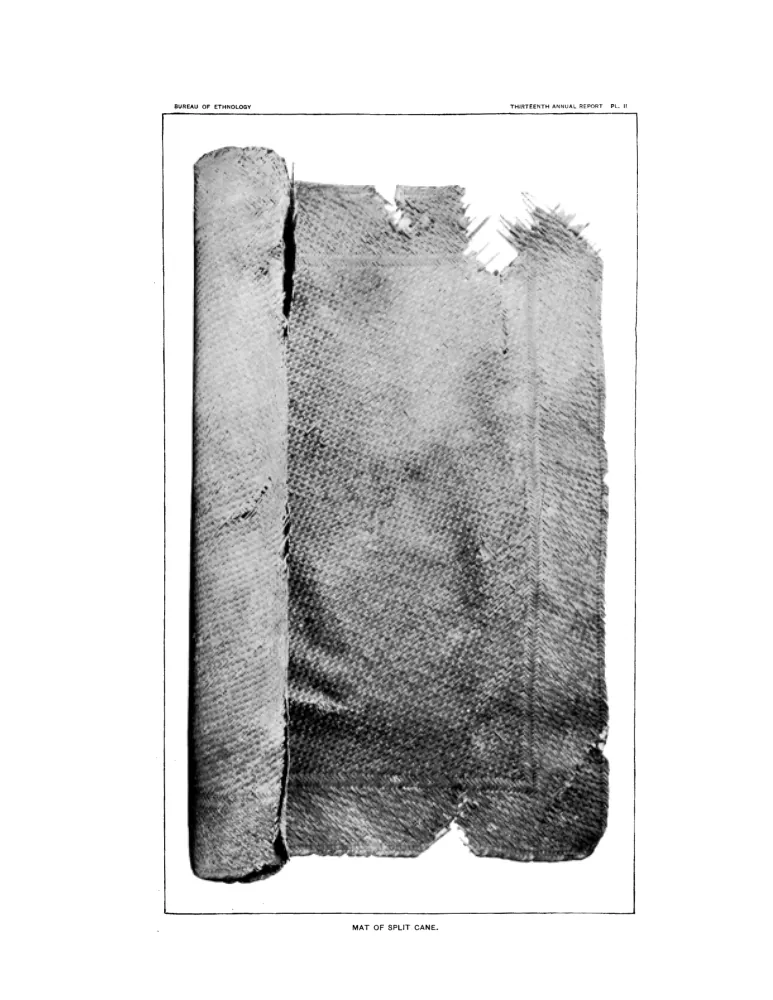
William Henry Holmes's study of the textile arts of the prehistoric mound-building peoples of the eastern United States, from the Thirteenth Annual Report of the Bureau of Ethnology. It covers wattle work, basketry, matting, and pliable fabrics (cloth, nets, feather-work, embroidery), drawing on early European accounts and on archaeological remains. Surviving fabrics come from caves and shelters, charred mound deposits, contact with copper, and impressions on pottery. It is illustrated with plates and figures, including drawings that analyze twined and woven structures; it contains no weaving drafts.
- Type
- Monograph
- Date
- c. 1896
- Language
- English
- Pages
- 50
- Archive notes
- U. S. Government publication
(A free account is all you need)
From Ralph Griswold's Digital Archive, delivered by the University of Arizona.
Have missing pages or a better copy of this document, or another document to share? Contributing documents »