Telas de Los Muertos - Resist-Dyeing
Sample pages
Page 1, at reduced quality. Open the document to read every page in full.
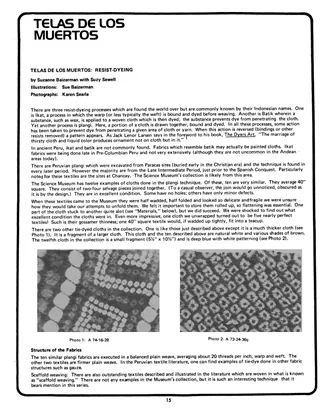
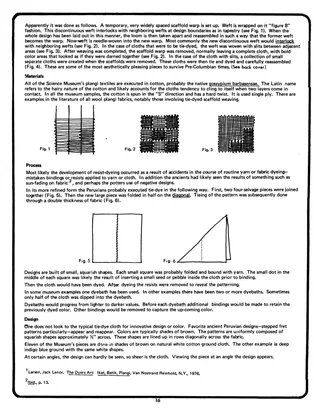
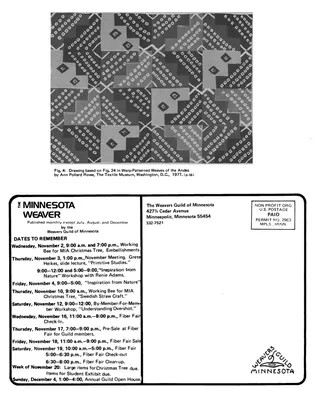
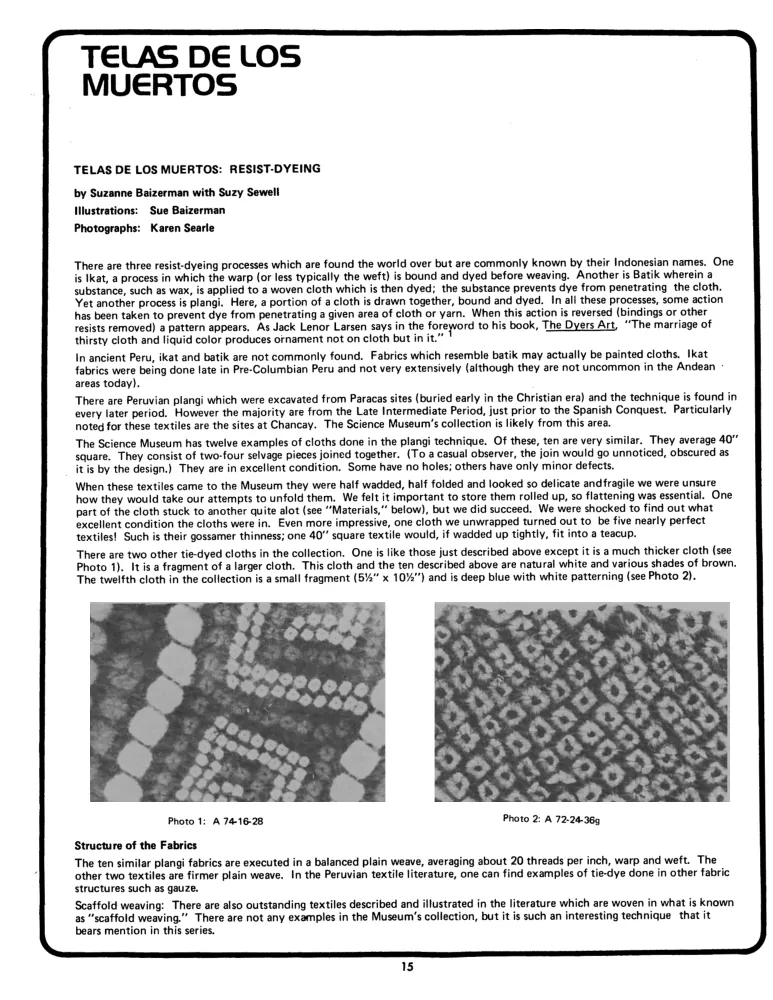
An article from the Minnesota Weaver's series on the Science Museum's collection of ancient Peruvian textiles, focused on resist-dyeing. It introduces ikat, batik and plangi, then describes twelve plangi (tie-dyed) cotton cloths, probably from Chancay, in the museum's collection, including their plain-weave structure, materials, probable tie-dye process and designs. It also explains scaffold weaving, in which the weft becomes the warp so that cloths can be tie-dyed, with line drawings and two photographs.
- Type
- Article
- Date
- November 1977
- Language
- English
- Pages
- 3
- Archive notes
- By permission. PDF provided by Judith Combs.
(A free account is all you need)
From Ralph Griswold's Digital Archive, delivered by the University of Arizona.
Have missing pages or a better copy of this document, or another document to share? Contributing documents »