Notes on the Early Usage of Flat Metallic Strips in Central and East Asian Textiles
Sample pages
Page 4, at reduced quality. Open the document to read every page in full.
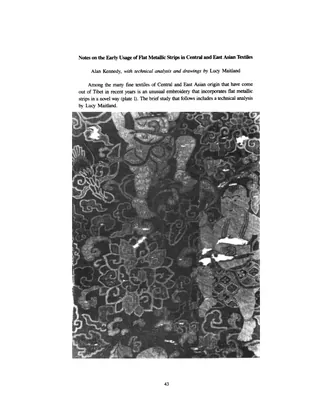
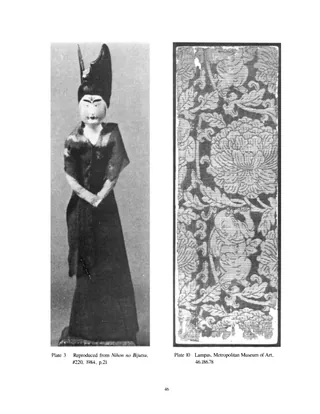
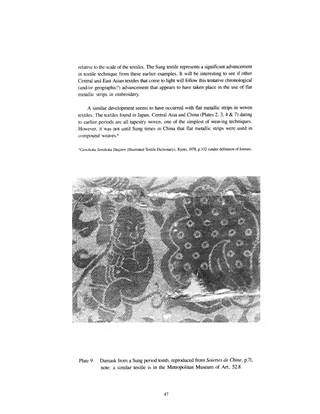
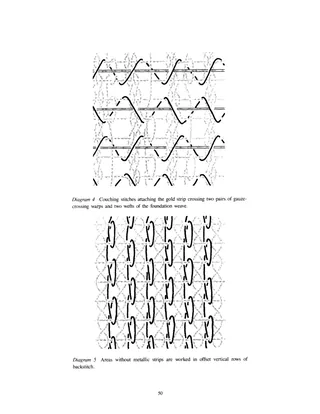
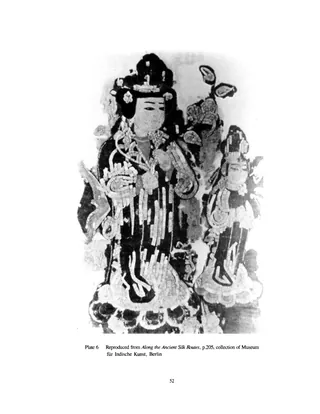
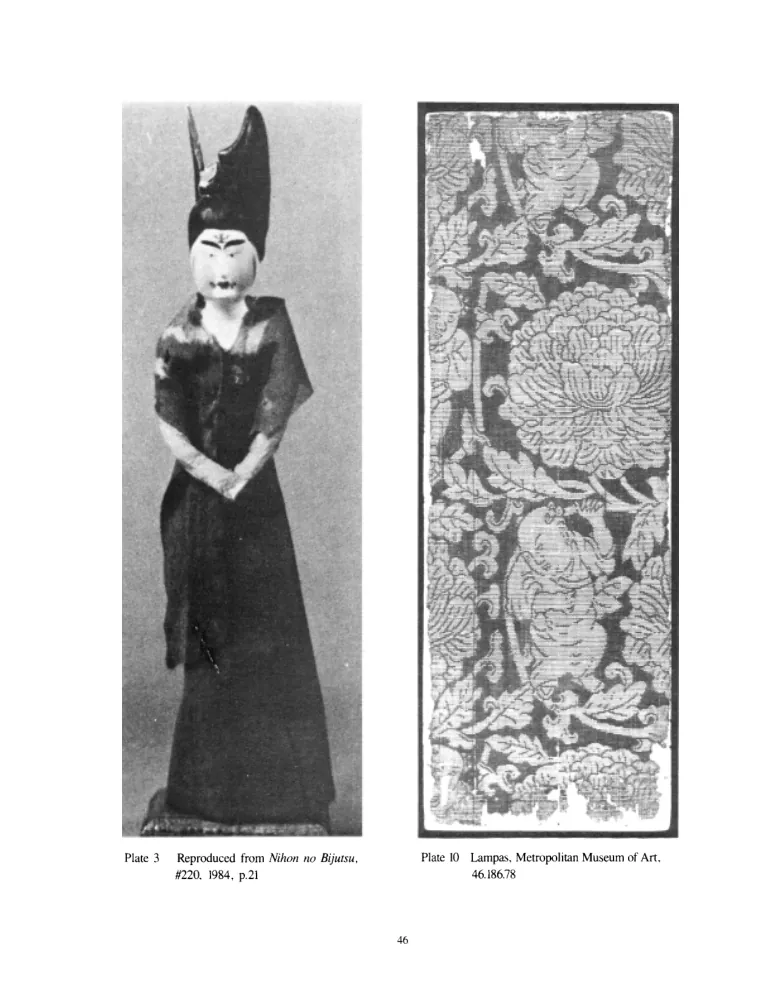
A short article on the early use of flat metallic (gold and silver foil) strips in Central and East Asian textiles, prompted by a Sung Dynasty embroidery of boys and flowering vines that came out of Tibet. It surveys earlier examples from Japan, Turfan, Khocho and Liaoning, in which the strips are tapestry-woven or couched. Lucy Maitland provides a stitch-by-stitch technical analysis of the embroidery on a silk gauze foundation, illustrated with five diagrams. Plates reproduce comparison textiles.
- Type
- Article
- Date
- 1989
- Language
- English
- Pages
- 12
(A free account is all you need)
From Ralph Griswold's Digital Archive, delivered by the University of Arizona.
Have missing pages or a better copy of this document, or another document to share? Contributing documents »