Ikat Technique and Dutch East Indian Ikats
Sample pages
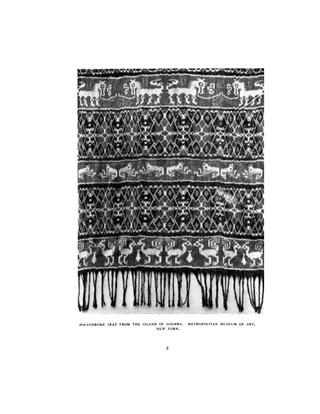
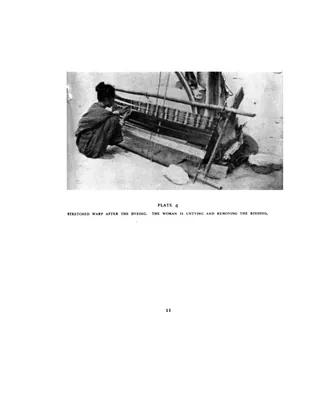
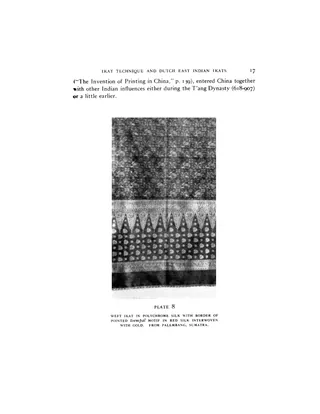
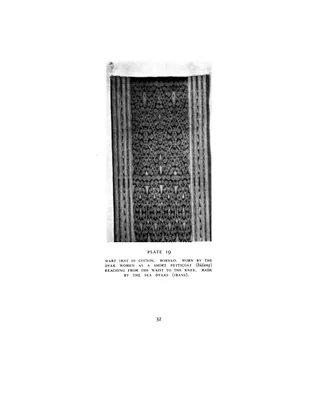
Page 10, at reduced quality. Open the document to read every page in full.
An illustrated article by Charles F. Iklé explaining the ikat technique, in which warp or weft threads are bound with agel fibre, resist-dyed and then woven, and distinguishing it from batik and plangi. It surveys ikat in the Dutch East Indies (Sumba, Sumatra, Bali, Borneo, Celebes, Roti, Savu, Timor, New Guinea) and the double ikats of Tenganan and of Gujarat (patola). It also covers early examples such as Egypto-Arabic pieces and the Ajanta frescoes, the toempal motif, the worldwide spread of ikat, dyes, and native beliefs about dyeing. About 30 plates, a map and a bibliography accompany the text.
- Type
- Article
- Date
- 1931
- Language
- English
- Pages
- 59
- Archive notes
- Scanned images provided by Tess Parrish
(A free account is all you need)
From Ralph Griswold's Digital Archive, delivered by the University of Arizona.
Have missing pages or a better copy of this document, or another document to share? Contributing documents »