Textile Documents › Authors › Author: Charles Iklé
2 documents found
Sort: 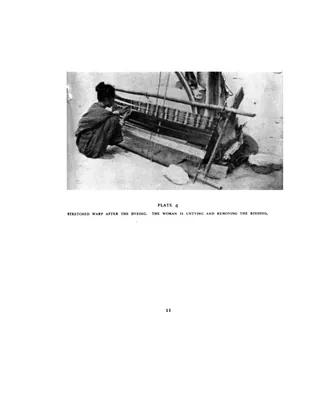
Ikat Technique and Dutch East Indian Ikats
Article · 59 pages
An illustrated article by Charles F. Iklé explaining the ikat technique, in which warp or weft threads are bound with agel fibre, resist-dyed and then woven, and distinguishing it from batik and plangi. It surveys ikat in the Dutch East Indies (Sumba, Sumatra, Bali, Borneo, Celebes, Roti, Savu, Timor, New Guinea) and the double ikats of Tenganan and of Gujarat (patola). It also covers early examples such as Egypto-Arabic pieces and the Ajanta frescoes, the toempal motif, the worldwide spread of ikat, dyes, and native beliefs about dyeing. About 30 plates, a map and a bibliography accompany the text.
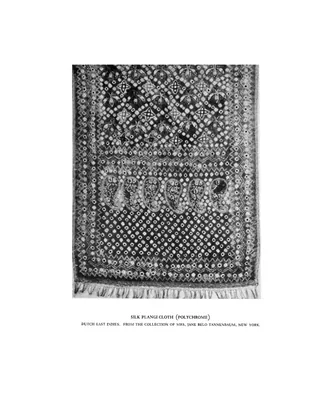
Plangi Technique
Article · 22 pages
Charles Iklé's article surveys plangi, the tie-and-dye resist technique in which cloth is gathered, bound and then dyed. It compares plangi with ikat and batik, then describes the main methods: pebble-and-thread puckering in Java, Indian bandhana work, West African pleat-and-tie, and an ancient Peruvian rolled-cloth method. It also covers related resist methods such as shirring, sewn cords, leaf and bamboo resists, and the Japanese kyokechi zome. A step-by-step account of making a two-color silk plangi cloth in Samarang, Java is followed by notes on ancient examples and the present-day distribution of plangi worldwide, with maps and a bibliography. It is illustrated with photographs of cloths from the Dutch East Indies, Japan, Peru, Mindanao and Mexico, plus process diagrams.