Prehistoric Textile Fabrics of the United States Derived from Impressions on Pottery
Sample pages
Page 12, at reduced quality. Open the document to read every page in full.
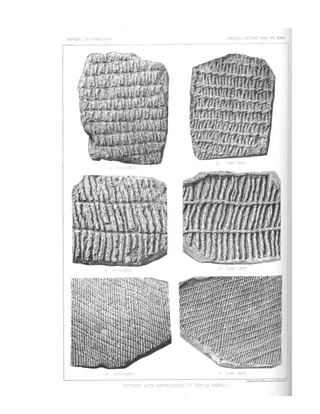
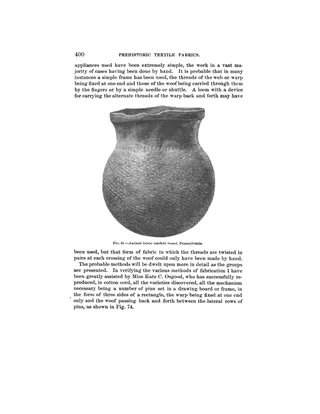
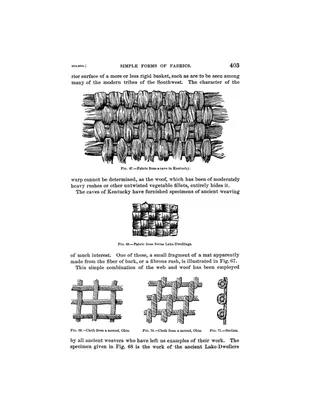
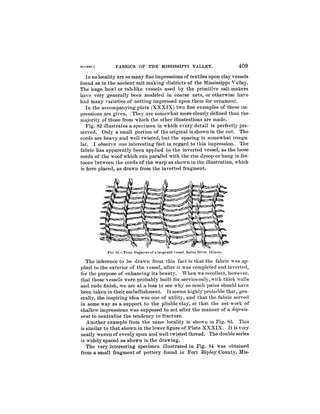
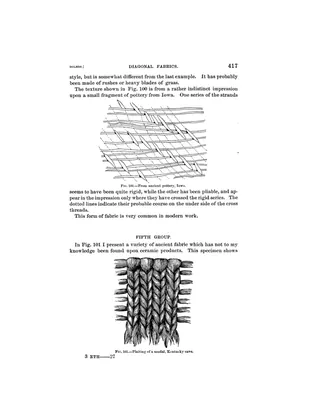
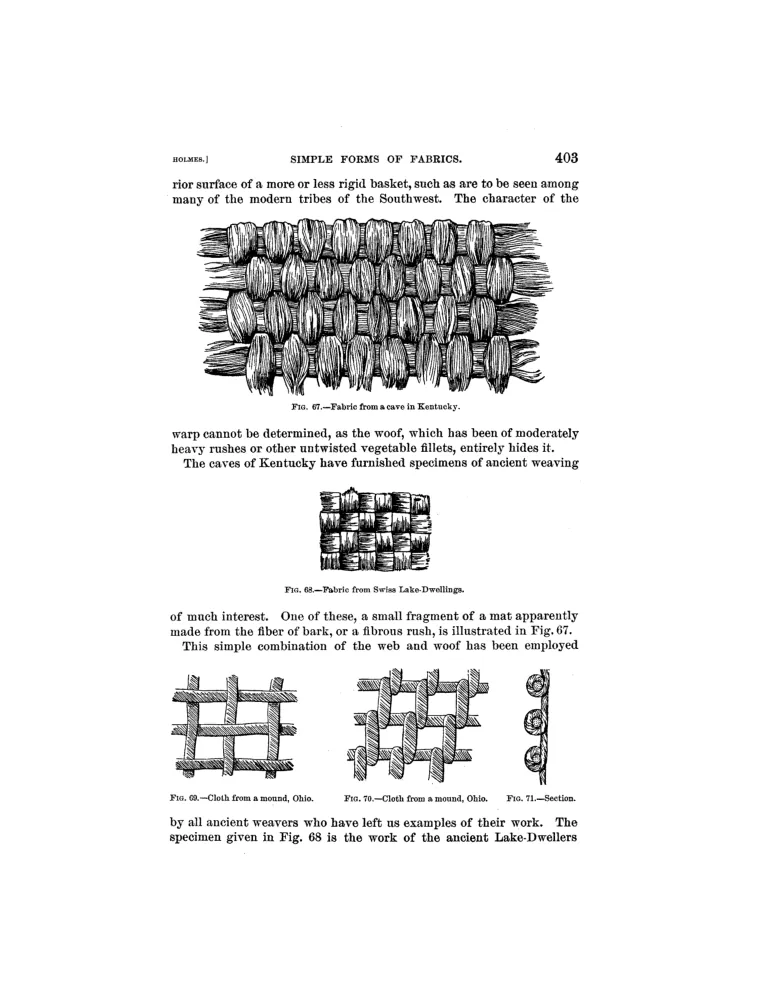
William H. Holmes's 1884 study, published in the Third Annual Report of the Bureau of Ethnology, examines textile impressions left on prehistoric pottery from the eastern and central United States. He sorts the fabrics into six groups plus miscellaneous forms: plain weave, paired and twisted warp, diagonal weaves, plaiting, knotted nets, and cord markings. Many illustrated figures show the impressions and restorations, with comparisons to Swiss Lake-Dwelling fabrics and modern Northwest Coast work. The text discusses how the fabrics may have been made, using pegs and frames, and how they were used in shaping and decorating pottery.
- Type
- Monograph
- Date
- 1884
- Language
- English
- Pages
- 34
(A free account is all you need)
From Ralph Griswold's Digital Archive, delivered by the University of Arizona.
Have missing pages or a better copy of this document, or another document to share? Contributing documents »