Tapestry Weaving: Its History and Technique
Sample pages
Page 1, at reduced quality. Open the document to read every page in full.
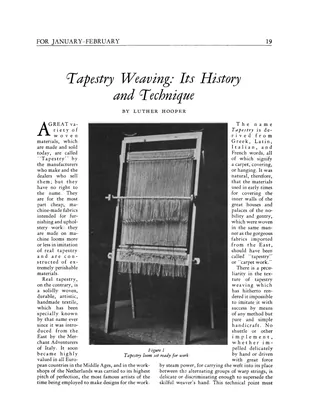
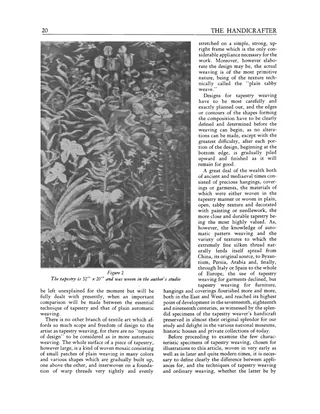
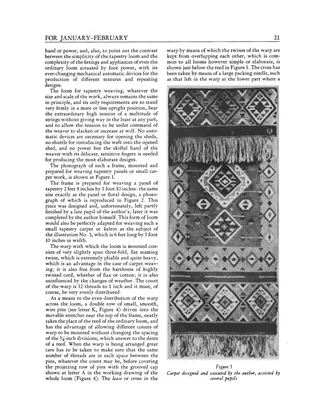
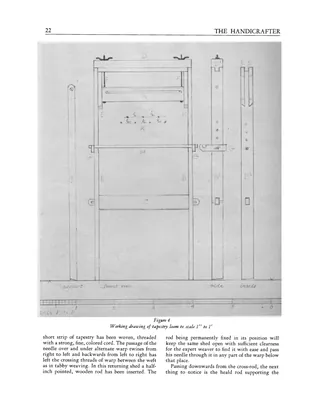
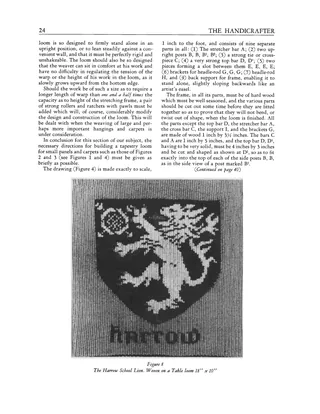
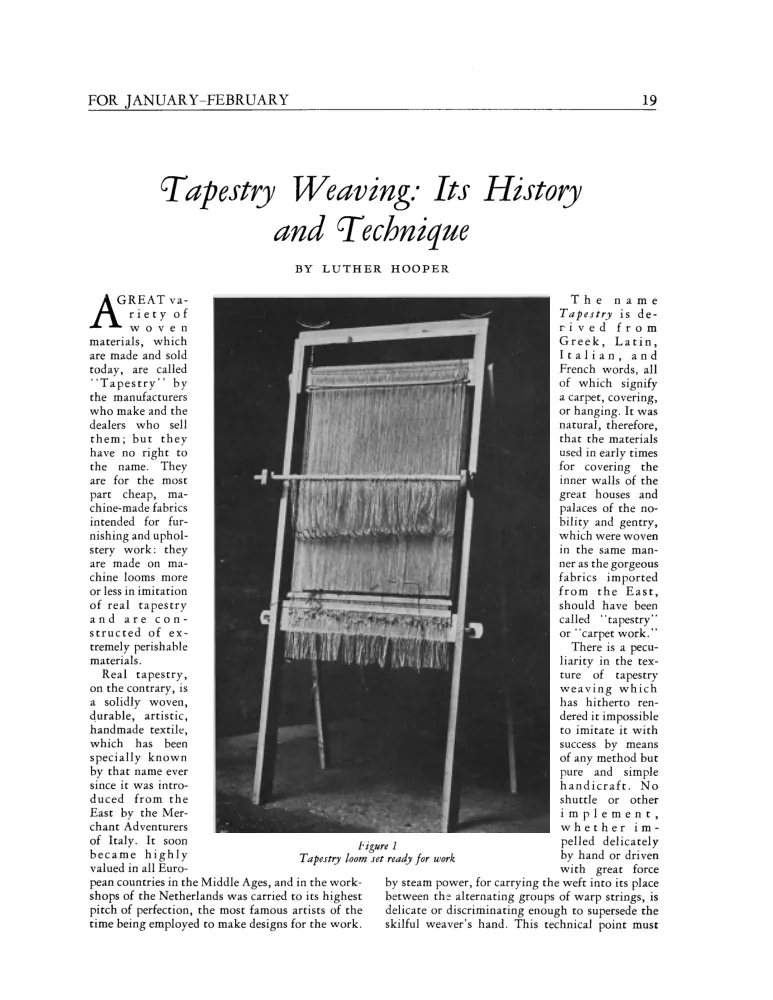
An article by Luther Hooper on the history and technique of true hand-woven tapestry, contrasting it with machine-made upholstery fabrics sold under the name. It explains the simplicity of the upright tapestry loom, the warp (12 ends per inch, with pins in place of a reed), the lease or cross-rod, and heald rod, and gives construction directions for a small loom with a scale working drawing. Illustrations include the author's tapestry panel and carpet, Egyptian ornaments from a robe of Amenhetep II, a 16th-century Flemish border, and the Harrow School Lion woven on a table loom. The text continues on a later page with the end of the loom-building directions.
- Type
- Article
- Date
- January-February 1932
- Language
- English
- Pages
- 7
(A free account is all you need)
From Ralph Griswold's Digital Archive, delivered by the University of Arizona.
Have missing pages or a better copy of this document, or another document to share? Contributing documents »