Textile Documents › Authors › Author: Luther Hooper
11 documents found
Sort: 
Hand-Loom Weaving: Plain and Ornamental
Book · 380 pages · weaving drafts
A comprehensive handbook on hand-loom weaving in the Artistic Crafts Series, edited by W. R. Lethaby, by Luther Hooper. It moves from the basics of spinning, flax preparation, warping, beaming and loom construction through simple pattern weaving (tapestry, brocading, twills, satins, double cloth, shedding motions, damask and velvet) to complex draw-loom, shaft monture, brocatelle, tissue, compound monture and figured-velvet weaving. It includes many line drawings of equipment, ruled-paper designs and drafts, plates of historic textiles, and a glossary.
The Loom and Spindle: Past, Present, and Future
Monograph · 61 pages · weaving drafts
Reprint of Luther Hooper's three Canton Lectures on the history and mechanics of the spindle and the loom, given to the Royal Society of Arts in 1912 and reprinted in the Smithsonian Annual Report for 1914. It covers prehistoric, ancient and primitive looms and spindles (Swiss lake dwellers, Greek, Egyptian, African, Indian, Chinese), the development of spinning wheels and spinning machinery, and the loom's shedding motions, heddles and treadles. The later lectures treat the draw loom, the drawboy, the Jacquard machine, the fly shuttle and power looms. It has 11 plates and many line drawings, with a few simple drawdown and tie-up diagrams.
The New Draw-Loom
Book · 236 pages · weaving drafts
Luther Hooper's 1932 handbook describes the construction and operation of his 'new draw-loom', a hand-operated pattern-weaving loom for handicraft weavers. It opens with the traditional draw-loom, including a master weaver's 1800 description, then covers building the frame, comber board, pulley box, monture, simple and shed-lifting appliance. Later parts describe a series of looms (Nos. II to IV) for warp effect, weft effect and brocaded weaving, and four specifications for full-sized looms for linen damask and silk tissues and damask. It includes plates, point-paper designs, harness diagrams, a glossary and a publisher's book list.
Silk: Its Production and Manufacture
Book · 133 pages · weaving drafts
A general introduction to silk in Pitman's Common Commodities and Industries series, covering the whole chain from sericulture to finished cloth. Early chapters treat the silkworm, silk-producing moths, the history of silk and its spread from China to Europe, rearing, reeling, throwing, winding, doubling and dyeing. The later chapters deal with weaving: ancient and Chinese silk webs, the simple and compound draw-loom, satin and damask weaving, Eastern and European silk weaving, English silk weaving to about 1800, the Jacquard machine and modern practice. Illustrated with line drawings of machinery and plates of historic textiles, and includes diagrams of satin and draw-loom mountings on ruled design paper, plus an index.
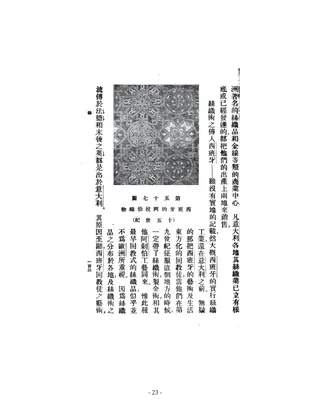
Silk: Its Production and Manufacture [Chinese Translation]
Book · 130 pages · Chinese · weaving drafts
A Chinese translation (Commercial Press, Shanghai, January 1924) of Luther Hooper's English handbook on silk, titled 蠶絲概論 (Outline of Sericulture/Silk). It covers silk's value and sources, silkworms and wild silk moths, the history of silk, sericulture, reeling, throwing (twisting), dyeing, and types of silk thread. It then treats silk weaving: ancient Chinese figured fabrics, simple and compound drawlooms, Jacquard punched-card harnesses, satin and damask (figured satin) weaves, the westward spread of silk weaving to Italy, Europe and England, and modern weaving. Illustrated with diagrams of looms, harnesses, weave patterns, reeling and throwing machinery, and photographs of historic textiles.
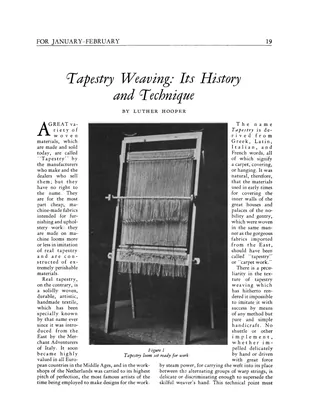
Tapestry Weaving: Its History and Technique
Article · 7 pages
An article by Luther Hooper on the history and technique of true hand-woven tapestry, contrasting it with machine-made upholstery fabrics sold under the name. It explains the simplicity of the upright tapestry loom, the warp (12 ends per inch, with pins in place of a reed), the lease or cross-rod, and heald rod, and gives construction directions for a small loom with a scale working drawing. Illustrations include the author's tapestry panel and carpet, Egyptian ornaments from a robe of Amenhetep II, a 16th-century Flemish border, and the Harrow School Lion woven on a table loom. The text continues on a later page with the end of the loom-building directions.
Tissage pour Debutants [Weaving for Beginners]
Luther Hooper · 2002
Book · 71 pages · French
A French translation (2002, by Philippe Demoule) of Luther Hooper's 1919 beginner's handbook on hand-loom weaving. It covers building a simple four-shaft treadle loom from wood and metal, making heddles, warping, beaming, threading and sleying, tying up the harness, tools such as shuttles, and starting to weave, ending with common faults and how to correct them. It is heavily illustrated with dimensioned line drawings of loom parts, warping boards, and warp handling. The final 15 pages on weave structures were not translated.
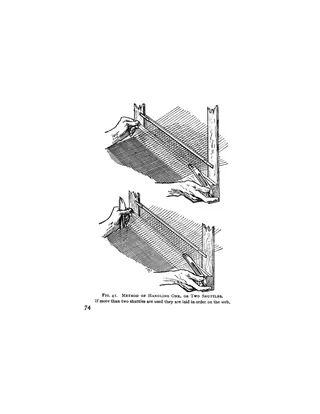
Weaving for Beginners
Book · 118 pages · weaving drafts
A 1919 beginner's manual by Luther Hooper on building, mounting and operating a simple four-shaft hand loom. It covers the woodwork, ironwork, frame and harness of the loom, then warping, beaming, entering the warp in harness and reed, gating (mounting) the loom, weaving tools, and getting started. Later chapters deal with mistakes and difficulties, and with variety in woven materials, including striped warps, tabby and twill on four headles. Many line drawings and working plates illustrate the loom parts and procedures. It opens with an explanatory note by W. R. Lethaby.
Weaving with Small Appliances, Book I: The Weaving Board
Book · 93 pages · weaving drafts
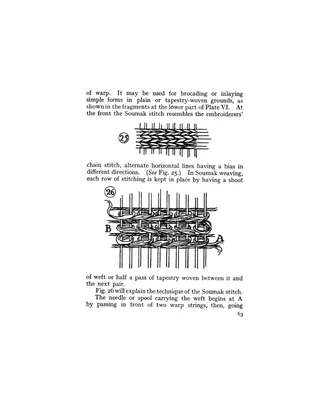
A 1922 instruction book by Luther Hooper on weaving with a simple board loom, intended for students and class teaching. It covers building and warping the loom, winding appliances, making leashes (heddles), plain tabby weaving, ornamental bands, brocading or inlay, tapestry weaving, Egyptian and Coptic mixed weaving, and Kelim, Soumak and knotted pile carpet effects. It ends with an upright tapestry table loom. It is illustrated with line figures, colored plates of woven samples, and design charts, and includes an index and publisher's advertisements.
Weaving with Small Appliances, Book II: Tablet Weaving
Book · 83 pages · weaving drafts
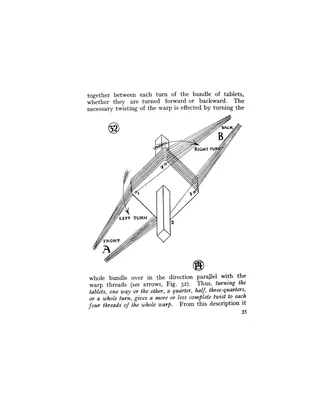
Book II of Luther Hooper's Weaving with Small Appliances is an instructional manual on tablet (card) weaving for making braids and narrow bands. It covers how the method differs from board-loom weaving, making the tablets and a small weaving stand, warping, mounting and threading the tablets, suitable yarns, and starting to weave plain braid. Later chapters teach ornamental designs: coloured stripes, checkers or dice patterns, checkers with vertical stripes, diagonals and chevrons, and reversing the turn. Many line drawings and coloured plates are included, along with tablet-by-tablet specifications giving threading, turn direction and colours for the plate designs. The book ends with publisher and supplier advertisements.
Weaving with Small Appliances, Book III: Table Loom Weaving
Book · 89 pages · weaving drafts
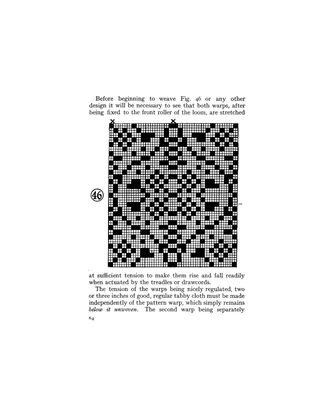
Book III of Luther Hooper's Weaving with Small Appliances series, a practical manual for the table loom. It describes the loom and its parts, including the pulley, cord, bead and rack mounting that raises the headles (heddles), and explains setting up, warping, turning on, entering and starting to weave. Later chapters cover plain weave variations, flushing, four- and eight-headle twills, broken twills, satinets, birdeye designs, turned or reversed twills and compound pattern weaving with two warps. It contains many bead-rack lifting plans and drafts, line drawings and eight coloured plates, and ends with an index and publisher advertisements.
11 documents found