On Tapestry
Sample pages
Page 1, at reduced quality. Open the document to read every page in full.
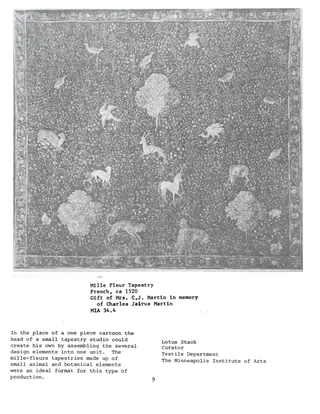
A short article by Lotus Stack, curator in the Textile Department of the Minneapolis Institute of Arts, on how medieval to pre-industrial European tapestries were produced. It covers the supply of wool, silk and metallic yarns, spinning, dyeing regulations, guild training and apprenticeship, task-based pay, and commissioned versus ready-made tapestries. It ends with a note on how mille-fleurs tapestries were assembled from small design elements, illustrated by a French tapestry of about 1520 in the museum's collection.
- Type
- Article
- Date
- April 1982
- Language
- English
- Pages
- 2
- Archive notes
- By permission. PDF provided by Judith Combs.
(A free account is all you need)
From Ralph Griswold's Digital Archive, delivered by the University of Arizona.
Have missing pages or a better copy of this document, or another document to share? Contributing documents »