Avoidance of Color Troubles Caused by Electric Light, Part 2
Sample pages
Page 1, at reduced quality. Open the document to read every page in full.
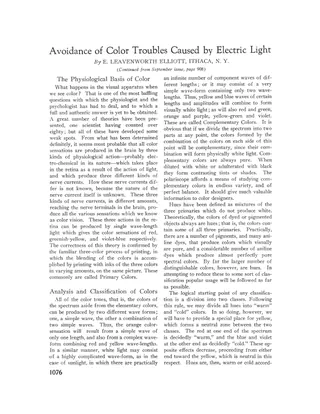
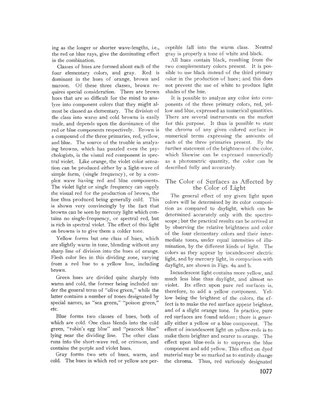
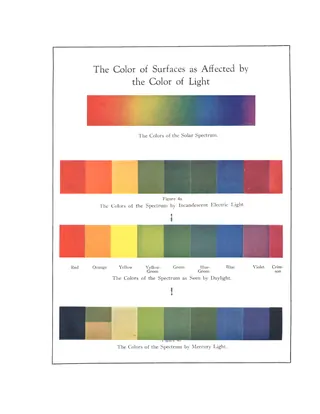
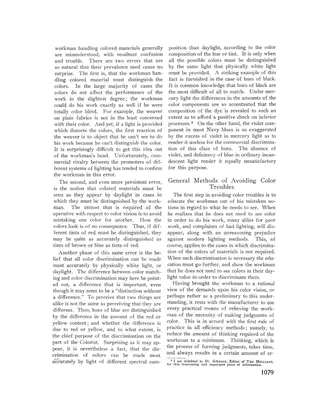
Second part of a series on how electric lighting distorts color in textile work. It covers the physiological basis of color vision, a classification of hues (warm, cold, browns, grays), and how incandescent and mercury light change the appearance of surfaces compared with daylight, with a figure comparing spectra. It then distinguishes colorists (designers, dyers) from workmen who only need to avoid mistaking colors, and recommends educating workers, using numbers or symbols for identification, and choosing distinguishable color series for fugitive silk dyeing under different lights.
- Type
- Article
- Date
- October 1929
- Language
- English
- Pages
- 7
(A free account is all you need)
From Ralph Griswold's Digital Archive, delivered by the University of Arizona.
Have missing pages or a better copy of this document, or another document to share? Contributing documents »