Notes on Development of Mandarin Squares: Some Newly DiscoveredMing Textiles
Sample pages

Page 4, at reduced quality. Open the document to read every page in full.
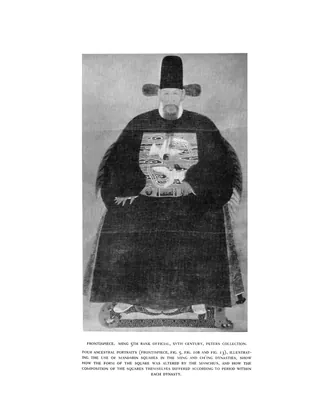
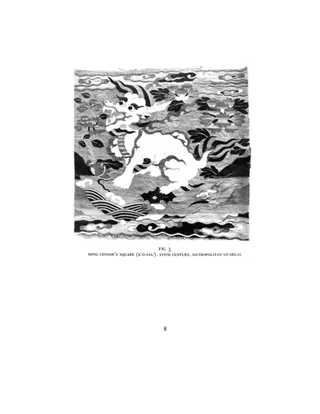
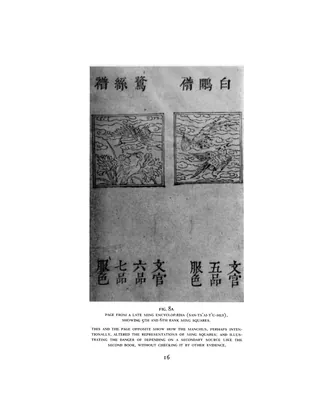
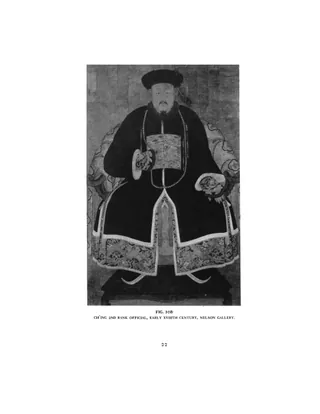
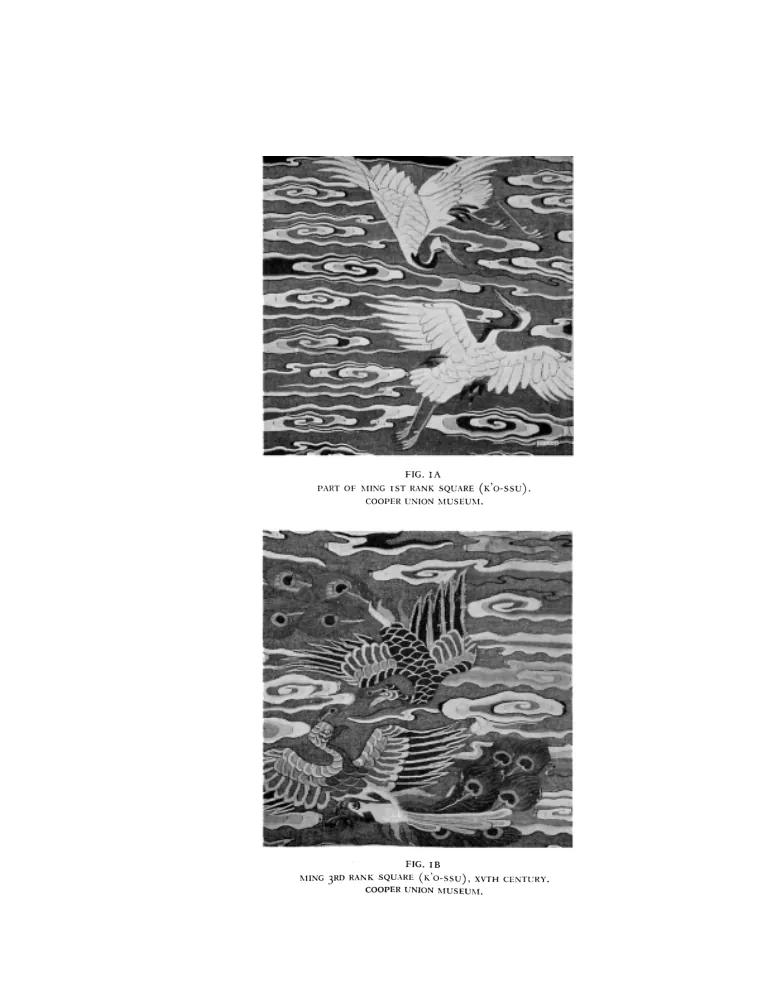
Schuyler Cammann traces the development of Chinese mandarin squares (rank badges) from their introduction under the Ming court in 1393 to the fall of the Manchu dynasty in 1912. He identifies previously unrecognized Ming squares in American museum collections, such as tapestry-woven (k'o-ssu) pieces at Cooper Union that had been labeled Japanese. He then contrasts Ming squares with early Ch'ing squares and surveys later Ch'ing changes in form, border, ornament, and technique. Ancestral portraits and Chinese encyclopedias are used as dating evidence, and the article is illustrated with 15 figures and a frontispiece.
- Type
- Article
- Date
- 1942
- Language
- English
- Pages
- 27
(A free account is all you need)
From Ralph Griswold's Digital Archive, delivered by the University of Arizona.
Have missing pages or a better copy of this document, or another document to share? Contributing documents »