Old Egyptian Lace
Sample pages
Page 1, at reduced quality. Open the document to read every page in full.
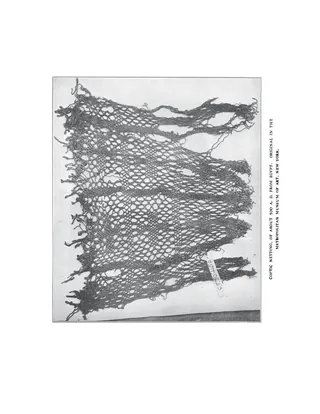
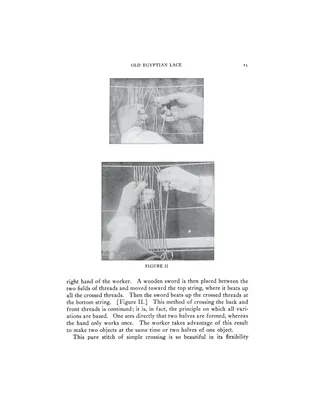
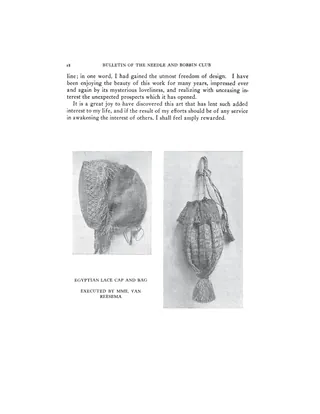
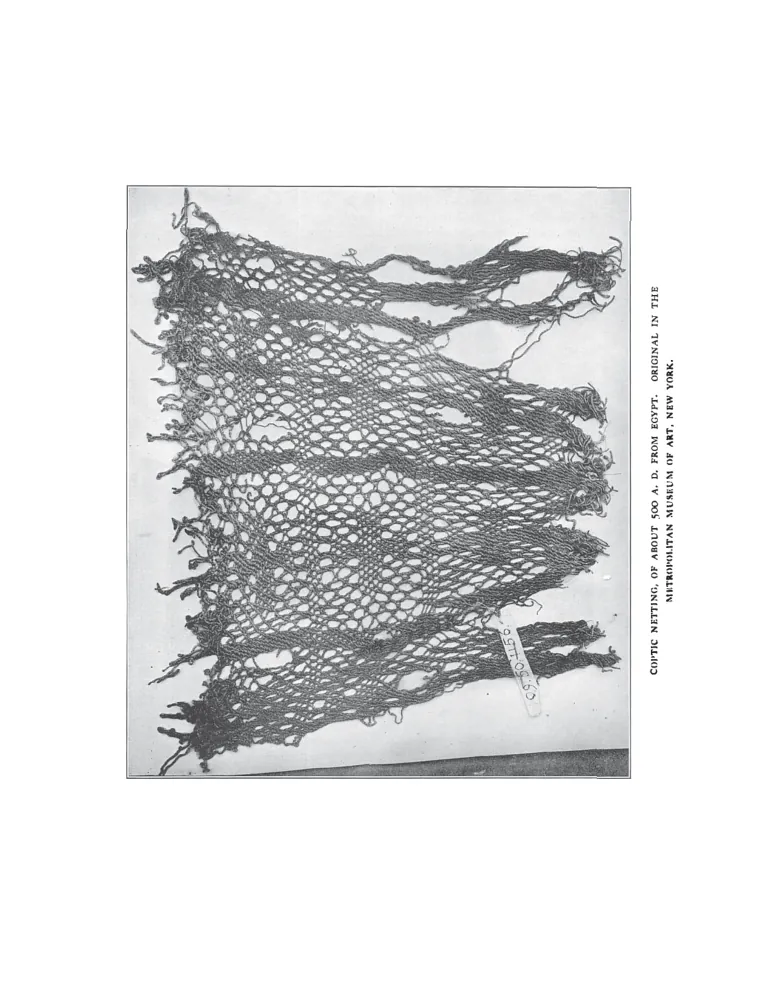
Article by a Dutch researcher on the open-work 'lace' found in Egyptian graves, such as Coptic caps, which she argues is not bobbin lace or needle lace but a form of sprang (twisted-thread netting worked on a frame). She describes how Louise Schinnerer matched it to Ruthenian peasant work in Galicia, and explains the frame setup, crossing of front and back threads, and use of a wooden sword. She also covers its survival in Scandinavia and the Netherlands (silk sashes, 1700-1840), the Spanish faja, and her own method for making horizontal patterns. Illustrated with a photograph of Coptic netting, two process photographs, and a cap and bag she made.
- Type
- Article
- Date
- 1920
- Language
- English
- Pages
- 7
(A free account is all you need)
From Ralph Griswold's Digital Archive, delivered by the University of Arizona.
Have missing pages or a better copy of this document, or another document to share? Contributing documents »