Speculation on the Development of English Lace Bobbins and the Need for Spangling
Sample pages

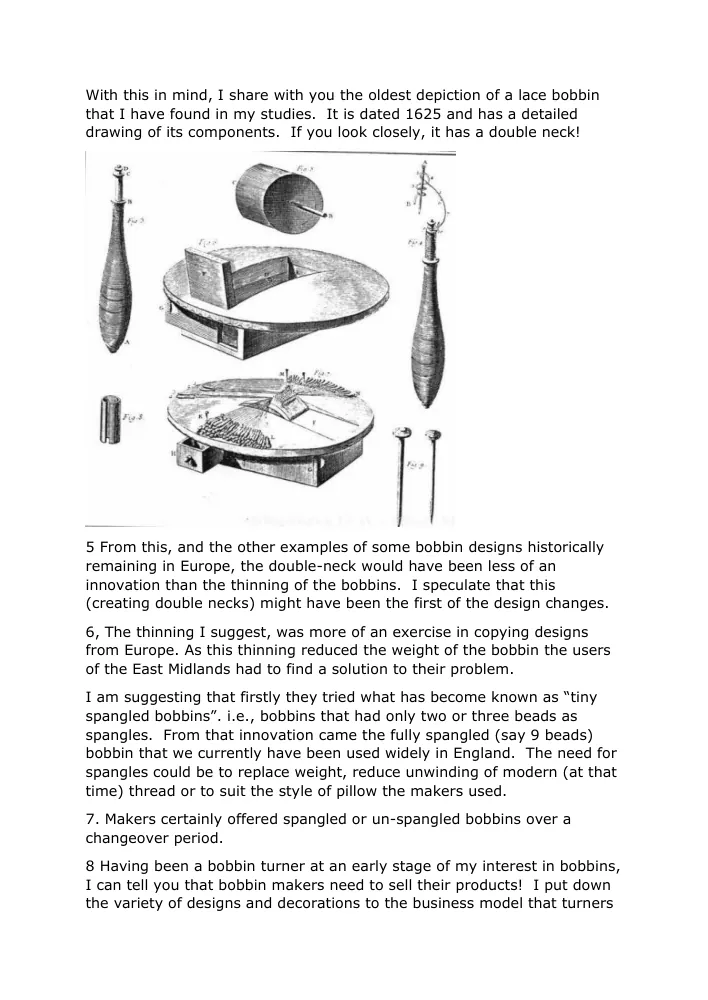
Page 2, at reduced quality. Open the document to read every page in full.
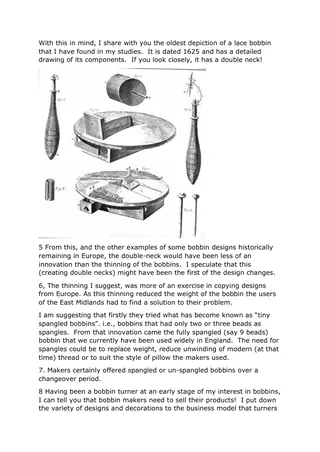
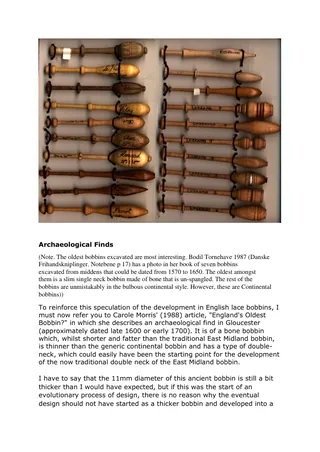
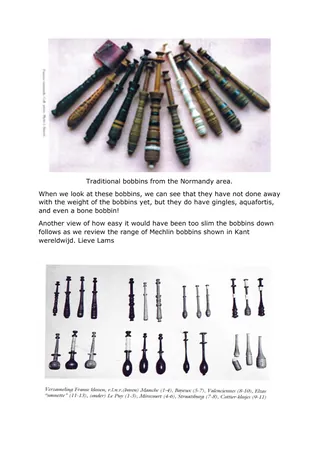
A January 2022 speculative essay by bobbin collector and former bobbin turner Brian Lemin on how English East Midlands lace bobbins came to be thin, double-necked and spangled with beads. Part one summarizes his hypotheses and part two develops them, drawing on archaeological finds (Gloucester, Eye in Suffolk), Continental bobbin types, lathe and tool development, the Industrial Revolution and the Arts and Crafts movement. He also discusses Wright on spangles and the bobbin maker Joseph Haskins, and dates spangling to roughly 1750-1800. It is illustrated with many photographs of bobbins, lathes and tools, and with paintings and engravings of English lacemakers, and ends with a bibliography.
- Type
- Web Doc
- Date
- 2022
- Language
- English
- Pages
- 29
(A free account is all you need)
From Ralph Griswold's Digital Archive, delivered by the University of Arizona.
Have missing pages or a better copy of this document, or another document to share? Contributing documents »