Avoidance of Color Troubles Caused by Electric Light, Part 1
Sample pages
Page 2, at reduced quality. Open the document to read every page in full.
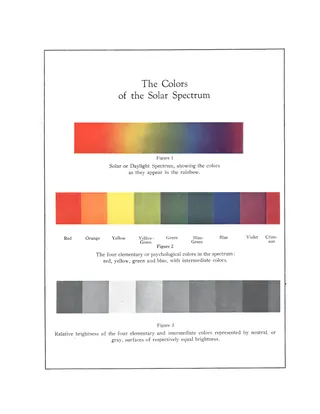
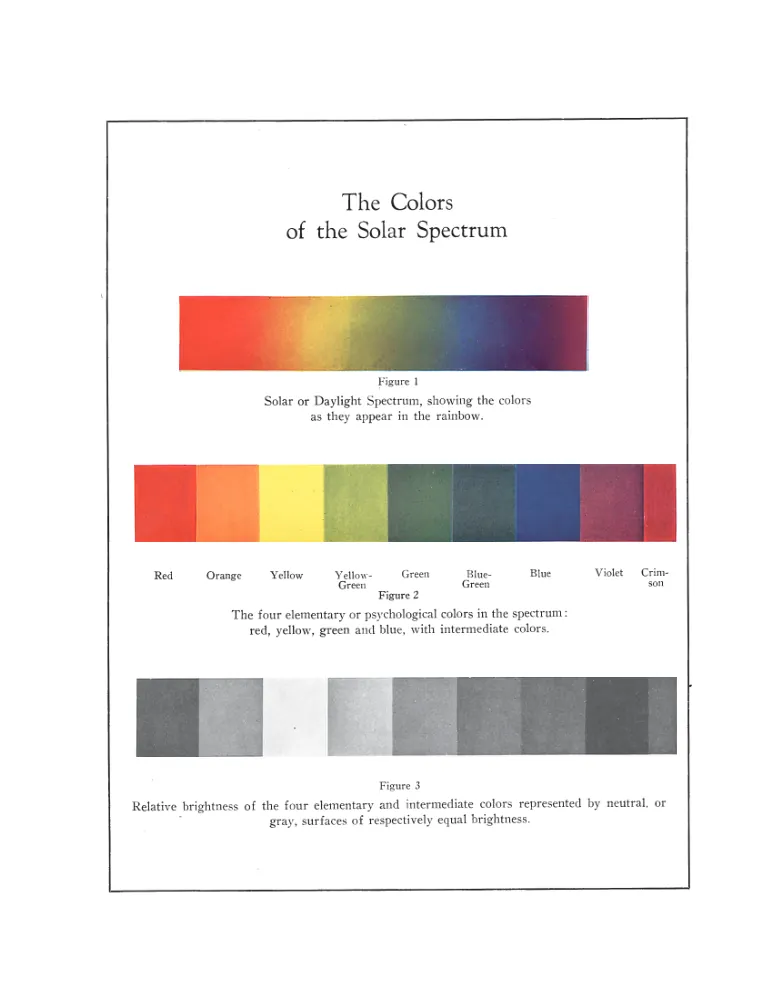
Part 1 of an article on avoiding color problems under electric light in industry, concentrating on the fundamentals of color theory. It argues that color vision matters for only a small share of workers, chiefly in textiles, and then explains color as a mental sensation, a property of light and a property of surfaces. Topics include elementary colors, chroma, brightness, saturation, tints, shades, hues, wave lengths, reflection, fluorescence, and the difference between mixing pigments and mixing lights. Three spectrum figures are included, and the article is continued in a later part.
- Type
- Article
- Date
- September 1929
- Language
- English
- Pages
- 6
(A free account is all you need)
From Ralph Griswold's Digital Archive, delivered by the University of Arizona.
Have missing pages or a better copy of this document, or another document to share? Contributing documents »