Shibori and "Kasuri": Two Forms of Indigo Dyeing in Japan
Sample pages
Page 2, at reduced quality. Open the document to read every page in full.
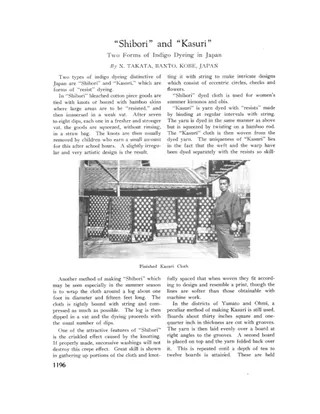
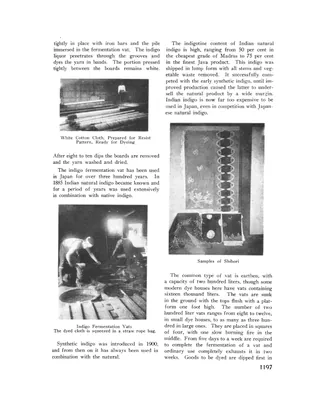
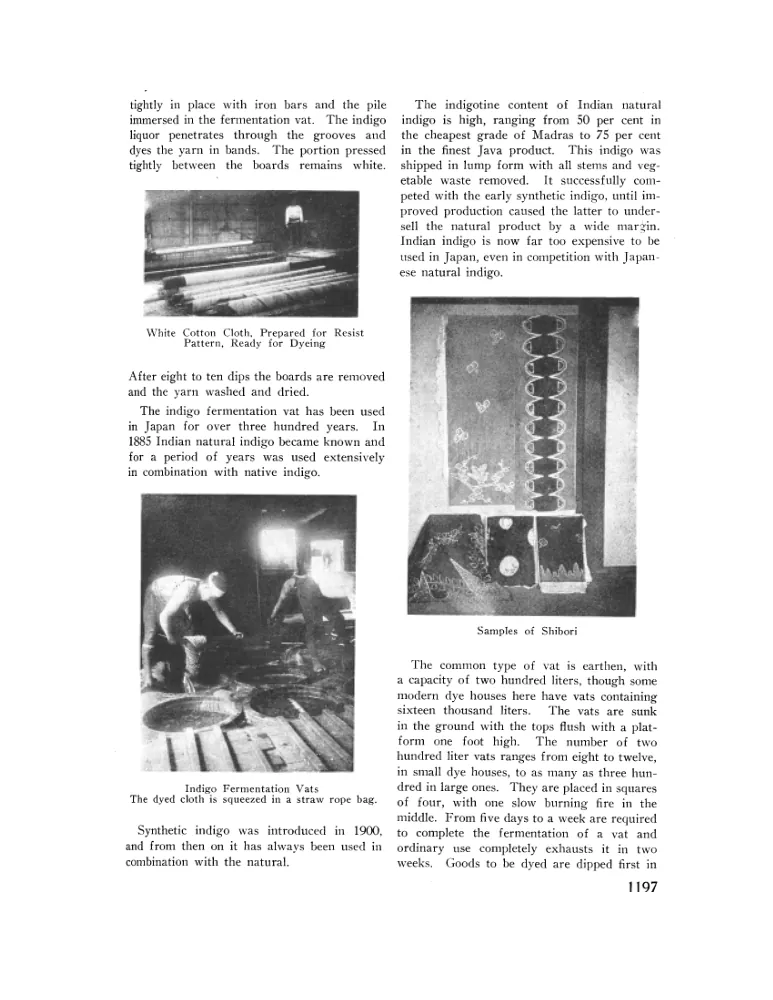
A short 1930 article by N. Takata describing two Japanese indigo resist-dyeing methods: shibori (tied or bound cloth dyed after piece weaving) and kasuri (yarn resist-dyed before weaving). It covers binding and board-clamping techniques used in Yamato and Ohmi, the dipping sequence through fermentation vats, and the history of natural, Indian and synthetic indigo in Japan. It closes with vat dimensions, a general recipe for a 200-liter vat, and temperature control. Photographs show finished kasuri cloth, prepared resist cloth, indigo vats and shibori samples.
- Type
- Article
- Date
- December 1930
- Language
- English
- Pages
- 3
(A free account is all you need)
From Ralph Griswold's Digital Archive, delivered by the University of Arizona.
Have missing pages or a better copy of this document, or another document to share? Contributing documents »