Weave as Drawn In
Sample pages
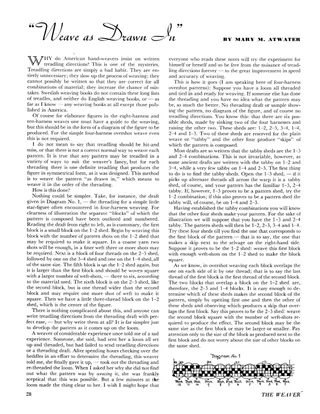
Page 1, at reduced quality. Open the document to read every page in full.
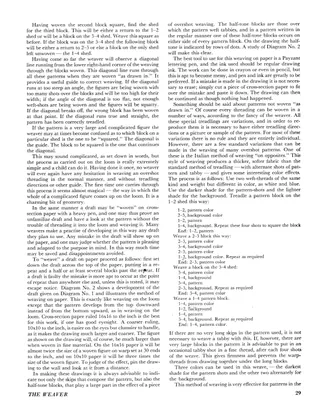
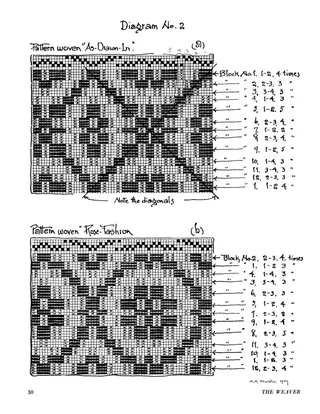
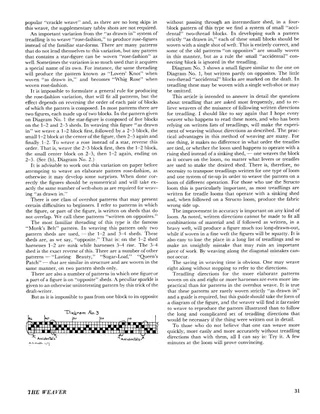
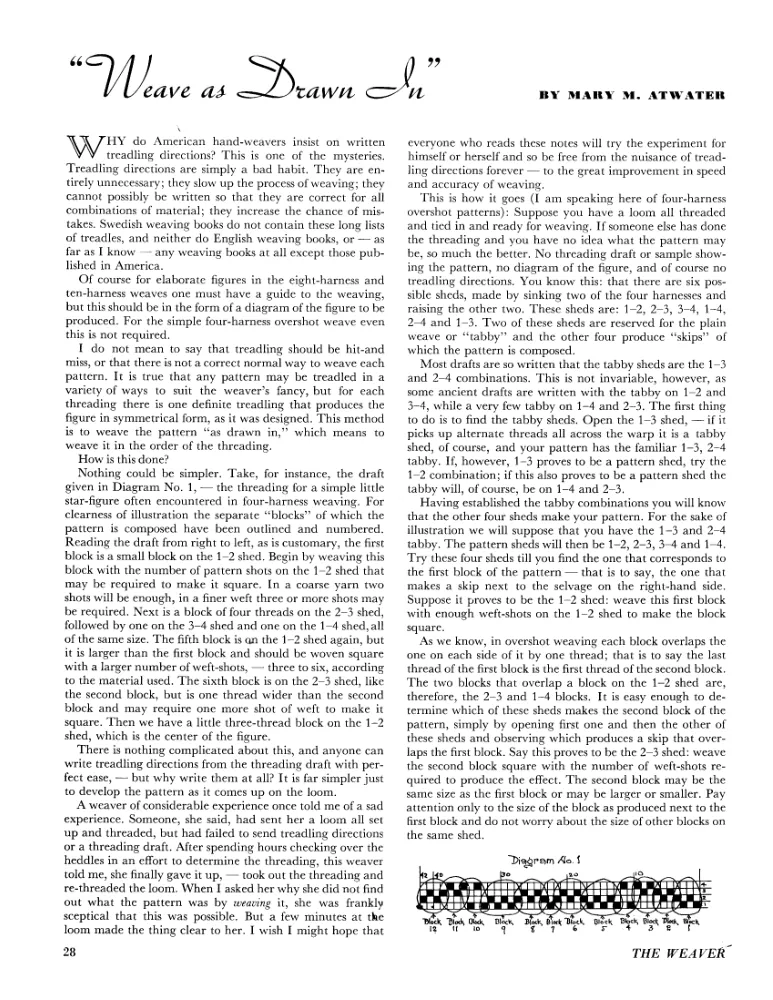
Mary M. Atwater argues that American handweavers should stop relying on written treadling directions and instead weave four-harness overshot patterns "as drawn in," following the order of the threading blocks. She explains how to find the tabby sheds, identify pattern blocks, and use the diagonal line as a guide. She also covers developing a draft on cross-section paper, weaving "on opposites" with two wefts, the "rose-fashion" variation (Lovers' Knot becoming Whig Rose), and small accidental blocks in patterns like Monk's Belt. Three diagrams illustrate the methods.
- Type
- Article
- Date
- April 1937
- Language
- English
- Pages
- 4
- Weaving drafts
- on 3 pages: 1, 3, 4
- Archive notes
- PDF provided by Judith Combs.
(A free account is all you need)
From Ralph Griswold's Digital Archive, delivered by the University of Arizona.
Have missing pages or a better copy of this document, or another document to share? Contributing documents »