Summer and Winter Weave on a 6-Harness
Sample pages
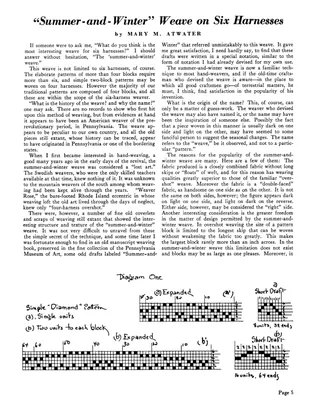
Page 1, at reduced quality. Open the document to read every page in full.
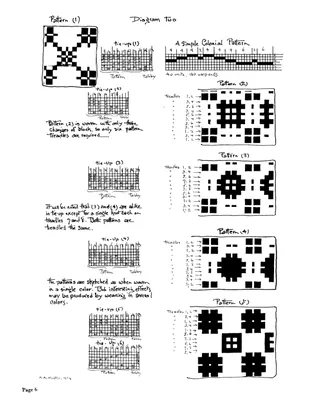
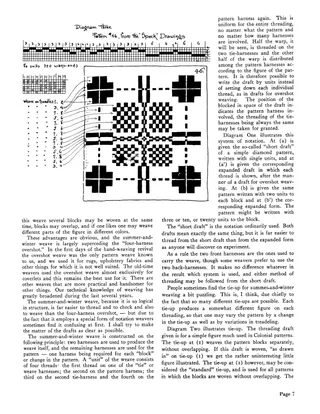
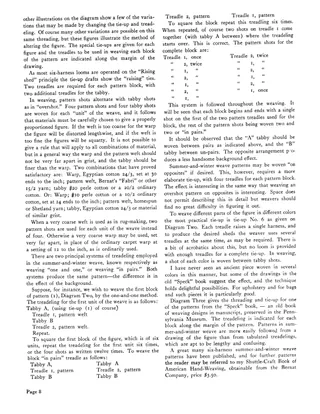
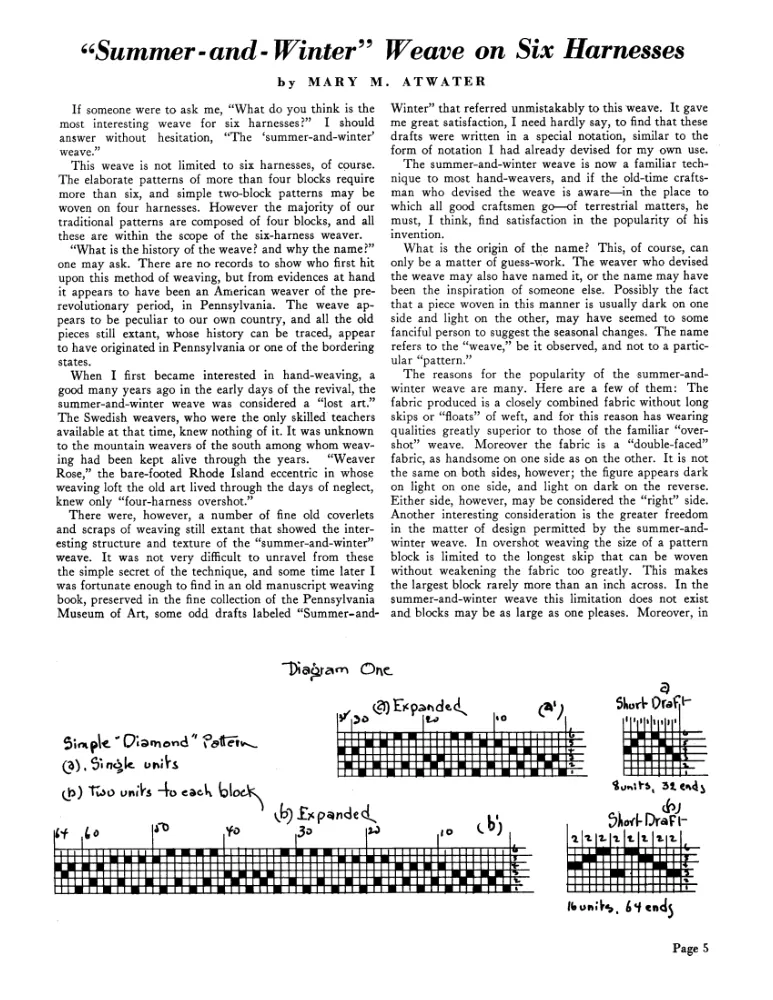
Mary M. Atwater's article explains summer-and-winter weave on six harnesses: its probable Pennsylvania origin, the name, and why it is more durable and more flexible in block size than overshot. It describes the unit structure (two tie harnesses plus pattern harnesses), the short-draft notation, tie-ups, treadling "one and one" and "in pairs", yarn choices and sett, and weaving in several colors. Three diagrams give a simple diamond pattern in short and expanded drafts, a Colonial pattern with variant tie-ups and treadlings, and pattern #46 from the Speck manuscript.
- Type
- Article
- Date
- January 1938
- Language
- English
- Pages
- 4
- Weaving drafts
- on 3 pages: 1, 2, 3
- Archive notes
- PDF provided by Judith Combs.
(A free account is all you need)
From Ralph Griswold's Digital Archive, delivered by the University of Arizona.
Have missing pages or a better copy of this document, or another document to share? Contributing documents »