Light for the Colorist, Part 2
Sample pages
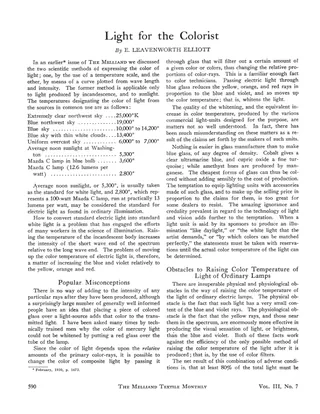
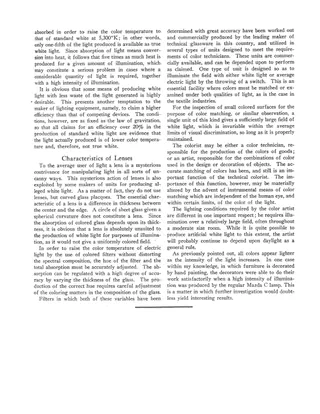
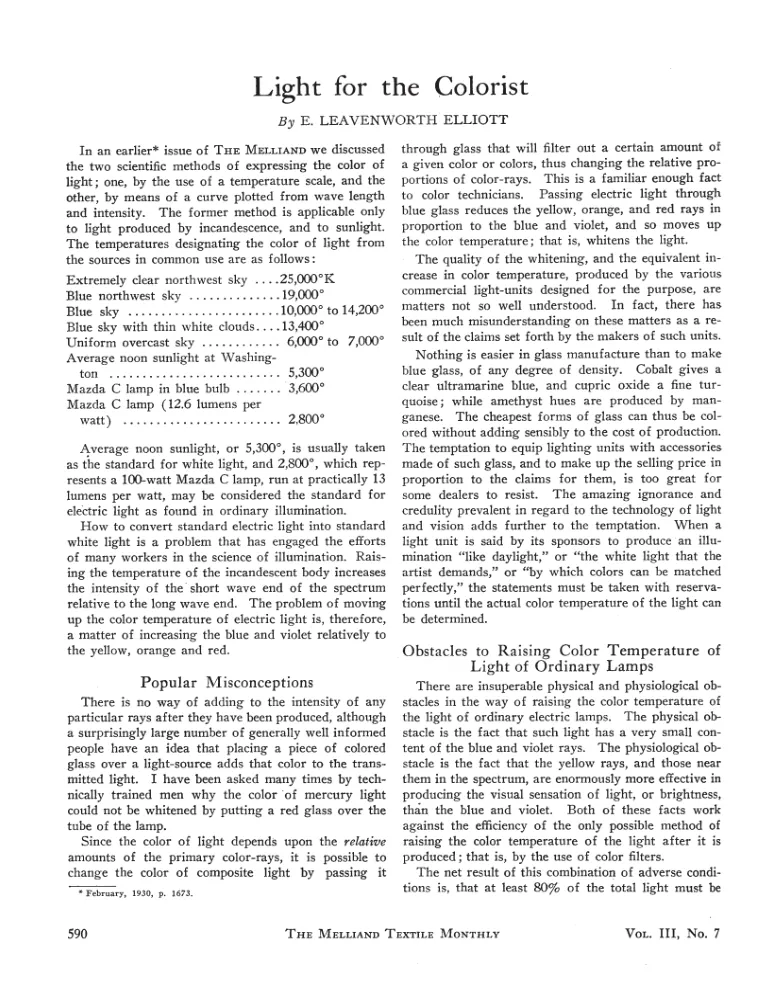
Page 1, at reduced quality. Open the document to read every page in full.
An article on artificial and natural light as it affects color matching and color work in the textile industry. It reviews color temperature scales for common light sources, the standard of 5,300°K noon sunlight for white light and 2,800°K for ordinary electric light, and why blue glass filters can whiten electric light only by absorbing at least 80% of it. It warns against exaggerated claims by makers of 'daylight' lamps, explains the difference between lenses and curved glass placques, and discusses the differing lighting needs of the technical colorist and the artist.
- Type
- Article
- Date
- October 1931
- Language
- English
- Pages
- 2
(A free account is all you need)
From Ralph Griswold's Digital Archive, delivered by the University of Arizona.
Have missing pages or a better copy of this document, or another document to share? Contributing documents »