Drawdown Automata, Part 2: Neighborhoods and State-Transition Rules
Sample pages
Page 1, at reduced quality. Open the document to read every page in full.
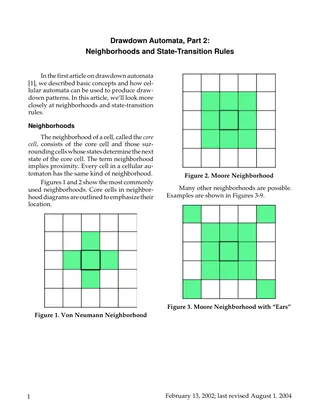
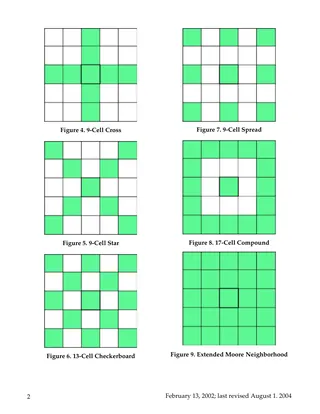
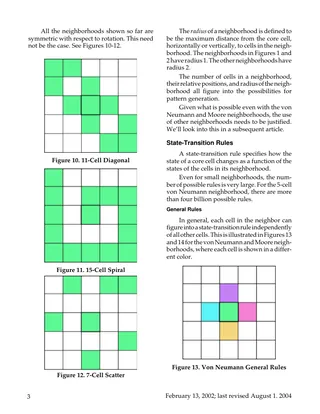
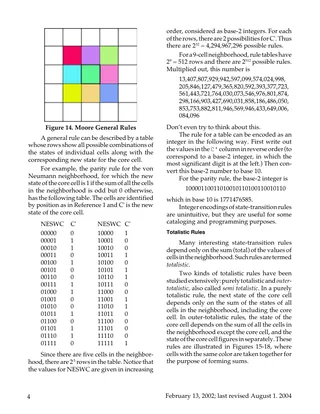
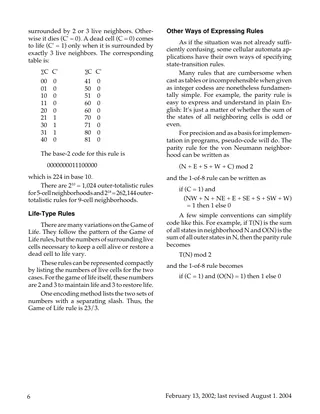
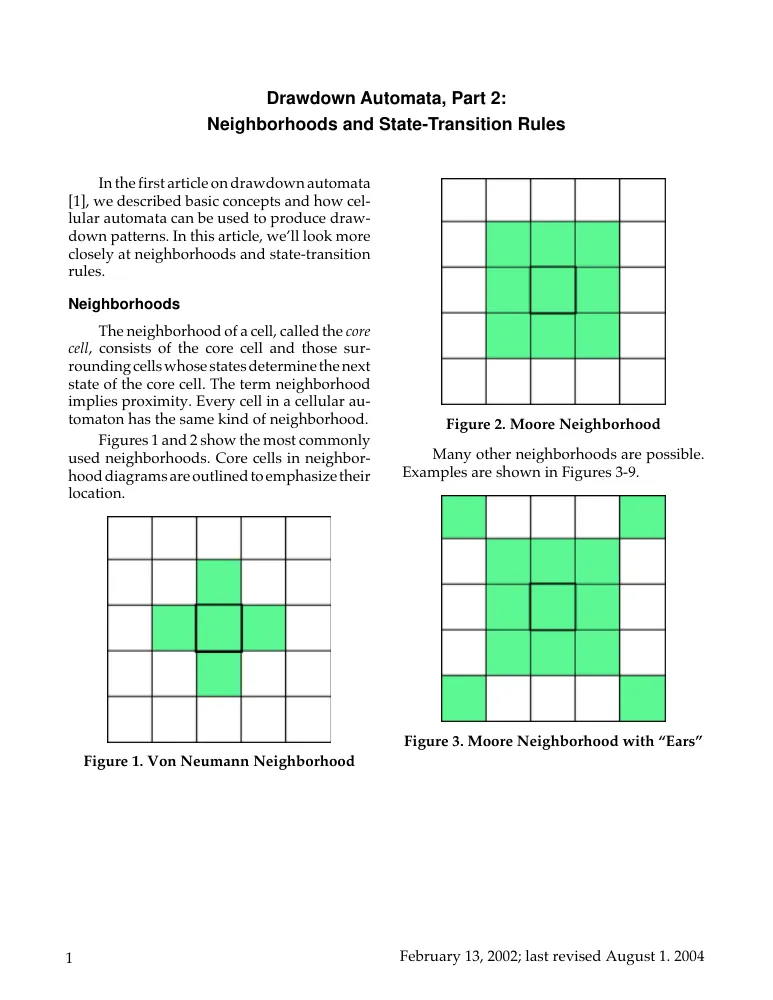
Second article in Ralph Griswold's series on drawdown automata, using cellular automata to generate weaving drawdown patterns. It explains neighborhoods (von Neumann, Moore, and many other shapes, with radius and symmetry) and state-transition rules: general rules, totalistic and outer-totalistic rules, Life-type rules, and alternative ways to express rules such as integer codes and pseudo-code. Worked examples use the parity rule and Conway's Game of Life, and the figures are grid diagrams of neighborhoods.
- Type
- Web Doc
- Date
- February 13, 2002
- Language
- English
- Pages
- 7
- Archive notes
- Last revised August 1, 2004
(A free account is all you need)
From Ralph Griswold's Digital Archive, delivered by the University of Arizona.
Have missing pages or a better copy of this document, or another document to share? Contributing documents »