Textile Documents › Publications › Publication: International Textbook Co.
70 documents found
Sort: 
Analysis of Cotton Fabrics
Monograph · 26 pages · weaving drafts
An International Correspondence Schools instruction paper (Serial 503) on analyzing a cotton cloth sample so it can be reproduced. It covers finding the warp and filling patterns, picking out the weave on design paper, and deriving the harness (drawing-in) draft and chain draft, using a worked example that combines plain weave with a 5-end warp satin in a striped cloth. Later sections cover determining the face of the fabric, the warp direction, yarn twist (with a twist counter), take-up, number of beams required, and chemical and burning tests to identify fibers such as cotton, wool and silk.
Analysis of Woolen and Worsted Fabrics
Monograph · 28 pages · weaving drafts
An International Correspondence Schools instruction paper (Serial 504) on analyzing woolen and worsted cloth samples so they can be reproduced in a mill. It covers making out warp and filling patterns, picking out the weave on design paper, and deriving the harness (drawing-in) draft and chain draft. It also treats finding face and back, warp and filling, twist direction and amount, shrinkage allowances, number of beams, and identifying fibers (wool vs. worsted, silk, linen, cotton, union fabrics) by burning and chemical tests.
Beam Warpers
Monograph · 30 pages
An International Correspondence Schools instruction paper on beam warpers used in preparing cotton warps after spooling. It describes the parts of the Entwistle and Draper warpers: creels, expansion combs, drop and rise rolls, stop-motions, measuring motions, slow-motion gearing, cone drive and beam doffer. It closes with speed calculations, management of warping rooms, production estimates and a table of pounds warped in 60 hours by yarn number and number of ends.
Box Motions
Monograph · 31 pages · weaving drafts
An International Correspondence Schools instruction paper on drop-box motions for power box looms, which carry several shuttles of different filling colors. It describes the Crompton 4x1 box motion in detail: picker connection, lifting lever, star gear, front and back shafts, box chain, multiplier motion and still box motion. It also explains how to build box chains from a filling draft and how to time, level and adjust box looms, and closes with power and speed figures. Illustrated with mechanical line drawings and one box-chain draft.
Burr Picking
Monograph · 25 pages
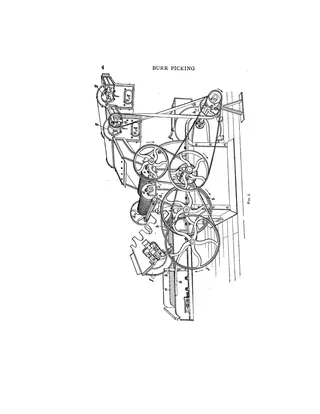
An International Correspondence Schools instruction paper (Serial 472) on burr picking, the first mechanical operation applied to scoured and dried wool to remove burrs, twigs and other vegetable matter before carding. It describes the Parkhurst, Sargent multiplex, single burr-cylinder and Goddard (Curtis and Marble) burr pickers, covering feed-rolls, picking and burr cylinders, burr guards, brushes, beaters, blowers, drives, speeds and capacities. It also gives burr wire types and advice on setting, cleaning, oiling, safety and the gauze room.
Burr Picking
Monograph · 27 pages
An instructional section (§30) from an International Textbook Co. correspondence course on burr picking, the first operation wool undergoes after scouring and drying. It explains why burrs and shives must be removed before carding, then describes the Parkhurst, single burr-cylinder, and Goddard (Curtis and Marble) burr pickers: their construction, drives, speeds, capacities and operation. It closes with sections on management, setting, the gauze room, and examination questions. Illustrated with line drawings of the machines, a burr wire table, and drive diagrams.
Carbonizing
Monograph · 18 pages
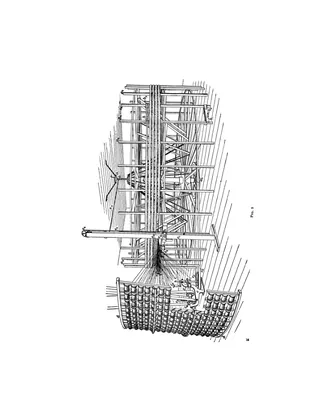
An International Correspondence Schools-style textbook section (§31) on carbonizing, the chemical removal of burrs and other vegetable matter from wool. It covers the sulphuric-acid, hydrochloric-acid, aluminum-chloride and magnesium-chloride processes, with solution strengths, drying temperatures and neutralizing. It also describes the compressed-air soaking apparatus, the carbonizing duster with crush rolls, and Sargent's low feed attachment, and carbonizing of cloth and rags. It ends with examination questions.
Chain Warping: Part 1
Monograph · 41 pages
An International Correspondence Schools instruction paper on chain warping, the industrial method of making warp yarn into loose ropes (chains) for bleaching, dyeing and sale. It explains short- and long-chain systems, spooling, thread and pin leases, and five warping methods: hand warping, warping mills, balling warpers, Denn warpers and Walcott warpers. Most of the text covers the construction and operation of the balling warper and its attachment, including traverse and winding motions, lease clock measuring and gear calculations. It ends with examination questions for students.
Chain Warping: Part 2
Monograph · 49 pages
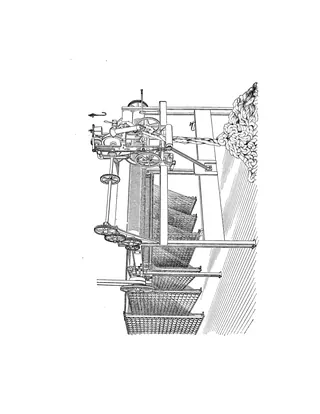
Part 2 of an International Correspondence Schools textbook on chain warping for cotton and similar mills. It describes the construction and operation of the Denn warper: creels, mechanical and electrical stop-motions, leasing harnesses (thread and pin leases), measuring rolls, the linker head, balling attachments and the measuring motion with gear calculations. It also covers chain weight calculations, Walcott warpers, Entwistle-type long-chain beaming machines, and quilling machines, ending with notes on oiling, cleaning and care of the machines. Illustrated with many mechanical line drawings.
Cloth Rooms
Monograph · 78 pages
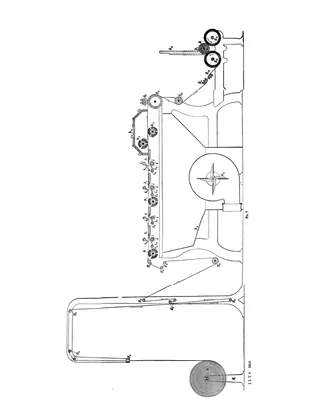
An International Correspondence Schools instruction text (Serial 500A) on the cloth room of an American cotton mill, covering what happens to woven cloth between the loom and shipment. Part 1 covers cloth checking, sewing-and-rolling machines, shearing and brushing machines, shear grinders, cotton brushers and calender-rolling. Part 2 covers trimming-and-inspecting machines, cloth folders and measuring motions, stamping, baling and shipment, and cloth inspection for weaving faults such as mispicks, floats, slubs and smashes. Machine descriptions are illustrated with many line drawings of mechanisms.
Cloth Rooms, Part 1 (Monograph 500A)
Monograph · 41 pages
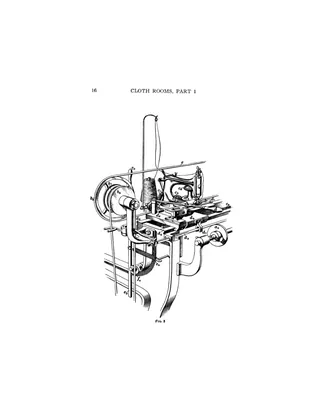
Part 1 of an International Textbook Company instruction text on the cloth rooms of American cotton mills, covering the processes cloth goes through after leaving the loom. It lists the operations (checking, inspecting, sewing, rolling, brushing, scraping and beating, shearing, calendering, folding, stamping, ticketing, baling) and discusses cloth-room layout and management. It then describes in detail the sewing-and-rolling machines, portable sewing machines, shearing-and-brushing machines, shear grinders, cotton brushers and calender-rolling arrangements, with numbered line drawings of the mechanisms.
Cloth Rooms, Part 2 (Monograph 500B)
Monograph · 38 pages
Part 2 of an International Textbook Company instruction paper on cotton mill cloth rooms. It describes trimming-and-inspecting machines, cloth folders and their measuring motions, measuring attachments, stamping, baling and presses for domestic and foreign shipment, and shipment in rolls or cases. It also covers cloth inspection (faults, grading into firsts and seconds, inspector's tools and spot removal), a summary of cloth-room processes, and a set of examination questions. Line drawings illustrate the machines and tools.
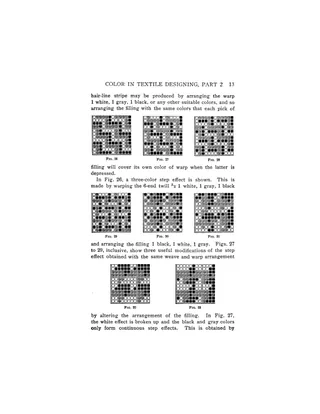
Color in Textile Designing
Monograph · 94 pages · weaving drafts
An International Correspondence Schools instruction text on color in textile design, bound in three parts. Part 1 covers color theory, classification and attributes of colors, factors that modify the color of fabrics, and how to make and analyze color effects on design paper. Part 2 treats regular and irregular simple and compound colorings in warp and filling on plain, twill and basket weaves. Part 3 covers stripes, hair lines, checks, overchecks, set checks, shaded checks, Scotch plaids with tartan thread counts, and spots. Many pages carry drawdown grids, color-order tables, and a few plates of striped samples, with practice examples after each section.
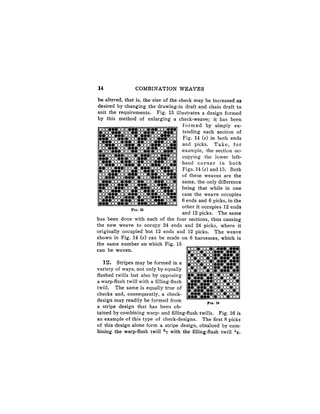
Combination Weaves
Monograph · 27 pages · weaving drafts
An International Correspondence Schools instruction paper on building new fabric designs by joining whole repeats of different weaves. It explains how weaves must be matched in interlacing so they weave evenly and how to make them 'cut' where they join. It then covers stripe weaves from warp- and filling-flush twills and satins, single-end stripes, and check-weaves made by extending stripes, reversing or transposing a weave, or combining weaves of different structure. The last sections cover weaves built from motives and the four-change method of originating weaves, with drafts, drawing-in drafts and practice examples throughout.
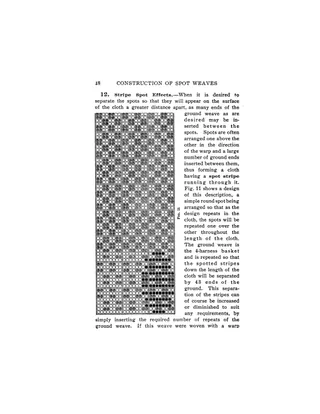
Construction of Spot Weaves
Monograph · 26 pages · weaving drafts
An International Correspondence Schools instruction pamphlet (Serial 509) on designing spot weaves. It explains how to lay out spots in plain, satin and broken crow order on design paper and how to choose and fit ground weaves, covering both warp-spot and filling-spot weaves, including corkscrew and cord grounds. It then treats spots formed by an extra warp or extra filling, with tying of floats, stripe spot effects, and harness and chain drafts. Practice examples follow each section, and many pages carry design-paper drawdowns and drafts.
Cotton Manufacture: How We Train People for First-Class Positions in Cotton Manufacture and Fabric Designing
International Textbook Co., c. 1901-1903
Monograph · 29 pages
Promotional booklet from the International Correspondence Schools (Scranton, PA) describing its textile correspondence courses after it acquired the American Correspondence School of Textiles of New Bedford, Massachusetts. It covers the school's history, faculty, teaching method and student aid, then lists the cotton manufacture and textile designing courses with subject lists and detailed synopses (carding, spinning, warp preparation, plain and fancy weaving, fabric design, color, and mill engineering). It is a period advertising and curriculum document rather than a weaving instruction text.
Cotton Slashing, Part 1
Monograph · 83 pages
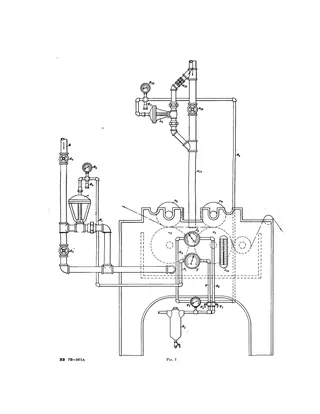
An International Textbook Company instruction paper (Serial 5473A, Part 1) on cotton slashing, the sizing and drying of warp yarn and winding onto loom beams in cotton mills. It covers the purposes of slashing and sizing, slasher types, creels, size boxes, squeeze rolls, steam connections, drying cylinders and condensate removal, automatic size-level and temperature controls, drives, beam pressers and measuring motions. Later sections describe high-speed slashing systems with stretch control and movable creels, and automatic size-cooking and size-room equipment. It is illustrated with engineering drawings and piping diagrams and contains no weaving drafts.
Cotton Slashing, Part 2
Monograph · 87 pages · weaving drafts
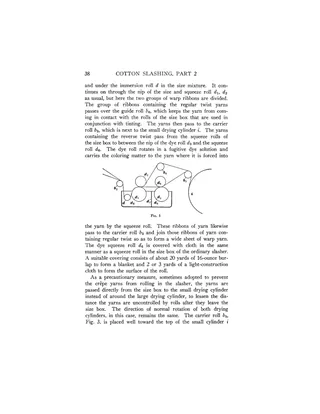
An International Textbook Company instruction paper on cotton slashing (warp sizing), Part 2, covering sizing materials and slasher operation. It describes starches, softeners, gums and weighting agents, size preparation and cooking, creeling section beams, and running a slasher. Later sections deal with slashing sheeting, crepe and colored warps, drawing-in, and slasher calculations such as production, yarn speed and cylinder temperature, size pickup, and cut markers. Illustrated with slasher diagrams, tables, and a few colored-warp and harness drafts.
Designing in General
Monograph · 18 pages · weaving drafts
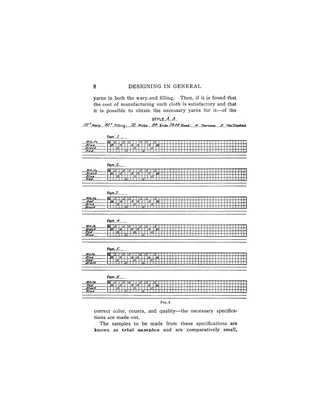
An International Correspondence Schools instruction paper on the work of a textile mill designer and the mill's sample-making department. It covers the designer's duties, the equipment of the designer's room and sample weave room (yarn and cloth testing machines, reels, sample books), how new styles originate, and how trial and selling samples are made. Procedures described include blanket warps, warping on pegs from a creel, beaming, drawing in, weaving, and tying over warp ends to get more samples from one warp. The one page marked as a draft is a set of color-order specifications for six warp patterns, not a weave draft.
Dobbies
Monograph · 37 pages · weaving drafts
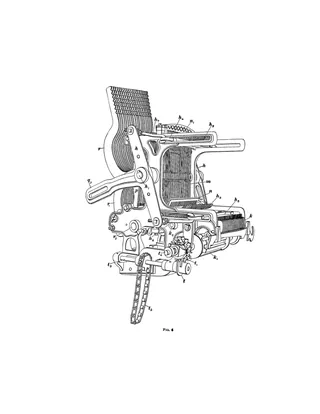
An International Correspondence Schools instruction paper (Serial 495) on dobby shedding mechanisms for power looms. It describes open, close, split and compound sheds, then the construction, drive and operation of single-cylinder dobbies and their variations (positive/non-positive, single- and double-lift, single- and double-index, pawl-and-ratchet drive, right- and left-hand). It also covers the double-cylinder dobby with repeat motion, building and pegging harness chains, and timing, setting, skipping faults, and power and speed.
Elementary Textile Designing
Monograph · 31 pages · weaving drafts
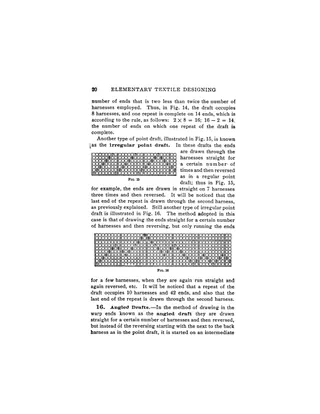
An International Correspondence Schools instruction paper (Serial 502) introducing the fundamentals of textile designing for woven fabrics. It explains warp and filling, plain weave, design paper, and how to indicate a weave on it, then covers harness (drawing-in) drafts, chain (pegging) drafts, and the effect of the weave on the cloth. Standard draft types (straight, point, irregular point, angled, skip, satin, section) are described with numbered figures, followed by how harness and chain drafts combine to produce the woven effect and practical points for constructing harness drafts. Practice exercises are included.
Fixing Looms
Monograph · 31 pages
An International Correspondence Schools-style instruction paper (Serial 492, Section 57) on setting up, adjusting and maintaining power looms in a mill weave room. It covers erecting looms, tying in warps, and setting the shed, harness cams, lease rods, warp line, picking cams, lug straps, pickers, binders, shuttles, protector and filling stop-motions, temples, and let-off and take-up motions. Later sections troubleshoot banging off, shuttles flying out, thin places, filling kinks and cut filling, and warp defects such as poorly sized yarn and knots, and close with the duties of the loom fixer. Two diagrams illustrate the warp line and shed.
Glossary of Weaves
Monograph · 36 pages · weaving drafts
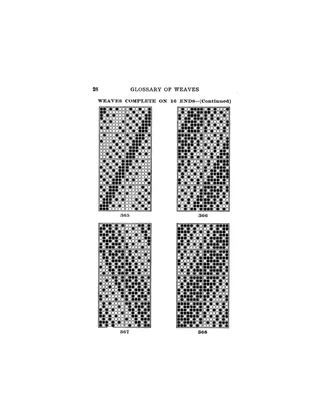
A glossary of 400 numbered weave diagrams from an International Correspondence Schools textbook, arranged by the number of ends on which each weave is complete, from 2 up to 24. A short introduction explains that the weave determines both the structure and the appearance of a cloth, and that the collection is meant to help designers select or adapt a weave. The rest of the booklet is almost entirely pages of small drawdown grids with only their numbers as text.
Jacquards
Monograph · 127 pages · weaving drafts
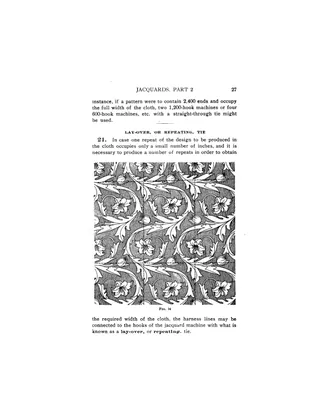
An International Correspondence Schools instruction text on jacquard machines in three parts (Serials 498A, 498B, 498C). Part 1 covers construction and operation of single-lift and double-lift jacquards, including hooks, needles, cylinder motions, griffs, and fixing and timing. Part 2 covers harness tying: comber boards, couplings, building and varnishing harnesses, and straight-through, lay-over, centered, and combination ties. Part 3 covers card cutting on the piano machine, reading designs, cutting a set of cards, hand and automatic lacing, and automatic repeating machines. Illustrated with many mechanical line drawings and a few tie diagrams.
Laces
Monograph · 50 pages
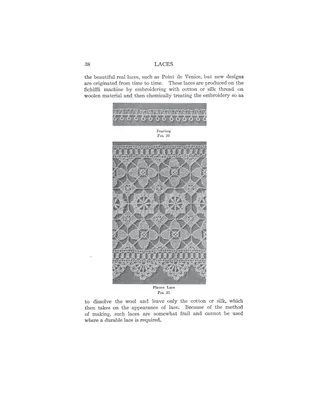
A textbook chapter on laces from a home-study course, covering the history and origin of lace, hand methods (needle-point and bobbin) and machine methods (woven and Schiffli embroidery lace), and a glossary of lace terms. Most of it is an alphabetical, numbered guide to lace types from Alençon and Algerian to Venetian, describing each one's character, materials, uses and wearing qualities. Many photographs pair hand-made and machine-made examples of each lace.
Leno Attachments
Monograph · 38 pages · weaving drafts
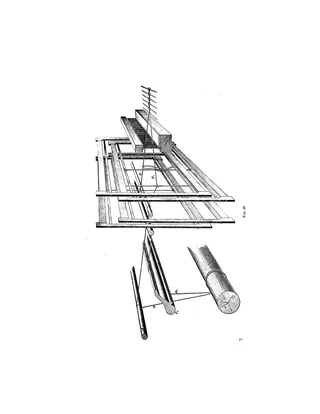
An International Correspondence Schools instruction paper (Serial 496) on the mechanical leno (gauze) attachments used on dobby looms. It explains the doup and standard harnesses, bottom and top doups, drawing in, reeding, and the slackener or easer for single-lift (close-shed) dobbies. It then covers double-lift (open-shed) dobbies with the jumper and yoke, harness-chain pegging plans, and the fixing and setting of these motions. It ends by comparing American and European drawing-in methods. Illustrated with numbered figures of harness and mechanism drawings and four chain drafts.
Leno Weaves
Monograph · 66 pages · weaving drafts
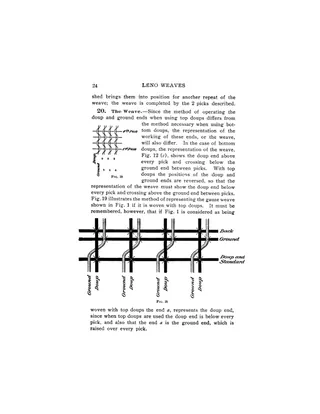
An International Correspondence Schools instruction paper (Serial 512) on leno, or gauze, weaves as woven on dobby looms. It covers plain gauze with bottom and top doups on close-shed and open-shed looms, including the standard, doup, ground and back harnesses, the slackener, jumper and yoke, and how to write harness and chain drafts. The second half treats fancy gauze: combinations of right- and left-hand doups, multiple picks before douping, multiple doup or ground ends, several sets of doups, combinations with plain weaves, effects without extra mechanisms, and dissecting leno cloth. It is illustrated with many mechanism drawings, weave diagrams and chain and drawing-in drafts.
Loom Attachments
Monograph · 29 pages
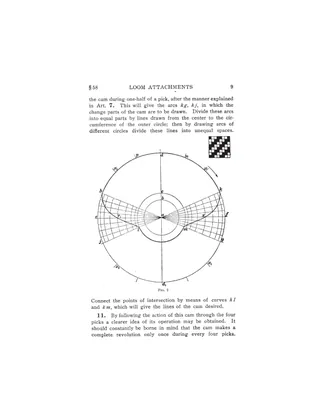
An International Textbook Company instruction paper (Serial 493) on loom attachments for cam looms, covering undercams for three- to six-harness work. It explains how to construct cams for 3/1 and 2/2 twills and five-harness satin, the auxiliary shafts and gear calculations that set cam speed, and the harness-roll (strap-and-roller) arrangements. It also describes plain and tape selvage motions, side-cam motions, and continuous take-up motions, with many mechanical diagrams.
Loom Attachments
Monograph · 31 pages · weaving drafts
An International Textbook Co. instruction paper (section 58) on undercam loom attachments for three- to six-harness work. It explains how cams are constructed for 3/1 twill, 2/2 twill and five-harness satin, and how auxiliary shafts and gearing give the right cam speed. It then covers harness rolls and strap arrangements, plain and tape selvage motions, side cams and continuous take-ups. The paper includes construction diagrams, gear calculations and examination questions.
Mill Engineering, Part 1
Monograph · 70 pages
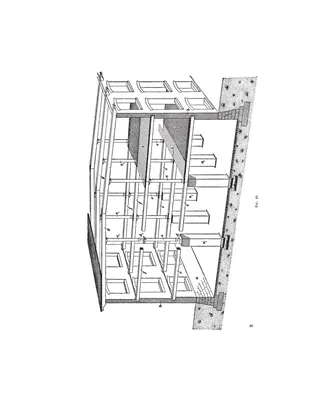
Part 1 of an International Textbook Co. instruction paper on mill engineering, covering the construction of textile mill buildings. It treats site selection (labor, markets, transportation, fuel, water supply), soils and foundations, footings, piles, foundation walls, mortar, brick and bricklaying, bonds, and measuring brickwork. It ends with slow-burning interior construction (floors, columns, roofs, monitors, fire-doors, windows) and a set of examination questions. It is illustrated with line drawings of footings, walls, bonds, piers, and a chimney; it is about building construction rather than weaving.
Mill Engineering, Part 2
Monograph · 81 pages
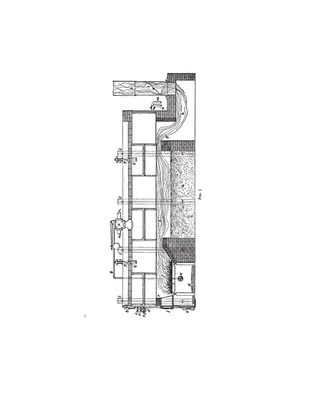
Part 2 of an International Textbook Company instruction text on mill engineering, covering the auxiliary equipment of a textile mill rather than the textile machinery itself. It describes steam power (types of boilers, feedwater heaters, safety valves and gauges, grates, simple, Corliss and compound steam engines, governors, condensers), water-power and turbine types, direct and indirect heating, ventilation, electric lighting, fire protection (hydrants, Underwriters' pump, sprinklers) and plumbing. Many engineering line drawings accompany the text, and the section ends with examination questions.
Mill Engineering, Part 3
Monograph · 34 pages
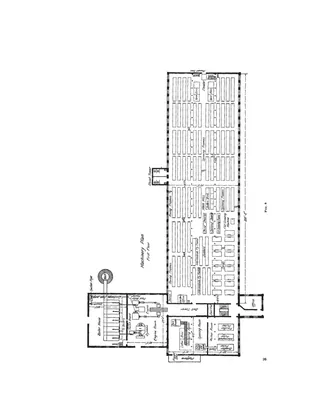
An International Textbook Company instruction paper (Part 3 of Mill Engineering) on planning a cotton mill. Using a worked example of a 10,000-spindle mill making 4-yard goods from 28s warp and 36s filling, it calculates the mill's organization (drafts, doublings, hanks), the number of machines at each process from picking through weaving, floor space, machinery cost, total cost, and floor-plan layout. It also lists mill supplies by department and ends with examination questions.
The Northrop Loom
Monograph · 82 pages
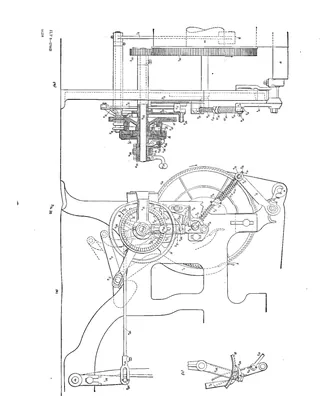
An International Correspondence Schools instruction paper on the Northrop automatic loom, in two parts. Part 1 covers construction and operation: the hopper or magazine, transferring mechanism, shuttle feeler, shuttles and bobbins, temple thread cutter, filling motion, and the feeler filling-changing device. Part 2 covers warp stop-motions (cotton-harness and steel-harness), take-up let-back, cut motion, and the Draper-Roper let-off motion. It then gives loom-fixing instructions for adjusting and timing these mechanisms, a table of recommended speeds by cloth width, loom arrangement, and the range of application of the Northrop loom. Illustrated with line drawings of mechanisms.
Pile Weaves
Monograph · 36 pages · weaving drafts
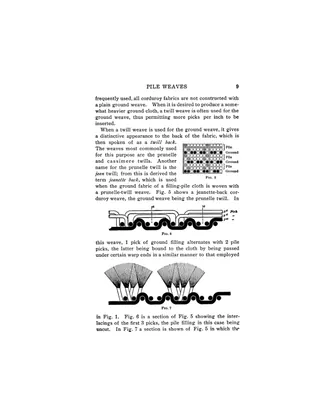
An International Correspondence Schools instruction paper (Serial 513) on the construction of pile fabrics, divided into filling-pile and warp-pile types. It covers corduroys, velveteens, figured filling-pile designs, velvets, double plushes, terry towels, and figured warp-pile fabrics including tapestry, Brussels and Wilton carpets. It explains how the pile is bound, cut and finished, and gives many weave drafts and cross-section diagrams, plus practice examples.
Plain Looms
Monograph · 46 pages
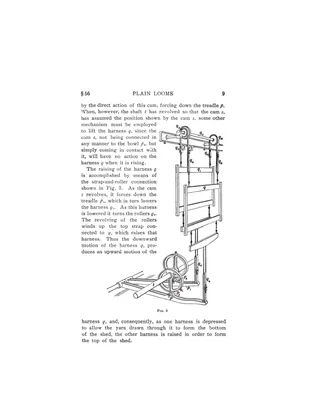
An International Correspondence Schools-style instruction paper (Serial 491, Section 56) explaining the construction and operation of the plain power loom, as used for cotton weaving in the early 1900s. It covers the three primary motions (shedding by cams, picking with the cone pick, beating up with the lay) and the auxiliary motions: let-offs (Bartlett and Morton), take-up, filling stop-motion, brake, temples, shuttle protector and loose reed. It ends with practical notes on loom drive, power requirements and calculations for take-up change gears and loom production. Illustrated with line drawings of mechanisms and cam constructions.
Reeling and Baling
Monograph · 35 pages
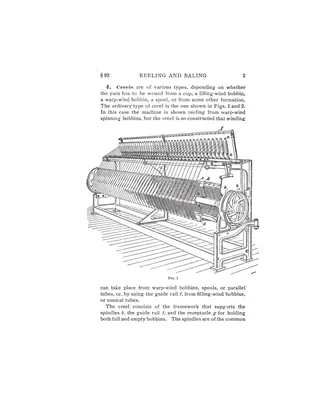
An International Textbook Co. instruction paper (section 92) on reeling yarn into skeins and hanks and baling it for sale and shipment. It covers reel construction (creel, swift, traverse, measuring and stop motions), methods of reeling (plain, cross, grant, lea, French, skeining), tying and banding skeins, knotting, production calculations, and packing as soft bales, pressed bales, bundles and compressed export bales. It ends with examination questions.
Satin and Other Weaves
Monograph · 22 pages · weaving drafts
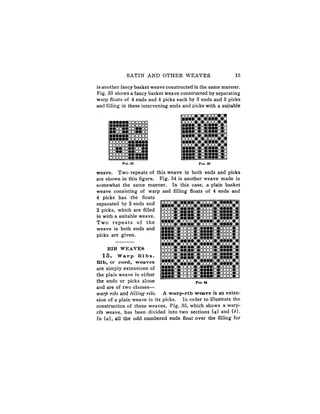
An International Correspondence Schools instruction paper (Serial 507) on the construction of satin weaves and weaves derived from them. It explains how satin bases are chosen, warp- and filling-flush satins, irregular 6-end satins, and double satins, and includes a table of satin orders for 5 to 12 ends. It then covers satin derivatives, granite weaves, basket weaves, warp and filling ribs, unequal ribs, corkscrew weaves, and honeycombs. Most pages carry small drawdown figures, and practice exercises follow two of the sections.
Silk Testing, Part 2 (Monograph 5001B)
Monograph · 48 pages
Instruction paper from the International Correspondence Schools on laboratory testing of raw silk, covering the winding test, the sizing tests (regular 450-meter, American 225-meter, conditioned and compound) and the cohesion test. It describes sampling, preparing and weighing skeins, computing breaks per 100,000 yards, range and average denier, and the machines used (winding frame, sizing reel, quadrant balance, cohesion-card winder and cohesion machine). It includes illustrated apparatus, sample laboratory record forms and certificates, grading tables, and a set of examination questions for students.
Silk Testing, Part 3 (Monograph 5001C)
Monograph · 58 pages
Part 3 of an International Correspondence Schools instruction paper on silk testing, covering additional tests for raw and thrown silk. It describes the serimeter test (breaking strength and evenness), the serigraph test (strength, elasticity, elongation), the gauge test for defects and cleanness, the twist test, the mirror test for evenness, and the measuring test for skein length. Each section explains the apparatus, sampling, procedure, laboratory record forms and testing-house certificates, with worked rules and examples. Examination questions are at the end.
Silk Throwing, Part 1 (Monograph 5002A)
Monograph · 42 pages
An International Correspondence Schools instruction paper (Part 1 of Silk Throwing, 1924) covering the preparation of raw silk into thrown yarns. It compares throwing with spinning, describes organzine and tram yarns and their twist, and covers receiving, weighing, opening, storing, examining and sorting bales of raw silk. The main section covers soaking: soap and oil solutions, making up bundles of skeins, soaking tubs and equipment, and a soap-slicing box. It ends with examination questions and a supplies advertisement.
Silk Throwing, Part 10 (Monograph 5002J)
Monograph · 66 pages
Instruction paper from International Correspondence Schools on the final stages of silk throwing, covering inspection, bundling, wrapping and shipping of thrown silk. It also covers coning, copping and quilling, and the characteristics and production of tram, organzine, hosiery tram, floss, grenadine and hard-twist crepe yarns such as georgette. Later sections treat twist testing, humidity control, soaking, clearances and waste, commission throwing, calculation of throwing prices, and the rules governing commission throwing. It ends with examination questions and includes drammage tables and drawings of bundling boxes, presses, knots, cones and a twist counter.
Silk Throwing, Part 2 (Monograph 5002B)
Monograph · 48 pages
Part 2 of an International Correspondence Schools instruction paper on silk throwing, continuing the section on opening, soaking, and drying raw silk. It covers the choice and testing of soaps and oils for soaking solutions, typical soaking formulas, absorption, tinting for yarn identification, hard water and softening, and oiling of tussah silk. It then describes hydroextractors (self-balancing and gyrating-basket types), rubbing gum spots, winding damp silk, and drying racks and rooms, and ends with 20 examination questions.
Silk Throwing, Part 3 (Monograph 5002C)
Monograph · 47 pages
Part 3 of an International Correspondence Schools instruction paper on silk throwing, devoted to hard-silk winding, the step that unwinds raw silk skeins onto bobbins. It describes the winding frame in detail: swifts (pin-hub, friction-hub, six-arm and geared types), spindles and their springs, winder bobbins, driving cone pulleys, and the traverse motion with its cams, levers and porcelain thread guides. It also covers operating practice such as beating out skeins and starting spindles. The paper opens with advice to the student and closes with 20 examination questions; it has mechanical line drawings but no weaving drafts.
Silk Throwing, Part 4 (Monograph 5002D)
Monograph · 51 pages
Part 4 of an International Correspondence Schools instruction paper on silk throwing, continuing the treatment of hard-silk winding. It describes winder variations (fixed-hanger, variable-speed, drum take-up and double-deck winders), variable-speed transmissions, and the winder operative's work: beating out skeins, placing skeins on swifts, removing lacing strings, starting and tying ends, and doffing bobbins. It also covers bobbin boards, power, cleaning and oiling, defective bobbins (tight, hard, soft, ridgy, lapped, scratched), speed and production calculations, and ends with examination questions.
Silk Throwing, Part 5 (Monograph 5002E)
Monograph · 69 pages
Part 5 of an International Correspondence Schools instruction paper on silk throwing, covering doubling and spinning (twisting) of raw silk. It describes the construction and operation of vertical doublers and of first-time and second-time spinners and twisters: frames, stop-motions, spindles, bobbins, take-up rolls, traverse motions, belts, guides and flyers. It also covers twist direction for organzine and tram, and ends with examination questions. Illustrated with mechanical line drawings.
Silk Throwing, Part 6 (Monograph 5002F)
Monograph · 88 pages
Part 6 of an International Correspondence Schools instruction paper on silk throwing, continuing the treatment of doubling and spinning with spinner machines. It explains how twist is inserted, with twist change gears (tram, organ and crêpe gearing), gear trains and twist calculations with worked examples and change-gear tables. It also covers production and spindle requirements, machine sizes, drive and belt arrangements, double-deck spinners, reversing the direction of twist, spindle oiling, plumbing and belt care, flyer rewiring, and slack twist. It ends with examination questions.
Silk Throwing, Part 7 (Monograph 5002G)
Monograph · 68 pages
Part 7 of an International Correspondence Schools instruction paper on silk throwing, devoted to combination machines, chiefly the two-process doubler-spinner used to make tram. It covers machine construction and drives, ring rails and cam traverse, spinning rings, travelers and spindles, the stop-motion with drop wires and feed-rolls, twist and speed calculations, production figures, adjustment, oiling, and defects such as hard twist and corkscrew threads. It includes numbered sections with worked rules and examples, tables of traveler weights, twist gear charts and production, engineering drawings, and examination questions at the end.
Silk Throwing, Part 8 (Monograph 5002H)
Monograph · 62 pages
Part 8 of an International Correspondence Schools instruction paper on silk throwing, continuing the coverage of combination machines. It describes other makes of doubler-spinner, the spinner-doubler, and three-process machines (spinner-doubler-twister), covering stop-motions, drop wires, feed-rolls, spindle drives and belt tension, gearing, and brakes. It also gives twist and production calculations with worked examples and change-gear tables, plus notes on tying ends and faults such as caterpillars and corkscrew threads, and ends with examination questions.
Silk Throwing, Part 9 (Monograph 5002I)
Monograph · 57 pages
Part 9 of an International Correspondence Schools course on silk throwing, covering reeling, bundling and shipping of thrown silk. It describes silk reel construction (end stands, reel flies, traverse motion, stop-motion, yardage clock and counting wheel), production calculations, and care of reels. It then covers steaming to set twist, lacing skeins, stripping, redrawing, thread cleaners, and shipping bobbins, followed by examination questions. Illustrated with line drawings of machinery and tables of change gears and yardage.
Spoolers: Prepared Especially for Home Study
Monograph · 28 pages
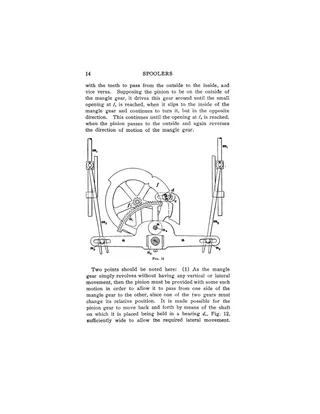
An International Correspondence Schools instruction paper describing the construction, operation, setting and management of the cotton spooler, the machine that winds yarn from spinning-frame bobbins onto spools for the next process. It covers bobbin holders, thread guides, spools and spindles, spindle banding, mangle-gear builder motions, settings and adjustments, and common faults. Worked calculations for spindle speed, change gears and production are included, followed by examination questions for students.
70 documents found