Textile Documents › Authors › Author: Staff, I. C. S.
30 documents found
Sort: 
Analysis of Cotton Fabrics
Monograph · 26 pages · weaving drafts
An International Correspondence Schools instruction paper (Serial 503) on analyzing a cotton cloth sample so it can be reproduced. It covers finding the warp and filling patterns, picking out the weave on design paper, and deriving the harness (drawing-in) draft and chain draft, using a worked example that combines plain weave with a 5-end warp satin in a striped cloth. Later sections cover determining the face of the fabric, the warp direction, yarn twist (with a twist counter), take-up, number of beams required, and chemical and burning tests to identify fibers such as cotton, wool and silk.
Analysis of Woolen and Worsted Fabrics
Monograph · 28 pages · weaving drafts
An International Correspondence Schools instruction paper (Serial 504) on analyzing woolen and worsted cloth samples so they can be reproduced in a mill. It covers making out warp and filling patterns, picking out the weave on design paper, and deriving the harness (drawing-in) draft and chain draft. It also treats finding face and back, warp and filling, twist direction and amount, shrinkage allowances, number of beams, and identifying fibers (wool vs. worsted, silk, linen, cotton, union fabrics) by burning and chemical tests.
Beam Warpers
Monograph · 30 pages
An International Correspondence Schools instruction paper on beam warpers used in preparing cotton warps after spooling. It describes the parts of the Entwistle and Draper warpers: creels, expansion combs, drop and rise rolls, stop-motions, measuring motions, slow-motion gearing, cone drive and beam doffer. It closes with speed calculations, management of warping rooms, production estimates and a table of pounds warped in 60 hours by yarn number and number of ends.
Box Motions
Monograph · 31 pages · weaving drafts
An International Correspondence Schools instruction paper on drop-box motions for power box looms, which carry several shuttles of different filling colors. It describes the Crompton 4x1 box motion in detail: picker connection, lifting lever, star gear, front and back shafts, box chain, multiplier motion and still box motion. It also explains how to build box chains from a filling draft and how to time, level and adjust box looms, and closes with power and speed figures. Illustrated with mechanical line drawings and one box-chain draft.
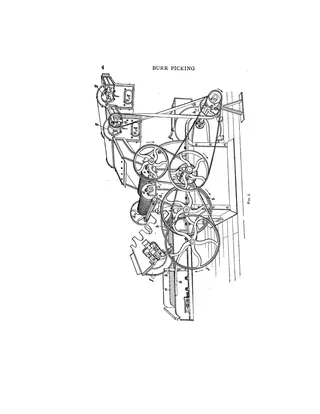
Burr Picking
Monograph · 25 pages
An International Correspondence Schools instruction paper (Serial 472) on burr picking, the first mechanical operation applied to scoured and dried wool to remove burrs, twigs and other vegetable matter before carding. It describes the Parkhurst, Sargent multiplex, single burr-cylinder and Goddard (Curtis and Marble) burr pickers, covering feed-rolls, picking and burr cylinders, burr guards, brushes, beaters, blowers, drives, speeds and capacities. It also gives burr wire types and advice on setting, cleaning, oiling, safety and the gauze room.
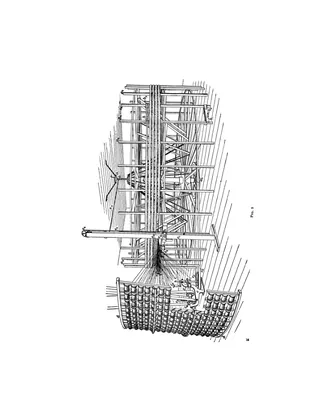
Chain Warping: Part 1
Monograph · 41 pages
An International Correspondence Schools instruction paper on chain warping, the industrial method of making warp yarn into loose ropes (chains) for bleaching, dyeing and sale. It explains short- and long-chain systems, spooling, thread and pin leases, and five warping methods: hand warping, warping mills, balling warpers, Denn warpers and Walcott warpers. Most of the text covers the construction and operation of the balling warper and its attachment, including traverse and winding motions, lease clock measuring and gear calculations. It ends with examination questions for students.
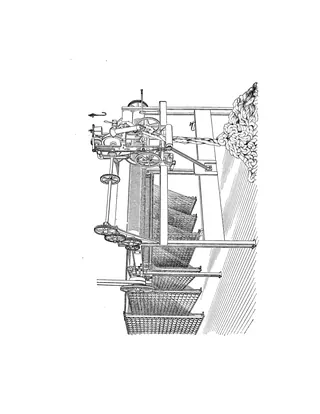
Chain Warping: Part 2
Monograph · 49 pages
Part 2 of an International Correspondence Schools textbook on chain warping for cotton and similar mills. It describes the construction and operation of the Denn warper: creels, mechanical and electrical stop-motions, leasing harnesses (thread and pin leases), measuring rolls, the linker head, balling attachments and the measuring motion with gear calculations. It also covers chain weight calculations, Walcott warpers, Entwistle-type long-chain beaming machines, and quilling machines, ending with notes on oiling, cleaning and care of the machines. Illustrated with many mechanical line drawings.
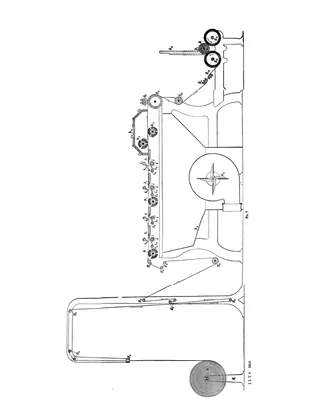
Cloth Rooms
Monograph · 78 pages
An International Correspondence Schools instruction text (Serial 500A) on the cloth room of an American cotton mill, covering what happens to woven cloth between the loom and shipment. Part 1 covers cloth checking, sewing-and-rolling machines, shearing and brushing machines, shear grinders, cotton brushers and calender-rolling. Part 2 covers trimming-and-inspecting machines, cloth folders and measuring motions, stamping, baling and shipment, and cloth inspection for weaving faults such as mispicks, floats, slubs and smashes. Machine descriptions are illustrated with many line drawings of mechanisms.
Color in Textile Designing
Monograph · 94 pages · weaving drafts
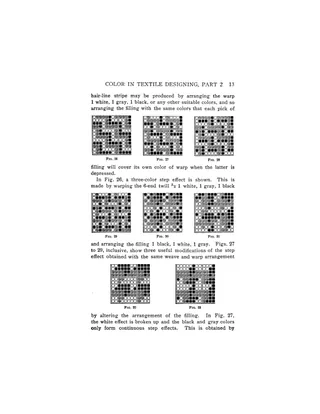
An International Correspondence Schools instruction text on color in textile design, bound in three parts. Part 1 covers color theory, classification and attributes of colors, factors that modify the color of fabrics, and how to make and analyze color effects on design paper. Part 2 treats regular and irregular simple and compound colorings in warp and filling on plain, twill and basket weaves. Part 3 covers stripes, hair lines, checks, overchecks, set checks, shaded checks, Scotch plaids with tartan thread counts, and spots. Many pages carry drawdown grids, color-order tables, and a few plates of striped samples, with practice examples after each section.
Combination Weaves
Monograph · 27 pages · weaving drafts
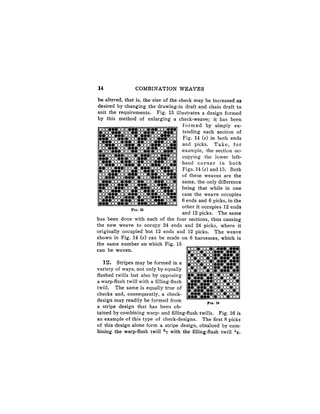
An International Correspondence Schools instruction paper on building new fabric designs by joining whole repeats of different weaves. It explains how weaves must be matched in interlacing so they weave evenly and how to make them 'cut' where they join. It then covers stripe weaves from warp- and filling-flush twills and satins, single-end stripes, and check-weaves made by extending stripes, reversing or transposing a weave, or combining weaves of different structure. The last sections cover weaves built from motives and the four-change method of originating weaves, with drafts, drawing-in drafts and practice examples throughout.
Construction of Spot Weaves
Monograph · 26 pages · weaving drafts
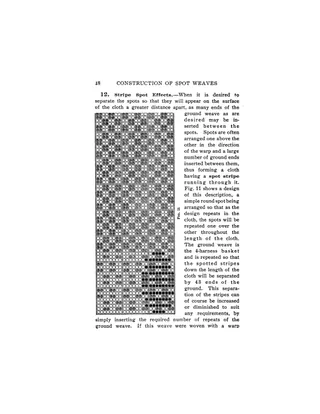
An International Correspondence Schools instruction pamphlet (Serial 509) on designing spot weaves. It explains how to lay out spots in plain, satin and broken crow order on design paper and how to choose and fit ground weaves, covering both warp-spot and filling-spot weaves, including corkscrew and cord grounds. It then treats spots formed by an extra warp or extra filling, with tying of floats, stripe spot effects, and harness and chain drafts. Practice examples follow each section, and many pages carry design-paper drawdowns and drafts.
Designing in General
Monograph · 18 pages · weaving drafts
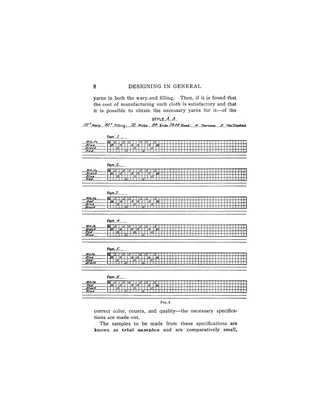
An International Correspondence Schools instruction paper on the work of a textile mill designer and the mill's sample-making department. It covers the designer's duties, the equipment of the designer's room and sample weave room (yarn and cloth testing machines, reels, sample books), how new styles originate, and how trial and selling samples are made. Procedures described include blanket warps, warping on pegs from a creel, beaming, drawing in, weaving, and tying over warp ends to get more samples from one warp. The one page marked as a draft is a set of color-order specifications for six warp patterns, not a weave draft.
Dobbies
Monograph · 37 pages · weaving drafts
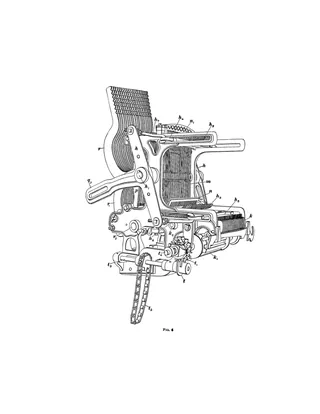
An International Correspondence Schools instruction paper (Serial 495) on dobby shedding mechanisms for power looms. It describes open, close, split and compound sheds, then the construction, drive and operation of single-cylinder dobbies and their variations (positive/non-positive, single- and double-lift, single- and double-index, pawl-and-ratchet drive, right- and left-hand). It also covers the double-cylinder dobby with repeat motion, building and pegging harness chains, and timing, setting, skipping faults, and power and speed.
Elementary Textile Designing
Monograph · 31 pages · weaving drafts
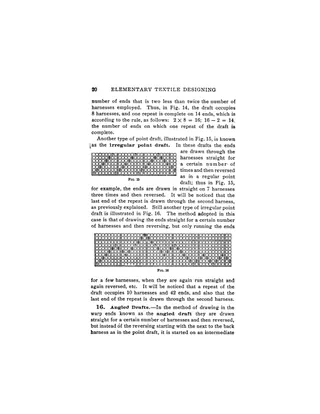
An International Correspondence Schools instruction paper (Serial 502) introducing the fundamentals of textile designing for woven fabrics. It explains warp and filling, plain weave, design paper, and how to indicate a weave on it, then covers harness (drawing-in) drafts, chain (pegging) drafts, and the effect of the weave on the cloth. Standard draft types (straight, point, irregular point, angled, skip, satin, section) are described with numbered figures, followed by how harness and chain drafts combine to produce the woven effect and practical points for constructing harness drafts. Practice exercises are included.
Glossary of Weaves
Monograph · 36 pages · weaving drafts
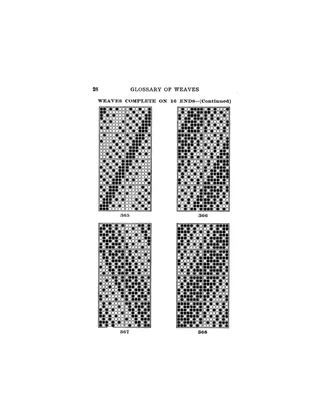
A glossary of 400 numbered weave diagrams from an International Correspondence Schools textbook, arranged by the number of ends on which each weave is complete, from 2 up to 24. A short introduction explains that the weave determines both the structure and the appearance of a cloth, and that the collection is meant to help designers select or adapt a weave. The rest of the booklet is almost entirely pages of small drawdown grids with only their numbers as text.
Jacquards
Monograph · 127 pages · weaving drafts
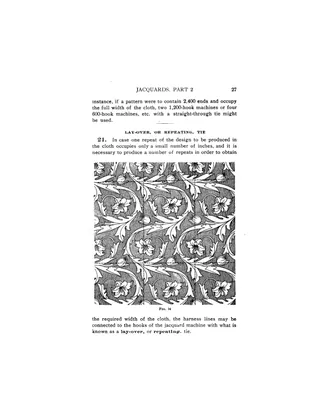
An International Correspondence Schools instruction text on jacquard machines in three parts (Serials 498A, 498B, 498C). Part 1 covers construction and operation of single-lift and double-lift jacquards, including hooks, needles, cylinder motions, griffs, and fixing and timing. Part 2 covers harness tying: comber boards, couplings, building and varnishing harnesses, and straight-through, lay-over, centered, and combination ties. Part 3 covers card cutting on the piano machine, reading designs, cutting a set of cards, hand and automatic lacing, and automatic repeating machines. Illustrated with many mechanical line drawings and a few tie diagrams.
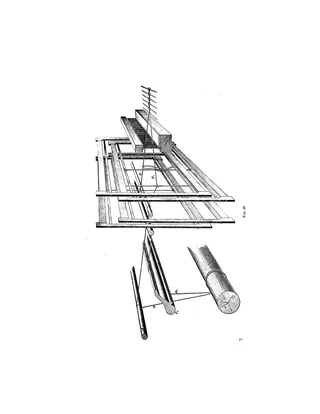
Leno Attachments
Monograph · 38 pages · weaving drafts
An International Correspondence Schools instruction paper (Serial 496) on the mechanical leno (gauze) attachments used on dobby looms. It explains the doup and standard harnesses, bottom and top doups, drawing in, reeding, and the slackener or easer for single-lift (close-shed) dobbies. It then covers double-lift (open-shed) dobbies with the jumper and yoke, harness-chain pegging plans, and the fixing and setting of these motions. It ends by comparing American and European drawing-in methods. Illustrated with numbered figures of harness and mechanism drawings and four chain drafts.
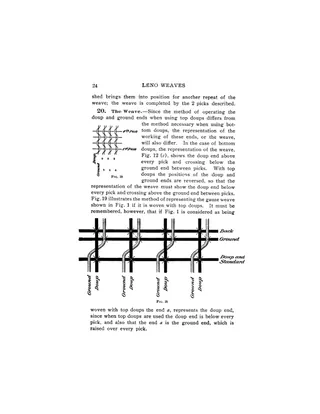
Leno Weaves
Monograph · 66 pages · weaving drafts
An International Correspondence Schools instruction paper (Serial 512) on leno, or gauze, weaves as woven on dobby looms. It covers plain gauze with bottom and top doups on close-shed and open-shed looms, including the standard, doup, ground and back harnesses, the slackener, jumper and yoke, and how to write harness and chain drafts. The second half treats fancy gauze: combinations of right- and left-hand doups, multiple picks before douping, multiple doup or ground ends, several sets of doups, combinations with plain weaves, effects without extra mechanisms, and dissecting leno cloth. It is illustrated with many mechanism drawings, weave diagrams and chain and drawing-in drafts.
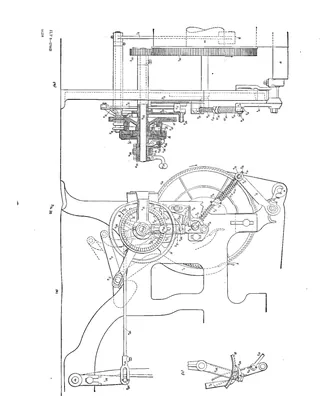
The Northrop Loom
Monograph · 82 pages
An International Correspondence Schools instruction paper on the Northrop automatic loom, in two parts. Part 1 covers construction and operation: the hopper or magazine, transferring mechanism, shuttle feeler, shuttles and bobbins, temple thread cutter, filling motion, and the feeler filling-changing device. Part 2 covers warp stop-motions (cotton-harness and steel-harness), take-up let-back, cut motion, and the Draper-Roper let-off motion. It then gives loom-fixing instructions for adjusting and timing these mechanisms, a table of recommended speeds by cloth width, loom arrangement, and the range of application of the Northrop loom. Illustrated with line drawings of mechanisms.
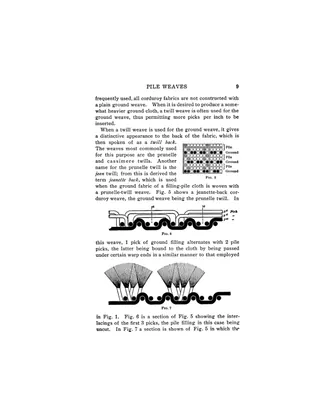
Pile Weaves
Monograph · 36 pages · weaving drafts
An International Correspondence Schools instruction paper (Serial 513) on the construction of pile fabrics, divided into filling-pile and warp-pile types. It covers corduroys, velveteens, figured filling-pile designs, velvets, double plushes, terry towels, and figured warp-pile fabrics including tapestry, Brussels and Wilton carpets. It explains how the pile is bound, cut and finished, and gives many weave drafts and cross-section diagrams, plus practice examples.
Satin and Other Weaves
Monograph · 22 pages · weaving drafts
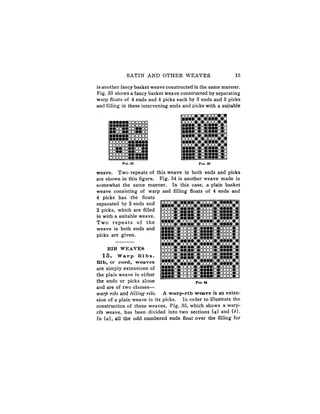
An International Correspondence Schools instruction paper (Serial 507) on the construction of satin weaves and weaves derived from them. It explains how satin bases are chosen, warp- and filling-flush satins, irregular 6-end satins, and double satins, and includes a table of satin orders for 5 to 12 ends. It then covers satin derivatives, granite weaves, basket weaves, warp and filling ribs, unequal ribs, corkscrew weaves, and honeycombs. Most pages carry small drawdown figures, and practice exercises follow two of the sections.
Spoolers: Prepared Especially for Home Study
Monograph · 28 pages
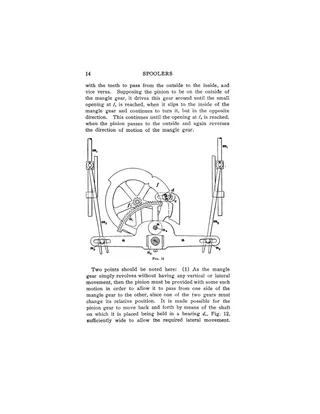
An International Correspondence Schools instruction paper describing the construction, operation, setting and management of the cotton spooler, the machine that winds yarn from spinning-frame bobbins onto spools for the next process. It covers bobbin holders, thread guides, spools and spindles, spindle banding, mangle-gear builder motions, settings and adjustments, and common faults. Worked calculations for spindle speed, change gears and production are included, followed by examination questions for students.
Twill Weaves and Derivatives
Monograph · 35 pages · weaving drafts
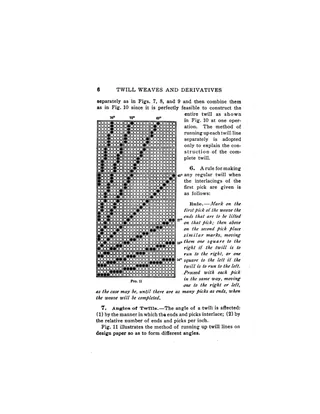
An International Correspondence Schools instruction paper on twill weaves and how they are designed on design paper, with practice questions. It covers the construction and repeat of twills, regular twills and their bases, twill angles, and derivatives made by rearranging or combining ends and picks. It goes on to fancy, entwining, curved, skip, pointed, diamond and diagonal (shaded) twills, with many drawdowns and chain and drawing-in drafts.
Weaves for Backed Cotton Fabrics
Monograph · 22 pages · weaving drafts
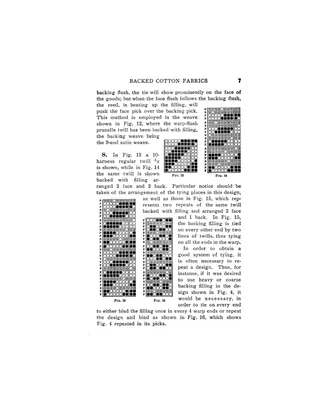
An International Correspondence Schools instruction paper on designing weaves for backed cotton fabrics, in which an extra warp or filling adds weight or warmth without showing on the face. It covers filling-backed and warp-backed cloths, including how to arrange face and back picks or ends, place the tying points, and make harness and chain drafts. The last sections treat piqués and Bedford cords, with wadding picks or ends, cutting picks and instructions for dissecting these cloths. Many design-paper figures and practice problems are included.
Wool
Monograph · 33 pages
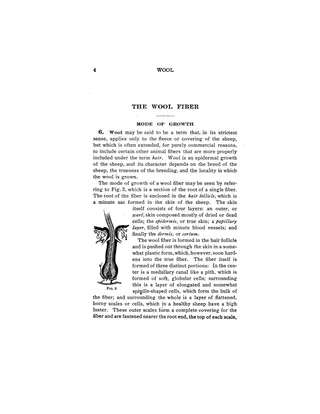
An International Correspondence Schools instruction paper on wool as a textile fiber. It covers the classification of textile fibers, the structure and growth of the wool fiber, and wool's properties (felting, fineness, strength, crimp, luster, hygroscopicity). It then treats wool substitutes (shoddy, mungo, extract), sheep breeds and world wool supply, mohair, and wool sorting by fleece region. It ends with wool-sorters' disease and a glossary of trade terms. Illustrated with micrographs of fibers and diagrams of fleece quality zones.
Wool Drying
Monograph · 18 pages
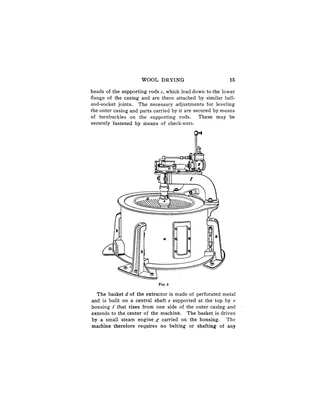
An International Correspondence Schools instruction paper (Serial 471) on drying scoured wool in woolen mills. It explains why high temperatures harm the fiber, then describes cold-air table dryers, multiple-apron hot-air dryers, and two-compartment sectional dryers, with operating temperatures, construction details and a capacity table. The last part covers hydro-extractors, both the self-balancing type and the Weston gyrating-basket type, with line drawings of each machine.
Wool Mixing
Monograph · 31 pages
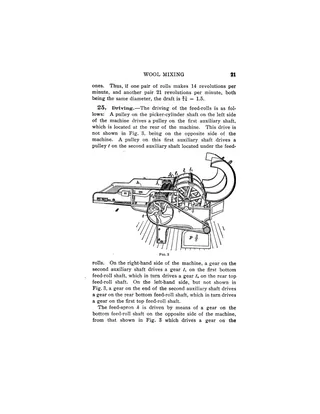
An International Correspondence Schools instruction paper on mixing wool stock before carding. It covers laying out mixes in alternating layers on the picker room floor, blending wool with shoddy, mungo, noils, cotton and silk, and calculating the cost and proportions of mixes by the linking (alligation) method. The second half describes mixing pickers (Davis & Furber, Atlas), the Fearnaught, and the Bramwell automatic picker feed, with construction, driving, operation and management, illustrated by line drawings of the machines.
Wool Oiling
Monograph · 15 pages
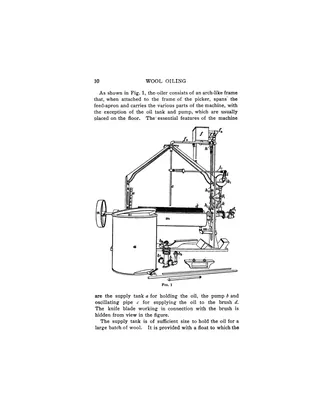
A 1905 International Correspondence Schools instruction paper on lubricating wool before carding and spinning. It explains why wool is oiled and compares olive, lard, oleine, red and mineral oils, with emulsion recipes and tests for acid in oil. It then describes hand oiling and the Spencer, Sargent and Goddard automatic oilers, with line drawings of the machines.
Wool Scouring
Monograph · 39 pages
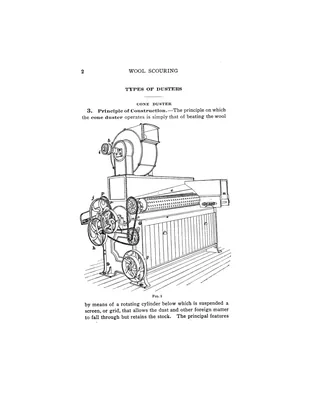
An International Correspondence Schools instruction paper on preparing and scouring raw wool in the mill. It covers dusting machines (cone, square and open dusters), the impurities in grease wool such as yolk, suint and dirt, and scouring agents (soaps, soda ash, potash), with tests for caustic alkali and adulteration. It also treats water hardness and softening, the effects of improper scouring, scouring machines (rake, parallel rake, hydraulic washers, squeeze rolls, self-feeds), naphtha degreasing, and the use of thermometers and hydrometers, ending with a Baumé–Twaddle comparison table.
Woolen and Worsted Ply Weaves
Monograph · 53 pages · weaving drafts
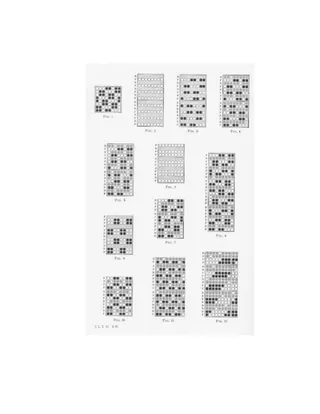
A correspondence-school instruction paper (International Correspondence Schools, Serial 511) on ply weaves for woolen and worsted cloth. It explains backed fabrics (filling-backed, warp-backed, reversibles, cut backed cloths, wadding fillings), double cloths (tying methods, wadding yarns, cut double cloths, double plain weaves) and triple cloths. It shows how to construct the weaves on design paper and how to make the drawing-in and chain drafts, with many numbered draft figures and practice examples.
30 documents found