Textile Documents › Authors › Author: Roberts Beaumont
8 documents found
Sort: 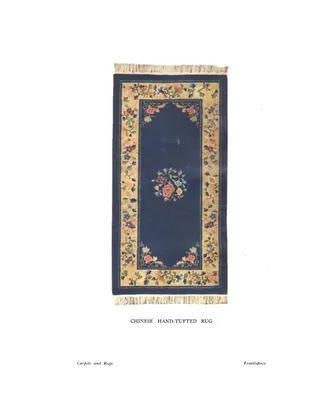
Carpets and Rugs
Book · 441 pages · weaving drafts
A 1924 technical treatise on the structure, design and manufacture of carpets and rugs, by Professor Roberts Beaumont and published posthumously. It opens with the history of pile and tapestry weaving and Eastern hand-tufted carpets, then covers felt carpeting, Kidderminster, Scotch and Ingrain carpets, union patternwork, Brussels and tapestry carpets, Wilton and cut-pile carpets, and chenille and machine-tufted Axminsters. A final chapter treats pile structure and quality. It includes many weave drafts and point-paper design diagrams, loom settings, yarn counts, colouring schemes, tables, and halftone plates, with an appendix on Chinese and Japanese hand-tufted carpets.

Colour in Woven Design
Book · 431 pages · weaving drafts
Roberts Beaumont's second edition (1912) of a treatise on the science and technology of textile colouring for woollen, worsted, cotton and silk fabrics. It begins with colour theory, attributes, contrast and harmony, standardization and mixtures. It then covers the application of colour to woven structures: stripes, checks, simple and compound colourings, fancy weaves, combination designs, spotted effects, double cloths, figured and pile fabrics. It has many colour plates of woven samples, many weaving drafts and drawdowns with warp and weft colour-order tables, and an index.
Dress, Blouse, and Costume Cloths: Design and Fabric Manufacture
Book · 621 pages · weaving drafts
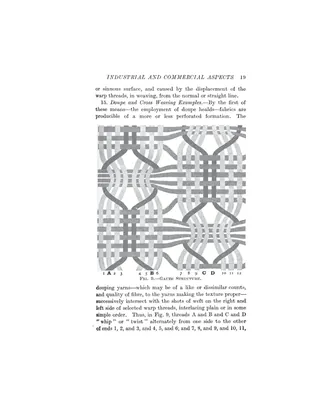
A comprehensive technical textbook on the design and manufacture of dress, blouse, and costume fabrics in silk, artificial silk, cotton, linen, worsted and woollen. It covers the commercial and industrial side of the dress trade, yarn structure (including thrown, spun and artificial silk and fancy folded yarns), weave elements and point-paper plans, and striped, checked, spotted, mosaic and figured designs. Later chapters treat pile, curl, lappet and gauze structures. It is illustrated with over 700 figures, including many weave drafts and photographs of fabric specimens.
The Finishing of Textile Fabrics
Book · 278 pages · weaving drafts
A 1909 technical treatise by Roberts Beaumont of the University of Leeds on the finishing of woollen, worsted and union cloths after weaving. It covers scouring, milling (fulling) and felting theory, raising with teazles and card wire, cutting, pressing, and lustring, with descriptions of finishing machinery by makers such as Kilburn, Bailey and Tomlinson. Much of the work examines how yarn structure, fibre type and weave structure (plain, twills, sateens, backed and double cloths) affect shrinkage and raising, illustrated with photographs, micrographs, tables, weave plans and healding drafts. It ends with finishing routines for specific cloths and an index.
Standard Cloths: Structure and Manufacture
Book · 357 pages · weaving drafts
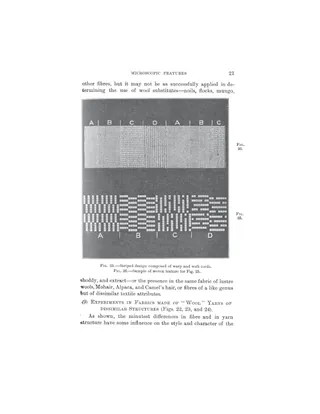
A 1916 technical treatise by Roberts Beaumont on the structure, analysis and manufacture of standard woollen and worsted cloths, including Government, military and naval fabrics. It opens with microscopic study of fabric structure and defects, then covers fabric quality, Cheviot and Saxony contrasts, and standard specifications and tests. Later chapters cover weave types, light fabrics and flannels, medium and heavy suitings, worsteds, double and compound cloths, overcoatings, Army and Navy cloths, tartans and felt manufacture. It gives many worked examples with yarn counts, reed and pick settings, finishing routines and weights per yard, with photographs, weave plans and colour schemes. It ends with an index and trade advertisements.
Textile Colour Theories
Article · 15 pages · weaving drafts
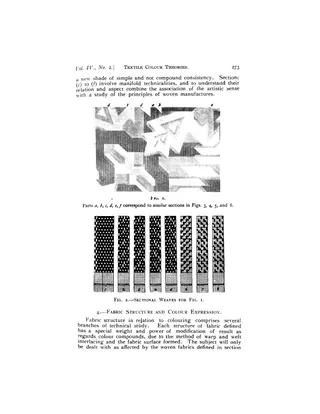
A 1913 paper by Professor Roberts Beaumont on the theory of colour in woven textiles. It argues that colour effect depends on technical factors as well as hue: fibre quality, yarn construction, fibre blending, fabric structure, weave (intertexture) and finishing. It outlines six groups of colour theories, then examines fibre qualities and fabric structure in more detail. Examples are a silk fabric with several weave sections and worsted/silk twill and weft-cord fabrics, illustrated with micro-photographs and a sectional weave diagram. It closes with brief notes on mathematical colour-and-weave effects and colour standardisation.
Woollen and Worsted: The Theory and Technology of the Manufacture of Woollen, Worsted, and Union Yarns and Fabrics, Vol. 1
Book · 307 pages
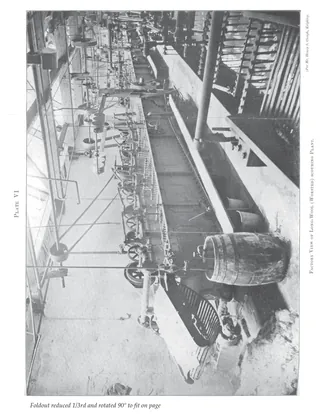
Volume 1 of Roberts Beaumont's 1916 technical treatise on woollen and worsted manufacture covers fibres and wool substitutes, wool sorting, scouring and blending, and the construction of woollen and worsted yarns. It describes carding, condensing, spinning, twisting, combing, drawing and worsted spinning machinery in detail, with card clothing tables, machine sets, productive-power tables and yarn costing examples. It is heavily illustrated with line drawings, photographs and fold-out plates of mill machinery. The front matter also lists later chapters on weaving, looms and fabric design, which are not in this volume.
Woven Fabrics at the World's Fair
Book · 132 pages · weaving drafts
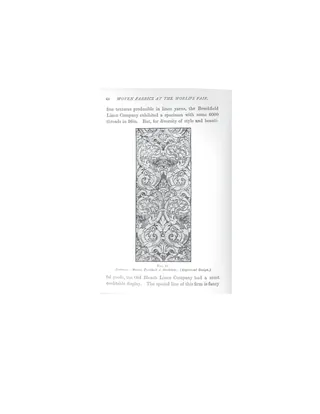
A review by Roberts Beaumont, a professor of textile industries at the Yorkshire College, of the woven fabrics shown at the 1893 World's Columbian Exposition in Chicago. It is organized into parts on general considerations, woollens and worsteds, cottons and linens, and silks, with an appendix arguing that the fair holds lessons for British manufacturers. The text compares British, American, French, German and Japanese exhibits and names many firms. It has 44 illustrations of designs and sketches of woven samples, including sectional weaving plans (point-paper designs) for extra-weft, velvet, pile and figured silk fabrics. The scan ends with advertisements from loom and textile machinery makers.
8 documents found