Textile Documents › Publications › Publication: E. A. Posselt
8 documents found
Sort: 
Fabric Analysis
Book · 142 pages · weaving drafts
A 1920 handbook by E. A. Posselt (Hand Books of the Textile Industry, vol. 4) on analyzing woven fabrics from fibre to finished cloth. It explains how to find fabric weight, pick out the weave on point paper (single cloth, double cloth, pile fabrics), and work out thread texture, counts, take-up, shrinkage and reed width. Later chapters cover identifying wool, hair, silk, cotton, linen and artificial fibres by microscope, burning and chemical tests, and testing yarn and fabric for count, strength, elasticity, twist, abrasion and moisture conditioning. The book has many figures of apparatus and microscope views, a few weave drafts, and period trade advertisements.
The Jacquard Machine
Book · 143 pages · weaving drafts
E. A. Posselt's textbook explains the construction and operation of the Jacquard machine, with about 230 illustrations. It describes the parts of the machine, the harness and comber-boards, and a long series of tie-ups (straight-through, point, centre, combined, sectional, compound harness, gauze and ingrain carpet). It also covers card stamping, card-punching machines and card lacing, followed by practical hints on Jacquard designing: designing paper, sketching, outlining in squares, and shading with satin and twill weaves. The volume ends with sample articles and advertisements for Posselt's other books and for textile machinery makers.
Narrow Woven Fabrics
Book · 239 pages · weaving drafts
Volume 2 of Posselt's Hand Books of the Textile Industry, a technical treatise on designing and manufacturing narrow woven fabrics such as ribbons, elastic webbing, galloons, and lamp wicks. It covers yarns and yarn counts, foundation and derivative weaves, selvages, tubular and double cloth, pile, gauze/leno and open-work ribbons, figured ribbons, color effects, fringes and pearl edges. The later part describes ribbon and narrow-ware looms and their mechanisms (shuttles, lays, take-ups, let-offs), and the book ends with publisher and equipment advertisements. About 74 pages carry weave drafts and diagrams.
Recent Improvements in Textile Machinery Relating to Weaving
Book · 222 pages
A late-19th-century technical treatise by E. A. Posselt describing patented improvements in power-loom machinery. It covers shedding mechanisms (dobbies, harness motions), drop-box and shuttle-box motions, let-off and take-up, pickers, shuttles, temples, reeds, heddles, Jacquard attachments, spooling and winding machines, lappet motions, and yarn-counting devices. Each entry explains a mechanism with line drawings and lettered parts, often credited to Crompton & Knowles, Draper, Mason or individual inventors. It also includes a table of contents and period advertisements for textile machinery and suppliers.
The Structure of Fibres, Yarns and Fabrics
Book · 390 pages · weaving drafts
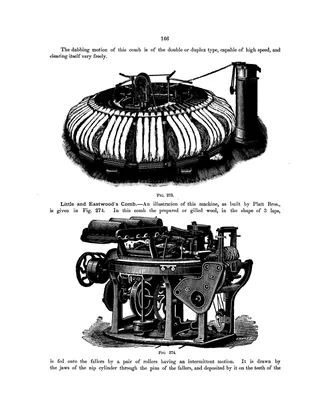
A late nineteenth-century American textbook on textile technology by E. A. Posselt. It describes the raw fibres (cotton, wool, worsted, silk, flax, jute, ramie, China-grass, hemp) and the machinery and processes for preparing and spinning each, including ginning, picking, carding, combing, drawing and spinning. It then covers yarn numbering systems, reed, warp and filling calculations, fabric cost estimates, a section on the structure of textile fabrics, and a section on arithmetic for textile purposes. The book is heavily illustrated with engravings of machines and microscope views of fibres, and has a few pages of weave diagrams and drafts, a glossary and index, and many period machinery advertisements.
Technology of Textile Design
Book · 327 pages · weaving drafts
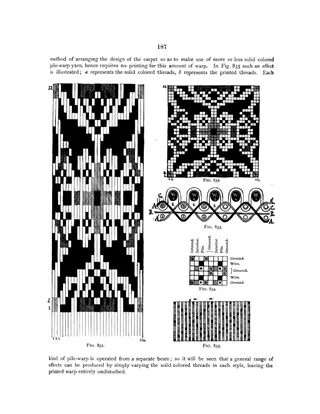
A fourth-edition textbook on the construction and design of woven fabrics for industrial textile manufacture. It covers foundation weaves (plain, twill, satin), drawing-in drafts, and a long series of derivative weaves: rib, basket, steep and curved twills, granite, honeycomb and imitation gauze. Later sections treat fabrics with extra warp or filling, lappet and tricot weaves, double and multi-ply cloth, pile fabrics (velvet, plush, chenille, carpets), Jacquard harness and card cutting, and gauze weaving. Appendices include fibre testing, yarn counting and silk-size tables, and metric conversion tables. The book is heavily illustrated with drawdown grids and machine diagrams, and has advertisements for loom and machinery makers at front and back.
Textile Calculations
Book · 171 pages · weaving drafts
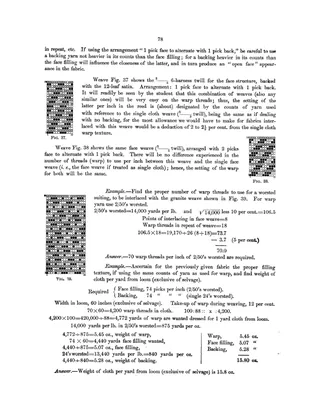
A textile mill reference by E. A. Posselt that teaches the calculations used in yarn, warp, filling and cloth manufacture. It covers yarn counts in the cotton, woolen (run and cut), worsted and silk systems, ply and mixed yarns, reed, warp and filling calculations, and the cost of materials for sample fabrics such as cassimere, worsted suiting, beaver overcoating and ingrain carpet. Later sections cover choosing the proper cloth texture for different weaves (twills, satins, ribs, backed cloths, double cloth), analysis of fibres and fabrics with microscope illustrations, cotton spinning tables, speed, belting and power, and a primer on arithmetic for textile work. Advertisements for textile machinery makers appear at the front and back.
Textile Machinery Part 3: Wool, Cotton, Silk from Fibre to Fabric
Book · 476 pages
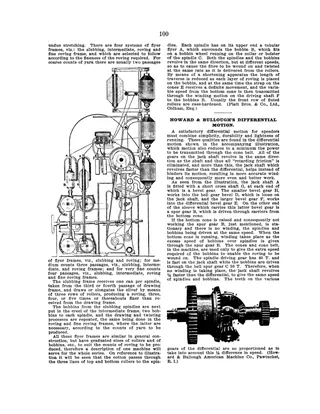
Part 3 of E. A. Posselt's Textile Machinery series (Textile Library vol. IX) surveys wool, cotton and silk processing from raw fibre to finished fabric. It covers fibre properties, grading and tests, then machinery for scouring, drying, carding, spinning, winding, warping, weaving, Jacquards, knitting, dyeing, mercerizing, and finishing (napping, gigging, shearing, tentering, pressing, baling). Many patented machines from British and American makers are described with line drawings. The volume ends with a buyers' index and many period advertisements from textile machinery and supply firms.
8 documents found