Textile Documents › Authors › Author: John Hawksley
3 documents found
Sort: 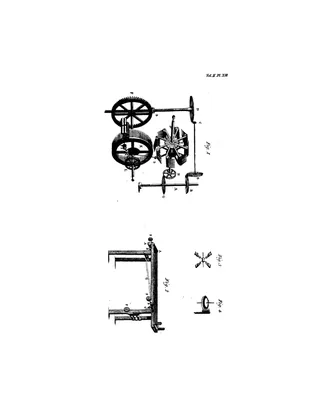
Specification of Messrs. Henry Wright and John Hawksley Patent for Machinery for Combing Wool &c.
Article · 7 pages
Reprint of the 1793 patent specification of Henry Wright and John Hawksley of Arnold, Nottinghamshire, for machinery to comb and prepare wool, cotton, silk, flax, hemp and mohair for spinning. The text describes the machines part by part, giving gear and cog counts, the comb-wheel and combing cylinder, a feeding frame with linen cloths and rollers, a brush for removing noils, and a second machine with a straight range of combs. Two engraved plates (XIII and XIV) illustrate the figures.
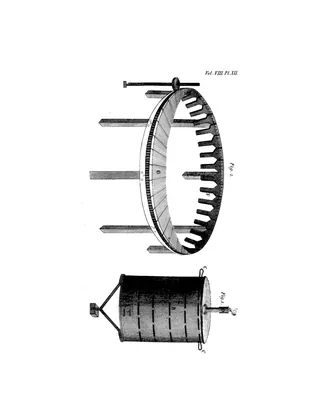
Specification of the Patent Granted to Mr. John Hawksley for Certain Improvements and Additions to Machinery for Combing Wool, Cotton, Silk, Flax, Hemp, and Mohair
Article · 6 pages
Specification of John Hawksley's 1797 English patent for improvements to wool and fibre combing machinery, as printed in the Repertory of Arts and Manufactures. It describes a circular revolving comb-pot (stove) for heating combs, a lapper or layer-on for feeding wool onto the combs, and holsters for holding the combs while the wool is drawn off. It builds on his earlier 1793 combing machine patent. Two plates of engraved machinery diagrams accompany the text.
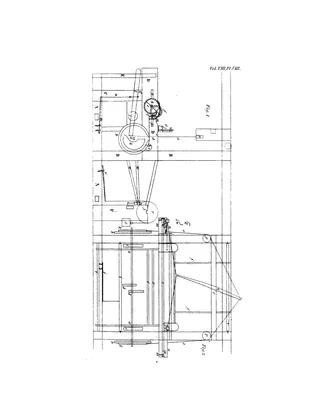
Specification of the Patent Granted to Mr. Robert Miller for a Method of Weaving All kinds of Linen, Cotton, Woollen, and Worsted Cloths
Article · 9 pages
Text of the 1796 patent specification of Robert Miller, a calico-printer at Milton Printfield, Dumbarton, Scotland, for a water-powered loom (also adaptable to steam, horse or other power) for weaving linen, cotton, woollen and worsted cloths. It describes the loom frame, the spindle with grooved sheave, wipers and treadles, the ratchet take-up of the cloth, the shuttle-driving cords and fly-pin, and a safety device that stops the loom if the shuttle fails to pass. Two engraved plates (VIII and IX) show side and front views of the loom mechanism.