Textile Documents › Authors › Author: Edith Appleton Standen
4 documents found
Sort: 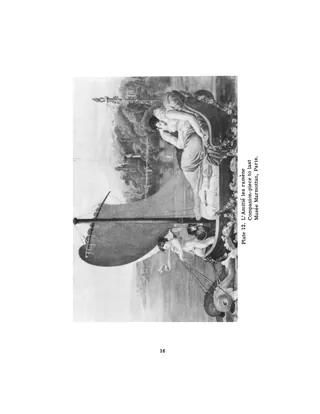
Gardens, Games and Sentiment -- Some Sources of French Printed Cottons
Article · 17 pages
An illustrated article by Edith Appleton Standen tracing the printed-print and garden sources of designs on French copperplate-printed cottons (toiles) of about 1780-1820, mostly in the Metropolitan Museum. It covers four designs: the Tomb of Rousseau at Ermenonville with views of Bagatelle, the Strolling Players adapted from Jacques Callot's gypsy etching, Love and Friendship from Mallet-Prud'hon prints, and Riding at the Ring from the Tivoli Garden. Plates reproduce the textiles alongside the engravings, etchings and drawings the designers borrowed from.
Garrick on Cotton
Article · 22 pages
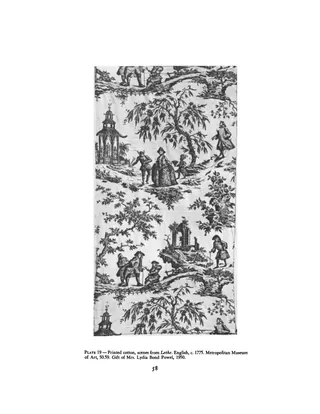
Article by Edith A. Standen on an English copperplate-printed cotton (toile) long called French, now identified as showing scenes from David Garrick's play Lethe (1740, revised 1749). She identifies the characters (Lord Chalkstone, Aesop, Mrs. Riot played by Kitty Clive, the Old Man, the Fine Gentleman) and traces their sources in contemporary engravings. She dates the Metropolitan Museum example to 1774 or later from the blue warp threads in the selvedge required by the English Act of 1774. The scan has 19 plates, mostly English embroideries from the Museum of Fine Arts, Boston (c. 1500-1686), plus the printed cotton as Plate 19.
Moon and Her Children; A Tapestry from a Set of the Planets
Article · 7 pages
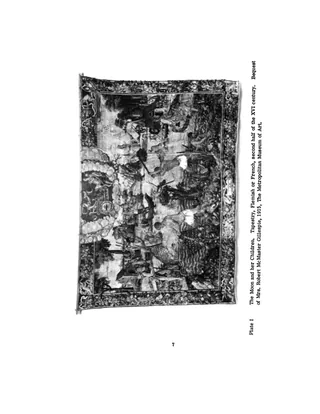
Article by Edith Appleton Standen on a sixteenth-century Flemish or French tapestry in the Metropolitan Museum, 'The Moon and Her Children' (also published as 'Month of June'), from a set of the planets. It traces the design to a 1531 woodcut series attributed to Bartel Beham and explains the planetary iconography, including the moon's chariot, water themes and shell-game scene. It compares the tapestry with a Brussels version in Munich and other sets, and discusses its style, coarse weave and likely provincial origin. Includes notes and three plates.
Portuguese Tapestry?
Article · 12 pages
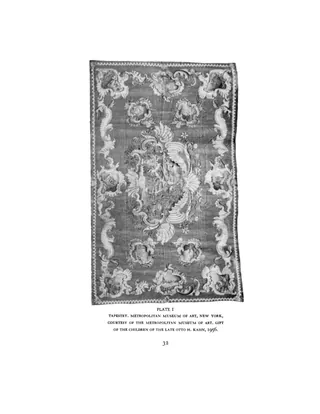
Edith A. Standen discusses a large mid-18th-century tapestry given to the Metropolitan Museum of Art in 1956 by the children of Otto H. Kahn. The tapestry has a blue ground, a central hunting scene, and a border of emblematic devices, most of them found in 18th-century emblem books, set in rococo (rocaille) scrollwork. She considers a Portuguese origin, comparing the rocaille to azulejo frames and weighing known Portuguese tapestry manufactories, and concludes it remains labelled "Portuguese (?), mid-eighteenth century." Nine plates show the whole tapestry and details of the border emblems, and footnotes cite sources.
4 documents found