Textile Documents › Publications › Publication: Lowell Offering
3 documents found
Sort: 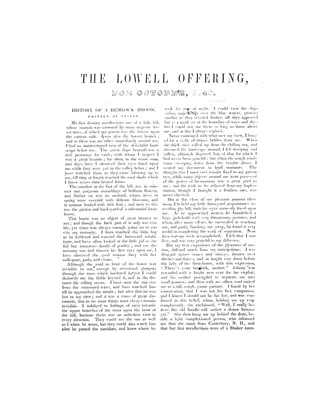
Lowell Offering, No. 1 (October 1840)
Lowell Offering, October 1840
Periodical · 16 pages
First issue (October 1840) of the Lowell Offering, a magazine of original essays, sketches, and poems written by female factory operatives in the Lowell, Massachusetts mills. Contents include the allegorical "History of a Hemlock Broom," pieces on old maids, woman's proper sphere, memory, science, autumn, Mount Auburn cemetery, and religious reflections. The closing Editorial Corner explains the publication's purpose of showcasing the talent and intelligence of mill workers and sets out rules for contributors.
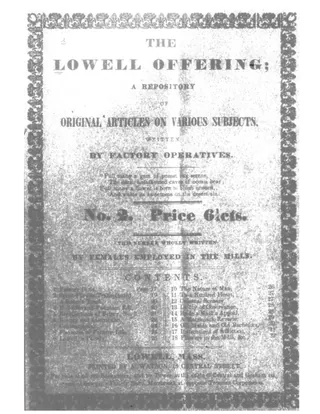
Lowell Offering, No. 2 (December 1840)
Lowell Offering, December 1840
Periodical · 16 pages
Issue No. 2 (December 1840) of the Lowell Offering, a periodical of original essays, poems and sketches written by women working in the Lowell, Massachusetts textile mills. It opens with a defense of factory girls against Orestes Brownson's charge that mill work brings infamy, and includes a piece on the pleasures of factory life, along with sentimental verse, moral essays, a satirical piece on old maids and old bachelors, and an imaginary tour of the planets. The issue is of interest for the social history of New England mill operatives, not for weaving technique.
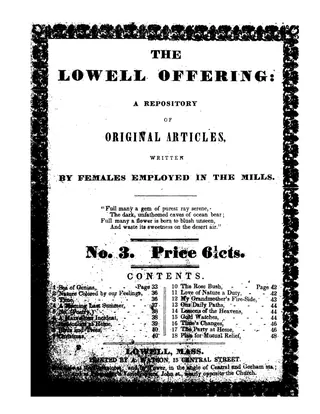
Lowell Offering, No. 3 (February 1841)
Lowell Offering, February 1841
Periodical · 20 pages
No. 3 (February 1841) of the Lowell Offering, a periodical of original prose and verse written by women employed in the Lowell, Massachusetts textile mills. It contains essays, poems, sketches and reflections on genius, nature, time, Christmas, home life and the dress of factory girls ("Gold Watches"), plus a plea for mutual relief among mill women. It opens with a prospectus for a proposed volume, "The Garland of the Mills", and ends with local Lowell business advertisements. It has no technical textile content, but is a primary source on mill-girl culture and the social attitudes surrounding factory work.