Textile Documents › Publications › Publication: Doubleday, Page & Co.
3 documents found
Sort: 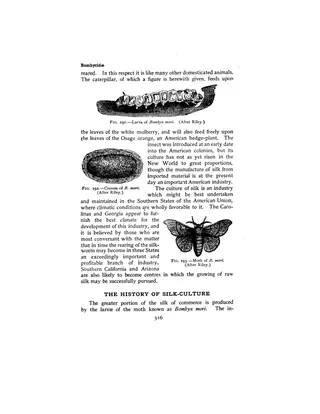
Family Bombycidae (Silk-Worm Moths) from The Moth Book
Article · 6 pages
Excerpt from W. J. Holland's The Moth Book (1920) covering the family Bombycidae, with the silkworm moth Bombyx mori as its main subject. It gives Hampson's family characterization, notes on the caterpillar's food plants, and a section on the history of silk culture. That history runs from China and the legend of Empress Si-Ling-Chi through Byzantium under Justinian, Europe, and the American colonies. It also covers the Morus multicaulis craze of the 1830s and the growth of the American silk industry.
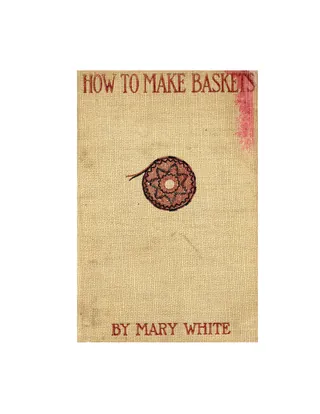
How to Make Baskets
Book · 207 pages
An instructional handbook on basketry by Mary White, first published in 1901 and reprinted through 1902. It covers materials (rattan, raffia, rush), tools, and basic weaving methods such as under-and-over weaving, pairing, triple twist and double weaving. Chapters then give step-by-step projects: mats, simple baskets, covers, handles, work baskets, candy baskets, scrap baskets, bird's nests, oval and melon baskets. Later chapters cover finishing, staining and polishing, chair caning, and Native American twined and coiled basketry techniques. It ends with Neltje Blanchan's chapter on what the basket means to the Indian, and a publisher's advertisement for dyes and materials. Line drawings and plates illustrate the techniques and finished baskets.
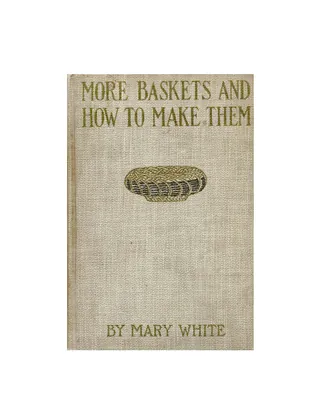
More Baskets and How to Make Them
Book · 161 pages
A how-to book by Mary White, sequel to her "How to Make Baskets," giving materials lists and step-by-step instructions for making baskets and related objects, mostly from rattan, raffia, palm leaf and silver top. Chapters cover centres and weaves, flower baskets, baskets for practical use, hanging baskets, square baskets, rush-seating chairs, raffia and palm-leaf hats, raffia and palm-leaf basketry, and natural dyes and unusual materials. It is illustrated with line drawings (numbered figures) and half-tone plates of finished baskets.